

Origin: Japan
Japanese Bobtail
Get reminders for your Japanese Bobtail's vaccines
Vaccination and parasite reminders, food-safety scans and health records — free to start in the Pethls app.


Good for
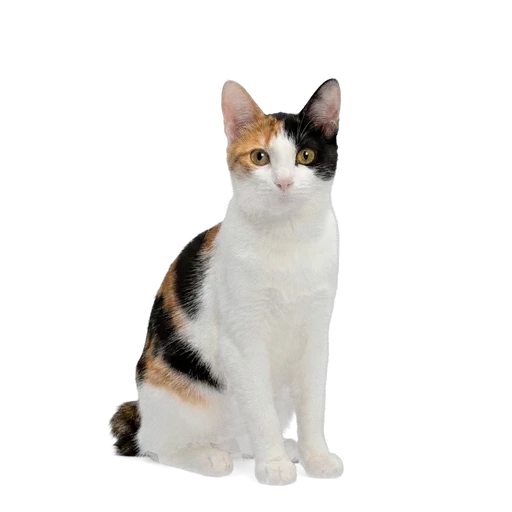
The Japanese Bobtail is instantly recognisable by its short pom-pom tail, a curl of fur closer to a rabbit's scut than a normal cat's tail. This is an old natural breed from Japan, famous as the model for the waving maneki-neko good-luck cat. In person they are busy, chatty, clever cats who play fetch, carry toys around in their mouths and greet you with a whole vocabulary of soft chirps and trills. They slot into family life easily and get on with children and other pets. Given enough activity and company, they settle into a busy home better than almost any other cat.
Temperament & personality
Japanese Bobtails are active, curious and highly sociable. They want to be where the action is, whether that means helping with the laundry, patrolling the kitchen counter or riding on a shoulder. They need daily mental and physical stimulation, so puzzle feeders, climbing space and regular play keep that clever brain occupied.
They are famously talkative, but their voice is musical rather than demanding, a run of soft chirps and trills that owners quickly learn to answer. Many will play fetch on their own initiative, dropping a toy in your lap and waiting for the throw. Carrying objects around in the mouth is a common and endearing habit.
This is a genuine family cat. They are patient and playful with respectful children, and they generally welcome other cats and cat-friendly dogs, often taking the lead in play. Their confidence and easy nature make them a solid choice for first-time owners, provided you can give them the activity and company they crave. Leave one alone and under-stimulated for long stretches and you will hear about it.
Vaccination schedule
Kittens begin the FVRCP core vaccine (feline viral rhinotracheitis, calicivirus and panleukopenia) at 6 to 8 weeks, with boosters every 3 to 4 weeks until at least 16 weeks of age. The rhinotracheitis and calicivirus components matter for this breed because they are the main upper respiratory infections it is prone to.
Rabies is given once between 12 and 16 weeks, according to the vaccine used and local requirements. Core vaccines are then boosted around the one-year mark and every 1 to 3 years afterward based on the product and your vet's guidance.
FeLV (feline leukaemia virus) is recommended for any Bobtail with outdoor access, which is common with such an active, adventurous cat, or one that lives with an infected housemate. Because upper respiratory viruses spread easily and can flare under stress, keeping the FVRCP series current is one of the better protections you can give this breed.
Best food & diet
Feed a complete, meat-first cat food that meets these obligate carnivores' need for animal protein and taurine. An active breed like the Japanese Bobtail burns real energy, so it needs proper fuel, but that energy also means portions should match activity rather than being left out all day.
Match the food to life stage: a kitten formula through the first year for growth, then an adult maintenance diet, and a senior formula later on. A mix of wet and dry food supports hydration and gives variety, which suits their curious, food-motivated nature.
Because they are so playful and food-driven, treats are an easy training reward but add up fast, so keep them to a small share of daily calories. Check body condition every few weeks: ribs easy to feel, a visible waist from above. Fresh water should always be available, and many Bobtails enjoy drinking from a running fountain.
Common health problems
The Japanese Bobtail is one of the healthier cat breeds, a natural breed shaped by centuries rather than intense selective breeding, so it carries few inherited disorders. One point worth clearing up: unlike the Manx, the Bobtail's short tail is safe. Its bob comes from a different gene, and unlike the Manx gene it is not linked to the spinal and nerve defects that can affect tailless cats. Kittens that inherit two copies are perfectly viable, and the tail is simply a short, curled pom-pom of reduced, kinked or angled vertebrae.
Upper respiratory infections are the main thing to watch. Signs include sneezing, runny eyes and nose, congestion and a reduced appetite. Most cases are viral and clear with supportive care, but a kitten, an older cat or one that stops eating should be seen by a vet.
As with any cat, routine dental care matters. Plaque and gum disease can build up over time, so bad breath, drooling or pawing at the mouth deserve a check. With their generally sturdy constitution, good preventive care and dental attention, many Japanese Bobtails live long, healthy lives of 12 to 18 years.
Allergies & skin
The Japanese Bobtail is not hypoallergenic. Like all cats it produces the Fel d 1 protein that triggers most human cat allergies, so a short coat does not make it allergy-safe. If someone in the home reacts to cats, meet an adult of the breed before deciding.
Their own skin is usually trouble-free. The most common causes of feline itching are flea-bite allergy, food sensitivities and environmental allergens such as pollen, mold or dust. Look out for excessive grooming, scabbing, thinning fur or persistent scratching, especially around the head, neck and tail base.
Because the coat is short to medium and easy to see through, skin problems tend to show up early on this breed, which is an advantage. If you spot ongoing itch, redness or hair loss, get a veterinary diagnosis rather than trying random remedies, since flea allergy, food allergy and mites need different treatments even though they look alike.
Flea, tick & worm prevention
Only ever use flea and tick products made for cats. Dog treatments containing permethrin are highly toxic to cats and can trigger tremors, seizures and death, so never apply a dog spot-on or split a dog dose for your Bobtail. This is one of the most common accidental poisonings vets see.
An active, outdoor-curious cat like this one needs reliable parasite cover. Fleas and ticks come home from the garden and from other animals, so a vet-recommended preventive on a regular schedule is worth keeping up. Many cat products bundle flea control with roundworm or tick protection in a single application.
Worming frequency depends on lifestyle: cats that hunt or roam outside need more frequent treatment, including tapeworm cover, than strictly indoor cats. Since fleas transmit tapeworm, staying consistent with flea control reduces worm risk too. Your vet can set the right interval for how your cat actually lives.
Medications & dosing
All cat medication is dosed by body weight, so keep an up-to-date weight for your Bobtail, which typically ranges from about 2.5 to 5 kilograms. This is a small-to-medium breed, and a dose calculated from the wrong figure can easily miss the mark, so weigh before starting anything weight-based.
Human medicines are not a shortcut. Paracetamol (acetaminophen) is fatal to cats in very small amounts, and ibuprofen and aspirin are dangerous unless a vet directs their use. Cats process many drugs differently from people, so what is safe for you can harm them.
Finish the full course of any prescription even after symptoms improve, and never share one pet's medication with another. For the upper respiratory infections this breed can get, treatment is usually supportive, sometimes with antivirals or antibiotics if there is a secondary infection, always at the dose and duration your vet sets. Their sociable, easygoing nature usually makes pilling less of a battle than with more nervous breeds.
Grooming & coat care
Japanese Bobtails come in short-haired and long-haired varieties, and both are low-maintenance. The coat is soft and silky with little undercoat, so it does not mat easily and sheds fairly lightly. A weekly brush is plenty for the shorthair; the longhair benefits from a going-over twice a week to keep the ruff and tail tidy.
Grooming this breed is easy and, given how sociable they are, often welcomed as attention rather than tolerated as a chore. Use a soft slicker or comb, and pay a little extra attention to the pom-pom tail on longhaired cats, which can hold loose fur. Seasonal sheds are mild compared with heavy double-coated breeds.
Keep up the rest of the routine: trim the nail tips every couple of weeks, check the ears and clean them gently if waxy, and brush the teeth with cat-safe toothpaste. Overall the coat asks very little, leaving more time for the play these cats would rather be doing.
How the Japanese Bobtail compares
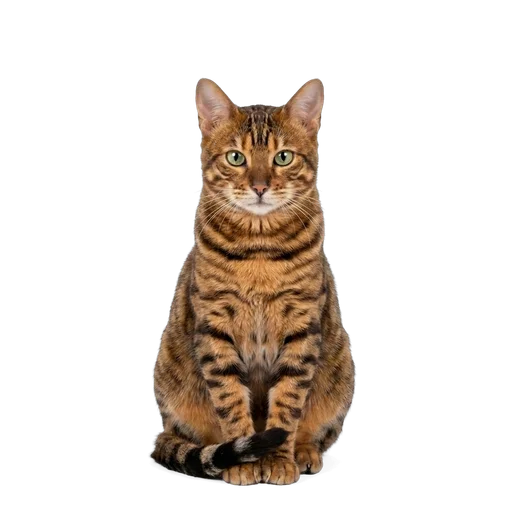
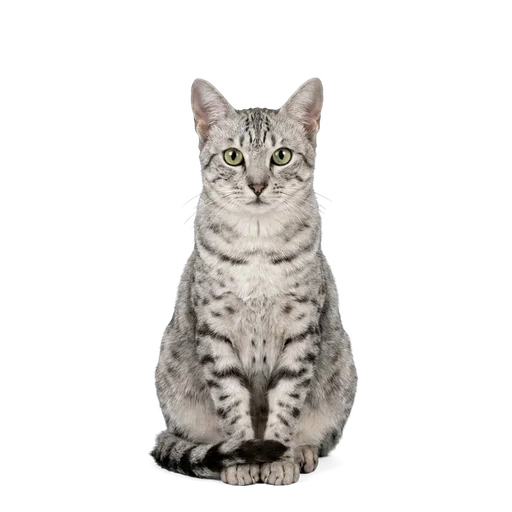
Deciding between similar breeds? Here is the Japanese Bobtail next to Toyger and Egyptian Mau.
| Japanese Bobtail | Toyger | Egyptian Mau | |
|---|---|---|---|
| Size | Medium | Medium | Medium |
| Weight | 2.5-5 kg | 3-7 kg | 3-6 kg |
| Lifespan | 12-18 yrs | 10-15 yrs | 12-15 yrs |
| Activity | Active | Active | Active |
| Shedding | Low | Low | Medium |
| Good with kids | Yes | Yes | Yes |
| Apartment-friendly | Yes | Yes | Yes |
Frequently asked questions
Is the Japanese Bobtail's short tail a health problem?
No. Unlike the Manx, whose taillessness is tied to spinal defects, the Japanese Bobtail's pom-pom tail is a harmless cosmetic trait. It is just a curl of tail bones and does not affect the cat's spine or nerves.
Do Japanese Bobtails really play fetch?
Many do, and often without being taught. They are clever, active cats that like to carry toys in their mouths and drop them for you to throw. Fetch, puzzle feeders and interactive play all help burn their considerable energy.
Are Japanese Bobtails good family cats?
Very much so. They are sociable, patient with respectful children and usually get on with other cats and cat-friendly dogs. Their confidence and easy nature also make them a good pick for first-time owners who can give them activity and company.
How much do Japanese Bobtails shed?
Not much. The silky coat has little undercoat, so both the short and long-haired varieties shed lightly and rarely mat. A weekly brush, or twice weekly for the longhair, keeps things tidy.
What is the most common Japanese Bobtail health issue?
This is a robust natural breed with few inherited problems. The main things to watch are upper respiratory infections, which cause sneezing and runny eyes, and everyday dental disease. Keeping vaccines current and teeth clean covers most of the risk.
Related breeds
Health and care information is drawn from established veterinary sources and is general guidance, not veterinary advice. See our sources
Keep records for your Japanese Bobtail
Vaccinations, food and treat safety, allergy alerts and parasite reminders - all tracked for your Japanese Bobtail in the Pethls app.