

Origin: United States
Toyger
Get reminders for your Toyger's vaccines
Vaccination and parasite reminders, food-safety scans and health records — free to start in the Pethls app.


Good for
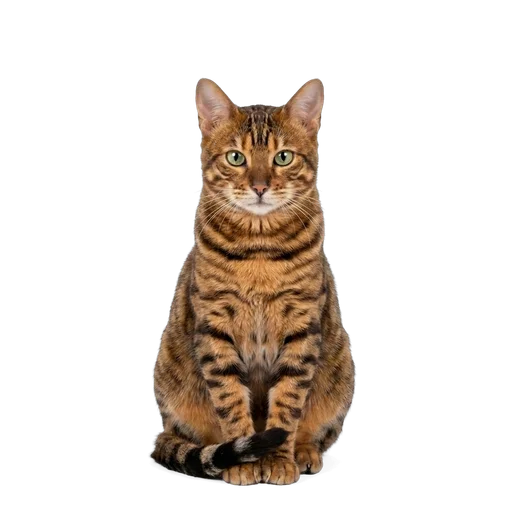
The Toyger is a striped tabby bred to resemble a toy tiger, and despite the wild look there is not a drop of tiger in it. Every Toyger is fully domestic, developed in the United States from tabby crosses to sharpen those bold, branching tiger-like stripes and the rich orange coat. Expect a medium cat of roughly 3 to 7 kilograms, muscular and glossy, with a lifespan around 10 to 15 years. What people remember most is the personality: confident, chatty, and easy to train, often happy to learn tricks or wear a harness on a walk. This is a young breed and generally a healthy one, though a little heart screening goes a long way.
Temperament & personality
Toygers are outgoing cats that stay busy. They like to follow their people from room to room, sit in on whatever you are doing, and comment on it with a soft, conversational voice. The tiger costume hides a genuinely friendly nature, so you get a cat that seeks laps and shoulders rather than one that hides under the bed when guests arrive.
Intelligence is the standout trait. Many Toygers pick up fetch, sit, and target training quickly, and a good number learn to walk on a leash if you introduce the harness gently. That cleverness needs an outlet. A bored Toyger will invent its own games, usually involving your countertops, so puzzle feeders, wand toys, and a tall cat tree keep the mischief pointed in a useful direction.
They tend to do well with children who handle them kindly and with other cats and cat-friendly dogs. Their steady, sociable temperament makes them a reasonable pick for a first-time owner, provided you can offer daily play. They are active but not frantic, so an attentive household in an apartment suits them fine.
Vaccination schedule
Kittens start the FVRCP core vaccine (feline viral rhinotracheitis, calicivirus, and panleukopenia) at about 6 to 8 weeks of age, then receive boosters every 3 to 4 weeks until they are at least 16 weeks old. This core series protects against the most common and dangerous feline viruses and is recommended for every Toyger regardless of lifestyle.
Rabies is given once between 12 and 16 weeks, depending on the vaccine and your local law. After the kitten series, your vet will set a booster rhythm, usually a first-year booster and then every 1 to 3 years for FVRCP and rabies based on the product and regional requirements.
FeLV (feline leukemia virus) is a lifestyle vaccine. If your Toyger goes outdoors, walks on a leash in shared spaces, or lives with cats of unknown status, vaccinate against FeLV; kittens should also be tested first. Strictly indoor cats with no outdoor access may not need it, so discuss the plan with your vet.
Best food & diet
Like all cats, Toygers are obligate carnivores, so the foundation is a complete, life-stage-appropriate food with meat as the leading ingredient. Choose a diet marked for kittens during growth, then switch to an adult formula around 12 months. Look for a nutritional adequacy statement confirming the food is complete and balanced.
These are muscular, active cats, but activity does not make them immune to weight gain from free-feeding. Measured meals twice a day work better than a bowl left out all day. Keep an eye on body condition, since a Toyger should have a visible waist and easily felt ribs under a light fat layer.
Fresh water should always be available, and many cats drink more from a fountain. Wet food helps with hydration and can make portion control easier. If you plan a raw or home-prepared diet, run it past your vet or a veterinary nutritionist first so it stays balanced.
Common health problems
As a newer breed with a small gene pool, the Toyger is generally healthy, but the health data is still building. The condition most worth watching is the heart. Heart murmurs turn up in some Toygers, and a murmur can be an early flag for hypertrophic cardiomyopathy (HCM), a common feline heart disease.
HCM causes the heart muscle to thicken, which can lead to clots, breathing trouble, or sudden collapse. Not every murmur means disease, and some serious cases have no murmur at all, so screening matters. Ask your vet about a cardiac check, and consider an echocardiogram with a cardiologist if a murmur is heard or if you are breeding.
Beyond the heart, care mirrors any indoor cat: dental disease, obesity, and urinary issues are the usual concerns as they age. Annual exams, and twice-yearly visits for senior cats, catch most problems while they are still manageable to treat.
Allergies & skin
The short, tight Toyger coat is low maintenance and does not predispose the breed to any specific skin disorder. Skin problems, when they occur, usually trace back to the same triggers seen in cats generally: flea bites, food sensitivities, and environmental allergens like pollen or dust.
Flea allergy dermatitis is the one to rule out first when a cat starts overgrooming, scratching, or developing scabby bumps along the back and tail base. Consistent flea control often resolves the itch on its own. If it does not, your vet may look into a food trial or environmental allergy.
The Toyger is not hypoallergenic. People who react to cats respond mostly to the Fel d 1 protein in saliva and dander, which every cat produces regardless of coat length. Regular brushing, clean bedding, and good air filtration reduce the load but do not remove it.
Flea, tick & worm prevention
Use only flea and tick products labeled for cats. This matters more than it sounds: permethrin, common in dog spot-ons, is highly toxic to cats and can cause tremors, seizures, and death. Never apply a dog product to a Toyger, and keep treated dogs separate until the product dries.
A monthly or as-directed cat-safe preventive, whether a spot-on or oral product from your vet, covers fleas and often ticks. Even indoor Toygers benefit, since fleas hitch rides on shoes, other pets, and secondhand furniture. Leash-walked Toygers face higher tick exposure and should be checked after outings.
For worms, kittens are usually dewormed several times in their first months, then adults are treated based on lifestyle and fecal testing. Cats that hunt or go outside need more frequent worming. Many combination products handle fleas and intestinal worms together, so ask your vet to match a schedule to how your cat lives.
Medications & dosing
All medication for a Toyger should be weight-based and vet-directed. Cats process drugs differently from dogs and people, and their smaller body mass leaves little margin for error, so accurate weight and correct dosing are essential. Weigh your cat before dosing rather than guessing.
Never give human painkillers. Paracetamol (acetaminophen) is lethal to cats even in tiny amounts, and ibuprofen and other NSAIDs are dangerous. If your Toyger is in pain, use only pain relief prescribed for cats, at the exact dose and interval given.
Finish full courses of antibiotics, and if a cardiac condition is diagnosed, give heart medication exactly on schedule since timing affects how well it works. Pilling a clever cat can be a battle, so pill pockets, a piller, or a compounded flavored liquid can help. Store medications away from curious paws.
Grooming & coat care
Grooming a Toyger is refreshingly simple. The coat is short, plush, and low-shedding, so a weekly brush with a soft slicker or a grooming glove removes loose hair and keeps the stripes gleaming. During spring and autumn coat changes you might brush a little more often.
Bathing is rarely needed. Most Toygers stay clean on their own, and a bath is only for the occasional muddy leash walk or a vet-recommended reason. When you do bathe, use a cat-formulated shampoo and dry thoroughly.
Round out the routine with the basics: check and gently clean the ears if wax builds up, trim the nails every couple of weeks, and brush the teeth with a cat-safe toothpaste as often as your cat tolerates. Dental care is easy to overlook and one of the best long-term investments in a cat's health.
How the Toyger compares
Deciding between similar breeds? Here is the Toyger next to Balinese.
| Toyger | Balinese | |
|---|---|---|
| Size | Medium | Medium |
| Weight | 3-7 kg | 2.5-5 kg |
| Lifespan | 10-15 yrs | 12-20 yrs |
| Activity | Active | Active |
| Shedding | Low | Low |
| Good with kids | Yes | Yes |
| Apartment-friendly | Yes | Yes |
Frequently asked questions
Are Toygers part tiger or wild cat?
No. Despite the name and the tiger-like stripes, the Toyger is entirely domestic. It was bred in the United States from tabby cats to exaggerate the striped pattern, with no tiger or other wild ancestry involved.
Can you really walk a Toyger on a leash?
Many Toygers take to a harness and leash well because they are intelligent and confident. Introduce the harness slowly indoors first, reward calm behavior, and progress to short outdoor trips once your cat is comfortable and fully vaccinated.
Are Toygers good with children and other pets?
Generally yes. Their friendly, sociable nature makes them a good fit for families, and they usually get along with other cats and cat-friendly dogs. Supervise young children and teach gentle handling to keep interactions positive.
Do Toygers shed a lot?
No. The short, tight coat sheds little and needs only a weekly brush. Shedding picks up slightly during seasonal coat changes, but grooming demands stay low overall.
What health issue should Toyger owners watch for?
The heart. Some Toygers develop heart murmurs, which can be linked to hypertrophic cardiomyopathy (HCM). Regular veterinary exams and, if a murmur is found or you are breeding, a cardiac ultrasound are worthwhile precautions.
Related breeds

Health and care information is drawn from established veterinary sources and is general guidance, not veterinary advice. See our sources
Keep records for your Toyger
Vaccinations, food and treat safety, allergy alerts and parasite reminders - all tracked for your Toyger in the Pethls app.