

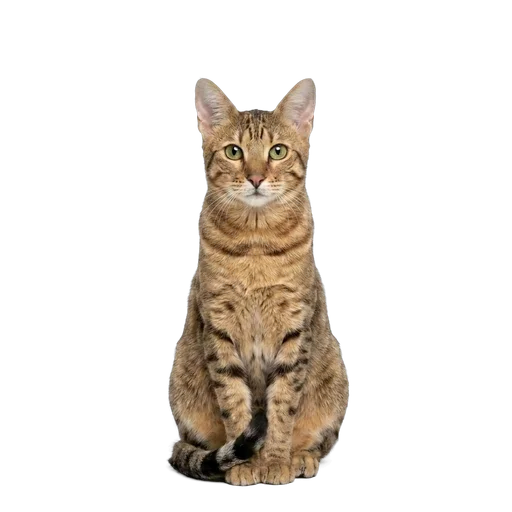
Origin: United States
Serengeti
Get reminders for your Serengeti's vaccines
Vaccination and parasite reminders, food-safety scans and health records — free to start in the Pethls app.


Good for
The Serengeti is a tall, long-legged spotted cat created in the United States by crossing the Bengal with the Oriental Shorthair. The goal was to capture the wild look of an African serval in a cat that is fully domestic, with no recent wild ancestry of its own. The result is a striking animal with big ears, a lean athletic frame and a bold spotted coat, paired with an outgoing, confident personality. Serengetis are active, curious and social, happiest when they have space to climb, things to chase, and people to interact with. They are a young breed and still fairly rare, but they make lively, engaging companions for an active household.
Temperament & personality
Serengetis are bold and confident cats that meet the world head-on. They tend to be fearless with visitors, quick to investigate a new box or bag, and rarely the type to hide under the bed. For all that confidence, they are affectionate and gentle with their people, with a strong social streak that keeps most of them in the middle of family life rather than watching from a distance.
Energy is the defining trait. These are athletic cats that jump high, run fast and love to climb, and they need real outlets for it. Tall cat trees, wall shelves, wand toys and daily interactive play keep a Serengeti satisfied. Without enough stimulation, a clever, restless cat like this will find its own entertainment, usually the kind you would rather it did not.
They are vocal, chatting with their owners and often following them around the house, a trait they inherit from the Oriental Shorthair side. Serengetis usually get on well with other confident pets and with children who match their energy, though their intensity and need for engagement make them a better fit for experienced cat owners than for someone wanting a quiet lap cat.
Vaccination schedule
Serengeti kittens follow the standard feline core schedule. The FVRCP vaccine, covering feline viral rhinotracheitis, calicivirus and panleukopenia, starts at 6 to 8 weeks and repeats every three to four weeks until the kitten is at least 16 weeks old.
Rabies is given once between 12 and 16 weeks, following local legal requirements and the vaccine used. Because Serengetis are curious, athletic cats that many owners allow supervised outdoor time, the FeLV vaccine against feline leukaemia is worth adding for any cat with access to the outside or to other cats.
A booster follows at around one year of age, after which core vaccines are repeated every one to three years based on your vet's risk assessment. Yearly checkups also let the vet listen to the heart and catch any early changes.
Best food & diet
As active, muscular cats, Serengetis do well on a high-quality, protein-rich complete diet appropriate to their life stage. Choose a food with a named meat as the main ingredient that meets a recognized standard such as AAFCO or FEDIAF, and feed kitten formula through the fast growth of the first year.
Their high energy means they burn a lot, but many are eager eaters who will happily clean the bowl, so measure meals rather than leaving food down all day. Splitting the daily ration into food puzzles and treat-dispensing toys works brilliantly for this breed, feeding the body and the busy mind at the same time.
Keep fresh water available at all times, and consider a fountain, since many active cats drink more from moving water. Watch body condition as your Serengeti matures, because a bored, under-exercised cat can gain weight even on a good diet.
Common health problems
The Serengeti is a young breed and, so far, generally healthy with no long list of breed-specific diseases. That is good news, but it also means the full picture is still emerging as the breed matures and more cats are followed over their lifetimes.
The main health point to watch comes from the founding breeds. Hypertrophic cardiomyopathy (HCM), the most common feline heart disease, occurs across many cat breeds, and having a cat's heart checked at routine visits is sensible. Ask your breeder whether the parents have been checked, and mention the background to your own vet so the heart is listened to at routine visits.
Beyond that, boredom is a real concern for this breed. These are active, demanding cats, and one that lacks climbing space, play and interaction can become stressed, overactive or destructive. Plenty of enrichment is part of keeping this breed genuinely healthy, not just entertained.
Allergies & skin
Serengetis have a short, close, spotted coat and typically sound skin, so there is no breed-linked skin disease to plan around. When skin trouble does appear, it usually traces back to the ordinary causes seen in any cat rather than anything specific to the breed.
Fleas are the leading trigger. A flea-allergic cat overgrooms and develops scabs or bald patches, and on a short-coated Serengeti that damage shows up fast. Reliable year-round flea control prevents most cases. If a cat stays itchy with no fleas present, a vet can investigate food or environmental allergies.
The Serengeti is not hypoallergenic. It produces the Fel d1 protein behind most human cat allergies, and even a light-shedding coat carries that protein onto surfaces and into the air, so allergy sufferers should spend time around the breed before committing.
Flea, tick & worm prevention
Only ever use flea and tick products licensed for cats on a Serengeti. Dog spot-ons containing permethrin are highly toxic to cats and can cause tremors, seizures and death, so keep those products away from any cat entirely. Your vet will recommend a safe, weight-appropriate option.
Because Serengetis are curious and often get supervised outdoor time, consistent prevention matters. Ticks become a real concern for cats that roam outside in warmer months, and fleas can hitch a ride indoors even on an apartment cat, so year-round cover is the simplest approach.
Worming should follow a vet-set routine based on your cat's hunting and outdoor access. Active outdoor cats that catch prey need worming more often than indoor cats. Good flea control also lowers tapeworm risk, since cats catch tapeworm by swallowing infected fleas during grooming.
Medications & dosing
Every medication for a Serengeti is dosed by body weight and must be prescribed by your vet. Cats metabolize drugs differently from humans and dogs, and the margin for error is small in a cat that may weigh only 4 or 5kg, so guessing a dose is never safe.
Common human medicines are dangerous or fatal to cats. Paracetamol (acetaminophen) can kill a cat from a single dose, and ibuprofen and similar anti-inflammatories are also toxic. Never give any human over-the-counter drug to your cat without direct veterinary guidance.
A bright, active cat like the Serengeti can be hard to pill, so ask your vet about flavored tablets, liquids or transdermal formulations if dosing turns into a struggle. Finish any prescribed course fully, weigh your cat when accuracy counts, and keep all medicines locked away from a cat that loves to investigate.
Grooming & coat care
Grooming needs are low. The Serengeti's short, sleek spotted coat sheds lightly and needs little more than a weekly brush or a rubber grooming mitt to lift loose hair and keep the coat shining. Most enjoy the attention, which makes it an easy routine to keep up.
The rest of the care is basic feline maintenance. Trim the claws when they grow long, check the large ears and clean them gently if wax builds up, and start tooth brushing early with a cat-safe paste to protect the gums over the years.
Because these cats climb and explore constantly, give them plenty of scratching posts and tall perches, which also help keep claws in good shape naturally. A quick weekly check of skin, ears, eyes and nails during grooming is the best way to spot any small problem before it grows.
How the Serengeti compares
Deciding between similar breeds? Here is the Serengeti next to Ocicat.
| Serengeti | Ocicat | |
|---|---|---|
| Size | Medium | Medium |
| Weight | 3.5-7 kg | 3-7 kg |
| Lifespan | 8-12 yrs | 12-18 yrs |
| Activity | Active | Active |
| Shedding | Low | Low |
| Good with kids | Yes | Yes |
| Apartment-friendly | Yes | Yes |
Frequently asked questions
Is a Serengeti part wild cat?
No. Despite being bred to resemble a serval, the Serengeti is fully domestic. It was created by crossing the Bengal and the Oriental Shorthair, both domestic breeds, so it carries no recent wild ancestry of its own. The wild look is the goal; the temperament is a house cat's.
Do Serengeti cats need a lot of attention?
Yes. Serengetis are active, curious and highly social, and they need daily play, climbing space and interaction to stay content. A bored Serengeti can become restless or destructive, so this breed suits owners who can give it real time and stimulation rather than a hands-off household.
Are Serengeti cats good for first-time owners?
They can be a lot for a beginner. Their high energy, intelligence and demand for engagement make them more suited to experienced cat owners or people ready to commit to plenty of enrichment. A first-time owner who is prepared for an active, interactive cat can still do well with one.
Are Serengeti cats healthy?
As a young breed, the Serengeti is generally healthy with no long list of inherited diseases. The one point to raise with your vet is heart health: hypertrophic cardiomyopathy is the most common feline heart disease, so having the heart checked at regular visits is sensible.
Do Serengeti cats get along with other pets?
Usually, yes. Their confident, social nature means they often mix well with other outgoing cats and with dogs, especially when introduced gradually. They tend to do best with pets that can match their energy rather than with a very timid or elderly housemate.
Related breeds
Health and care information is drawn from established veterinary sources and is general guidance, not veterinary advice. See our sources
Keep records for your Serengeti
Vaccinations, food and treat safety, allergy alerts and parasite reminders - all tracked for your Serengeti in the Pethls app.