


Origin: France
Bichon Frise
Get reminders for your Bichon Frise's vaccines
Vaccination and parasite reminders, food-safety scans and health records — free to start in the Pethls app.


Good for
The Bichon Frise is a cheerful little cloud of a dog, weighing in at 5 to 8 kilograms with a soft, curly white coat and a personality to match its bouncy looks. Bred as a companion through and through, this French charmer lives to be near its people and is happy almost all the time. Bichons are playful, curious, and peppy without being hyperactive, which makes them a genuinely easy fit for families, flats, and first-time owners. The trade-off for that low-shedding, allergy-friendly coat is real grooming commitment. If you can keep up with the brushing and clipping, you get one of the most affectionate small dogs around.
Temperament & personality
Bichons are sociable optimists. They were developed purely for company, and it shows in how much they want to be with you: on the sofa, underfoot in the kitchen, curled up while you work. That devotion is lovely, but it also means the breed is prone to separation anxiety if left alone for long stretches. Building up alone-time gradually from puppyhood helps a lot.
They are playful and a little bit clownish, happy to zoom around the living room in a burst of the classic Bichon 'blitz' and then flop for a cuddle. Curiosity keeps them engaged, and they respond well to positive, reward-based training. They are not stubborn so much as sensitive, so harsh corrections backfire.
With children and other pets they are excellent. A well-socialized Bichon is patient with respectful kids and usually friendly with other dogs and cats. Their gentle, non-aggressive nature is a big part of why they suit multi-pet and multi-generation households.
Vaccination schedule
The puppy course usually centers on the DHPP combination, which protects against distemper, hepatitis (adenovirus), parvovirus, and parainfluenza. The first three are the core antigens; parainfluenza is included in the same shot but is considered non-core. Puppies begin at roughly 6 to 8 weeks and receive boosters every 2 to 4 weeks until they are at least 16 weeks old, so that fading maternal antibodies do not blunt the response.
Rabies is given from 12 weeks as a single dose, with the exact timing set by local regulations and your vet. Keep the certificate safe, as you will need it for travel, boarding, and licensing in many places.
A one-year booster follows the puppy series, after which core vaccines are repeated every 1 to 3 years. Leptospirosis is now recommended as a core vaccine for all dogs, given as a 2-dose puppy series followed by an annual booster (unlike the DHPP core vaccines that repeat every 1 to 3 years); water, rural, or wildlife exposure raises the risk and is a good reason not to skip the yearly booster. Because Bichons are so social and often visit groomers regularly, also discuss non-core options such as the kennel cough (Bordetella) vaccine and canine influenza with your vet depending on your area and lifestyle.
Best food & diet
Choose a complete, balanced food suited to a small breed and your dog's life stage, with a named meat protein leading the ingredient list and a recipe meeting AAFCO or FEDIAF standards. Small-breed kibble is easier for a Bichon to chew and helps with dental cleaning as they crunch.
Weight control is important. Bichons enjoy their food and will happily accept every treat on offer, but excess weight strains joints already at risk of patellar luxation and Legg-Calve-Perthes. Measure meals, keep treats to a small fraction of daily calories, and adjust portions as activity changes.
Because bladder stones are a known problem in the breed, ask your vet whether a diet aimed at urine pH and stone prevention makes sense for your dog. Constant access to fresh water and steady hydration help dilute the urine and reduce stone risk. If your Bichon has a history of stones, a prescription urinary diet may be recommended to manage the specific stone type.
Common health problems
Skin is the Bichon's headline health issue. Atopic dermatitis and other allergies are very common, producing itchy, inflamed skin, recurrent ear infections, and constant licking or chewing, especially of the paws and belly. Many affected dogs need lifelong management, from medicated baths to prescribed anti-itch medication.
Orthopaedic problems include patellar luxation, where the kneecap slips out of place, and Legg-Calve-Perthes disease, in which the top of the thigh bone loses its blood supply and degenerates, causing hind-leg pain and lameness in young dogs. Both may need surgery in more serious cases.
Urolithiasis, or bladder stones, shows up as straining to urinate, blood in the urine, or frequent small trips outside. It needs prompt veterinary care because a blocked urethra is an emergency. Bichons are also prone to autoimmune haemolytic anemia, a condition where the immune system attacks its own red blood cells, causing weakness, pale gums, and lethargy that warrants urgent attention.
Two more issues to watch: dental disease, which small breeds are prone to and which regular tooth brushing helps prevent, and tear staining, the reddish-brown tracks below the eyes that many white Bichons develop. Tear staining is usually a cleanliness and tear-flow issue rather than a serious illness, but sudden changes should be checked.
Allergies & skin
Allergic skin disease deserves its own focus in this breed. Bichons are genuinely predisposed to atopic dermatitis, an inherited tendency to react to environmental triggers such as pollen and dust mites. The result is chronic itching, redness, thickened skin, ear infections, and hair loss from all the scratching.
Flea allergy and food sensitivities can layer on top, so a good workup starts by ruling out fleas with strict year-round prevention, then considering a diet trial. Atopic dermatitis is controlled, not cured, so expect ongoing care that might include medicated shampoos, prescribed anti-itch medication, omega-3 supplements, or allergen-specific immunotherapy from a dermatologist.
Day to day, a lot comes down to skin and coat hygiene. Regular bathing with a vet-approved shampoo, thorough drying (damp curls trap moisture and breed yeast), and prompt attention to any hot spot or smelly ear all keep flare-ups smaller. Wiping the coat down after walks in high-pollen season can reduce the allergen load on the skin.
Flea, tick & worm prevention
Year-round parasite control is standard, and for a Bichon it matters doubly because flea bites can ignite the allergic skin the breed already struggles with. A single flea can trigger a serious flare, so consistent monthly prevention is not optional if your dog has any tendency to itch.
Match products to your dog's weight, which for an adult Bichon sits in the 5 to 8 kilogram band that most small-dog formulations cover comfortably. Choose from spot-ons, chewables, or collars based on what suits your household; chewables avoid leaving residue on that pale coat and skin.
Worming targets roundworms, tapeworms, and hookworms, with heartworm and lungworm cover added in regions where those parasites occur. Puppies are wormed every 2 weeks from about 2 weeks old until 12 weeks, then monthly to 6 months. Adults are usually treated every 3 months, adjusted by lifestyle and local risk on your vet's advice.
Medications & dosing
All medicines for a Bichon are dosed by current body weight, and because the breed sits in the small range there is little room for error. Weigh your dog before starting any new treatment and re-check periodically, since even a modest weight change matters at this size.
Never give human medications on your own initiative. Common painkillers such as ibuprofen and paracetamol (acetaminophen) are toxic to dogs and can cause serious harm at doses that seem tiny. Only use pain relief or anti-inflammatories that your vet has prescribed specifically for your dog.
Bichons with chronic skin allergies often end up on long-term medication, so keep an accurate log of what they take and at what dose, and follow up on any recommended blood monitoring. If your dog is on immune-suppressing drugs for haemolytic anemia or severe atopy, do not stop or change the dose without veterinary guidance, since abrupt changes can be dangerous.
Grooming & coat care
This is where the Bichon asks the most of you. The soft, curly, double coat sheds very little, which is why the breed is considered hypoallergenic, but instead of falling out the loose hair stays trapped in the curls and mats. Without daily brushing those mats form fast, pulling on the skin and hiding problems underneath.
Plan on brushing right down to the skin every day with a slicker brush and comb, not just skimming the surface. Pay attention to the friction zones: behind the ears, in the armpits, around the collar, and on the hindquarters. Skip a few days and small tangles knit into a solid mat that has to be shaved off.
On top of home care, Bichons need professional grooming roughly every 4 to 6 weeks for clipping, bathing, nail trims, and tidying of the face and feet. Keep the eye area clean to manage tear staining, dry the coat completely after every bath to prevent skin infection, and brush the teeth several times a week to help guard against dental disease, as in many small breeds.
How the Bichon Frise compares
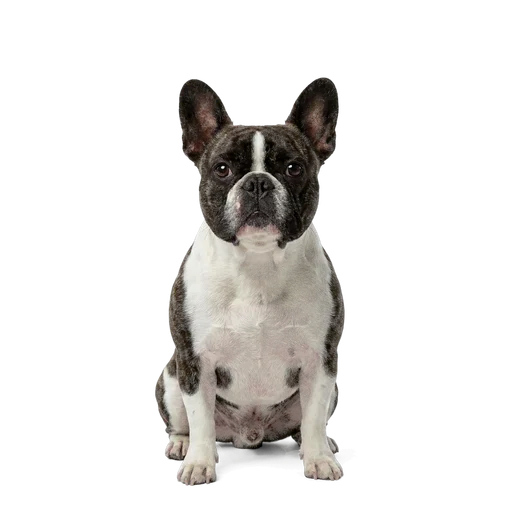
Deciding between similar breeds? Here is the Bichon Frise next to Toy Poodle and French Bulldog.
| Bichon Frise | Toy Poodle | French Bulldog | |
|---|---|---|---|
| Size | Small | Small | Small |
| Weight | 5-8 kg | 2-4 kg | 8-14 kg |
| Lifespan | 14-15 yrs | 12-15 yrs | 10-12 yrs |
| Activity | Moderate | Moderate | Calm |
| Shedding | Low | Low | Low |
| Good with kids | Yes | Yes | Yes |
| Apartment-friendly | Yes | Yes | Yes |
Frequently asked questions
Are Bichon Frises really hypoallergenic?
They are about as close as a dog gets. The curly double coat sheds very little and traps loose hair and dander, so many allergy sufferers tolerate them well. No dog is guaranteed allergen-free, so spend time with one before committing.
Are Bichons good for first-time owners?
Yes. They are friendly, adaptable, and eager to please, which makes training pleasant. The one thing beginners must be ready for is the serious grooming commitment and the breed's tendency toward skin allergies.
How much grooming does a Bichon need?
A lot. Daily brushing down to the skin to prevent matting, plus professional clipping every 4 to 6 weeks. Their low-shedding coat is easy on your furniture but demanding on your schedule.
Do Bichon Frises have many health problems?
Skin allergies (atopic dermatitis) are common and often lifelong. Other watch points include patellar luxation, bladder stones, Legg-Calve-Perthes disease, autoimmune haemolytic anemia, and tear staining, and like many small breeds they can occasionally develop dental disease. Buying from a health-testing breeder lowers the odds.
Can Bichons be left alone during the day?
Not for long stretches. They form strong attachments and are prone to separation anxiety. Gradual training to be alone, plenty of enrichment, and ideally shorter absences help prevent stress and destructive behavior.
Related breeds

Health and care information is drawn from established veterinary sources and is general guidance, not veterinary advice. See our sources
Keep records for your Bichon Frise
Vaccinations, food and treat safety, allergy alerts and parasite reminders - all tracked for your Bichon Frise in the Pethls app.