

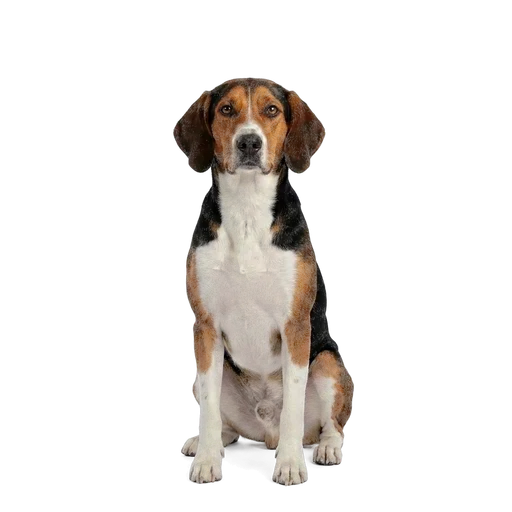
Origin: United Kingdom
Harrier
Get reminders for your Harrier's vaccines
Vaccination and parasite reminders, food-safety scans and health records — free to start in the Pethls app.


Good for
The Harrier is a British pack hound that sits neatly between the Beagle and the English Foxhound in size, which is why hound people affectionately call it a Beagle on steroids. Weighing 20 to 27 kg and built for hunting hare over miles of open country, the Harrier is cheerful, outgoing, and genuinely fond of both people and other dogs. It is rare as a house pet, and honestly, that rarity filters out casual buyers: this is a driven scent hound that needs serious daily exercise, a secure yard, and a family that can live with a musical voice. Do that, and you get a hardy, good-humored companion for 12 to 15 years.
Temperament & personality
Centuries of pack hunting shaped everything likable about the Harrier. Dogs that lived, traveled, and hunted in groups had no room for quarrelsomeness, so the modern Harrier is one of the most reliably dog-friendly breeds you can find, and that sociability extends warmly to people and children. Expect a happy, waggy, slightly clownish housemate who wants in on every family activity and greets your guests like long-lost packmates.
The same heritage brings the challenges. A Harrier's nose runs the show, and once it locks onto a scent trail, your voice becomes background static. Off-leash freedom is only safe in securely fenced areas, and the fence needs auditing: Harriers dig, and athletic ones climb. Plan on a genuine ninety minutes to two hours of daily exercise. Long runs, hikes, bikejoring, and scent sports like tracking or nose work suit them far better than a stroll around the block.
Then there is the voice. Harriers were bred to bay so the huntsman could follow the pack by ear across a valley, and they still announce trails, squirrels, boredom, and general enthusiasm with a carrying hound song. Close-packed housing and Harriers rarely mix. Training-wise they are clever but independent, food-motivated, and mildly amused by commands that offer nothing in return, so keep sessions short, rewarding, and slightly competitive. An under-exercised Harrier redirects all that drive into digging, baying, and creative escape work.
Vaccination schedule
Harrier puppies follow the standard core protocol. DHPP, the combination vaccine against distemper, hepatitis, parvovirus, and parainfluenza, starts at six to eight weeks and repeats every three to four weeks until at least sixteen weeks of age. Do not shortcut the series; a single dose is not protective on its own, because antibodies from the mother can block early vaccines unpredictably.
Rabies is given once at twelve to sixteen weeks according to local law, boosted a year later, then maintained on a one-year or three-year cycle depending on the product and your region. If you ever cross a border with your dog, keep proof of rabies vaccination with the pet travel paperwork. As a separate point on sourcing: this is a rare breed, so a puppy often comes from a distant breeder and travels some distance to reach its new home.
Given the Harrier's lifestyle, non-core vaccines earn their keep. A hound that hikes, swims, and pushes through hedgerows has real exposure to leptospirosis from wildlife urine and standing water, and one that joins group runs, daycare, or hound meets benefits from Bordetella and canine influenza cover. Talk lifestyle honestly with your vet and set reminders for each booster so none slip.
Best food & diet
Harriers are classic hound eaters: fast, enthusiastic, and utterly without an off switch. Pack hounds that hesitated at the trough went hungry, and the instinct survives intact in the family pet. Feed two measured meals a day of a quality diet for active medium breeds, and measure means with a scale or a proper cup, not a scoop of whatever fits. Free feeding a Harrier is a straight road to obesity, which is one of the breed's few real health threats.
A hard-exercised Harrier doing two hours of daily running needs performance-level calories, while the same dog in a quieter month needs a third less, so adjust portions to workload and body condition rather than habit. You should feel ribs easily under a thin fat layer and see a clear tuck at the waist. Extra weight on a hound built for endurance running loads the hips and shortens the active years.
Counter-surfing and bin-raiding are breed sports, so manage the environment: lidded bins, closed doors, food pushed back from counter edges. Count training treats against the ration, and use part of the daily kibble in food puzzles or scattered in the grass for scent-driven snuffling, which entertains the nose and slows the eating. Fresh water always, especially after long runs in warm weather.
Common health problems
The Harrier is a genuinely hardy breed. Generations of pack breeding selected for soundness, stamina, and easy keeping, and the breed's rarity has largely spared it the fad-driven breeding that damages popular dogs. Most Harriers live active lives well into their teens with little more than routine care. Still, three issues deserve an owner's attention.
Hip dysplasia is the main heritable concern. The hip socket forms too shallow, the joint wears loose, and arthritis follows, showing as stiffness after rest, a swaying gait, or reluctance to jump into the car. Buy from a breeder who provides hip scores on both parents, keep the dog lean lifelong, and build muscle with steady exercise. Mild cases are managed with weight control and joint support; severe cases have surgical options.
Otitis externa, plain ear infection, comes with the territory of drop ears that trap warmth and moisture over the canal. Head shaking, ear scratching, a sour smell, or brown discharge mean a vet visit, because untreated infections become chronic and painful. Weekly ear checks and drying the ears after swims prevent most episodes. The third problem is obesity, and it is entirely under the owner's control: a hound bred to run twenty miles behind hare who instead gets two short leash walks and an open feed bowl will balloon, and the weight drags every joint and organ down with it.
Allergies & skin
The Harrier's short, dense coat rarely causes trouble on its own, and the breed has no notable predisposition to skin disease. When itching appears, work through the standard list. Flea allergy dermatitis is first: hounds that push through undergrowth collect fleas efficiently, and a sensitized dog will chew its rump raw over a single bite. Rigorous year-round flea control removes the most common cause of hound itch outright.
Environmental allergies show up in some individuals as paw licking, face rubbing, recurring ear inflammation, and belly rashes, often seasonal in the early years. Since ear trouble is already the breed's weak point, an allergic Harrier tends to announce the problem through its ears first, with infections that keep returning despite good cleaning. Repeated otitis is a reason to investigate allergy, not just refill ear drops.
Outdoor life brings mechanical skin problems too: grass-seed foreign bodies between the toes and inside ears in summer, scrapes from brambles, and the occasional tick bite reaction. A quick nose-to-tail check after country runs catches most of it early. The Harrier is not hypoallergenic; it sheds moderately year-round and produces normal dander, so allergic households should meet adult hounds before committing.
Flea, tick & worm prevention
Few pet breeds match a Harrier's parasite exposure. This is a dog that follows scent through bracken, hedgerows, and rough pasture, exactly where ticks quest and fleas wait. Year-round prevention is essential, either monthly spot-ons, oral chews lasting one to three months, or a long-duration collar. In tick-heavy regions, an oral isoxazoline product plus a post-walk tick check is a strong combination, and the short coat makes the check quick: run hands over ears, neck, armpits, groin, and between the toes.
Worming needs equal discipline because Harriers scavenge and hunt. Carrion, rabbit droppings, and the occasional caught rodent are all worm superhighways. Puppies get dewormed every two weeks from two weeks of age until twelve weeks, then monthly until six months. For adults with this breed's habits, worming every three months is the sensible baseline, with tapeworm cover included given the hunting instinct. Households with children should hold that schedule firmly since roundworms are transmissible to people.
In heartworm regions, monthly prevention after a negative test is mandatory, and combination products can bundle heartworm, gut worms, and flea control into one monthly routine. Lungworm, spread by slugs and snails, is worth flagging to your vet in affected areas of the UK and Europe because outdoor hounds meet plenty of both. Keep a record of every product and due date; a missed month is exactly when exposure meets vulnerability.
Medications & dosing
All routine and prescription medication for a Harrier should be dosed to current body weight and directed by a vet. At 20 to 27 kg, the breed sits near the top of many products' medium-dog bands, and a Harrier that gains winter weight can quietly cross into the next bracket, leaving its usual flea or worming dose short. Weigh the dog every few months and keep an up-to-date figure so prescriptions and preventives are calculated from fact rather than memory.
Never medicate a dog from the human cabinet. Ibuprofen, naproxen, and paracetamol are dangerous to dogs at small doses, and a food-obsessed hound is a genuine risk for eating dropped pills, so store all medication, human and canine, out of reach of a determined counter-surfer. Chocolate, grapes, and xylitol gum deserve the same treatment; Harrier appetite is indiscriminate.
For ear infections, use the specific drops your vet prescribes for the specific infection; leftover drops from last time may target the wrong organism and breed resistance. Finish every antibiotic course even when symptoms vanish early. Older Harriers on long-term arthritis medication need blood work once or twice a year to monitor liver and kidney function, and any lameness lasting more than a day or two is worth an exam rather than a wait-and-see week.
Grooming & coat care
Grooming a Harrier takes minutes, not appointments. The short, hard coat needs a weekly rubdown with a hound glove or rubber curry brush to lift dead hair and spread skin oils, giving that healthy pack-hound shine. Shedding is moderate year-round with a modest uptick in spring and autumn; a second weekly session during those weeks keeps the sofa acceptable. No trimming, no stripping, no groomer's bill.
Ears are the real grooming job in this breed. Check them weekly and after every swim: the flap should be clean, pale pink, and nearly odorless inside. Clean with a vet-approved ear cleaner only when you see wax, never with cotton buds pushed into the canal, and dry the ears after swimming or baths. Catching redness or smell early keeps otitis externa from becoming a chronic, expensive problem.
Round out the routine with nails every three to four weeks, though hounds doing serious road and trail mileage wear them down naturally, and check the dewclaws regardless. Brush teeth several times a week. Bathe only when the roll-in-something-dead instinct wins, which it periodically will, using a mild dog shampoo. Grooming time doubles as a health scan: run hands over the whole dog for ticks, grass seeds between the toes, lumps, and sore spots after every big country outing.
How the Harrier compares
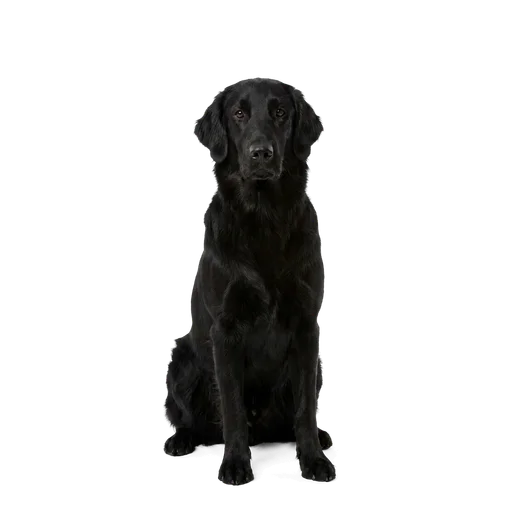
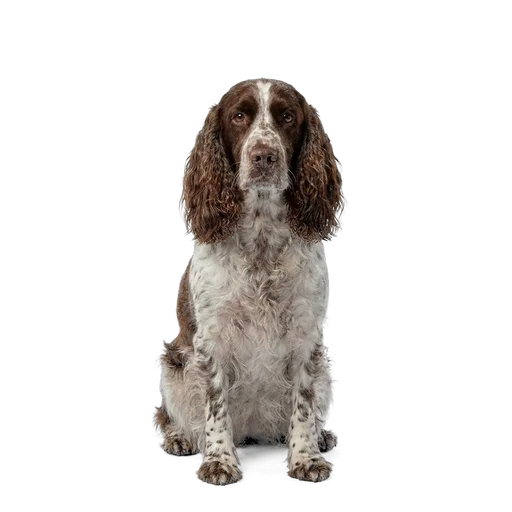
Deciding between similar breeds? Here is the Harrier next to Flat-Coated Retriever and English Springer Spaniel.
| Harrier | Flat-Coated Retriever | English Springer Spaniel | |
|---|---|---|---|
| Size | Medium | Large | Medium |
| Weight | 20-27 kg | 25-36 kg | 18-25 kg |
| Lifespan | 12-15 yrs | 8-10 yrs | 12-14 yrs |
| Activity | Active | Active | Active |
| Shedding | Medium | Medium | Medium |
| Good with kids | Yes | Yes | Yes |
| Apartment-friendly | No | No | No |
Frequently asked questions
Is a Harrier a good family pet?
For an active family, yes. Harriers are cheerful, sturdy, patient with children, and famously good with other dogs thanks to their pack heritage. The trade-offs are real: they need ninety minutes to two hours of daily exercise, a securely fenced yard, and tolerance for a loud hound voice. They are rare as house pets, so expect a search and possibly a waiting list for a puppy.
How is a Harrier different from a Beagle?
Size and stamina, mostly. The Harrier stands taller and heavier, typically 20 to 27 kg against a Beagle's 9 to 14 kg, and it was bred to run down hare over longer distances at greater speed. Temperament is similar: merry, scent-obsessed, food-driven, and sociable. Think of the Harrier as a Beagle scaled up in both body and exercise requirement.
Can Harriers be let off the leash?
Only in securely enclosed areas. A Harrier that catches a hot scent will follow it over the horizon regardless of recall training, because centuries of breeding tell it that finishing the trail is the whole point. Use long lines for open-country walks, invest heavily in recall anyway, and audit fences for digging and climbing routes.
Do Harriers bark a lot?
They bay, which is louder and carries farther. Harriers were bred to give voice on a trail so hunters could follow the pack by sound, and pets still sing about squirrels, visitors, and boredom. Exercise and mental work reduce nuisance noise substantially, but a Harrier in an apartment or a terraced house with sensitive neighbors is asking for trouble.
Are Harriers healthy dogs?
Notably so. Pack breeding selected for soundness and stamina, and the breed has escaped the exaggerations that plague popular dogs. The main things to watch are hip dysplasia, so buy from hip-scored parents, ear infections from those drop ears, and obesity in under-exercised pets. With lean weight and real exercise, 12 to 15 active years is a fair expectation.
Related breeds
Health and care information is drawn from established veterinary sources and is general guidance, not veterinary advice. See our sources
Keep records for your Harrier
Vaccinations, food and treat safety, allergy alerts and parasite reminders - all tracked for your Harrier in the Pethls app.