

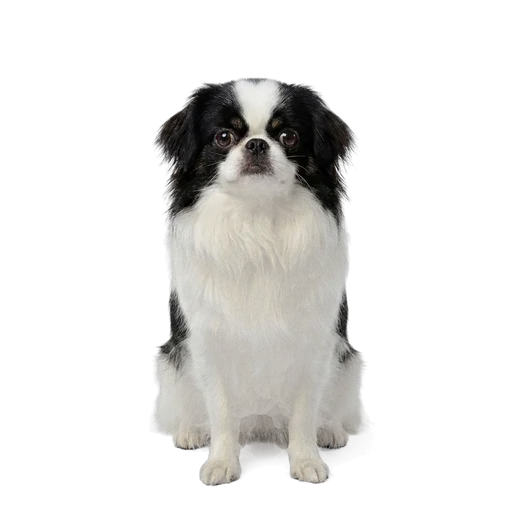
Origin: Japan
Japanese Chin
Get reminders for your Japanese Chin's vaccines
Vaccination and parasite reminders, food-safety scans and health records — free to start in the Pethls app.


Good for
The Japanese Chin is an elegant toy breed with an unmistakably aristocratic air, long favored by Japanese nobility as a companion rather than a worker. At 3 to 6 kg and 10 to 12 years of lifespan, it is a small dog with big, wide-set eyes and a plumed tail carried over the back. What surprises most people is how cat-like it behaves: it grooms itself with a paw, seeks out high perches, and studies a room before deciding how to act. Sensitive, quiet, and deeply affectionate, the Chin suits calm households and apartment living. It is a gentle dog that mirrors the mood of its people.
Temperament & personality
The Japanese Chin is often described as the most cat-like of dogs, and the comparison fits. Chins wash their faces with their paws, climb to the back of the sofa or a windowsill to survey their domain, and pick their moments rather than rushing in. They are quiet by toy-breed standards and rarely nuisance barkers.
Affection is the heart of the breed. A Chin bonds intensely with its household and is happiest curled against a person, but it tends to be reserved with strangers rather than pushy. This sensitivity cuts both ways: Chins pick up on tension and thrive in a peaceful home, while chaos or rough handling unsettles them. They generally get along with other pets, including cats.
Training works best when it feels like a game and never a battle. Chins are intelligent and observant but have an independent, sometimes stubborn streak, so patient, gentle, reward-based sessions win the day. Because they are delicate and sensitive, they are better suited to homes with adults or considerate older children than to boisterous young kids.
Vaccination schedule
Chin puppies follow the standard canine schedule, starting core vaccines at 6 to 8 weeks and boosting every 3 to 4 weeks until roughly 16 weeks old. The DHPP combination protects against distemper, hepatitis (adenovirus), parvovirus, and parainfluenza; the first three are the true core, and parainfluenza is bundled in. Vaccine doses are not scaled to body weight, so a tiny Chin gets the same amount as a large dog; the vet simply handles it carefully.
Rabies is given once between 12 and 16 weeks, boosted at one year, then repeated every 1 to 3 years according to local law.
For non-core vaccines, think about your Chin's lifestyle. Dogs that visit groomers or boarding facilities benefit from Bordetella and canine influenza protection against kennel cough. Leptospirosis may be recommended in some areas. Because the breed is brachycephalic and can have a delicate airway, keep the dog calm and cool at vet visits, and mention any breathing concerns before sedation for any procedure.
Best food & diet
A complete small- or toy-breed formula suits the Japanese Chin well. Small kibble is easier for a short, flat-faced muzzle to pick up. Choose a food with a named meat protein first and one that meets AAFCO or FEDIAF standards for your dog's life stage.
Weight control matters enormously here. Extra kilos worsen breathing in a flat-faced dog and put more load on the heart, so keep your Chin lean. At 3 to 6 kg the daily ration is small, and treats add up fast, so weigh meals, feed twice a day, and keep snacks to a minimum.
Because the muzzle is short, some Chins gulp air while eating and can be a little messy. A shallow bowl and unhurried mealtimes help. Toy puppies need frequent small meals to avoid low blood sugar (hypoglycemia), so feed young Chins three to four times a day until they are grown, and always keep fresh water available.
Common health problems
The Japanese Chin's flat face brings brachycephalic obstructive airway syndrome, a group of breathing problems caused by narrowed nostrils and soft tissue at the back of the throat. Signs range from noisy breathing and snoring to real distress in heat or during exertion. Keep a Chin cool, avoid strenuous exercise in warm weather, and see a vet if breathing sounds labored; severe cases can be helped surgically.
Two orthopedic and cardiac issues appear regularly. Patellar luxation, a slipping kneecap, causes a skipping gait and ranges from mild to surgical. Heart murmurs, often from mitral valve disease, are picked up on exam and should be monitored with the vet over time.
The most serious concern is GM2 gangliosidosis, a fatal inherited storage disease that affects the nervous system of affected puppies. A DNA test identifies carriers, so responsible breeders screen their stock and avoid pairing two carriers. Ask any breeder for proof of testing. Finally, the Chin's large, prominent eyes sit exposed and are prone to corneal scratches and ulcers, so protect them and treat any squinting, tearing, or cloudiness promptly.
Allergies & skin
Japanese Chins may develop the same allergies as other breeds. Environmental allergies to pollen, dust mites, and mold (atopy) tend to show up as itching, paw licking, face rubbing, and recurrent ear infections. Flea allergy dermatitis, triggered by flea bites, is another frequent cause of sudden intense itching.
The Chin is flat-faced but not a heavily wrinkled breed, so it lacks the deep muzzle folds of a Pug or French Bulldog. Its real facial-care concern is the area around those large, prominent eyes, where tears collect and stain the coat. Wipe that area gently and keep it dry to prevent irritation and skin-fold dermatitis where the short muzzle creases the skin.
Food allergies are less common but possible, usually appearing as year-round itching or digestive upset; an elimination diet supervised by your vet is the way to confirm one. Any persistent scratching, odor, or red skin is a reason to book a check rather than wait, since a Chin's coat can hide a developing problem.
Flea, tick & worm prevention
Keep a Japanese Chin on year-round flea and tick prevention, matched precisely to its weight. At 3 to 6 kg the dog sits in the smallest weight bands for most products, so buy the preventive that fits its current weight rather than splitting a larger dose.
You can choose monthly chewables, topical spot-ons, or long-acting collars. Some products combine flea, tick, heartworm, and intestinal worm cover in a single dose, which simplifies the routine. Your vet can recommend the best fit for your local parasite risk.
Worming runs on its own timetable. Puppies are dewormed every two weeks from about 2 weeks until 12 weeks, then monthly to 6 months of age. Adult Chins are typically wormed every three months, more often if they scavenge or live with young children. Where heartworm is present, keep prevention going all year without gaps.
Medications & dosing
Medication for a Japanese Chin is always weight-based, and at just a few kilos the margin for error is small. Weigh your dog before any dose is worked out, and let your vet calculate it rather than estimating from a chart meant for bigger dogs.
Sedation and anesthesia need special care in this breed. Because the Chin is brachycephalic, its airway is more easily compromised, so a vet experienced with flat-faced breeds will plan the sedation carefully and monitor recovery closely.
Never reach for human painkillers. Ibuprofen and paracetamol (acetaminophen) are toxic to dogs, and the small body of a Chin makes even a low dose dangerous. If your dog needs pain relief or any other medicine, use only what your vet prescribes, finish the course, and report vomiting, lethargy, or appetite loss straight away.
Grooming & coat care
The Japanese Chin carries a single, long, silky coat that is surprisingly easy to maintain for its length. Shedding is moderate, and the coat does not mat as readily as some longhaired breeds. A thorough brush and comb two or three times a week keeps it silky and tangle-free, with extra attention behind the ears, on the feathered legs, and around the plumed tail.
Chins famously groom themselves like cats, which helps keep them tidy between brushings, but they still need human help. Bathe as needed and dry the coat fully. The facial folds and the area under those big eyes should be wiped clean regularly to prevent staining and irritation.
This is not a hypoallergenic breed; the Chin sheds and produces the usual dander, so it is not the best choice for allergy sufferers. Round out care with weekly ear checks, regular nail trims, and tooth brushing, since dental disease is common in toy breeds and the flat face can crowd the teeth.
How the Japanese Chin compares
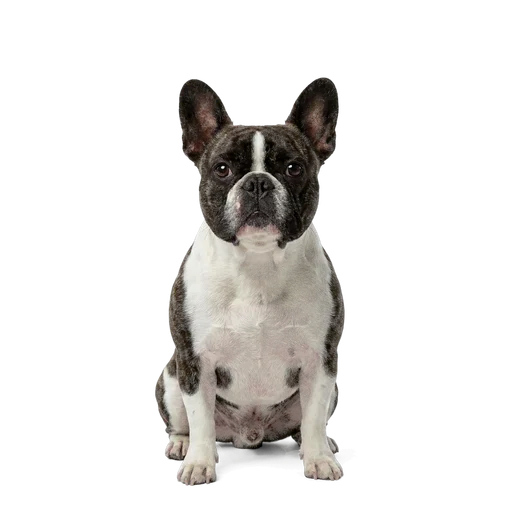
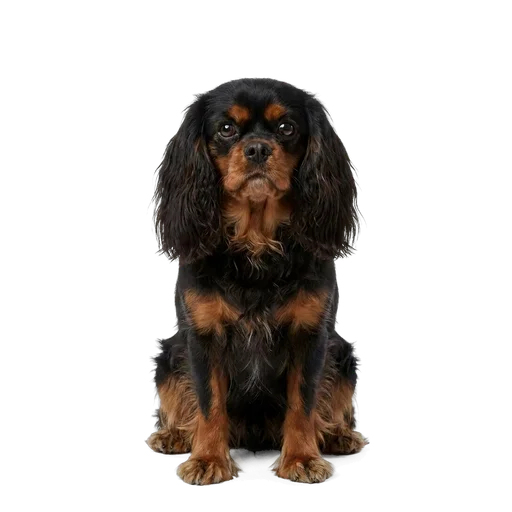
Deciding between similar breeds? Here is the Japanese Chin next to French Bulldog and English Toy Spaniel.
| Japanese Chin | French Bulldog | English Toy Spaniel | |
|---|---|---|---|
| Size | Small | Small | Small |
| Weight | 3-6 kg | 8-14 kg | 4-6 kg |
| Lifespan | 10-12 yrs | 10-12 yrs | 10-12 yrs |
| Activity | Calm | Calm | Calm |
| Shedding | Medium | Low | Medium |
| Good with kids | Yes | Yes | Yes |
| Apartment-friendly | Yes | Yes | Yes |
Frequently asked questions
Are Japanese Chins really cat-like?
Yes, and it is one of the breed's charms. Chins wash their faces with a paw, climb to high perches to watch the room, and behave with a quiet, self-possessed independence. They still crave human affection, but they express it in a calmer, more reserved way than most toy dogs.
Do Japanese Chins have breathing problems?
They can. The Chin is brachycephalic, meaning its flat face and short muzzle can cause brachycephalic airway syndrome, with snoring, noisy breathing, and heat sensitivity. Keep your Chin cool, avoid hard exercise in warm weather, and see a vet if breathing ever sounds labored.
Are Japanese Chins good apartment dogs?
Very much so. They are quiet, low-energy, and content with short walks and indoor play, which suits apartment life well. Their main need is companionship and a calm environment, since they are sensitive dogs that mirror the mood of the home.
Is the Japanese Chin hypoallergenic?
No. Despite the long silky coat, the Chin sheds a moderate amount and produces normal dander, so it is not a good match for allergy sufferers. If allergies are a concern, spend time with the breed before deciding.
How long do Japanese Chins live?
A Japanese Chin typically lives 10 to 12 years. Keeping the dog lean, protecting its prominent eyes, monitoring the heart, and choosing a breeder who DNA-tests for GM2 gangliosidosis all support a full, healthy life.
Related breeds
Health and care information is drawn from established veterinary sources and is general guidance, not veterinary advice. See our sources
Keep records for your Japanese Chin
Vaccinations, food and treat safety, allergy alerts and parasite reminders - all tracked for your Japanese Chin in the Pethls app.