

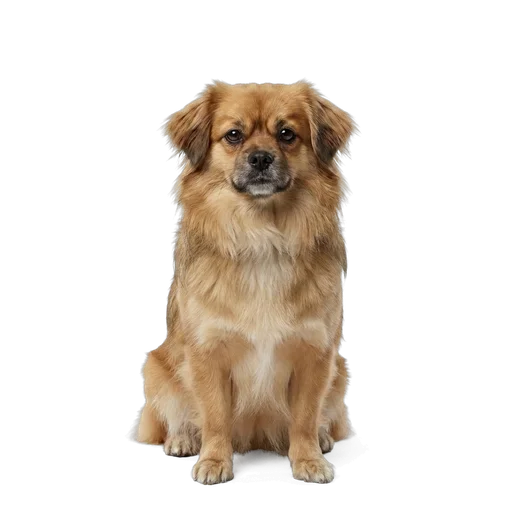
Origin: Tibet
Tibetan Spaniel
Get reminders for your Tibetan Spaniel's vaccines
Vaccination and parasite reminders, food-safety scans and health records — free to start in the Pethls app.


Good for
The Tibetan Spaniel is an ancient companion and watchdog from the Himalayan monasteries, and despite the name it is not a spaniel at all. Monks valued these 4 to 7 kg dogs for keeping watch from the monastery walls and barking word of approaching strangers down to the mastiffs below. The modern Tibbie keeps that job description: affectionate and playful with its own people, reserved with strangers, and forever climbing to the back of the sofa or a windowsill to survey its territory. Owners routinely describe the breed as cat-like, and they mean it as a compliment. Expect an independent-minded, sweet-natured little dog with a lifespan of 12 to 15 years.
Temperament & personality
Centuries as a monastery sentinel shaped a distinctive character. A Tibbie is genuinely devoted to its family, happiest leaning against someone on the sofa or supervising the household from a high vantage point, yet it keeps a streak of independence that surprises people expecting a needy lapdog. It will come for affection when it chooses, watch you thoughtfully from across the room the rest of the time, and often use its front paws almost like a cat, patting at toys and faces.
With strangers the breed is naturally aloof. A well-socialized Tibetan Spaniel is polite but unimpressed by visitors, warming up on its own timetable, and it will reliably announce anyone approaching the door. This is alarm barking with purpose rather than yappiness, but in a flat it still needs channelling early: teach a quiet cue and reward settling once the announcement is made.
Tibbies generally do well with respectful children and are among the more sociable small breeds with other dogs and cats, having lived communally around the monasteries rather than hunting anything. Training works when it feels like the dog's own idea. Harsh corrections shut them down, repetition bores them, and recall is famously selective, so food, games and a securely fenced garden serve you better than force. One practical warning: they climb. A Tibbie on top of the garden wall, calmly surveying the street, is a breed tradition you may not want continued.
Vaccination schedule
Tibetan Spaniel puppies follow the standard core protocol: a DHPP series against distemper, hepatitis (adenovirus), parvovirus and parainfluenza, starting at six to eight weeks of age and repeated every three to four weeks until at least sixteen weeks. Finish the full course even if the puppy seems perfectly healthy, because early doses can be neutralized by antibodies from the mother and only the later injections reliably take effect once maternal antibodies have waned. Rabies vaccination is given from twelve weeks where law or travel plans require it.
The one-year booster locks in puppy immunity. From there, most adults receive DHPP every three years, leptospirosis annually, and kennel cough vaccine if they board, attend daycare or mix widely. Your vet will tailor the plan to local disease risk, which matters more than any generic schedule.
Because Tibbies are long-lived, their vaccine history spans well over a decade and often more than one veterinary practice. Keeping the record in a health log means every booster date, batch and reaction note stays in one place from puppyhood through the senior years.
Best food & diet
A Tibetan Spaniel spans a fairly wide range for a small dog, roughly 4 to 7 kg, so feed the dog in front of you rather than the chart on the bag. Most adults need somewhere between 250 and 450 kcal a day depending on size and activity. Choose a complete small-breed food with a named meat first on the ingredient list and split it into two daily meals. Puppies do better on three to four small meals of a small-breed puppy formula until around ten to twelve months.
This is a breed that expends its energy in bursts of play and patrol rather than long route marches, and food-motivated individuals gain weight easily. Extra kilos on a Tibbie load the kneecaps, which matters in a breed prone to patellar luxation, and blur the naturally neat outline. Run your hands over the ribs monthly; you should feel them easily under a thin layer.
One medical exception overrides everything above: a Tibbie diagnosed with a portosystemic liver shunt needs a specific protein-modified diet prescribed by a vet, and this is not something to improvise at home. For healthy dogs, no special diet is required, though a smaller kibble size is generally easier for a little dog to pick up and chew.
Common health problems
Progressive retinal atrophy (PRA) is the breed's best-known inherited condition. The light-sensing cells of the retina degenerate slowly, usually starting with night blindness in early middle age and progressing over years to full vision loss. There is no treatment, but the disease is painless and blind Tibbies adapt astonishingly well in a stable home. A DNA test (PRA3) identifies affected and carrier dogs, so ask breeders for both parents' results. Early night blindness often shows as a dog that hangs back or bumps around in dim light, so it is worth having any such change checked.
Patellar luxation, a kneecap slipping out of its groove, is common across small breeds and the Tibbie is no exception. Watch for the characteristic skip: a few strides on three legs, then back to normal. Mild grades need only weight control and muscle-maintaining exercise; higher grades may need surgery. Cherry eye, a prolapse of the tear gland of the third eyelid, appears as a red, fleshy lump at the inner corner of the eye, usually in young dogs. It looks alarming but is fixable, and the gland should be surgically tucked back rather than removed, since removal risks dry eye for life.
Portosystemic shunt is the most serious condition on the list, though far rarer. An abnormal blood vessel bypasses the liver, so toxins normally filtered out reach the brain, and affected puppies are often the smallest of the litter, slow to grow, and strangely dull or wobbly, classically an hour or two after meals. Diagnosis needs blood tests and imaging, and treatment ranges from a special diet and medication to surgical closure of the vessel. Caught early, many dogs do well. Any unusually small, spacey Tibbie puppy deserves a bile acid test rather than a wait-and-see approach.
Allergies & skin
The Tibetan Spaniel wears a silky double coat and sheds moderately year-round, with a heavier undercoat blow-out in spring and sometimes again in autumn, so this is not a breed for allergy-sensitive households. Anyone with dog allergies should assume a Tibbie will trigger them and test the theory in person before falling for a puppy.
The dogs themselves have reasonably trouble-free skin by small-breed standards, but the usual suspects still apply. Flea allergy dermatitis causes intense itching and scabby hair loss over the rump from even a single bite, and the dense undercoat gives fleas excellent cover, so year-round prevention doubles as skin care. Environmental allergy (atopy) shows up as paw licking, face rubbing and recurring ear or skin infections, typically starting between one and three years of age.
Two breed-flavored notes. The slightly short muzzle in some individuals is worth keeping clean with an occasional wipe and dry. And prominent eyes plus a love of high perches and hedge-diving means eye irritation is worth taking seriously: squinting, pawing at an eye or sudden redness should see a vet promptly rather than waiting out the weekend.
Flea, tick & worm prevention
Year-round parasite prevention suits the Tibbie's lifestyle: a dense undercoat that hides fleas, garden patrols that meet ticks, and a curious nose in everything. Use a vet-recommended flea and tick product monthly or per label, and match the product band to the dog's actual, weighed weight. The breed's 4 to 7 kg spread sometimes straddles two weight bands, so weigh the dog before buying rather than assuming: too little product may not clear the parasites, while too much risks toxicity in a dog this size. If there are cats in the house, avoid permethrin spot-ons for the dog or apply with strict separation, because permethrin is lethal to cats.
Ticks hide well in a double coat, so run your fingers against the lie of the hair after walks in long grass, checking ears, neck folds, armpits and between the toes. Remove ticks with a twisting tick hook and note the date; a fever or lameness in the following weeks is worth mentioning to your vet.
Worm adults routinely, typically every three months, with a broad product covering roundworms and tapeworms, and ask your vet whether lungworm cover is needed in your area, since slugs and snails in an average garden are enough exposure. Puppies need worming every two weeks until twelve weeks old, then monthly until six months. A reminder in a health log for each due date keeps a twelve-plus-year prevention record from developing gaps.
Medications & dosing
Everything a vet prescribes for a Tibetan Spaniel is dosed by body weight, and the breed's own range proves the point: a correct dose for a 7 kg Tibbie can be close to double the dose for a 4 kg one. Never dose from memory or from another dog's prescription, keep the current weight logged in a health log, and ask the practice to reweigh at every visit; small dogs drift in weight more than owners notice.
Keep human medication locked away. Ibuprofen, paracetamol, decongestants and nicotine products are all dangerous to a dog this size in quantities as small as a single tablet or piece of gum, and xylitol-sweetened products can cause fatal drops in blood sugar. If a Tibbie swallows something it should not have, call a vet or animal poison line straight away with the packaging in hand. Do not wait for symptoms.
The breed-specific caution concerns the liver. Because portosystemic shunts occur in Tibetan Spaniels, a dog with a known or suspected shunt handles many drugs poorly, including some sedatives and anaesthetics that rely on liver metabolism. Make sure any shunt diagnosis, or even a past borderline bile acid result, is flagged prominently in the dog's record before every procedure and prescription.
Grooming & coat care
For a glamorous-looking breed, the Tibbie is refreshingly practical to maintain. The silky double coat lies flat, resists matting better than most long coats, and needs a thorough brush and comb-through two or three times a week rather than daily labour. Concentrate on the friction points: the mane over the neck and chest, the ear feathering, the trousers and the plumed tail. A slicker brush plus a metal comb reaches through to the undercoat, which is where the actual work happens.
Shedding is steady and moderate through the year, then ramps up seasonally when the undercoat lets go, typically in spring and sometimes again in autumn. During those weeks, brushing every day or two with an undercoat rake keeps drifts of pale fluff off the furniture. Never clip a Tibbie's coat short for summer; the double coat insulates against heat as well as cold, and shaving can damage regrowth. Bathe every four to eight weeks or when the dog has found something disgusting, and dry the undercoat properly afterwards.
The rest of the routine is standard small-dog housekeeping: nails every three to four weeks, ears checked weekly, a wipe and dry for the face, and daily tooth brushing, since small mouths crowd teeth and dental disease is the most common problem vets find in the breed's senior years. Handled from puppyhood with patience and snacks, most Tibbies come to treat grooming as one more chance to be admired.
How the Tibetan Spaniel compares
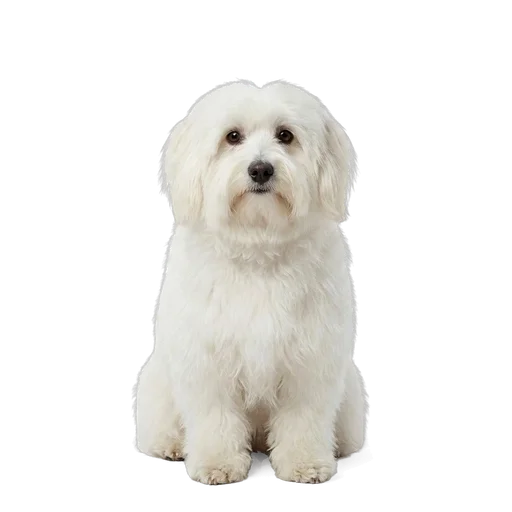
Deciding between similar breeds? Here is the Tibetan Spaniel next to Lhasa Apso and Coton de Tulear.
| Tibetan Spaniel | Lhasa Apso | Coton de Tulear | |
|---|---|---|---|
| Size | Small | Small | Small |
| Weight | 4-7 kg | 6-8 kg | 4-7 kg |
| Lifespan | 12-15 yrs | 12-15 yrs | 15-19 yrs |
| Activity | Moderate | Moderate | Moderate |
| Shedding | Medium | Low | Low |
| Good with kids | Yes | Yes | Yes |
| Apartment-friendly | Yes | Yes | Yes |
Frequently asked questions
Is a Tibetan Spaniel actually a spaniel?
No. The name stuck from early Western fanciers, but the breed has no hunting spaniel ancestry. It developed over centuries in Tibetan monasteries as a companion and watchdog, keeping lookout from the walls and alerting the larger mastiffs below, and it is more closely related to other Tibetan and Asian companion breeds like the Lhasa Apso and Pekingese.
Are Tibetan Spaniels good apartment dogs?
Very good ones. They are small, clean, moderate in energy and content to spend much of the day perched somewhere high watching the world. The two things to manage are alarm barking, which needs early training if you share walls, and a daily walk plus play, because a bored Tibbie invents its own projects.
Do Tibetan Spaniels shed a lot?
Moderately. Expect steady light shedding year-round from the silky double coat and a heavier undercoat drop in spring and sometimes again in autumn. Brushing two or three times a week, stepped up to daily during seasonal molts, keeps it well controlled. The breed is not hypoallergenic.
What health problems affect Tibetan Spaniels?
The main breed concerns are progressive retinal atrophy, which causes gradual vision loss and can be screened for with a DNA test, slipping kneecaps (patellar luxation), cherry eye in young dogs, and rarely a portosystemic liver shunt in puppies. It is otherwise a robust breed that commonly lives 12 to 15 years.
Are Tibetan Spaniels easy to train?
They are clever but independent, so it depends what you mean by easy. They learn quickly when training is short, rewarding and feels like their idea, and they house-train well. Blind obedience is not in the job description, and recall around distractions stays unreliable enough that a secure garden and a long line are sensible for life.
Related breeds


Health and care information is drawn from established veterinary sources and is general guidance, not veterinary advice. See our sources
Keep records for your Tibetan Spaniel
Vaccinations, food and treat safety, allergy alerts and parasite reminders - all tracked for your Tibetan Spaniel in the Pethls app.