

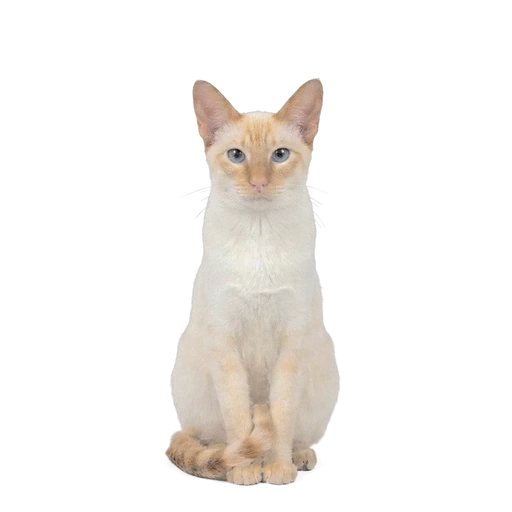
Origin: United States
Colorpoint Shorthair
Get reminders for your Colorpoint Shorthair's vaccines
Vaccination and parasite reminders, food-safety scans and health records — free to start in the Pethls app.


Good for
The Colorpoint Shorthair is, at heart, a Siamese in a broader palette of point colors. Developed in the United States by crossing Siamese with other shorthairs, it keeps the classic wedge head, blue eyes and svelte body while adding points in shades the traditional four never covered. Temperament comes straight from the Siamese side: vocal, clever, affectionate and frankly demanding of your attention. This is a cat that wants to be involved in everything you do and will tell you, loudly, when it feels sidelined. It thrives on company and does poorly with long stretches of solitude, so it fits a home where interaction is part of the daily rhythm.
Temperament & personality
Colorpoint Shorthairs are people-oriented to the core. They bond closely, seek out laps and shoulders, and expect to supervise your every task. Expect a lot of conversation: this is one of the more vocal cat types, with a broad range of calls and a strong sense that they should be answered.
They are highly intelligent and need stimulation. Interactive play, training, puzzle feeders and vertical space keep them content, while boredom tends to surface as noise, mischief or clinginess. Many will learn to fetch and walk on a harness.
Sociable by nature, they usually do well with other cats, friendly dogs and gentle children, in part because they simply want company. The trade-off is their dislike of being alone. A Colorpoint left on its own for long days can become stressed, which is why they suit committed, interactive owners more than those wanting an independent cat.
Vaccination schedule
Kittens begin the core FVRCP vaccine (feline viral rhinotracheitis, calicivirus and panleukopenia) at 6 to 8 weeks, with boosters every 3 to 4 weeks until at least 16 weeks of age. Rabies is given once between 12 and 16 weeks according to local law.
FeLV (feline leukemia) is recommended for any Colorpoint with outdoor access or contact with cats of unknown status, given as a two-dose starter series. The kitten year is the key window for this vaccine even in largely indoor cats.
Expect a booster around one year, then a shift to a 1 to 3 year schedule for core vaccines based on your vet's read of lifestyle and risk. Keep the record updated for boarding, grooming or travel.
Best food & diet
Feed a complete, life-stage food led by named animal protein, in a kitten formula for growth and a maintenance diet for adults. The breed spans roughly 2.5 to 5.5 kg, and its athletic, fine-boned build stays healthiest when kept lean, so measure meals rather than free-pouring.
Wet food or a wet-and-dry mix helps keep the cat hydrated, which is generally sensible for a cat and helps steady water intake. Some are fussy eaters, so settle on a quality food they reliably accept.
Keep fresh water available at all times, and a fountain often encourages a cat that would otherwise drink too little. Change diets gradually over 7 to 10 days to avoid stomach upset.
Common health problems
As a Siamese-derived breed, the Colorpoint Shorthair shares that line's health risks. Feline asthma is notable: it causes coughing, wheezing and sometimes distressed open-mouth breathing, and an acute flare is an emergency that needs prompt veterinary treatment.
Amyloidosis, in which abnormal protein builds up in organs such as the liver and kidneys and gradually impairs them, is another inherited concern in this family. Dental disease is common and benefits from routine home care and professional cleanings.
Progressive retinal atrophy (PRA) is something to stay alert to, as it can slowly reduce vision and may lead to blindness, and you may occasionally see crossed eyes (strabismus), which is cosmetic and rarely causes problems.
Choose a breeder who is open about their lines, arrange a full vet exam within the first week, and keep annual check-ups, moving to twice yearly with age, so airway, organ, dental and eye issues are caught while they are manageable.
Allergies & skin
The Colorpoint Shorthair is not hypoallergenic. Its short, close coat sheds little, which some allergy sufferers find marginally easier, but the cat still produces the Fel d 1 allergen in saliva and dander, so it is no guarantee for a sensitive household.
The tight coat makes the skin easy to inspect. Look for flea allergy dermatitis, which brings itching and scabbing near the tail base and along the back, and keep an eye out for overgrooming, which can signal stress in a breed this reliant on company.
Because feline asthma is a real risk here, reduce airborne irritants at home: avoid smoking indoors, choose low-dust litter, and go easy on sprays and strong scents. This helps the airways and the skin alike. Any lasting itch, redness or bald patch deserves a vet's opinion.
Flea, tick & worm prevention
Only ever use flea and tick products licensed for cats. Dog spot-ons containing permethrin are highly toxic to cats and can cause tremors, seizures and death, so in a home with dogs keep the two products completely separate and apply them apart.
The short coat makes fleas fairly visible, but a monthly vet-recommended preventive plus an occasional flea-comb check is the dependable approach, especially for any cat with outdoor access or outdoor housemates.
Worm on a cat-safe routine: typically every 3 months for an indoor adult and more frequently for hunters and outdoor cats, with a closer schedule for kittens. Let your vet set the product and interval by weight and lifestyle.
Medications & dosing
Every dose is calculated from the cat's current weight, so weigh accurately before giving anything, from a wormer to a prescription, particularly for cats at the lighter end of the range where margins are small.
Never use human painkillers. Paracetamol (acetaminophen) is fatal to cats even in tiny doses, and ibuprofen and aspirin are dangerous without veterinary direction. Cats also handle many drugs differently from dogs, so a scaled-down dog medicine is not safe by default.
For a cat with asthma, management often involves inhaled or oral corticosteroids, sometimes delivered through a feline inhaler and spacer, always under a vet's supervision. Give every course exactly as prescribed, complete antibiotics fully, and confirm there are no interactions before combining medicines.
Grooming & coat care
Grooming is genuinely low effort. The short, close-lying single coat sheds little and almost never mats, so a weekly once-over with a rubber brush or grooming glove is usually enough to lift loose hair and keep the coat sleek.
Many of these cats treat brushing as one more chance for the attention they crave, which makes the routine easy. A soft cloth wipe leaves the short coat with a nice shine.
Do not skip the rest of the basics: trim nails every couple of weeks, check the ears, and brush the teeth several times a week to counter the dental disease common in this line. Regular gentle handling keeps everything simple and gives this sociable cat more of the contact it wants.
How the Colorpoint Shorthair compares
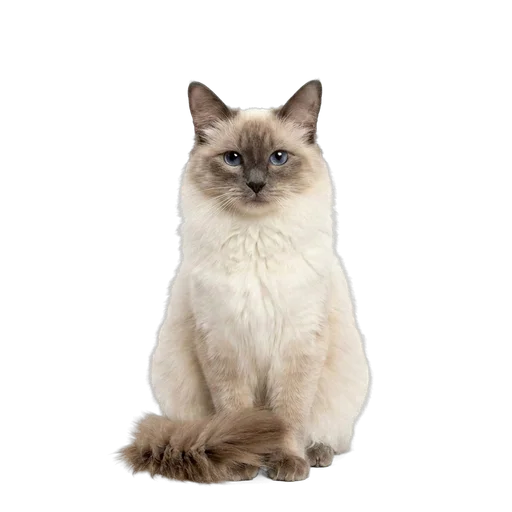
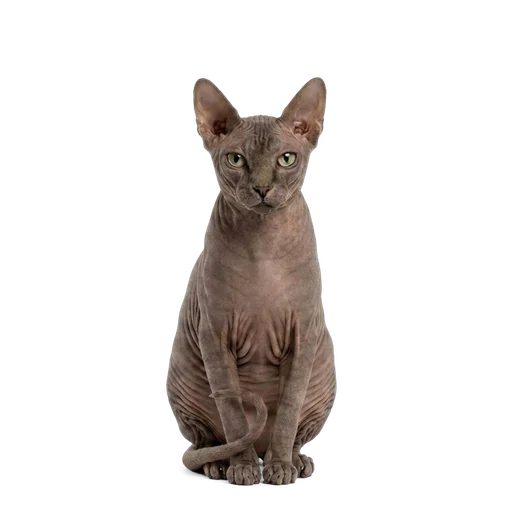
Deciding between similar breeds? Here is the Colorpoint Shorthair next to Balinese and Donskoy.
| Colorpoint Shorthair | Balinese | Donskoy | |
|---|---|---|---|
| Size | Medium | Medium | Medium |
| Weight | 2.5-5.5 kg | 2.5-5 kg | 3.5-7 kg |
| Lifespan | 12-16 yrs | 12-20 yrs | 12-15 yrs |
| Activity | Active | Active | Active |
| Shedding | Low | Low | Low |
| Good with kids | Yes | Yes | Yes |
| Apartment-friendly | Yes | Yes | Yes |
Frequently asked questions
Is a Colorpoint Shorthair the same as a Siamese?
It is very closely related. The Colorpoint Shorthair was developed from the Siamese and shares its body type and temperament, with the main difference being a wider range of point colors than the four recognized for the traditional Siamese.
Are Colorpoint Shorthairs loud?
Yes, they are among the more talkative cats. They have a wide vocal range and use it often to get attention and interaction, so a quiet, hands-off household is not the best match.
Do they get along with other pets and children?
Usually well. Their strong need for company makes them sociable with other cats, friendly dogs and gentle children, provided interactions are respectful and supervised with young kids.
What are the main health concerns?
The key ones are feline asthma, amyloidosis affecting the liver and kidneys, and dental disease, and it is worth being aware of progressive retinal atrophy. Some cats also have harmless crossed eyes.
How much grooming do they need?
Very little. The short single coat sheds minimally and rarely mats, so a weekly brush plus routine nail, ear and dental care is all it takes.
Related breeds
Health and care information is drawn from established veterinary sources and is general guidance, not veterinary advice. See our sources
Keep records for your Colorpoint Shorthair
Vaccinations, food and treat safety, allergy alerts and parasite reminders - all tracked for your Colorpoint Shorthair in the Pethls app.