

Origin: China
Dragon Li
Get reminders for your Dragon Li's vaccines
Vaccination and parasite reminders, food-safety scans and health records — free to start in the Pethls app.


Good for
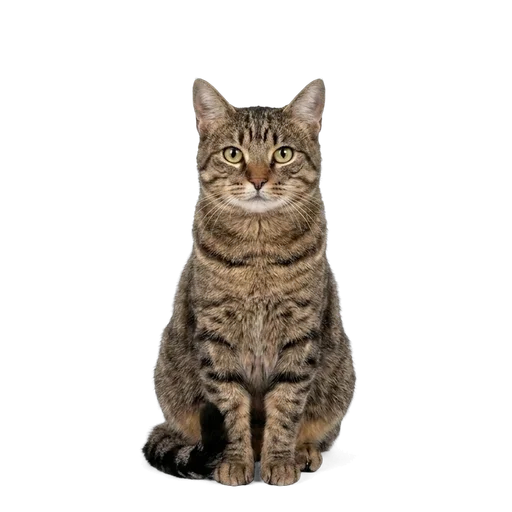
The Dragon Li, also called the Chinese Li Hua, is China's own natural cat: a golden-brown mackerel tabby that shaped itself over centuries as a village mouser before anyone thought to write a breed standard. It is clever, alert, and quietly loyal, warm with its own household and busy on its own terms rather than yours. Expect an independent streak, plenty of active play, and a formidable rodent record. For owners who want a sturdy, low-fuss companion rather than a lap ornament, few breeds fit better.
Temperament & personality
The Dragon Li was never designed by breeders; it is a landrace, refined by centuries of surviving in Chinese villages and farmyards. That history shows. These are level-headed, self-reliant cats that observe before they act, rarely panic, and almost never yowl for attention. Owners describe a quiet devotion: the cat is in the same room as you, keeping an eye on things, without demanding a lap.
The hunting drive is the breed's defining trait. A Dragon Li tracks a moth across the ceiling with total focus, and games that mimic a real hunt, wand toys that dart and hide, hold its attention far longer than a rolling ball. In rural China the breed earned its keep as a mouser for generations, and even a pampered apartment Li Hua will patrol its territory on a schedule.
They can be reserved with strangers, retreating to a vantage point until a visitor proves harmless, but they are gentle with the people they know and typically tolerant of considerate children. Like many sturdy cats they fill out gradually, so a gangly, playful youngster still shy of two years old is not misbehaving; it is still growing into its adult build.
Vaccination schedule
Landrace toughness does not extend to viruses, so a Dragon Li kitten needs the full feline core program. FVRCP, the combined vaccine against feline viral rhinotracheitis, calicivirus, and panleukopenia, starts at 6 to 8 weeks and repeats every 3 to 4 weeks until at least 16 weeks of age. The last dose at 16 weeks or beyond is the one that reliably takes, once maternal antibodies have faded.
Rabies vaccination follows at 12 to 16 weeks, timed to the product used and local regulations. If your Dragon Li will do any mousing outdoors, rabies protection stops being optional in every sense: a cat that hunts is a cat that meets wildlife.
The same logic applies to FeLV. Feline leukemia virus spreads through close contact with infected cats, so any Li Hua with outdoor access should be vaccinated after an initial two-dose kitten series. Indoor-only adults can often stop FeLV boosters later, and FVRCP boosters stretch to every one to three years. Review the plan with your vet annually as the cat's lifestyle changes.
Best food & diet
A Dragon Li in good condition is a compact, muscular 4 to 5.5 kg, and keeping it there is most of the job. Choose a complete diet with named animal protein first on the label, and split it into two or more meals. Mixing in wet food supports hydration, which matters for long-term kidney and urinary health in a breed that routinely reaches 12 to 15 years.
Because these cats fill out gradually, do not rush the switch to adult food; many do well on kitten or all-life-stages formulas into their second year, with portions adjusted to keep a visible waist. After neutering, energy needs drop while appetite does not, and this is where a stocky tabby quietly becomes an overweight one.
Put the hunting brain to work at mealtimes. Puzzle feeders, food scattered across a snuffle mat, or kibble hidden around the room satisfy the searching instinct better than a bowl ever will. One warning for proud mousers: a cat that eats prey still needs its complete diet, and it definitely needs the deworming schedule covered below.
Common health problems
Centuries of surviving as a working village cat left the Dragon Li with a short list of inherited problems. This is a robust breed with few genetic conditions behind it. There is no long list of inherited disorders to watch for; the condition worth keeping in mind is hip dysplasia, a poor fit of the hip joint that is uncommon in cats generally but still sensible to watch for in any sturdy, active cat.
Feline hip dysplasia hides well. Cats rarely limp the way dogs do; instead they stop jumping onto the counter, hesitate at the stairs, groom their hindquarters less, or get grumpy when handled around the hips. If you see those changes, ask for an orthopedic exam and radiographs. Management ranges from weight control and joint supplements through pain relief to surgery in severe cases, and lean body weight is the single most protective factor at every stage.
Otherwise, care for a Dragon Li is standard preventive medicine: annual exams, dental checks, and weight tracking. Dental disease is the most common medical finding in all adult cats, and a stoic landrace breed will hide a sore mouth until it is advanced, so let the vet look even when the cat seems fine. Well-kept Dragon Lis routinely reach 12 to 15 years.
Allergies & skin
The Dragon Li wears a short, thick, weatherproof coat and is not hypoallergenic. It produces standard levels of Fel d 1, the main human cat allergen, and its medium shedding spreads that allergen around the home, especially during seasonal molts. Allergy sufferers should meet the actual cat first.
The breed's own skin is generally sound. When allergies do appear they follow the usual feline order of likelihood: flea-bite allergy first, then food allergy (common culprits include beef, chicken, and fish such as salmon), then environmental atopy to triggers like dust mites. Signs worth a vet visit include overgrooming to bald patches, small crusty scabs along the spine and neck, recurrent ear infections, and scratching around the head and face.
For a cat with outdoor mousing habits, flea allergy deserves extra respect, since a single bite can set off weeks of itching in a sensitized cat. Year-round flea prevention is the treatment as much as the precaution. If itching persists on solid flea control, a vet-supervised elimination diet of 8 to 12 weeks is the next diagnostic step, not an off-the-shelf food swap.
Flea, tick & worm prevention
Only ever use cat-labeled parasite products on a Dragon Li, dosed to its actual weight of roughly 4 to 5.5 kg. Dog spot-ons containing permethrin are a genuine emergency for cats: even secondhand contact with a treated dog can trigger tremors and seizures. If it happens, go to a vet immediately.
A hunting breed needs a hunter's parasite plan. Cats that catch mice pick up tapeworm from prey and fleas from everywhere prey lives, so an outdoor-access Li Hua should be on year-round flea and tick prevention plus tapeworm treatment as frequently as every month. Indoor cats can run a lighter schedule, but not zero, because fleas hitchhike indoors on shoes and other pets.
Kittens follow the standard worming ladder: every 2 to 3 weeks from 3 weeks old until 8 weeks, then monthly until 6 months. From there, let lifestyle set the interval, commonly every 1 to 3 months for confirmed mousers. An annual fecal exam is cheap and keeps the plan honest.
Medications & dosing
All feline medication is dosed by body weight, so keep a current number for your Dragon Li rather than assuming the breed-average 4 to 5.5 kg. A kitchen scale trick works well: weigh yourself holding the cat, subtract, and note it in your pet app before any vet call or prescription refill.
This breed's stoicism is a dosing hazard in itself. A Li Hua in pain tends to withdraw quietly rather than cry, which tempts owners to medicate at home. Resist it. Paracetamol is lethal to cats, ibuprofen and aspirin are close behind, and permethrin-based products are toxic on contact. Every analgesic your cat can safely take is prescription-only and dosed to the gram of body weight.
If hip dysplasia is ever diagnosed, long-term management may include vet-prescribed joint supplements and feline-licensed pain medication such as low-dose NSAIDs with periodic blood monitoring. Give these exactly as scheduled, never double up after a missed dose, and report appetite loss or vomiting straight away, since those are the early flags of drug intolerance in cats.
Grooming & coat care
Centuries of self-sufficiency produced a coat that mostly manages itself. The Dragon Li's short, dense fur needs a once-weekly session with a slicker or rubber brush to clear loose undercoat, rising to two or three times a week during the heavy spring molt. Regular brushing also cuts down on hairballs, which increase noticeably when the thick coat is blowing.
Baths are rarely necessary; the coat is naturally water-resistant and the cat handles cleaning duties itself. Round out the routine with claw trims every few weeks for indoor cats, a monthly ear check, and tooth brushing worked up to several times a week. Start all of this in kittenhood if you can, because a reserved adult Li Hua accepts handling it learned as a kitten far more gracefully than a routine sprung on it later.
Use grooming time as a health scan. Run your hands over the hips and spine while you brush and note any flinching or muscle loss over the hindquarters, which is worth mentioning at the next check-up.
How the Dragon Li compares
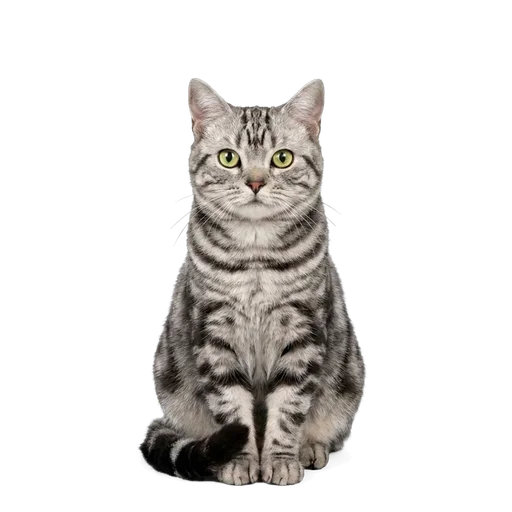
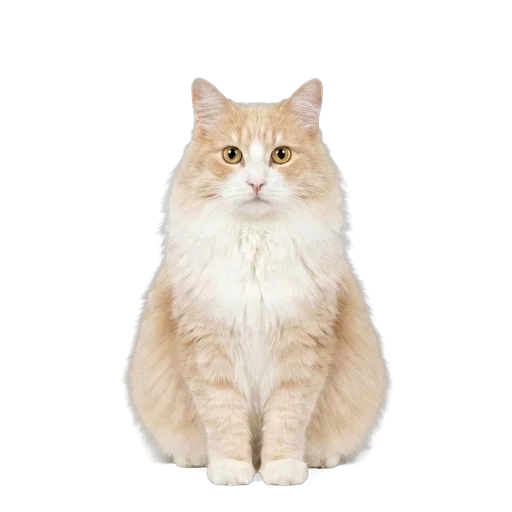
Deciding between similar breeds? Here is the Dragon Li next to American Shorthair and Cymric.
| Dragon Li | American Shorthair | Cymric | |
|---|---|---|---|
| Size | Medium | Medium | Medium |
| Weight | 4-5.5 kg | 3.5-7 kg | 3.5-5.5 kg |
| Lifespan | 12-15 yrs | 15-20 yrs | 10-15 yrs |
| Activity | Moderate | Moderate | Moderate |
| Shedding | Medium | Medium | Medium |
| Good with kids | Yes | Yes | Yes |
| Apartment-friendly | Yes | Yes | Yes |
Frequently asked questions
Is the Dragon Li rare outside China?
Yes, very. The breed is common as a native cat within China but only gained formal recognition there in the 2000s, and few breeders exist abroad. Expect a long search and possibly an import process if you want one outside Asia.
Are Dragon Li cats affectionate?
In their own measured way. They bond firmly to their family and like to be nearby, but they are not typically lap cats and can be aloof with strangers. Owners who respect that independence usually find the loyalty underneath it.
Can a Dragon Li live happily indoors?
Yes, provided you feed the hunting instinct. Daily wand-toy sessions, puzzle feeders, and window perches replace the mousing career well. A bored Li Hua indoors will stalk anything that moves, including your ankles.
When is a Dragon Li fully grown?
Later than most cats. The breed matures slowly and generally needs into its second year to reach its final adult build and settled temperament, so do not be surprised by a lanky, playful youngster well past its first birthday.
Are Dragon Li cats hypoallergenic?
No. The short thick coat sheds a medium amount, and the breed produces normal levels of the Fel d 1 allergen. People with cat allergies should spend time around one before bringing it home.
Related breeds
Health and care information is drawn from established veterinary sources and is general guidance, not veterinary advice. See our sources
Keep records for your Dragon Li
Vaccinations, food and treat safety, allergy alerts and parasite reminders - all tracked for your Dragon Li in the Pethls app.