

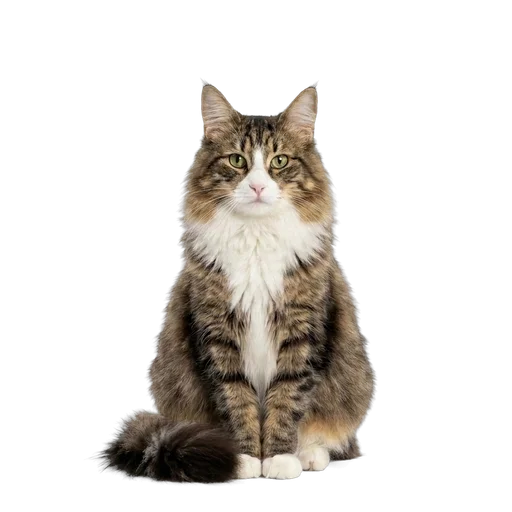
Origin: Norway
Norwegian Forest Cat
Get reminders for your Norwegian Forest Cat's vaccines
Vaccination and parasite reminders, food-safety scans and health records — free to start in the Pethls app.


Good for
The Norwegian Forest Cat is a big, heavy-boned cat built for a Scandinavian winter, with a thick water-resistant double coat and a tufted, almost lynx-like look. Despite the imposing size, most "Wegies" are gentle, patient and quietly affectionate rather than demanding. They mature slowly, often not reaching full weight until 4 or 5 years old, and adult males can push 9 kg. This is a sturdy, family-friendly cat that tolerates children and other pets well and would rather supervise the household from a favorite perch than chase you around the flat. Expect a healthy lifespan of 12 to 16 years with good care and screening.
Temperament & personality
Norwegian Forest Cats are calm to moderately active. They like to climb and will happily use the top of a wardrobe or a tall cat tree, a nod to their history as barn and forest hunters, but they are not frantic or clingy. Most keep to a predictable routine, with bursts of play broken up by long naps.
They tend to bond to the whole family rather than fixing on one person. A Wegie will often follow you room to room and sit near you without insisting on being a lap cat every minute. That easygoing, loyal streak makes them forgiving of busy homes and gentle with children who have been shown how to handle a cat properly.
They are intelligent and food-motivated, which makes clicker training and puzzle feeders genuinely useful. A bored Wegie can get into cupboards and knock things off shelves, so rotate toys and give them vertical space. They usually greet other cats and cat-savvy dogs with confidence rather than panic.
Vaccination schedule
Kittens start the core FVRCP vaccine (feline viral rhinotracheitis, calicivirus and panleukopenia) at 6 to 8 weeks, with boosters every 3 to 4 weeks until they are at least 16 weeks old. Rabies is given once between 12 and 16 weeks depending on the vaccine and local law. These are the non-negotiable core vaccines for every kitten.
Feline leukaemia (FeLV) vaccination is strongly recommended for any Norwegian Forest Cat that goes outdoors, has access to a garden or catio, or lives with cats of unknown status. If your cat has any outdoor access, discuss FeLV cover with your vet early. Kittens are usually tested for FeLV and FIV before their first shot.
After the kitten series, cats get a booster at around one year, then FVRCP every 1 to 3 years and rabies per product label. Your vet will tailor the schedule to your cat's lifestyle and to local disease risk, so keep the vaccination card up to date.
Best food & diet
As obligate carnivores, Norwegian Forest Cats do best on a diet built around named animal protein. Pick a complete food that meets AAFCO or FEDIAF standards for the correct life stage, with a clearly listed meat or fish first ingredient. Growing kittens of this slow-maturing breed benefit from a kitten formula until around 12 months, sometimes longer given how late they finish filling out.
Portion to lean body condition, not to appetite. These are large cats, and it is easy to mistake a big frame for permission to overfeed. Weigh your cat, check the ribs and waist monthly, and adjust. Splitting the daily ration into two or three meals or using a puzzle feeder helps slow fast eaters and keeps a big cat active.
Wet food or a wet and dry mix supports hydration and urinary health, which is worth encouraging in any cat and is a sensible habit in a breed carrying kidney risks such as polycystic kidney disease (PKD), where good hydration helps support overall kidney health as cats age. Always provide fresh water. Because beef, chicken and salmon are common triggers in this breed, introduce any new protein gradually and watch for stomach upset or itching.
Common health problems
Hypertrophic cardiomyopathy (HCM) is the heart disease to watch. It thickens the heart muscle and can appear in mid-life with few outward signs until it is advanced. Ask about periodic vet heart checks and, where advised, an echocardiogram, especially if a murmur is heard or the breeder reports HCM in the line.
Polycystic kidney disease (PKD) causes fluid-filled cysts that slowly reduce kidney function. Signs of chronic kidney disease, such as increased thirst, more urination and weight loss, tend to show later in life. Reputable breeders screen with genetic testing and ultrasound, so ask to see results before you buy a kitten.
The breed-specific one is glycogen storage disease type IV (GSD IV), a serious inherited defect of glucose metabolism. Affected kittens are often stillborn or fade in the first weeks, while some deteriorate with muscle weakness later. A DNA test exists, and responsible breeders screen breeding cats so they never pair two carriers. Hip dysplasia is uncommon in cats overall but is a recognized concern in large, heavy-boned breeds like the Norwegian Forest Cat and the Maine Coon, so mention any early stiffness or reluctance to jump at a routine check-up.
Allergies & skin
Food reactions in this breed most often trace back to common proteins, particularly beef, chicken and salmon. A true food allergy usually shows as year-round itching, over-grooming, ear inflammation or loose stools rather than a runny nose. The only reliable way to confirm it is a vet-guided elimination diet using a novel or hydrolyzed protein for 8 to 12 weeks.
Environmental allergens matter too. Dust mites and grass pollen can drive itchy skin, sneezing and watery eyes, sometimes seasonally. Regular vacuuming, washing bedding on a hot cycle and reducing dust around sleeping areas all help lower the load on a sensitive cat.
That dense double coat can hide skin problems until they are established. Part the fur during grooming and check for scabs, flea dirt, redness or thinning hair, particularly along the back and at the base of the tail. Any bald patch, persistent scratching or sore skin deserves a vet visit rather than an over-the-counter guess.
Flea, tick & worm prevention
Use only cat-licensed parasite products. This is not a minor detail: dog spot-ons containing permethrin are highly toxic to cats and can cause tremors, seizures and death. Never apply a dog flea treatment to a Norwegian Forest Cat, and keep treated dogs separate until the product has dried.
For a cat with outdoor access, year-round flea and tick cover makes sense, since ticks are a real risk for a cat that roams a garden or woodland edge. Your vet can recommend a suitable spot-on or tablet and show you how to part that thick coat so the product reaches the skin rather than sitting on the fur.
Worming should follow a vet schedule based on lifestyle. Outdoor hunters that catch rodents need more frequent roundworm and tapeworm treatment than a strictly indoor cat. Kittens are wormed often in the early weeks, then the plan settles into a routine your vet sets by weight and risk.
Medications & dosing
Because adult Wegies vary so much in size, from a 4 kg female to a 9 kg male, every medication should be dosed to current body weight, not guessed by looks. Weigh your cat before treatment and let the vet calculate the dose. This is especially important for wormers, flea products and any heart or kidney medication.
Never split human tablets or share medicine between pets. Many drugs that are safe for dogs or people are dangerous for cats, including paracetamol, ibuprofen and certain topical creams. Even a small dose can be fatal, so keep all human medicine well out of reach.
Cats with HCM or PKD may end up on long-term medication and need regular blood pressure, blood and urine monitoring. Give heart and kidney drugs exactly as prescribed, never stop suddenly, and book the follow-up checks so the vet can adjust the dose as the condition changes.
Grooming & coat care
The Norwegian Forest Cat carries a thick, water-resistant double coat with a woolly undercoat and a glossy top layer. Brush 2 to 3 times a week for most of the year to prevent mats behind the ears, in the armpits and around the britches. A stainless steel comb plus a slicker brush works better on this coat than a soft bristle brush alone.
Twice a year the coat blows out in a heavy seasonal molt, usually in spring and autumn. During those weeks, daily brushing is realistic and necessary to keep on top of the loose undercoat and reduce hairballs. Shedding is high, so expect fur on furniture and clothes and keep a lint roller handy.
Round out grooming with weekly nail trims, ear checks and dental care such as tooth brushing or vet-approved dental chews. Bathing is rarely needed because the coat is somewhat self-maintaining and water-resistant, but a mat that has gone solid should be cut out carefully by a groomer or vet rather than yanked.
How the Norwegian Forest Cat compares
Deciding between similar breeds? Here is the Norwegian Forest Cat next to Siberian and Maine Coon.
| Norwegian Forest Cat | Siberian | Maine Coon | |
|---|---|---|---|
| Size | Large | Large | Large |
| Weight | 4-9 kg | 5-10 kg | 5-11 kg |
| Lifespan | 12-16 yrs | 11-18 yrs | 12-15 yrs |
| Activity | Moderate | Moderate | Moderate |
| Shedding | High | High | High |
| Good with kids | Yes | Yes | Yes |
| Apartment-friendly | No | Yes | Yes |
Frequently asked questions
Are Norwegian Forest Cats good with children and other pets?
Yes. They are sturdy, patient and confident, which suits family life with respectful children and with cats or cat-friendly dogs. As with any cat, supervise young kids and give the cat an escape route to a high perch.
Are Norwegian Forest Cats hypoallergenic?
No. They are a heavy-shedding, double-coated breed and produce the usual Fel d 1 allergen in saliva and skin. People with cat allergies are likely to react. No cat is truly hypoallergenic.
How much grooming does a Wegie need?
Brush 2 to 3 times a week most of the year, and daily during the spring and autumn molt. Regular combing prevents mats in the armpits and britches, where this thick coat tangles first.
What health problems should I screen for?
Ask the breeder about genetic testing for glycogen storage disease type IV, plus screening for polycystic kidney disease and hypertrophic cardiomyopathy. Hip dysplasia is uncommon in cats overall but is a recognized concern in large, heavy-boned breeds like the Norwegian Forest Cat, so it is worth mentioning any early joint stiffness at a check-up.
How big do Norwegian Forest Cats get?
They are a large breed, roughly 4 to 9 kg, with males noticeably bigger than females. They mature slowly and may not reach full size until 4 or 5 years old.
Related breeds
Health and care information is drawn from established veterinary sources and is general guidance, not veterinary advice. See our sources
Keep records for your Norwegian Forest Cat
Vaccinations, food and treat safety, allergy alerts and parasite reminders - all tracked for your Norwegian Forest Cat in the Pethls app.