

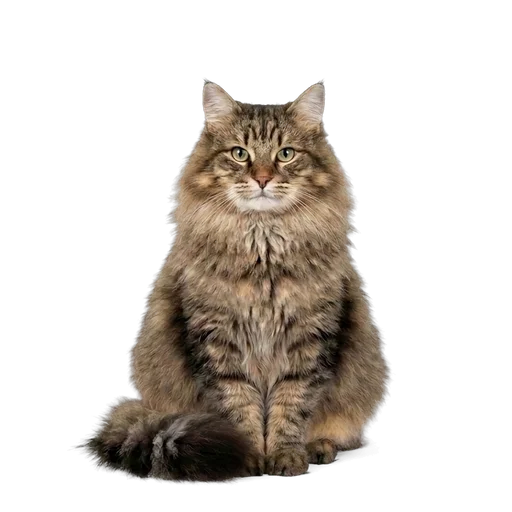
Origin: Russia
Siberian
Get reminders for your Siberian's vaccines
Vaccination and parasite reminders, food-safety scans and health records — free to start in the Pethls app.


Good for
The Siberian is Russia's national cat, a big, muscular animal built to survive brutal winters. Under that dense triple coat is a surprisingly agile athlete that can jump to the top of a bookshelf from a standing start. Despite the imposing size, this is one of the friendliest breeds you will meet, following its people from room to room and greeting visitors at the door like a dog would. Siberians are patient with children, relaxed around other cats and dogs, and clever enough to learn tricks and open cupboard doors you would rather they left alone. They are best known for one thing beyond their looks: many produce lower levels of the Fel d1 allergen, which makes some allergy sufferers tolerate them better.
Temperament & personality
Siberians are affectionate without being clingy. They want to be near you and will happily sit on your lap or supervise from the desk while you work, but they are secure enough to entertain themselves when you are busy. Most keep a playful, kitten-like streak well into adulthood, batting toys around and inventing games with whatever they find.
The dog-like reputation is earned. Many Siberians fetch, come when called, and take an interest in water, dipping paws into the bowl or watching a running tap with real fascination. They are quieter than the Siamese-line breeds, communicating in soft chirps and trills rather than loud demands.
This is a sociable cat that reads a household well. Siberians tend to be gentle with toddlers, patient during rough handling, and calm when a new pet arrives. Their confidence makes them a good match for busy family homes, and their adaptability means they settle into apartments as easily as houses with gardens.
Vaccination schedule
Kittens start their FVRCP course (feline viral rhinotracheitis, calicivirus and panleukopenia) at 6 to 8 weeks, with boosters every three to four weeks until they are at least 16 weeks old. This core vaccine protects against the respiratory and gut viruses that spread fastest among young cats, so completing the full series matters more than any single shot.
Rabies is given between 12 and 16 weeks depending on the vaccine brand and your local laws. A first booster follows a year later, then every one to three years on the schedule your vet sets. Rabies vaccination is a legal requirement in many regions and non-negotiable for any cat that goes outdoors or travels.
The feline leukaemia (FeLV) vaccine is recommended for any Siberian with outdoor access or contact with cats of unknown status. Indoor-only cats may not need it after the kitten series, and your vet will weigh lifestyle against risk. A booster series and yearly health check keep the whole plan on track.
Best food & diet
Siberians are large, active cats, and they do best on a high-protein diet built around named meat sources. Look for a complete food where the first ingredients are named animal proteins rather than vague meat meal or a wall of grain. Chicken, beef and salmon are among the more common feline food allergens, so if your cat reacts to one, check the label and switch to a protein it tolerates. Cats are obligate carnivores, so animal protein and fat should carry most of the calories.
Portion to body condition, not to the size of the cat. A full-grown Siberian can weigh anywhere from 5 to 10 kilograms, and it is easy to overfeed a cat that looks big-boned when it is actually carrying fat. You should feel the ribs under a light covering and see a slight waist from above. Measured meals twice a day beat leaving a bowl down all day.
Fresh water is essential, especially given the risk of kidney disease later in life. Many Siberians drink more readily from a pet fountain than a still bowl. Feeding some wet food alongside dry helps with hydration too. Any diet change should be made gradually over a week to avoid stomach upset.
Common health problems
The health concern to know about is hypertrophic cardiomyopathy (HCM), the most common heart disease in cats. It thickens the heart muscle and can go unnoticed until it is advanced, so it is worth asking your vet to listen for murmurs at annual checks and considering a heart scan (echocardiogram) if anything sounds off. Responsible Siberian breeders screen their cats.
Pyruvate kinase deficiency (PK deficiency) is an inherited condition that affects red blood cells and can cause anemia. A simple DNA test identifies carriers and affected cats, and reputable breeders test their breeding lines so kittens are not born affected. If you are buying a kitten, ask to see the parents' PK test results.
Polycystic kidney disease (PKD) is not a hallmark Siberian problem the way HCM and PK deficiency are, but it is worth a general word: it causes fluid-filled cysts to build in the kidneys over time and can lead to kidney failure in middle age. It is mainly a Persian-line concern, and a DNA test exists if a breeder wants to rule it out. Beyond genetics, keep up with routine dental care and yearly bloodwork so any early kidney or organ changes are caught while they are still manageable.
Allergies & skin
Siberians are often reported to produce lower levels of Fel d1, the main cat allergen. Fel d1 lives in saliva and skin secretions and spreads onto the coat during grooming, which is how it ends up in the air and on furniture.
Still, no Siberian is truly hypoallergenic. Every cat of this breed still produces some Fel d1, and the amount varies from one individual to the next, even within the same litter. Females and neutered cats tend to produce less than intact males. If allergies are the reason you are drawn to the breed, spend real time with the specific cat before committing, ideally over several visits.
For the cat's own skin, the thick coat can hide irritation, so part the fur now and then to check for flakes, scabs or redness. Flea allergy is the most common skin problem in any cat, which makes year-round parasite control the simplest form of prevention. Sudden overgrooming, bald patches or scratching warrants a vet visit rather than a wait-and-see approach.
Flea, tick & worm prevention
Use only cat-licensed flea and tick products. This is the single most important rule of parasite control in cats. Never apply a dog spot-on that contains permethrin to a cat, because cats cannot process it and even a small dose can cause tremors, seizures and death. Your vet can supply a product dosed correctly for your Siberian's weight.
The dense triple coat makes fleas easy to miss until an infestation takes hold. A monthly or three-monthly preventive, depending on the product, keeps ahead of the problem. If your cat goes outside, ticks become a concern too, so check the ears, chin and armpits after outdoor time and remove any you find promptly.
Worming rounds out the plan. Roundworms and tapeworms are the usual culprits, and outdoor cats that hunt or catch fleas are at higher risk since fleas carry tapeworm. Most cats are wormed every three months, though hunters may need it more often. Your vet will match the schedule and product to your cat's lifestyle.
Medications & dosing
Cat medications are dosed by body weight, and with a breed that ranges from 5 to 10 kilograms that range is wide. A dose calculated for a slim female could be far too little for a large male, so always weigh your cat rather than guessing. Give your vet an accurate current weight whenever a new medication is prescribed.
Never give human painkillers to a cat. Paracetamol (acetaminophen) is lethal to cats even in tiny amounts, and ibuprofen and aspirin are dangerous too. Cats lack the liver enzymes to break these down safely. If your Siberian is in pain, only a vet-prescribed, cat-specific medication is safe.
Finish any course of antibiotics as directed, even if your cat seems better partway through, and never split or share medication between pets. Pilling a large, strong Siberian can be a two-person job, so ask your vet or nurse to demonstrate the technique, or discuss whether a compounded liquid or a food-safe option would be easier for both of you.
Grooming & coat care
The Siberian's triple coat is glorious and needs regular help to stay that way. For most of the year a thorough brushing once or twice a week keeps it free of mats and spreads the natural oils that keep it water-resistant. Pay attention to the areas that tangle first: behind the ears, under the legs and the fluffy 'britches' on the back legs.
Then there is the molt. Siberians shed heavily twice a year, usually in spring and autumn, and during those weeks daily brushing is realistic if you want to stay on top of the fur. A deshedding tool helps pull out the loose undercoat before it ends up on your furniture or, worse, in your cat's stomach as hairballs.
Round out the routine with the basics every cat needs: check and clean ears if they look waxy, trim claws every few weeks, and brush the teeth to guard against dental disease. Introduce all of this gently and pair it with praise or a treat. A Siberian that learns grooming is a good experience will sit for it happily its whole life.
How the Siberian compares
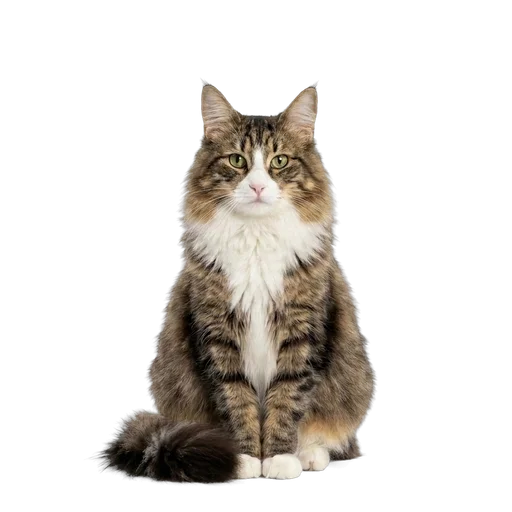
Deciding between similar breeds? Here is the Siberian next to Norwegian Forest Cat and Maine Coon.
| Siberian | Norwegian Forest Cat | Maine Coon | |
|---|---|---|---|
| Size | Large | Large | Large |
| Weight | 5-10 kg | 4-9 kg | 5-11 kg |
| Lifespan | 11-18 yrs | 12-16 yrs | 12-15 yrs |
| Activity | Moderate | Moderate | Moderate |
| Shedding | High | High | High |
| Good with kids | Yes | Yes | Yes |
| Apartment-friendly | Yes | No | Yes |
Frequently asked questions
Are Siberian cats hypoallergenic?
No cat is truly hypoallergenic, and Siberians are no exception. What sets them apart is that many produce lower levels of Fel d1, the main cat allergen, so some allergy sufferers tolerate them better than other breeds. Levels vary from cat to cat, so spend time with the specific animal before deciding.
How big do Siberian cats get?
Siberians are a large breed, typically weighing between 5 and 10 kilograms when fully grown. Males are noticeably bigger than females. They are slow to mature and may not reach full size until around five years old, so a young adult often still has filling out to do.
Do Siberian cats get along with dogs and children?
Generally yes. Siberians are confident, sociable and patient, which makes them a good fit for busy family homes. They tend to be gentle with children and relaxed around other pets, including dogs. Early, calm introductions and giving the cat an escape route always help the relationship along.
How much grooming does a Siberian need?
A brush once or twice a week is enough for most of the year. During the heavy spring and autumn molts you may need to brush daily to keep the shedding under control and prevent mats and hairballs. A deshedding tool is a worthwhile investment for those seasonal periods.
What health problems are Siberian cats prone to?
The main inherited concerns are hypertrophic cardiomyopathy (a heart muscle disease), pyruvate kinase deficiency (which can cause anemia). Polycystic kidney disease is mainly a Persian-line concern rather than a Siberian hallmark, though a DNA test can rule it out. DNA tests exist for both main concerns, so buy from a breeder who screens their lines, and keep up annual vet checks with heart monitoring.
Related breeds
Health and care information is drawn from established veterinary sources and is general guidance, not veterinary advice. See our sources
Keep records for your Siberian
Vaccinations, food and treat safety, allergy alerts and parasite reminders - all tracked for your Siberian in the Pethls app.