

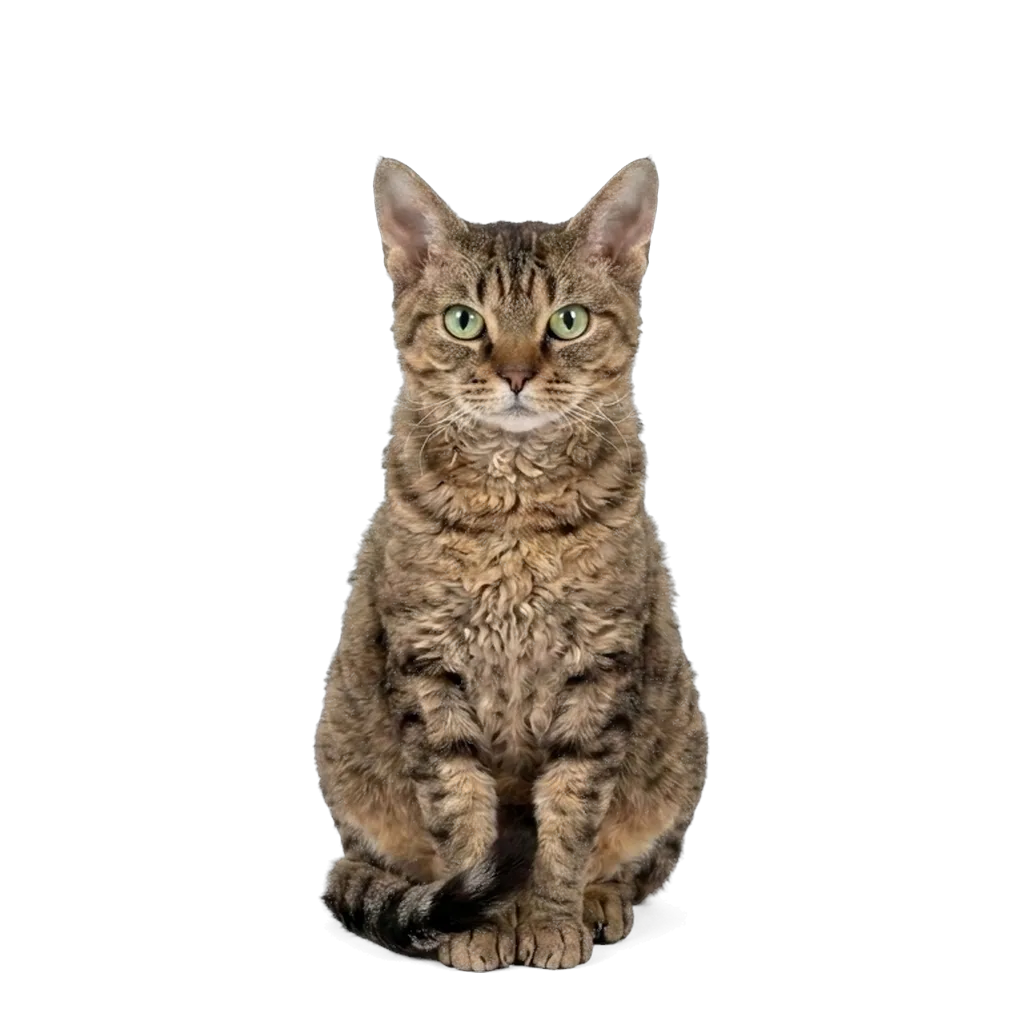
Origin: United States
Oregon Rex
Get reminders for your Oregon Rex's vaccines
Vaccination and parasite reminders, food-safety scans and health records — free to start in the Pethls app.


Good for
The Oregon Rex is a piece of American cat history rather than a breed you can bring home today. It appeared in Oregon in the 1940s and 1950s, when a spontaneous mutation produced kittens with short, wavy coats, and for a couple of decades it was bred as a distinct rex breed. The Oregon mutation was recessive and, based on test matings from the era, genetically distinct from the Cornish and Devon rex genes. By the 1970s the last known purebred lines had been crossed into other rex breeding programs, and the Oregon Rex is now considered extinct as a separate breed. This page is written for people researching the breed's history, tracing rex ancestry, or caring for a rex-type cat with similar roots. The care advice below applies to any curly-coated cat of comparable build, roughly 2.5 to 4.5 kg with a lifespan of 12 to 15 years.
Temperament & personality
Breeders and owners who knew the Oregon Rex described a lively, affectionate cat with a stubborn streak. It bonded closely with its people and enjoyed being in the middle of household activity, but it liked things done on its own terms. Accounts from the era often mention a cat that would demand attention one minute and firmly decline handling the next.
That self-willed quality set it apart from the softer, clownish Cornish Rex it was eventually folded into. The Oregon Rex was reportedly a confident, athletic cat that climbed, explored, and played hard well into adulthood. Like most rex-type cats, it stayed kitten-like far longer than heavier breeds.
If you have a rex-descended cat today, expect the same broad pattern: high engagement, a need for daily play, and a cat that follows you from room to room. These are not aloof cats. They do best in homes where someone is around for a good part of the day and where climbing and chasing are part of the routine.
Vaccination schedule
Any rex-type cat follows the standard feline schedule. The core FVRCP vaccine, covering feline viral rhinotracheitis, calicivirus, and panleukopenia, starts at 6 to 8 weeks of age. Kittens then get boosters every 3 to 4 weeks until they are at least 16 weeks old, because maternal antibodies can block earlier doses from taking hold.
Rabies is given once between 12 and 16 weeks, depending on the vaccine brand and local law. In most US states it is legally required even for indoor cats. After the kitten series, FVRCP and rabies are boosted at one year, then every one to three years based on the product used and your vet's assessment.
FeLV (feline leukemia virus) vaccination is recommended for all kittens by most US guidelines, then continued annually only for cats with outdoor access or exposure to cats of unknown status. A thin-coated rex kept strictly indoors, which is the sensible arrangement anyway, can usually drop FeLV boosters after the first year, though this depends on your household and lifestyle.
Best food & diet
Rex-type cats run warm. The short, sparse coat provides less insulation, so they burn a few more calories keeping their body temperature up than a densely coated cat of the same size. The effect is modest, not dramatic; the coat's insulation matters, but a sparse-coated cat still eats to its own size and body condition, not that of a heavier cat. Feed a complete, meat-first diet that meets AAFCO standards for the cat's life stage, and let body condition, not the bag's feeding chart, set the portion.
Wet food is a good backbone for the diet. Cats have a weak thirst drive, and the extra moisture supports kidney and urinary health over a 12 to 15 year lifespan. Many owners split the day into two or three meals of wet food with a small measured amount of dry food for grazing or puzzle feeders.
Watch weight closely on any small-framed cat. At 2.5 to 4.5 kg, even 300 extra grams is a meaningful percentage of body weight. Run your hands over the ribs monthly; on a rex coat you will feel body condition changes quickly, which is one small advantage of the thin coat.
Common health problems
The Oregon Rex existed for too short a time, in too small a population, for any breed-specific disease to be documented. No hereditary condition was ever formally attributed to it. What we can say applies to rex-coated cats in general, and it comes down to the coat itself rather than internal disease.
The sparse, wavy coat gives poor protection against cold. Rex-type cats chill easily in drafty houses and should never live outdoors in cool climates. They seek out heat sources, so check laundry machines, radiators, and heated blankets. The thin coat also offers little defense against sun; white or lightly pigmented ears and noses can sunburn through a window seat and are at some risk of solar-induced skin damage over years.
Beyond the coat, routine feline care covers it: annual exams (twice yearly for seniors), dental checks, weight monitoring, and standard parasite prevention. Some cats descended from the mid-century rex lines carry Cornish or Devon Rex ancestry from later crosses, and hypertrophic cardiomyopathy runs in several rex lines. If your cat has known Cornish or Devon Rex heritage, ask about periodic heart screening for hypertrophic cardiomyopathy.
Allergies & skin
A common misunderstanding first: rex cats are not hypoallergenic, and the Oregon Rex was no exception. The allergen that troubles people, Fel d 1, is produced in saliva and skin glands, not the fur. A curly coat sheds less loose hair around the house, which some allergic people find easier to live with, but the allergen is still there. Anyone with a cat allergy should spend time with a rex-type cat before committing.
The cat's own skin needs a little thought. With less hair covering it, rex skin is more exposed to scrapes, sunburn, and temperature swings. Skin oils that a full coat would normally distribute along the hair can instead build up, occasionally leaving a slightly greasy feel or oily patches around the chin and paws. A monthly wipe-down with a damp cloth usually manages it; only a minority of rex-type cats need actual baths. As with any cat, some rex-type cats develop allergies: food-related triggers such as beef, chicken, or dairy, and environmental ones such as dust mites or scented household products and fragrance can show up as itchy or inflamed skin, though none of this was ever specific to the Oregon Rex.
Rex-type cats can occasionally develop the same allergic skin disease as any cat: flea allergy dermatitis, food allergy, and environmental atopy. Signs show fast on a thin coat, so overgrooming, scabbing along the spine, or bald patches are easy to spot early. Persistent itching warrants a vet visit and strict flea control before any diet trial.
Flea, tick & worm prevention
Even a strictly indoor rex-type cat needs parasite prevention. Fleas hitch rides on shoes, other pets, and secondhand furniture, and a thin-coated cat with flea allergy dermatitis looks rough very quickly. Use a monthly cat-licensed spot-on or a vet-prescribed oral product, dosed by weight.
One rule matters above all others: never use dog flea products on a cat. Permethrin-based dog treatments are severely toxic to cats and cause tremors, seizures, and death. This includes contact exposure, so if a dog in the house wears a permethrin product, keep the cat away from it until the application site is fully dry. Read every label; cat-safe products say so explicitly.
Worming is straightforward. Kittens are treated for roundworms every 2 to 3 weeks from about 3 weeks of age until 12 weeks, then monthly to 6 months. Adults with no outdoor access and no hunting typically need worming every 3 months; hunters and outdoor cats may need monthly treatment. Many modern spot-ons combine flea and worm cover in one application, which suits a cat whose sparse coat makes application easy.
Medications & dosing
All medication for a small cat is weight-based, and at 2.5 to 4.5 kg the margin for error is narrow. A dose calculated for a 4.5 kg cat can be half again too much for a 2.5 kg one. Have your vet weigh the cat at every visit and recalculate doses rather than reusing an old prescription on a cat whose weight has drifted.
Never give human painkillers to a cat. Paracetamol (acetaminophen) is lethal to cats at doses safe for a small child, ibuprofen causes kidney failure and stomach ulceration, and aspirin lingers in feline metabolism for days. If your cat seems painful, call the vet; there are cat-safe options like licensed NSAIDs and buprenorphine, but they must be prescribed and dosed precisely.
There was never an Oregon Rex-specific drug sensitivity on record, and rex-type cats handle standard veterinary medicines normally. One practical note: with so little coat, transdermal medications and spot-on products absorb readily, so apply exactly the prescribed amount and no more. Keep a simple log of what was given and when; it prevents accidental double-dosing in multi-person households.
Grooming & coat care
The rex coat is the easy part. Short, wavy, and lacking the coarse guard hairs of a normal cat coat, it sheds little and never mats. Skip brushing altogether or use only a very soft rubber grooming mitt once a week, because stiff brushes and slicker pins can break the fine hairs and thin the coat further. Many rex owners simply smooth the coat with a slightly damp hand.
What the coat saves you in brushing, it asks back in protection. Provide warm sleeping spots away from drafts, and in cold houses a fleece-lined bed or an igloo-style hideout gets heavy use. Limit intense direct sun on windowsills for pale-coated cats, and consider pet-safe sun protection for white ears if your cat is a dedicated sunbather.
Round out the routine with the basics every cat needs: nail trims every 2 to 3 weeks, a weekly ear check (rex ears are large and collect wax visibly), and daily tooth brushing if the cat tolerates it, or dental treats and annual dental checks if not. The whole weekly grooming commitment for a rex-type cat is comfortably under fifteen minutes.
How the Oregon Rex compares
Deciding between similar breeds? Here is the Oregon Rex next to German Rex and Oriental Shorthair.
| Oregon Rex | German Rex | Oriental Shorthair | |
|---|---|---|---|
| Size | Medium | Medium | Medium |
| Weight | 2.5-4.5 kg | 2.5-4.5 kg | 2.3-5 kg |
| Lifespan | 12-15 yrs | 12-15 yrs | 12-15 yrs |
| Activity | Active | Active | Active |
| Shedding | Low | Low | Low |
| Good with kids | Yes | Yes | Yes |
| Apartment-friendly | Yes | Yes | Yes |
Frequently asked questions
Can I still buy an Oregon Rex kitten?
No. The breed is considered extinct as a distinct line. The last purebred Oregon Rex cats were absorbed into other rex breeding programs, mainly the Cornish Rex, by the early 1970s. If a seller offers you an Oregon Rex today, they are either mislabeling a Cornish or Devon Rex or misrepresenting a random-bred curly cat.
How was the Oregon Rex different from the Cornish Rex?
Genetically, its rex mutation arose independently in Oregon in the 1940s and 1950s, separate from the Cornish mutation in England. Test matings at the time indicated the genes were not the same. In temperament, period accounts describe the Oregon Rex as more self-willed and independent than the famously clownish Cornish Rex, though both were lively and affectionate.
Was the Oregon Rex hypoallergenic?
No, and neither are today's rex breeds. The Fel d 1 allergen comes from saliva and skin, not fur, so a curly low-shedding coat reduces loose hair around the home but does not remove the allergen. Allergic households sometimes cope better with rex-type cats, but reactions are still possible and often significant.
What killed off the breed?
Nothing dramatic; it was numbers. The founding population was tiny, few breeders worked with it, and the better-established Cornish Rex offered a similar coat with a broader gene pool. Remaining Oregon Rex cats were crossed into other rex lines, and the independent breed simply ceased to exist as its distinct genes merged into those programs.
I have a rex-type cat with old American lines. How should I care for it?
Care for it like any rex-coated cat. Keep it indoors and warm, protect pale ears from strong sun, groom minimally with soft tools, feed to a lean body condition, and keep standard FVRCP and rabies vaccination plus cat-safe parasite prevention up to date. Ask your vet about heart screening if Cornish Rex ancestry is likely, and expect a healthy lifespan of 12 to 15 years.
Related breeds

Health and care information is drawn from established veterinary sources and is general guidance, not veterinary advice. See our sources
Keep records for your Oregon Rex
Vaccinations, food and treat safety, allergy alerts and parasite reminders - all tracked for your Oregon Rex in the Pethls app.