

Origin: Kenya
Sokoke
Get reminders for your Sokoke's vaccines
Vaccination and parasite reminders, food-safety scans and health records — free to start in the Pethls app.


Good for
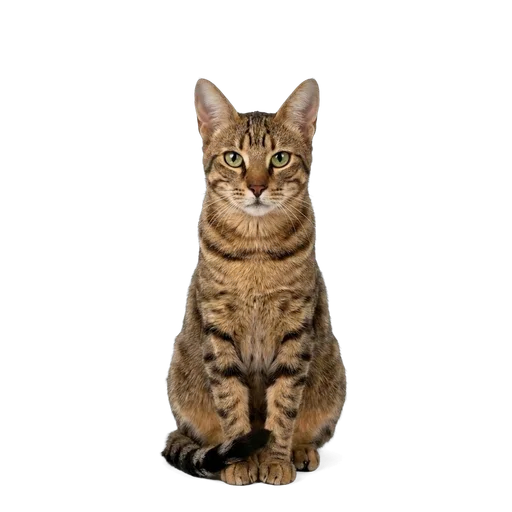
The Sokoke is one of the rarest natural cat breeds on the planet, a landrace that developed on its own in the Arabuko-Sokoke forest of coastal Kenya. Its ticked tabby coat has a distinctive wood-grain pattern, and it moves with an odd, elegant tip-toe gait that breeders consider a hallmark. This is a slender, athletic cat of 2.5 to 4.5 kg that often lives 15 to 20 years. Expect an intelligent, chatty companion that bonds hard to its own people and gets along with respectful children and other cats. They are also remarkably healthy, but that comes with a catch of its own: the breed is genuinely scarce, so finding a Sokoke kitten usually means a long waiting list.
Temperament & personality
Sokokes are busy cats. They climb, patrol, follow you from room to room and keep up a running commentary in a voice that is more conversational than demanding. Owners often describe them as dog-like in their attachment: this is a breed that picks its family and stays close, rather than one that treats humans as interchangeable staff.
That bond has a flip side. A Sokoke left alone all day with nothing to do will get loud and inventive, so plan for climbing trees, puzzle feeders and a second cat if your household is out at work. They generally accept other cats well, which fits their forest origins where related cats lived in loose groups.
With children they do fine as long as the children have learned cat manners. A Sokoke will play fetch and chase with an eight-year-old for half an hour, then remove itself when it has had enough. It is not a cat that tolerates being carried around like a toy, and it will simply vanish to a high shelf rather than scratch.
Vaccination schedule
Sokokes follow the standard feline schedule; being a rare breed changes nothing about their immune needs. Kittens start the FVRCP core vaccine (panleukopenia, herpesvirus, calicivirus) at 6 to 8 weeks, with boosters every 3 to 4 weeks until at least 16 weeks of age. That last booster at 16 weeks or later matters, because maternal antibodies can block earlier doses.
Rabies is given once between 12 and 16 weeks, depending on your local law and the vaccine brand, then boosted a year later. FVRCP gets a booster at one year, after which most vets move to a one-year or three-year cycle based on the product used and your cat's lifestyle.
FeLV (feline leukemia) is recommended for any cat with outdoor access or contact with cats of unknown status. Many vets vaccinate all kittens for FeLV in the first year regardless, then continue only if the cat goes outside. A Sokoke kept fully indoors, which suits this cold-sensitive breed anyway, can usually drop FeLV after the kitten series. Log each dose in a health log so booster reminders arrive before, not after, the due date.
Best food & diet
Feed a complete, meat-first diet appropriate to life stage. Sokokes are lean, muscular cats, and an active adult in the 2.5 to 4.5 kg range typically needs somewhere around 180 to 250 kcal a day, though individual needs vary widely with activity. Kittens need a growth formula until roughly 10 to 12 months. Treat any calorie figure as a starting point rather than a fixed rule, and let your cat's body condition and your vet fine-tune the amount.
Wet food, or a wet and dry mix, helps keep water intake up, which supports urinary health; the Sokoke has no breed-specific dietary requirements we are aware of. Because the Sokoke carries almost no spare body fat and its short coat sits close to the body, sudden weight loss shows fast; weigh monthly and investigate any drop of more than 5 percent rather than waiting for the next annual visit.
Skip raw-meat guesswork unless a vet or veterinary nutritionist builds the ration. This breed lived on wild prey in Kenya, but a modern balanced commercial diet is safer than an improvised one, and there is no evidence Sokokes need anything exotic.
Common health problems
Here is the unusual part: the Sokoke has no widely documented breed-specific diseases, and as a natural landrace it largely escaped the genetic bottlenecks of heavily bred pedigrees. Lifespans of 15 to 20 years are commonly reported.
Hardy does not mean immortal. Sokokes get the same everyday problems as any cat: dental disease, obesity in under-exercised indoor cats, kidney decline in old age, and parasites. Because the breed population is tiny, reputable breeders matter; a small gene pool handled carelessly could introduce problems the landrace never had, so ask what health screening the breeder does.
One practical note: the near-absent undercoat gives this cat poor insulation. Sokokes feel the cold, seek out radiators and sunny windowsills, and may shiver in a chilly house. Indoor living with warm sleeping spots is the right setup, and a cat that suddenly stops seeking warmth or starts hiding is telling you something is wrong.
Routine care carries the load here: annual exams, dental checks (with cleanings when tartar builds), weight tracking and parasite prevention. A simple weight log kept over time can flag the trend before it becomes a diagnosis.
Allergies & skin
The Sokoke is not hypoallergenic. Its coat is very short with almost no undercoat, which means less loose hair drifting around your flat, but the allergen that troubles people is the Fel d1 protein in saliva and skin oils, and Sokokes produce it like any other cat. Allergic visitors will still react.
The cat's own skin is usually trouble-free. With so little coat, though, any problem is visible early: flea dirt, scabs along the spine, thinning patches or dandruff all show plainly. Flea allergy dermatitis is the most common itch in cats generally, so year-round flea prevention doubles as skin insurance.
Food allergies are uncommon but possible, typically showing as itching around the head and neck or recurring ear infections and digestive upsets. If that pattern appears, a vet-supervised elimination diet of 8 to 12 weeks is the only reliable test; over-the-counter allergy kits are not.
Flea, tick & worm prevention
Use a cat-licensed flea and tick product year-round: spot-ons such as fluralaner, selamectin or fipronil-based combinations, or a vet-recommended chewable. Never, under any circumstances, use a dog permethrin product on a cat. Permethrin is highly toxic to cats and causes tremors, seizures and death; this is one of the most common preventable poisonings vets see.
Indoor Sokokes still need cover. Fleas ride in on clothing, other pets and secondhand furniture, and the thin Sokoke coat gives them easy access to skin. Ticks are mainly a concern for cats with garden access, so pick a combined product if yours goes out.
Worming runs alongside. Kittens are treated for roundworms every 2 weeks from 3 weeks of age until 8 weeks, then monthly to 6 months. Adults are typically wormed every 1 to 3 months depending on hunting and outdoor access; a strictly indoor cat may manage with less frequent treatment on vet advice. Tapeworm cover matters for any cat that has had fleas, since fleas carry tapeworm larvae. Set repeating reminders in a health log so doses do not silently lapse.
Medications & dosing
Every medication a Sokoke receives should be dosed by current body weight and directed by a vet. At 2.5 to 4.5 kg this is a light cat, and a dose calculated for an average 4.5 kg moggy can be meaningfully too much for a 2.8 kg Sokoke female. Get an actual scale reading before dosing, not an estimate.
Cats are not small dogs, metabolically speaking. They lack the liver enzymes to clear many common drugs, so paracetamol (acetaminophen) is lethal to cats, ibuprofen and aspirin are dangerous, and dog flea products can kill. Never give human painkillers, and never split a dog's medication for a cat.
Sokokes take pills the way most smart, athletic cats do: badly, once they know the game. Pill pockets, compounded flavored liquids or having the vet demonstrate proper technique all beat wrestling. Record each medication, dose and time in a health log so nobody in the household double-doses the cat.
Grooming & coat care
This is close to the easiest coat in the cat fancy. The Sokoke's fur is very short, lies flat and has almost no undercoat, so shedding is light and mats are essentially impossible. A once-weekly pass with a soft brush or grooming mitt removes loose hair and spreads skin oils, and doubles as a health check for lumps, scabs and fleas.
Baths are unnecessary unless the cat gets into something. Interestingly for a cat, many Sokokes do not mind water much, but there is no routine reason to use it.
Spend the saved grooming time on the rest: nails trimmed every 2 to 3 weeks for an indoor cat, ears checked monthly and left alone if clean, and teeth brushed with cat toothpaste as often as the cat allows, daily being the ideal. Dental disease is the most likely health cost this otherwise robust breed will rack up, and a toothbrush is cheaper than anesthesia and extractions.
How the Sokoke compares
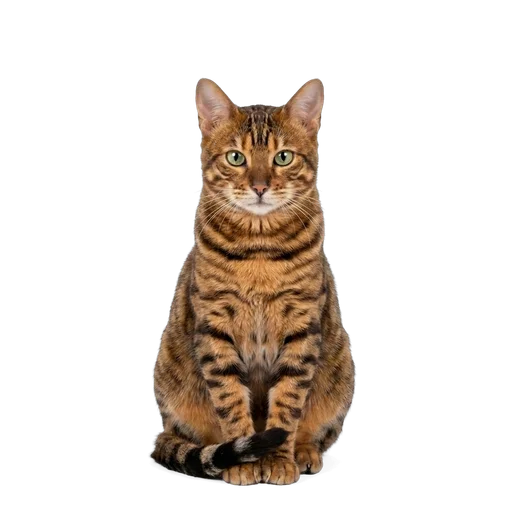
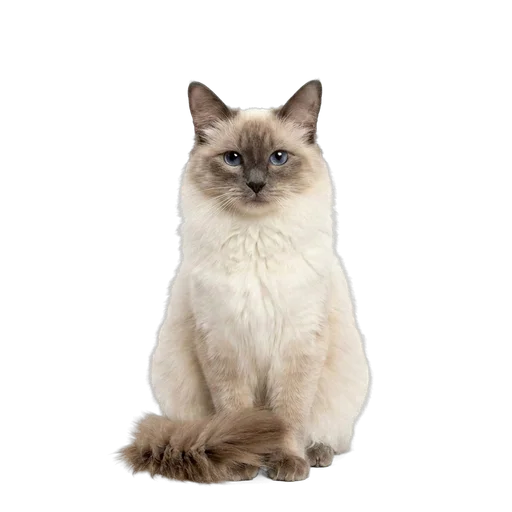
Deciding between similar breeds? Here is the Sokoke next to Toyger and Balinese.
| Sokoke | Toyger | Balinese | |
|---|---|---|---|
| Size | Medium | Medium | Medium |
| Weight | 2.5-4.5 kg | 3-7 kg | 2.5-5 kg |
| Lifespan | 15-20 yrs | 10-15 yrs | 12-20 yrs |
| Activity | Active | Active | Active |
| Shedding | Low | Low | Low |
| Good with kids | Yes | Yes | Yes |
| Apartment-friendly | Yes | Yes | Yes |
Frequently asked questions
How rare is the Sokoke, really?
Genuinely rare. It is often cited among the rarest recognized breeds in the world, with only a small number of active breeders, mostly in Europe and North America. Expect a waiting list, travel, and careful vetting from the breeder. Anyone offering cheap Sokoke kittens on short notice is almost certainly not selling Sokokes.
Are Sokokes healthy cats?
Yes, unusually so. As a natural landrace from Kenya, it has no widely documented hereditary diseases and commonly lives 15 to 20 years. They still need everything ordinary cats need: vaccinations, parasite prevention, dental care and weight monitoring.
Can a Sokoke live in an apartment?
Yes, and indoor life actually suits the breed because its thin coat handles cold poorly. The condition is vertical space and activity: climbing trees, shelves, play sessions and ideally a feline companion. A bored Sokoke in a bare flat will let you know, loudly.
Is the Sokoke hypoallergenic?
No. It sheds little thanks to the short single coat, so there is less hair around the home, but it produces normal levels of Fel d1, the protein most cat-allergic people react to. Spend time around an adult Sokoke before committing if allergies are a concern.
Do Sokokes get along with children and other cats?
Generally yes. They are playful and social with respectful kids and usually accept other cats well. They dislike rough handling and being restrained, so toddlers need supervision, and introductions to resident pets should be gradual as with any cat.
Related breeds
Health and care information is drawn from established veterinary sources and is general guidance, not veterinary advice. See our sources
Keep records for your Sokoke
Vaccinations, food and treat safety, allergy alerts and parasite reminders - all tracked for your Sokoke in the Pethls app.