

Origin: Ukraine
Ukrainian Levkoy
Get reminders for your Ukrainian Levkoy's vaccines
Vaccination and parasite reminders, food-safety scans and health records — free to start in the Pethls app.


Good for
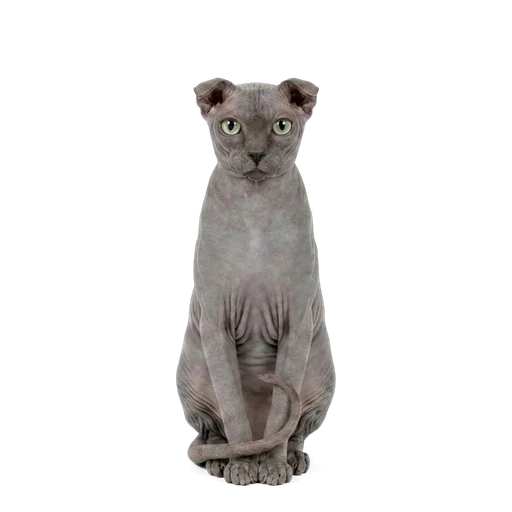
The Ukrainian Levkoy is impossible to mistake for anything else: a hairless cat with ears that fold forward, giving it an unusual, distinctive face. The breed was created in Ukraine in the early 2000s by crossing the hairless Donskoy with the Scottish Fold. Under the striking looks sits one of the friendliest cats around, gentle, curious and genuinely social, happiest indoors with warmth and company. Females usually run about 2.5 to 3.5 kg and males 4 to 5 kg, and most live around 15 to 20 years. Care revolves around the skin: baths instead of brushing, sun protection, and a sweater when the flat gets cold.
Temperament & personality
Levkoys are people cats. They greet visitors at the door, supervise your cooking, sleep under the duvet against your legs and follow the household schedule closely. Part of that sociability is genuine temperament, bred deliberately for friendliness, and part is practical: a hairless cat seeks warm bodies the way furred cats seek sunbeams.
They are gentle and adaptable with children and other pets. A Levkoy will usually tolerate a child's clumsy affection with patience, walk away rather than swat, and curl up with the resident dog for shared heat. Multi-pet homes suit them well, and a companion animal helps if the humans work long days, because this breed dislikes being alone.
Curiosity is constant but not frantic. Expect a cat that investigates every bag and open drawer, learns feeding routines to the minute, and plays in bursts rather than bouncing off walls. Energy sits in the comfortable middle: interactive play daily, then long warm naps. For families wanting an affectionate, low-drama indoor cat with an unforgettable face, the fit is excellent.
Vaccination schedule
Hairlessness changes nothing about vaccination needs. Levkoy kittens start FVRCP core vaccines (panleukopenia, herpesvirus, calicivirus) at 6 to 8 weeks, with boosters every 3 to 4 weeks until 16 weeks of age or later. The final dose at 16+ weeks is the one that reliably takes hold once maternal antibodies fade.
Rabies follows at 12 to 16 weeks per local law, boosted at one year and then on the schedule the vaccine is licensed for. FVRCP is boosted at one year, then typically every 1 to 3 years.
FeLV vaccination applies to cats with outdoor access, which a Levkoy should essentially never have unsupervised; bare skin, sunburn risk and cold sensitivity all argue for indoor life. Many vets still give the FeLV kitten series as insurance, then stop for confirmed indoor cats. One practical note: some hairless cats run a mild skin reaction at injection sites that is easier to see without fur. A lump that persists past a few weeks is worth a check.
Best food & diet
Hairless cats burn extra calories staying warm. Without an insulating coat, a Levkoy's resting energy use runs higher than a furred cat of the same size, so many need noticeably more food, sometimes 10 to 20 percent above standard feeding guides. Feed a high-quality, meat-first diet and let body condition, not the bag chart, set the portion.
The higher metabolism does not make this breed obesity-proof, especially after neutering or in a very warm home where the thermal cost drops. Monthly weigh-ins catch drift early, and a monthly photo helps too, since on a hairless cat you can literally see condition changes.
Feed smaller meals more often if your cat gulps, and favor wet food or mixed feeding for hydration. Some Levkoy owners find their cats produce oilier skin on very fatty diets; if skin grease and staining increase, look at the diet's fat content before blaming shampoo frequency.
Kittens stay on growth formula until about 12 months. There is no breed-specific supplement worth buying; skin health comes from a complete balanced diet, warmth and bathing routine, not from powders.
Common health problems
The Levkoy typically lives around 12 to 15 years, but two inherited considerations shape smart buying. The first is the fold-ear gene inherited from the Scottish Fold. That gene affects cartilage throughout the body, and mating two fold-eared cats can produce kittens with severe, painful joint and bone disease. Responsible breeders only ever pair a fold-eared Levkoy with a straight-eared cat. Ask the breeder directly about their pairing policy, and walk away from anyone vague about it.
Even in properly bred cats, it is sensible to watch for stiffness, reluctance to jump or a stilted gait, and get it checked early. The second consideration is the skin itself: sunburn through windows or on balconies, and irritation from friction, harsh detergents on bedding or over-frequent harsh bathing. Both are manageable with routine care, covered in the skin and grooming sections.
Cold sensitivity is constant. A Levkoy in a cool flat loses heat fast, so provide heated beds or warm hides, keep the home comfortably warm and use a soft sweater in winter. A hairless cat that stops eating and hunches may simply be cold, but the same posture flags illness, so do not guess for more than a day.
Beyond that, expect the standard feline list: dental disease, and kidney and thyroid changes in senior years. Annual vet exams, moving to twice yearly after age 10, plus a simple record of weight and symptoms, cover the monitoring.
Allergies & skin
Despite the common assumption, the Ukrainian Levkoy is not hypoallergenic. People react to Fel d1, and a hairless cat still spreads it across its skin when grooming. Symptoms are sometimes milder around hairless breeds because there is no shed fur to carry allergen through the house, but plenty of people react just as strongly, so spend real time with an adult Levkoy before committing.
The cat's own skin needs active management. Without fur to absorb them, skin oils accumulate and can leave brownish residue on bedding and in skin folds; too much buildup leads to clogged follicles and irritation. Regular gentle baths handle this, detailed in the grooming section.
Sun is the other risk. Pale hairless skin can burn surprisingly fast behind glass, so treat sunny windowsills as a real risk, and repeated burns can raise long-term skin cancer risk. Keep sunny sills managed with sheer curtains or UV film, or apply a vet-approved pet sunscreen to exposed skin if sunbathing cannot be prevented. Use only a vet-approved pet sunscreen. Many human sunscreens contain ingredients such as zinc oxide and salicylates that can be toxic to a cat if licked off.
Watch for contact irritation too: red patches after new laundry detergent, itchiness after a new blanket, small pimple-like spots along the back. Most cases resolve by removing the trigger and adjusting the bath routine, but spreading, crusting or genuinely itchy skin needs a vet, since hairless cats can get the same allergies, mites and infections as any cat, just more visibly.
Flea, tick & worm prevention
Hairless does not mean flea-proof. Fleas feed on skin, not fur, and a Levkoy makes an easy target; bites show as small red bumps you can actually see, which at least makes detection quick. Use a cat-licensed preventive year-round, since fleas arrive on clothing, visitors and other pets even in a strictly indoor home.
Spot-on products work on hairless cats, applied to the back of the neck where the cat cannot lick. Because Levkoy skin can be sensitive, watch the application site for redness after the first dose of any new product, and ask your vet about oral options if the skin objects. Time baths at least 2 to 3 days away from spot-on application so the product is absorbed properly.
The absolute rule: never use dog flea products containing permethrin on a cat. Permethrin poisoning causes tremors and seizures in cats and is frequently fatal. In a dog-and-cat household, keep the products separated and prevent the cat from grooming a freshly treated dog.
Worming follows standard feline practice: kittens every 2 weeks from 3 to 8 weeks old, monthly to 6 months, then every 1 to 3 months for adults based on lifestyle. An indoor Levkoy is lower risk but not zero, since roundworm eggs walk in on shoes. Set recurring reminders for flea and worm dates so the routine survives busy months.
Medications & dosing
Dosing is by current body weight and always vet-directed. A Levkoy's 2.5 to 5 kg range spans several dose bands for common medications, so weigh the cat rather than assuming; for home tracking you can weigh yourself, then weigh yourself holding the cat and subtract, but use the clinic scale for prescriptions.
Cats cannot take paracetamol under any circumstances, and ibuprofen, aspirin and most human medications range from risky to lethal. Hairless breeds add a wrinkle for topical products: with no coat to slow absorption, creams and spot-ons contact skin directly, and anything applied where a tongue can reach will be ingested. Use only feline-licensed topicals and follow placement instructions exactly.
The good news is that Levkoys are typically cooperative patients. Their people-oriented nature makes pilling, ear drops and post-op care easier than with most breeds, especially when paired with warmth and treats. For anything long-term, keep a record of every dose and note skin observations alongside, since visible skin makes this breed unusually easy to monitor for medication reactions.
Grooming & coat care
There is no coat, so grooming means skin care. The core routine is a gentle bath every 1 to 4 weeks with a mild, fragrance-free cat shampoo in comfortably warm water, adjusted to how quickly your individual cat gets oily. Over-bathing backfires: stripped skin produces more oil and gets irritated, so if the skin looks dry or flaky, stretch the interval. Between baths, unscented pet wipes handle greasy patches, and skin folds deserve a quick weekly check and wipe.
Dry the cat thoroughly and immediately. A wet hairless cat in a normal room chills fast, so have warm towels ready and keep the bathroom heated. Most Levkoys, introduced to baths as kittens, accept the routine calmly and treat the toweling as a cuddle.
Ears and nails need more attention than on furred cats. The folded ears accumulate wax where airflow is limited, so check weekly and clean visible wax from the outer ear with a vet-approved cleaner, never pushing into the canal. Nails collect a waxy film in the nail beds; wipe it away during trims every 2 weeks. Finish with tooth brushing on as many days as the cat allows.
Wardrobe and environment complete the picture: a couple of soft, well-fitting cat sweaters for winter, fleece-lined beds away from drafts, and managed sun on windowsills. Shedding is effectively nil, one genuine perk of a hairless cat.
How the Ukrainian Levkoy compares
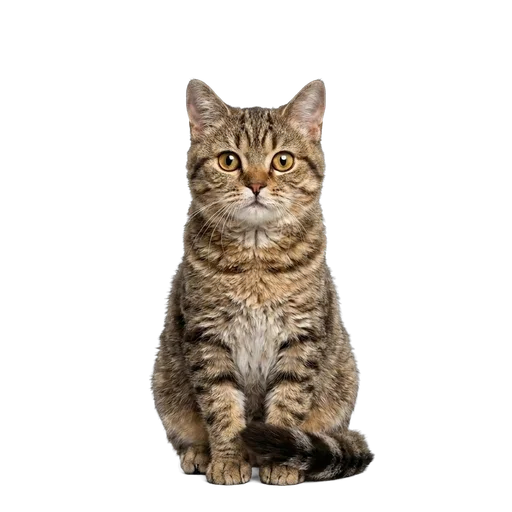
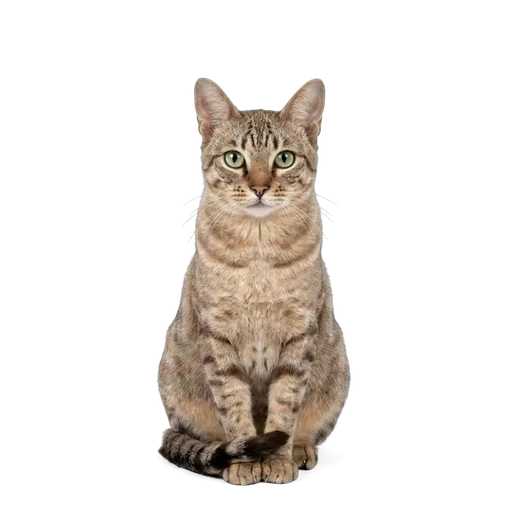
Deciding between similar breeds? Here is the Ukrainian Levkoy next to American Wirehair and Australian Mist.
| Ukrainian Levkoy | American Wirehair | Australian Mist | |
|---|---|---|---|
| Size | Medium | Medium | Medium |
| Weight | 5-7 kg | 3-7 kg | 3-6.5 kg |
| Lifespan | 15-20 yrs | 12-18 yrs | 12-16 yrs |
| Activity | Moderate | Moderate | Moderate |
| Shedding | Low | Low | Low |
| Good with kids | Yes | Yes | Yes |
| Apartment-friendly | Yes | Yes | Yes |
Frequently asked questions
Is the Ukrainian Levkoy hypoallergenic?
No. Cat allergy is triggered by the Fel d1 protein in saliva and skin secretions, and Levkoys produce it despite having no fur. Some allergic people find hairless cats easier to live with because no shed hair spreads allergen around the home, but reactions vary person to person. Test your reaction in person first.
How often does a Ukrainian Levkoy need a bath?
Usually every 1 to 4 weeks, depending on how oily the individual's skin gets. Use a mild, fragrance-free cat shampoo, warm water and thorough drying. If the skin turns flaky or red, you are bathing too often or too harshly; stretch the interval and switch to unscented wipes between baths.
Why does fold-to-fold breeding matter when buying a Levkoy?
The folded ears come from a cartilage gene inherited from the Scottish Fold. Two copies of that gene can cause severe, painful bone and joint disease. Ethical breeders always mate a fold-eared cat to a straight-eared one, so ask the breeder about their pairing policy and expect a clear, confident answer.
Do Ukrainian Levkoys get cold easily?
Yes, constantly. With no coat, they lose heat fast and actively seek warmth: laps, radiators, duvets and other pets. Provide heated or well-insulated beds, keep the home comfortably warm, and use a soft sweater in winter. Cold, hunched posture or reduced appetite in a chilly flat is a signal to warm things up and watch closely.
Can a Levkoy go outside?
Not unsupervised. Bare skin burns in the sun, chills quickly and scratches easily, and the same friendliness that makes the breed such good company indoors becomes a liability outdoors, where a trusting cat wanders up to trouble. A secure catio, a harness walk in mild shaded weather, or a sunny window with UV film gives them the stimulation safely. If sun exposure is unavoidable, use only vet-approved pet sunscreen.
Related breeds
Health and care information is drawn from established veterinary sources and is general guidance, not veterinary advice. See our sources
Keep records for your Ukrainian Levkoy
Vaccinations, food and treat safety, allergy alerts and parasite reminders - all tracked for your Ukrainian Levkoy in the Pethls app.