

Origin: United Kingdom
Cardigan Welsh Corgi
Get reminders for your Cardigan Welsh Corgi's vaccines
Vaccination and parasite reminders, food-safety scans and health records — free to start in the Pethls app.


Good for
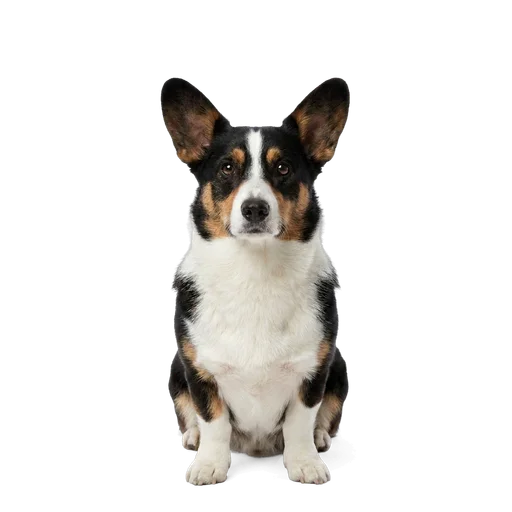
The Cardigan Welsh Corgi is the older of the two Corgi breeds and the one that kept its tail. Set on short legs with a long, sturdy body and a pair of big rounded ears, it looks built for comfort but was bred to move cattle across Welsh hillsides. That heritage shows in a smart, hardworking dog that bonds tightly to its family. Cardigans are loyal, alert, and a touch reserved with strangers, which makes them good watchdogs. Give one a job and some exercise and you get a loving, level-headed companion.
Temperament & personality
Cardigans are herding dogs at heart, so they are clever, watchful, and happiest with something to do. They form deep attachments to their people and like to be part of the household action. That loyalty comes with an opinion; they will tell you when someone is at the door, and they can be vocal if boredom sets in.
With strangers they tend to hang back and assess before warming up, which is normal for the breed rather than a fault. Early, positive socialization smooths those edges and helps a Cardigan grow into a confident adult that reads situations calmly. They are generally good with children and other pets, though their herding instinct can show up as nipping at heels, which training redirects.
They are intelligent and enjoy learning, so obedience, trick training, and dog sports all suit them. A Cardigan that gets mental work alongside its walks is a settled, easy dog to live with. One left under-stimulated finds its own entertainment, usually loudly.
Vaccination schedule
Puppies begin the core vaccine course at around 6 to 8 weeks with DHPP (distemper, hepatitis, parvovirus, parainfluenza), then get repeat doses every 2 to 4 weeks until about 16 weeks old. Rabies is given when the puppy is old enough, generally around 12 to 16 weeks, then boosted on the schedule set by the vaccine and your local law.
Once the puppy series is finished, adult Cardigans move to booster intervals your vet decides, usually core vaccines every 1 to 3 years. Leptospirosis is now recommended as a core vaccine for every dog, given as a 2-dose puppy series followed by an annual booster (unlike the every 1 to 3 year DHPP boosters); dogs with water, rural, or wildlife exposure face higher risk, which is one reason the yearly booster matters. Depending on your area and your dog's lifestyle, your vet may also add non-core cover such as kennel cough, Lyme disease, or canine influenza.
Keep a clear record of every vaccination and its due date. A digital reminder means you never miss a booster, and these visits double as regular checkups where your vet can look your dog over head to tail.
Best food & diet
Feed a complete, balanced diet suited to your Cardigan's age and activity level. Because these are food-motivated dogs that pile on weight easily, portion control is not optional; it is one of the most important things you can do for a long-backed breed.
Keeping a Cardigan lean is a genuine health measure, not vanity. Every extra kilo puts more strain on the spine and the joints, and this is a breed where back trouble is a real concern. Measure meals, factor treats into the daily allowance, and check your dog's waistline regularly rather than trusting the eye test.
Puppies should grow steadily rather than fast, since rapid growth stresses developing joints. Ask your vet or breeder for a feeding guide, and adjust as your dog matures. Fresh water should always be available, and any diet change is best made gradually over a week or so to avoid upsetting the stomach.
Common health problems
The Cardigan's long back and short legs come with a real risk. Like many long-backed, short-legged breeds, Cardigans can run into intervertebral disc disease (IVDD), where a spinal disc bulges or ruptures and presses on the spinal cord, causing pain, weakness, or in bad cases paralysis. Keeping your dog lean and limiting big jumps on and off furniture goes a long way to protecting the spine.
Hip dysplasia is worth catching early, where the hip joint develops poorly and can lead to arthritis over time; good breeders screen breeding dogs for it. Degenerative myelopathy, a progressive disease of the spinal cord that gradually weakens the hind legs in older dogs, is worth discussing with your vet and can be tested for genetically.
Eyes and urinary tract round out the list. Progressive retinal atrophy can slowly reduce vision and can end in blindness, and screening is available. Cardigans can form urinary stones, which show up as straining, blood in the urine, or frequent squatting; these need veterinary treatment and sometimes a special diet. Buying from a breeder who health-tests reduces the risk across the board.
Allergies & skin
Cardigans carry a thick double coat, and while it is generally hardy, skin allergies can still crop up. Environmental triggers such as pollens, grasses, and dust mites, or occasionally a food ingredient, can lead to itching, red skin, and ear irritation. Persistent scratching, paw licking, or head shaking is worth a vet visit.
The dense undercoat can hide problems, so part the fur now and then to check the skin underneath, especially during heavy sheds when loose hair traps moisture and debris. Keeping the coat well brushed lets air reach the skin and makes it easier to spot fleas, hot spots, or irritation early.
If allergies are diagnosed, management usually blends regular bathing with a suitable shampoo, parasite control, and sometimes anti-itch medication or a diet trial. As with most dogs, controlling fleas is a big part of keeping allergic skin calm, since flea bites make everything worse.
Flea, tick & worm prevention
Cardigans need the same year-round parasite protection as any dog. Fleas and ticks are covered by spot-on treatments, chewable tablets, or collars, most of which are dosed by body weight, so pick the band that matches your dog and reapply on time. Lapses are when infestations sneak in.
Worming targets roundworms and tapeworms, plus lungworm and heartworm in regions where those are present. Puppies are wormed often in their first months, then adults follow a routine, commonly every three months, that your vet tailors to local risk and lifestyle.
Because a Cardigan sits low to the ground and loves nosing through grass, ticks can hitch a ride easily. Run your hands through that thick coat after country walks and remove any ticks with a proper tool. Prompt removal lowers the chance of tick-borne disease taking hold.
Medications & dosing
At 11 to 17 kg a Cardigan is a small but solidly built dog, and medication doses are still worked out by body weight. Weigh your dog properly rather than estimating, since the low, long-bodied shape of the breed makes it easy to misjudge weight by eye.
Never reach for human medicines without your vet's say-so. Painkillers made for people, such as ibuprofen and paracetamol, are dangerous for dogs, and even dog-safe drugs must be given at the correct dose and interval. This matters with a breed prone to back pain, where owners are tempted to self-treat a sore dog; always let the vet choose the pain relief.
Follow prescriptions exactly, complete any course as directed, and check before stopping early or catching up a missed dose. If your Cardigan seems in pain, especially a reluctance to move, jump, or use the stairs, treat it as a reason to call the vet rather than to medicate at home.
Grooming & coat care
The Cardigan's weatherproof double coat is practical rather than fussy, but it sheds, and it sheds heavily. Expect a steady drift of hair most of the year and two big seasonal molts where the undercoat comes out in clumps. A slicker brush and an undercoat rake are your best friends.
Brush at least a couple of times a week normally, and step that up to daily during the molting seasons to stay ahead of the loose hair. Regular brushing keeps the coat healthy, spreads natural oils, and cuts down on the fur that would otherwise coat your home.
Bath only occasionally, when your dog is genuinely dirty, since over-bathing strips the coat's natural protection. Round out the routine with nail trims, ear checks, and tooth brushing. This is not a coat that needs clipping, so grooming demands sit in the middle range: not high-maintenance, but not wash-and-go either.
How the Cardigan Welsh Corgi compares
Deciding between similar breeds? Here is the Cardigan Welsh Corgi next to Cavalier King Charles Spaniel and Dandie Dinmont Terrier.
| Cardigan Welsh Corgi | Cavalier King Charles Spaniel | Dandie Dinmont Terrier | |
|---|---|---|---|
| Size | Small | Small | Small |
| Weight | 11-17 kg | 5-8 kg | 8-11 kg |
| Lifespan | 12-15 yrs | 9-14 yrs | 12-15 yrs |
| Activity | Moderate | Moderate | Moderate |
| Shedding | High | Medium | Low |
| Good with kids | Yes | Yes | Yes |
| Apartment-friendly | No | Yes | Yes |
Frequently asked questions
What is the difference between a Cardigan and a Pembroke Welsh Corgi?
The easiest tell is the tail: the Cardigan keeps its long, fox-like tail, while the Pembroke is naturally short-tailed or has traditionally been docked. Cardigans are the older breed, tend to be a little larger and longer in the body, and have bigger, more rounded ears. They also come in more coat colors, including brindle and blue merle.
Do Cardigan Welsh Corgis shed a lot?
Yes. The double coat sheds year-round and blows out heavily twice a year during seasonal molts. Regular brushing, daily during the big sheds, keeps it under control, but this is not a breed for anyone hoping to avoid dog hair on the sofa and clothes. They are not hypoallergenic.
How do I protect my Corgi's back?
Keep your dog lean, since extra weight is the biggest strain on that long spine. Discourage jumping on and off furniture and the bed, use ramps or steps where you can, and take stairs slowly. Support the whole body when lifting rather than picking your dog up under the front legs. Any sudden reluctance to move or signs of back pain warrant a vet visit.
Are Cardigan Welsh Corgis good with children and other pets?
Generally yes, especially when raised with them and properly socialized. They are loyal and playful family dogs. The one thing to watch is their herding instinct, which can show as nipping at heels when children run around. Training redirects this, and supervising early interactions helps everyone learn the rules.
How much exercise does a Cardigan need?
They have moderate energy and enjoy a good daily walk plus some active play or training. As a herding breed they also need mental stimulation, so trick work, puzzle toys, or dog sports keep them content. They are adaptable but do best with a yard or regular outdoor time rather than being cooped up in a small flat all day.
Related breeds



Health and care information is drawn from established veterinary sources and is general guidance, not veterinary advice. See our sources
Keep records for your Cardigan Welsh Corgi
Vaccinations, food and treat safety, allergy alerts and parasite reminders - all tracked for your Cardigan Welsh Corgi in the Pethls app.