

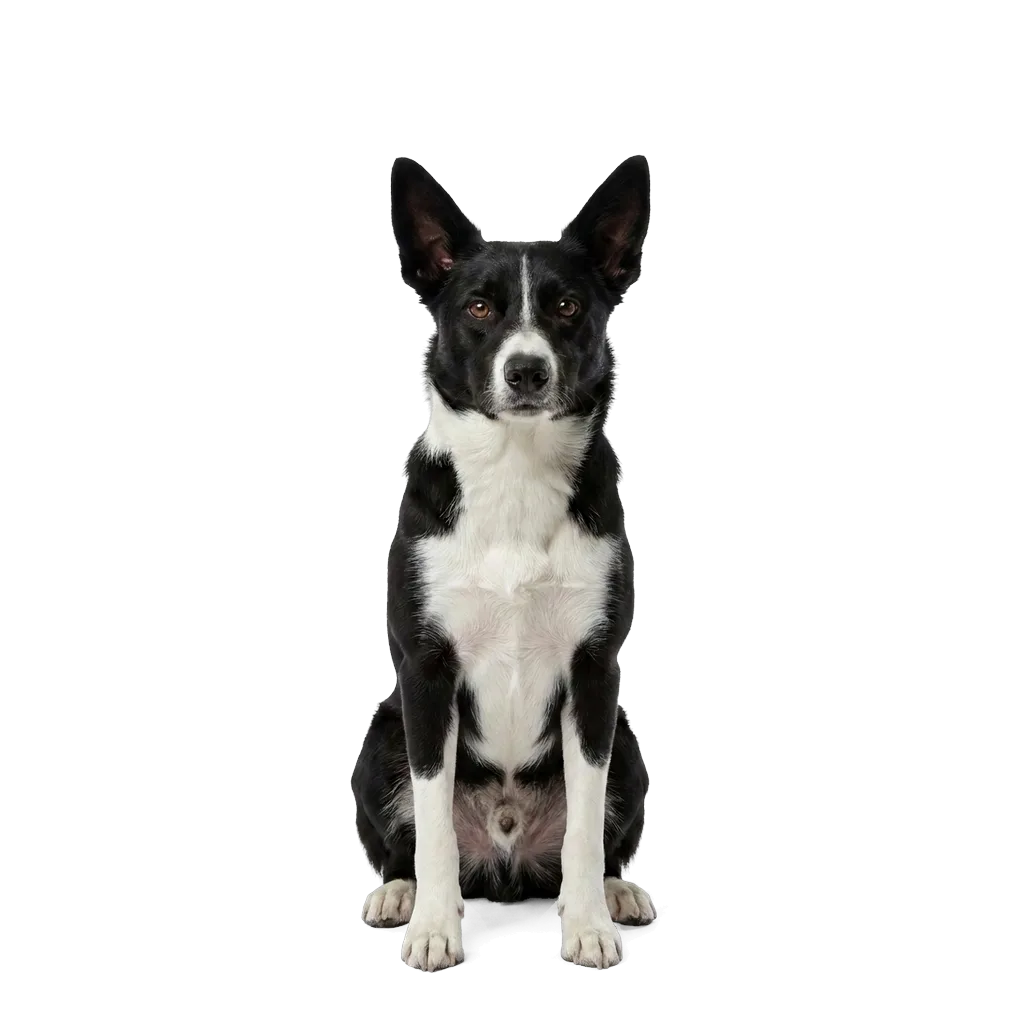
Origin: United States
McNab
Get reminders for your McNab's vaccines
Vaccination and parasite reminders, food-safety scans and health records — free to start in the Pethls app.


Good for
The McNab is California's own stockdog, developed from the 1880s onward by Scottish immigrant rancher Alexander McNab from collies he imported to his Mendocino County ranch to work cattle and sheep. It is a lean, hard-muscled dog with a huge weight range of roughly 11 to 30 kg, cat-like feet, and an off switch that only works after the work is done. McNabs are a hardy, long-lived working breed and stay sound for most of them. This is a ranch and sport dog through and through, and it carries the herding-breed MDR1 (ABCB1) drug-sensitivity mutation often enough that testing should be on every owner's list.
Temperament & personality
A McNab is defined by focus. Where some herding breeds circle wide and fuss, the McNab was selected as a loose-eyed, upright heading dog that works cattle up close and gets the job done in punishing heat without wasted motion. That translates at home into a dog that watches you constantly, learns commands in a handful of repetitions, and takes work seriously. With its own family the breed is friendly, affectionate, and often quite soft to correction; harsh handling backfires badly.
Around strangers, McNabs range from friendly to politely aloof. They are less sharp than many guarding farm breeds and generally sensible with visitors once introduced. With other dogs most are agreeable, especially those raised working in packs, but the strong chase-and-control instinct means cats, chickens, and small pets need careful introductions and management. Some McNabs never become trustworthy with fast-moving small animals.
Be honest about the energy before you commit. This is a dog bred to cover dozens of kilometers a day over rough ground. Without livestock, it needs a serious substitute: agility, flyball, bikejoring, trail running, or long daily sessions of demanding training. A McNab left in a suburban backyard with a fifteen-minute walk becomes a fence-running, hole-digging, compulsively barking problem. It is emphatically not a couch or apartment dog.
Vaccination schedule
McNab puppies follow the standard core protocol: the DHPP combination vaccine against distemper, adenovirus (hepatitis), parainfluenza, and parvovirus. First shot at 6 to 8 weeks, then repeat doses of the series every 3 to 4 weeks until at least 16 weeks of age. Parvo is unforgiving in ranch environments where dogs, wildlife, and visiting vehicles mix, so do not let a puppy roam shared ground until the series is complete. A booster at one year, then repeat every one to three years per your vet's protocol.
Rabies is legally required. The first dose goes in at 12 to 16 weeks depending on your state, a booster follows at one year, and after that a one-year or three-year cycle applies based on the vaccine and local ordinance. Working dogs that may contact skunks, bats, or foxes have real exposure risk, so never let a rabies booster lapse.
Given the typical McNab lifestyle, non-core vaccines earn their keep. Leptospirosis vaccination is widely recommended for dogs drinking from stock ponds and creeks. Rattlesnake vaccine is worth discussing with a California vet for dogs working brushy hill country, though avoidance training matters more. Add Bordetella and canine influenza if your dog travels to trials, training clinics, or boarding.
Best food & diet
Fuel a McNab like the athlete it is. A working or sporting McNab does well on a performance formula with 26 to 30 percent protein and 15 to 20 percent fat, while a lightly worked pet does fine on a standard active-adult food. Because the breed spans roughly 11 to 30 kg, feeding guides are a starting point only; a small female pet and a big male ranch dog may eat wildly different amounts. Two meals a day beats one, and hard exercise should not happen within an hour of eating.
These dogs run lean by design, and that is correct. A McNab in working condition should sit at a lean body-condition score, with ribs easily felt under a thin fat cover and an obvious tucked waist. Newcomers to the breed often think a fit McNab looks thin. Resist the urge to fatten it up; extra weight is the enemy of joints, heat tolerance, and stamina.
Puppies grow on a quality puppy food until about 12 months, kept lean to protect developing hips. For adults in heavy seasonal work, such as gathering in fall, increase rations with workload and taper them off-season rather than feeding for the hardest week all year. Fresh water in quantity matters more for this heat-country breed than any supplement.
Common health problems
The McNab is a landrace shaped by a century of ranch selection, where unsound dogs simply did not get bred. As a working landrace, the McNab has avoided many of the inherited problems seen in more heavily line-bred breeds, and typically lives 13 to 15 years, with many dogs still working at ten. There is no long list of breed diseases, but a couple of watch-points stand out.
MDR1 (ABCB1) drug sensitivity is the most important. As a collie-descended breed, McNabs carry the mutation at meaningful rates. It is invisible until the wrong drug is given, at which point it can cause tremors, blindness, coma, or death. A one-time DNA test removes the guesswork; details are in the medications section below.
Like many working herding breeds, McNabs can occasionally develop hip dysplasia, so it is worth asking breeders for hip scores on both parents and keeping the dog lean through puppyhood. Beyond that, the usual general canine eye issues can appear in any individual dog rather than being breed-typical. Cherry eye, for example, a prolapse of the third eyelid gland that shows up as a red lump in the inner corner of the eye, is uncommon in McNabs but can occur in any breed; if it does, know that it looks alarming but is fixable, and the gland should be surgically tucked back rather than removed, since removal leads to dry eye later. Beyond those, McNab health care is mostly about the injuries any hard-running ranch dog collects: foxtails, torn pads, barbed-wire cuts, and rattlesnake encounters.
Allergies & skin
McNab skin is generally trouble-free, helped by a short, practical coat that dries fast and hides nothing. When itching does show up, the usual suspects apply: flea allergy dermatitis first, then environmental allergies to grasses and pollens, which are hard to avoid in a dog that spends its life belly-deep in California grassland. Paw licking, face rubbing, and recurring ear irritation in season point to atopy and deserve a vet workup rather than endless medicated baths.
Food allergy is possible but uncommon. If your vet suspects it, commit to a proper elimination diet for 8 to 12 weeks with zero off-plan treats; half-hearted trials waste months. Chronic ear infections or year-round itching, rather than seasonal, are the pattern that justifies the effort.
The bigger regional skin threat is mechanical, not allergic: foxtail grass awns. These barbed seeds drill into paws, ears, nostrils, and armpits from late spring through fall and can migrate deep into the body. Check a working McNab nose to tail after every outing in dry grass, especially between the toes. A sudden violent sneezing fit, head shaking, or a weeping lump between toes means a vet visit. The breed is not hypoallergenic; it sheds real hair and dander year-round.
Flea, tick & worm prevention
Northern California ranch country is prime territory for fleas and for ticks carrying Lyme disease and anaplasmosis, and the western black-legged tick is active through the cool months when owners least expect it. Keep a McNab on year-round flea and tick prevention: monthly isoxazoline chews suit most working dogs because they cannot wash off in stock ponds. Do daily hand checks after brush work, paying attention to ears, neck folds, and between toes.
Heartworm is established in California, including the foothill and coastal counties where McNabs work, so monthly heartworm prevention runs all twelve months with an annual test. For intestinal parasites, dogs with access to livestock, carrion, and squirrels have higher tapeworm and roundworm exposure than city pets. Twice-yearly fecal exams, or routine quarterly deworming for full-time ranch dogs, is a sensible standard. Puppies get dewormed every two weeks from 2 to 8 weeks old, then move onto monthly prevention.
The MDR1 caveat applies here too. Standard monthly heartworm preventives use low, labeled doses that are generally well tolerated by MDR1-affected dogs. Confirm any product with your vet. Concentrated livestock ivermectin, however, is a genuine poisoning hazard on ranches. McNabs have been poisoned by licking spilled cattle wormer or eating the manure of recently dewormed horses. Store livestock products securely and keep dogs out of the pen for a few days after treating stock.
Medications & dosing
With a breed weight range as wide as 11 to 30 kg, weight-based dosing is not a formality; the right dose for a big male could be nearly triple the dose for a small female. Have your vet weigh the dog at every visit, calculate every prescription from current weight, and never estimate. Skip human painkillers entirely unless a vet directs otherwise, since ibuprofen, naproxen, and acetaminophen are all toxic to dogs.
McNabs commonly carry the MDR1 (ABCB1) mutation inherited from their collie ancestors. Affected dogs lack a working drug pump at the blood-brain barrier, so certain medications build up in the brain at normal doses. The dangerous list includes high-dose ivermectin and similar dewormers, loperamide (Imodium), certain sedatives such as acepromazine and butorphanol, and several chemotherapy drugs including vincristine, vinblastine, and doxorubicin.
Get the MDR1 cheek-swab test done once, early in the dog's life, and tell every vet who ever treats the dog, including emergency clinics where nobody knows your history. Ask for the status to be flagged in the chart. If the dog is untested and needs urgent sedation or deworming, say the words McNab and possible MDR1 out loud; a good vet will choose safer alternatives on the spot.
Working dogs also see more NSAIDs for sprains and more antibiotics for wire cuts than the average pet. Give NSAIDs with food, complete every antibiotic course, and call the clinic promptly if a medicated dog goes wobbly, dull, or off its feed. Those are exactly the early signs of a drug reaction you do not want to sleep on.
Grooming & coat care
Grooming a McNab is refreshingly quick. The short-to-medium coat was selected to shed foxtails and burrs rather than collect them, and it needs only a weekly once-over with a rubber curry or slicker brush to lift dead hair and dust. Shedding is moderate and fairly steady, with a heavier turnover in spring. There is nothing to trim, strip, or style.
Baths happen when the dog finds something dead to roll in, which for a ranch dog is a real schedule. Use a gentle dog shampoo, rinse thoroughly, and let the coat air dry. Between baths, a wipe-down with a damp towel handles ordinary dust. The coat's natural oils do useful work in brush country, so avoid over-washing.
The parts that actually need discipline are nails, ears, and feet. Trim nails every few weeks if hard ground is not doing the job, and do not forget dewclaws. Check ears weekly and after every grass outing, since McNab ears, whether pricked or folded, are classic foxtail traps. Examine pads and between toes after rough work for cuts, seeds, and thorns. Add tooth brushing a few times a week and the whole routine still takes less time than a border collie's brushing alone.
How the McNab compares
Deciding between similar breeds? Here is the McNab next to Boykin Spaniel and American Eskimo Dog.
| McNab | Boykin Spaniel | American Eskimo Dog | |
|---|---|---|---|
| Size | Medium | Medium | Medium |
| Weight | 10-25 kg | 11-18 kg | 4.5-16 kg |
| Lifespan | 10-13 yrs | 10-15 yrs | 13-15 yrs |
| Activity | Active | Active | Active |
| Shedding | Medium | Medium | High |
| Good with kids | Yes | Yes | Yes |
| Apartment-friendly | No | No | Yes |
Frequently asked questions
Is a McNab a good pet for a regular family home?
Only if the family is genuinely active or can give the dog a job. McNabs are friendly, loyal, and good with respectful children, but they need one to two hours or more of hard exercise plus mental work daily. In a sedentary suburban home, or any apartment, the breed's energy and herding instinct turn into serious behavior problems.
Do McNabs have the MDR1 mutation?
Many do. The McNab descends from Scottish collies, the source population for MDR1 (ABCB1), and testing labs regularly find the mutation in the breed. Do a one-time cheek-swab DNA test and share the result with your vet, since affected dogs react badly to high-dose ivermectin, loperamide, some sedatives, and certain chemotherapy drugs.
How is a McNab different from a Border Collie?
Both are collie-descended stockdogs, but the McNab was bred in California for cattle work in heat: it tends to work closer and more upright, has a shorter, easier coat, and is often described as having a calmer off switch at home once exercised. Border Collies show more eye and crouch. Energy needs are similarly high in both.
How big do McNabs get?
The breed is unusually variable because it was bred for function, not looks. Adults range from roughly 11 to 30 kg, with small quick females at one end and big cattle-working males at the other. Ask to see the parents; puppies usually land near the family average.
Are McNabs healthy dogs?
Yes, notably so. As a working landrace they escaped many inherited problems and commonly live 13 to 15 years. The main watch-points are MDR1 drug sensitivity and occasional hip dysplasia, plus the everyday hazards of ranch life such as foxtails and ticks; problems like cherry eye are uncommon in the breed and no more likely than in dogs generally.
Related breeds

Health and care information is drawn from established veterinary sources and is general guidance, not veterinary advice. See our sources
Keep records for your McNab
Vaccinations, food and treat safety, allergy alerts and parasite reminders - all tracked for your McNab in the Pethls app.