

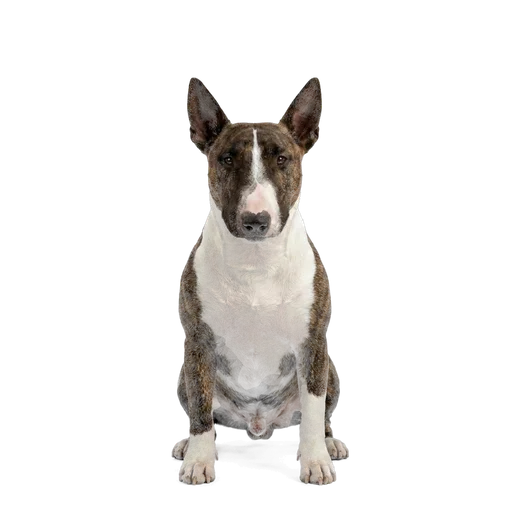
Origin: United Kingdom
Miniature Bull Terrier
Get reminders for your Miniature Bull Terrier's vaccines
Vaccination and parasite reminders, food-safety scans and health records — free to start in the Pethls app.


Good for
The Miniature Bull Terrier packs the full egg-headed Bull Terrier personality into a compact 11 to 15 kg body. Developed in the UK from the same stock as its bigger cousin, this small, muscular clown lives around 11 to 13 years and spends most of them making people laugh. Minis are comical, stubborn, physically tough and hopelessly devoted to their humans. They are also a handful in training and carry a few serious inherited eye and kidney conditions, so health testing matters more here than in most small breeds.
Temperament & personality
Mini Bull Terriers are the comedians of the terrier world. They greet life at full throttle: spinning with joy at dinner time, hurling themselves onto laps as if they weighed 3 kg instead of a solid 14, and performing the famous 'Bully run' zoomies around the garden at startling speed. They are intensely people-oriented and genuinely unhappy left alone for long stretches. This is a dog that wants to be in the room, preferably on you.
Underneath the comedy sits classic Bull Terrier stubbornness. Minis are not stupid; they simply weigh every request against their own agenda. Training works when it is short, funny and paid well in food and games. Repetitive drilling bores them into open rebellion. House rules need to be consistent from day one, because a Mini who learns the sofa is negotiable will renegotiate daily for a decade.
With children they are usually superb: sturdy enough to enjoy rowdy play, patient and affectionate. Supervision still matters because their play style is physical and they can flatten a small child out of pure enthusiasm. With other dogs the picture is mixed. Many Minis are fine with dogs they know, but same-sex scrappiness and a strong prey drive toward cats and small animals run in the breed. Early, ongoing socialization is the best insurance.
They adapt surprisingly well to apartments if their exercise needs are met, since they are compact and not typically nuisance barkers. What they cannot adapt to is being ignored.
Vaccination schedule
Mini Bull Terrier puppies follow the standard core protocol. DHPP (distemper, adenovirus, parvovirus, parainfluenza) starts at six to eight weeks and is repeated every three to four weeks until 16 weeks or older. Do not cut the series short: a bold, sociable puppy like a Mini is exactly the sort that meets many dogs early, and parvovirus does not care how charming he is.
Rabies is given as a single dose between 12 and 16 weeks depending on where you live, boosted at one year, then every one to three years per the vaccine license and local law. Leptospirosis is now recommended as a core vaccine for every dog: it needs a two-dose puppy series followed by an annual booster, and the risk is higher if your dog is likely to drink from puddles and ponds or spend time around rural and wildlife areas. Discuss non-core vaccines based on lifestyle: Bordetella if daycare, boarding or training classes are on the calendar.
After the puppy series and the one-year booster, adults typically move to DHPP every three years, with the core leptospirosis booster given annually and kennel cough annually where relevant. Keep vaccine appointments even in the awkward adolescent phase; it is also your vet's chance to check knees, eyes and hearing while the breed's key conditions are still easy to monitor. Puppies from tested parents still need their own veterinary record started properly.
Best food & diet
Feed a complete small-to-medium breed diet matched to a muscular, energetic build. At 11 to 15 kg, Minis are dense little dogs, and much of that weight should be muscle rather than padding. A quality food with around 25 percent protein suits most adults; puppies need a puppy formula until roughly 10 to 12 months. Two meals a day for adults keeps energy stable and reduces begging theatrics, at which this breed excels.
Weight creep is the main dietary enemy. Minis are enthusiastic eaters, comedians who work for snacks, and prone to becoming little barrels in middle age. Extra weight loads the kneecaps, which matters in a breed with patellar luxation in its background. Measure meals, count treats within the daily total and keep a visible waist. You should feel ribs without pressing hard.
Two breed-specific angles are worth a word with your vet. Skin-prone individuals sometimes improve on diets rich in omega-3 fatty acids, and a fish-based food or fish oil supplement is a reasonable trial for a Mini with recurring itchiness. And for any dog diagnosed with polycystic kidney disease, diet becomes part of management: your vet may recommend a kidney-support food with controlled phosphorus. Fresh water should always be available, and a Mini who suddenly starts emptying the water bowl deserves a kidney check rather than a bigger bowl.
Common health problems
Primary lens luxation (PLL) is the breed's headline problem. The fibers holding the lens inside the eye weaken and the lens slips out of position, usually between three and seven years of age. A luxated lens can block fluid drainage, spike eye pressure and cause painful glaucoma and blindness within days. A red, cloudy, weepy or suddenly painful eye in a Mini is an emergency, not a wait-and-see. The good news: a DNA test identifies affected dogs and carriers, so ask for the parents' PLL results before buying a puppy, and test your own dog if its status is unknown. Affected dogs benefit from regular pressure checks so problems are caught early.
Patellar luxation, where the kneecap slips out of its groove, appears in the breed as it does in many small dogs. The classic sign is a skipping step: the dog trots, hops on three legs for a few strides, then carries on as if nothing happened. Mild cases need only weight control and muscle-building exercise; severe cases may need surgery. Have your vet grade the knees at routine visits.
Deafness runs in Bull Terrier breeds, particularly in predominantly white dogs, in one ear or both. A puppy that ignores you may be stubborn (plausible) or deaf (testable). The BAER hearing test gives a definitive answer and good breeders test whole litters. Unilateral deaf dogs live completely normal lives; bilaterally deaf dogs can thrive too but need hand-signal training and secure spaces.
Polycystic kidney disease (PKD) causes fluid-filled cysts in the kidneys that can gradually reduce function. Some affected dogs never show signs; others develop increased thirst, weight loss and poor appetite in middle age. Ultrasound screening detects cysts, and early diagnosis lets you slow progression with diet and monitoring. Given the list above, it pays to book an annual vet check that looks over the eyes, the knees and the kidneys, in a breed that otherwise lives a hard-wearing 11 to 13 years.
Allergies & skin
Bull Terrier breeds are known for sensitive skin, and the Mini inherited it. The short white coat offers little protection, and atopic dermatitis (environmental allergy to pollens, grasses and dust mites) is relatively common. It usually starts between one and three years of age as paw chewing, face rubbing, armpit and belly redness or repeated ear infections that return as soon as drops stop.
Flea allergy makes everything worse, so strict year-round flea control is the first prescription for any itchy Mini. If itching persists, your vet will work through the options: medicated shampoos, essential fatty acid supplements, antihistamine trials and modern targeted anti-itch medications that have transformed life for allergic dogs. Genuine food allergy is less common but worth ruling out with a properly run elimination diet if signs are year-round.
White-coated Minis also sunburn, especially on the ear tips, nose and any thinly haired belly skin, and repeated sunburn raises skin cancer risk. Provide shade in summer and use a dog-safe sunscreen for beach days and sunbathers (many Minis are dedicated sun worshippers). Interdigital cysts between the toes are something to stay alert to in any dog; a weekly paw check catches these while they are small. The breed is not hypoallergenic, and its short coat sheds a steady moderate amount of stiff little hairs that weave into fabric with impressive persistence.
Flea, tick & worm prevention
Because so many Mini Bull Terriers have sensitive or allergy-prone skin, flea prevention is genuinely non-negotiable: one flea bite can trigger a week of scratching in a sensitized dog. Use a vet-recommended product all year round, either a monthly spot-on or a chewable tablet lasting one to three months. Treat every pet in the household, since one protected dog in a flea-infested home is just a slower buffet.
Ticks come home from parks, long grass and countryside walks. Most modern flea products also cover ticks; check that yours does. The Mini's short white coat makes ticks easy to spot, so do a quick hands-on check after rural walks, focusing on ears, neck folds, armpits and between toes, and remove any tick with a proper tick remover using a twist rather than a pull.
Worming runs on the usual schedule: every two weeks for young puppies from two weeks of age, monthly from 12 weeks to six months, then at least every three months as adults. Households with children should worm more often, monthly is safest, because roundworm eggs are a genuine human health risk and Minis and kids tend to be physically inseparable. Ask your vet about lungworm cover if slugs and snails are common in your area. Dose by actual weight; at 11 to 15 kg most Minis sit near a band boundary on dosing charts, so a weigh-in twice a year keeps you accurate.
Medications & dosing
All medication for a Mini Bull Terrier should be dosed by current body weight and directed by a vet. At 11 to 15 kg the breed often lands right at the edge between 'small' and 'medium' bands on packaging, and rounding the wrong way with some products, especially wormers and flea treatments, means either under-dosing (ineffective) or over-dosing (unsafe). When in doubt, ask the practice to confirm the band.
Never reach for human painkillers. Ibuprofen causes stomach ulcers and kidney damage in dogs, and kidney safety deserves extra respect in a breed carrying polycystic kidney disease. For the same reason, if your Mini is diagnosed with PKD or reduced kidney function, tell every prescribing vet before any drug is chosen; NSAIDs and certain antibiotics need dose adjustment or avoidance when kidneys are compromised.
Deaf or partially deaf Minis can benefit from one practical adjustment: a dog that cannot hear reassurance may wake more disoriented from sedation, so it is worth mentioning hearing status before procedures. Otherwise the rules are boring and lifesaving: finish antibiotic courses even after the dog looks fine, store chewable medications out of reach because a Mini will eat a month's supply as a snack if given the chance, and report vomiting, black stools or lethargy on any new drug the same day.
Grooming & coat care
Grooming a Mini Bull Terrier is gloriously simple. The short, flat, glossy coat needs a once-weekly going-over with a rubber grooming mitt or soft bristle brush to lift dead hair and distribute oils. That is genuinely most of the job. Shedding is moderate rather than heavy, with noticeable seasonal peaks in spring and autumn when a daily two-minute mitt session keeps hair off the sofa.
Bathe every six to eight weeks or as needed, using a gentle hypoallergenic dog shampoo, since many Minis have reactive skin that harsh products will inflame. Dogs on allergy management may be on a medicated shampoo schedule instead; follow the vet's plan rather than the bottle. Rinse thoroughly, as leftover shampoo residue is a classic cause of post-bath itching in this breed.
Round out the routine with nail trims every three to four weeks (Minis are not big self-trimmers unless they do lots of pavement work), weekly ear checks, and tooth brushing several times a week. Skin checks are the breed-specific extra: while brushing, scan for redness, sunburn on ear tips, lumps and any interdigital swellings between the toes. Start all handling in puppyhood with plenty of treats, because a 14 kg dog built like a small anvil can make an unwilling nail trim into a full contact sport.
How the Miniature Bull Terrier compares
Deciding between similar breeds? Here is the Miniature Bull Terrier next to Border Terrier and Cairn Terrier.
| Miniature Bull Terrier | Border Terrier | Cairn Terrier | |
|---|---|---|---|
| Size | Small | Small | Small |
| Weight | 11-15 kg | 5-7 kg | 6-8 kg |
| Lifespan | 11-13 yrs | 12-15 yrs | 13-15 yrs |
| Activity | Active | Active | Active |
| Shedding | Medium | Low | Low |
| Good with kids | Yes | Yes | Yes |
| Apartment-friendly | Yes | Yes | Yes |
Frequently asked questions
How is the Miniature Bull Terrier different from the standard Bull Terrier?
Size, mostly. The Mini carries the same egg-shaped head, muscular build and clownish temperament in an 11 to 15 kg package, versus roughly 22 to 32 kg for the standard. It is a separate registered breed with its own health priorities, notably primary lens luxation, which is tested by DNA. Many owners find the Mini easier to manage physically while keeping every bit of the personality.
What is primary lens luxation and how do I protect my dog?
PLL is an inherited condition where the lens inside the eye breaks loose from its supporting fibers, usually between three and seven years of age. A loose lens can trigger glaucoma and blindness quickly, so any suddenly red, cloudy or painful eye needs a vet the same day. A DNA test shows whether a dog is affected, a carrier or clear; buy puppies from tested parents and test your dog if its status is unknown.
Are Mini Bull Terriers good family dogs?
For active, engaged families, yes. They are affectionate, sturdy and funny, and most adore children. They need supervision with small kids because they play with their whole body, consistent training because they are stubborn, and company because they hate being alone. Households with cats or small pets should think carefully, as prey drive runs strong in the breed.
Why do breeders BAER test Mini Bull Terrier puppies?
Deafness in one or both ears occurs in Bull Terrier breeds, especially predominantly white dogs. The BAER test measures the brain's response to sound and gives a definitive result even in young puppies. A dog deaf in one ear lives an entirely normal life; knowing about bilateral deafness early lets owners train with hand signals from the start.
Can a Miniature Bull Terrier live in an apartment?
Yes, better than many terriers. Minis are compact, not typically constant barkers, and happiest wherever their people are. The trade is exercise: they need a solid hour of walks and play daily plus mental games, or the famous Bully zoomies will happen indoors, at speed, off your furniture.
Related breeds



Health and care information is drawn from established veterinary sources and is general guidance, not veterinary advice. See our sources
Keep records for your Miniature Bull Terrier
Vaccinations, food and treat safety, allergy alerts and parasite reminders - all tracked for your Miniature Bull Terrier in the Pethls app.