

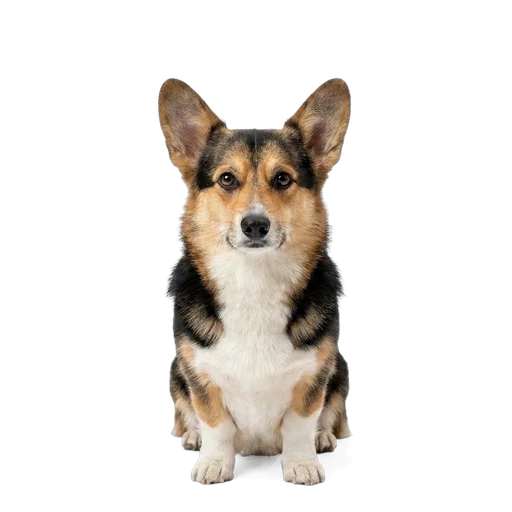
Origin: United Kingdom
Pembroke Welsh Corgi
Get reminders for your Pembroke Welsh Corgi's vaccines
Vaccination and parasite reminders, food-safety scans and health records — free to start in the Pethls app.


Good for
The Pembroke Welsh Corgi packs a full-sized herding dog into a low, long body on short legs, standing about a foot tall but weighing a solid 10 to 14 kg. Bred in Wales to drive cattle by nipping at their heels, it has a herding dog's brains and drive in a compact frame, and plenty of opinions about how the day should go. Most live 12 to 13 years and stay busy and vocal throughout. The thick double coat sheds heavily year-round and blows out twice a year, so this is not a hypoallergenic breed. Their trademark long back and short legs are charming, and it is worth being mindful of their back and joints as they age.
Temperament & personality
A Corgi has a big-dog personality in a small-dog body. They are confident, alert, and quick to bark, which makes them excellent watchdogs and occasionally noisy neighbors. That herding heritage shows in their intensity: they like a job, they think for themselves, and a bored Corgi will invent work, often involving your ankles or the vacuum cleaner.
They are highly trainable and genuinely clever, quick to work things out, but the same brains mean they push boundaries. Consistent, reward-based training from puppyhood pays off, and they thrive on games that use their mind, from scent work to trick training to canine sports. Skip the harsh corrections; Corgis get stubborn and grumpy when handled unfairly.
They bond hard with their family and are good with children, but the heel-nipping instinct is real. A Corgi may try to herd running kids by nipping at their legs, so supervise play and teach the dog that hands and heels are off limits. With other pets they usually do well when raised together, though the bossy streak can make two Corgis a lively household.
Vaccination schedule
Pembroke puppies get the standard DHPP series covering distemper, hepatitis (adenovirus), parvovirus, and parainfluenza. It starts around 6 to 8 weeks and repeats every 3 to 4 weeks until the puppy is at least 16 weeks old, with that last dose past the 16-week mark being the one that reliably takes once maternal antibodies have faded.
Rabies is given once between 12 and 16 weeks depending on local law, boosted at one year, then repeated every 1 to 3 years based on the vaccine and your region. Core dog vaccines are given as a fixed dose rather than scaled to body weight, so a Corgi's size does not complicate the schedule the way it can for the smallest toy breeds, who sometimes see more adverse reactions.
Discuss non-core vaccines based on lifestyle. Active Corgis that hike, compete in dog sports, board, or attend daycare benefit from Bordetella and often leptospirosis, which the outdoorsy ones can pick up from wildlife and standing water. Canine influenza is worth adding if your area sees outbreaks or your dog mixes with many other dogs.
Best food & diet
Feed a complete diet formulated for small to medium active dogs, and take portion control seriously. Corgis love food and gain weight easily, and obesity is not just a fitness issue for them: every extra kilo puts more load on that long spine and short legs, which is hard on the back and joints. Keep your Corgi lean enough that you can feel the ribs easily, and measure every meal.
Listed allergens for the breed include beef, dairy, chicken, grass pollen, and dust mites. Beef and chicken are frequent food triggers, so a dog with chronic itch, ear infections, or loose stool may do better on a single alternative protein under vet guidance. Grass pollen and dust mites point more toward environmental allergy than diet, which matters when you are trying to figure out what is actually causing the scratching.
Treats are where Corgi diets quietly go wrong. Because they are so trainable and so food-driven, it is easy to hand over calories all day during training. Use part of the daily food ration as training rewards, or switch to low-calorie options like small pieces of vegetable, and count treats as part of the daily total, not extra.
Common health problems
The condition most closely tied to the breed is intervertebral disc disease, or IVDD. The long back and short legs put chronic stress on the spinal discs, which can bulge or rupture and cause pain, wobbliness, or in bad cases paralysis. Prevention is largely mechanical: keep the dog lean, discourage repeated jumping on and off the sofa and bed, use ramps or steps, and always support the back and rear end when lifting so the spine stays level. Sudden reluctance to move, a hunched back, or dragging a leg is an emergency.
Hip dysplasia also shows up in the breed. This is a malformed hip joint that leads to arthritis and stiffness over time, and keeping weight down and the joints supported slows it. Another concern is degenerative myelopathy, a progressive spinal cord disease that gradually weakens the hind legs in older Corgis. Good breeders screen for it with a DNA test. It is painless but progressive, and there is no cure, only supportive care.
Progressive retinal atrophy is an inherited condition that slowly leads to blindness, and it too can occur in Pembrokes. Responsible breeders test for it. Von Willebrand disease, an inherited clotting disorder, matters most before any surgery, since affected dogs can bleed excessively, so tell your vet if your dog is a known carrier. On top of all of this, the breed's strong tendency toward obesity worsens nearly every condition above.
Allergies & skin
Corgis can occasionally develop both food and environmental allergies. Grass pollen and dust mites are on the breed's trigger list and typically cause itchy skin, red paws, face rubbing, and recurrent ear infections, often seasonally when pollen counts climb. Food allergens like beef, dairy, and chicken can drive year-round itch and digestive upset. Sorting one from the other usually takes an elimination diet plus attention to whether flares track the seasons.
The dense double coat can hide skin problems until they are advanced, so part the fur and look at the skin during grooming. Trapped moisture and dead undercoat can lead to hot spots, especially in warm weather or after swimming, so thorough drying and regular de-shedding help keep the skin healthy.
Ears deserve routine attention because allergies and the coat make infections more likely. Check weekly for redness, odor, or head shaking, and clean with a vet-approved ear cleaner as needed. If your Corgi is chewing its feet and scratching persistently, treat it as an allergy workup rather than repeatedly reaching for anti-itch shampoo alone.
Flea, tick & worm prevention
Use a vet-approved monthly or quarterly flea and tick product year-round. At 10 to 14 kg a Corgi sits comfortably in the mid-range weight bands for most preventives, so dosing is less fiddly than in toy breeds, but still match the product to the dog's current weight rather than guessing. Fleas are especially worth preventing in an allergy-prone breed, where a few bites can set off a big skin flare.
Ticks are a real concern given how much time active Corgis spend in grass and undergrowth, exactly the environments that also expose them to grass pollen. After walks in long grass or wooded areas, run your hands through the coat and check the ears, neck, armpits, and groin. In regions with tick-borne disease, choose a product that covers ticks reliably and consider the relevant vaccines.
For worming, deworm puppies every 2 weeks from around 2 weeks of age until 12 weeks, then monthly to 6 months. Adults need routine intestinal worming several times a year and year-round heartworm prevention wherever heartworm is present. Many combination products handle fleas, worms, and heartworm together, which is convenient, but confirm the coverage with your vet so nothing important is left out.
Medications & dosing
Corgis are dosed like the small-to-medium dogs they are, by body weight, so an accurate current weight is the starting point for any medication. Because they gain and lose weight fairly easily, reweigh before dosing anything significant rather than relying on last year's number, particularly for anesthesia, sedatives, and pain medication.
Von Willebrand disease is worth flagging to your vet here. In any dog affected by it, certain drugs, including some common pain relievers and anything that affects platelets, can worsen bleeding. Tell your vet if your dog is a known carrier before any surgery or dental, and never give human painkillers like ibuprofen or paracetamol, which are toxic to dogs and dangerous for a bleeder.
For the chronic conditions this breed faces, IVDD pain, arthritis from hip dysplasia, allergy management, medication is often long-term and needs monitoring. Use only vet-prescribed, dog-specific drugs at the exact prescribed dose, keep a written record of what your dog takes, and do not adjust doses on your own even if the dog seems better or worse.
Grooming & coat care
The Pembroke's coat is a weatherproof double coat: a soft insulating undercoat under a coarser outer layer. It sheds steadily all year and then blows the undercoat in heavy seasonal molts twice a year, when you will find Corgi fluff on every surface. This is a heavy shedder, full stop, so plan for the hair before you commit to the breed.
Brush a couple of times a week normally, and daily during the twice-yearly coat blows, using an undercoat rake or de-shedding tool to pull out the dead undercoat before it ends up on your floor and furniture. Regular de-shedding also keeps the coat healthy and lets air reach the skin. Bathe every few weeks or as needed; the coat is fairly dirt-resistant, so over-bathing is unnecessary and can dry the skin.
Never shave a Corgi's double coat. It does not reduce shedding long term, and it removes the insulation that keeps the dog cool in summer and warm in winter, and it can grow back patchy. Round out grooming with nail trims every few weeks, weekly ear checks, and regular tooth brushing, and keep an eye on weight during grooming sessions since the coat can disguise a thickening waistline.
How the Pembroke Welsh Corgi compares
Deciding between similar breeds? Here is the Pembroke Welsh Corgi next to Border Terrier and Cairn Terrier.
| Pembroke Welsh Corgi | Border Terrier | Cairn Terrier | |
|---|---|---|---|
| Size | Small | Small | Small |
| Weight | 10-14 kg | 5-7 kg | 6-8 kg |
| Lifespan | 12-13 yrs | 12-15 yrs | 13-15 yrs |
| Activity | Active | Active | Active |
| Shedding | High | Low | Low |
| Good with kids | Yes | Yes | Yes |
| Apartment-friendly | Yes | Yes | Yes |
Frequently asked questions
Do Corgis really need a lot of exercise?
Yes. Behind the short legs is a working herding dog with real stamina and a busy mind. Aim for a good hour of activity a day split into walks, play, and training, plus mental work like puzzle toys or trick sessions. A Corgi that is under-exercised gets bored, vocal, and mischievous, often channeling that energy into barking, herding the household, or ankle nipping.
Why should I stop my Corgi jumping off the couch?
Their long back and short legs make them prone to intervertebral disc disease, where a spinal disc bulges or ruptures and can cause pain or even paralysis. Repeated hard landings from furniture stress those discs. Use ramps or steps for the sofa and bed, keep the dog lean, and support the back and rear when you lift them so the spine stays level.
How much do Corgis shed?
A lot, all year, with two heavy molts when they blow their undercoat. The thick double coat is built for Welsh weather and constantly releases hair. Expect regular vacuuming and plan on brushing a few times a week, moving to daily during the seasonal coat blows with an undercoat rake. They are not a good match for anyone hoping to avoid dog hair.
Are Corgis good with children?
Generally yes, they are sturdy, playful, and affectionate with their family. The thing to manage is the herding instinct: a Corgi may nip at running children's heels the way it would move cattle. Supervise play, teach kids not to run wildly around the dog, and train the dog early that nipping is never allowed. With those guardrails they are great family dogs.
Are Pembroke and Cardigan Welsh Corgis the same breed?
No, they are two separate breeds. The Pembroke is the more common one, often with a naturally short bobtail or a docked tail and a slightly smaller, more refined build. The Cardigan is a bit larger and heavier with a long, full tail and rounded ears. This guide covers the Pembroke, though both share the long-backed shape and the associated risk of back problems.
Related breeds



Health and care information is drawn from established veterinary sources and is general guidance, not veterinary advice. See our sources
Keep records for your Pembroke Welsh Corgi
Vaccinations, food and treat safety, allergy alerts and parasite reminders - all tracked for your Pembroke Welsh Corgi in the Pethls app.