

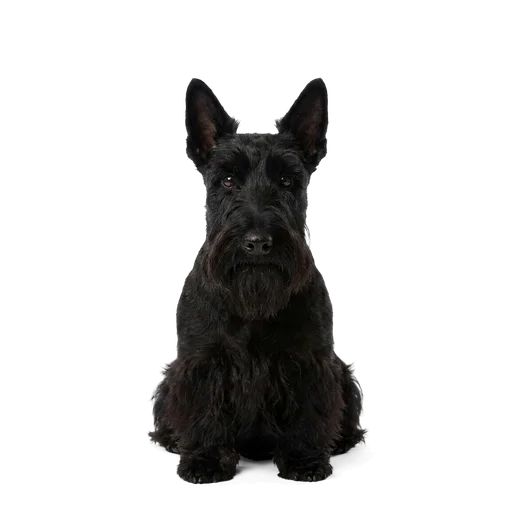
Origin: United Kingdom
Scottish Terrier
Get reminders for your Scottish Terrier's vaccines
Vaccination and parasite reminders, food-safety scans and health records — free to start in the Pethls app.


Good for
The Scottish Terrier, known affectionately as the Scottie, is a small, sturdy dog from the Scottish Highlands with an unmistakable silhouette: long head, prick ears, wiry beard and a hard, wiry jacket with longer furnishings hanging low along the belly and legs. At 8 to 10 kg it is compact but powerfully built, bred to go to ground after badger, fox and vermin. Scotties are dignified, independent and famously self-possessed, often aloof with strangers while deeply loyal to their own people. They typically live 11 to 13 years and pack more determination into a small body than almost any other breed. This guide walks through what Scottie ownership really involves, including a set of breed-specific health conditions worth knowing before you bring one home.
Temperament & personality
A Scottie carries itself with real dignity. This is not a bouncy, needy dog; it is thoughtful, self-contained and often described as having a mind of its own. Scotties bond strongly with their families and can be genuinely affectionate at home, yet they tend to be reserved or downright aloof with people they do not know, which is entirely in character for the breed.
That independence comes with a stubborn streak. Scotties were bred to work alone underground, making their own decisions without a handler telling them what to do, and it shows in training. They learn quickly but see little reason to obey a command they disagree with. Positive, patient, consistent methods work far better than repetition or force, which simply makes a Scottie dig in.
The terrier drive is strong. Scotties love to dig, and a lawn or flower bed is fair game unless you provide an outlet. They can be feisty with other dogs and will chase cats and small animals, so they are not the easiest fit for a multi-pet home. Their boldness means they rarely back down, sometimes taking on dogs many times their size.
For the right owner, all of this adds up to a wonderful companion: loyal, brave, comical in its stubbornness and quietly devoted. First-time owners can do well with a Scottie provided they go in with their eyes open, since the breed's independence asks for firm, kind consistency rather than prior experience.
Vaccination schedule
Scottie puppies need the standard core vaccination course. This begins at 6 to 8 weeks with a combined DHPP vaccine covering distemper, hepatitis (adenovirus), parvovirus and parainfluenza, followed by a second dose at 10 to 12 weeks and usually a third at 14 to 16 weeks. The staged approach ensures protection takes hold as maternal antibodies fade.
Rabies vaccination can be given from 12 weeks. It is not a legal requirement for dogs living in the UK, but it is essential if you plan to travel abroad with your Scottie under an Animal Health Certificate, so factor in the timing well before any trip.
A first booster is given at about 12 months, after which core vaccines are boosted every one to three years depending on the vaccine and your vet's guidance. Under current US guidance leptospirosis is now a core vaccine recommended for every dog, so your Scottie should receive it as standard: a two-dose puppy series followed by an annual booster, which is more frequent than the every-one-to-three-years core boosters because the immunity is shorter-lived. Dogs with water, rural or wildlife exposure face a higher risk, which is part of why that yearly booster matters. Non-core vaccines against kennel cough, Lyme disease and canine influenza remain optional and depend on your dog's lifestyle, so confirm the plan with your vet.
One breed-specific point worth raising with your vet: von Willebrand disease, an inherited bleeding disorder, is something your vet should have on record. It does not change the vaccination schedule itself, but it matters before any procedure where bleeding could be a risk. Keep a written record of all vaccine dates so you never miss a due booster.
Best food & diet
Scotties thrive on a complete, balanced diet suited to their small size and moderate energy needs. A quality small-breed formula offers the right kibble size and calorie density for a dog of 8 to 10 kg. Match the food to life stage, using a puppy growth diet during development and switching to an adult maintenance food once growth finishes.
Weight management is important. Scotties have short legs and a heavy, low-slung build, so excess weight strains their joints, and their dignified stance can hide a few extra pounds. Measure meals precisely and keep treats to a small fraction of daily calories rather than free-feeding.
Food sensitivities are worth keeping in mind, as some Scotties react to common ingredients such as beef, chicken or wheat. If your dog shows persistent itching, ear trouble or digestive upset, talk to your vet about a diet trial using a single novel protein or a hydrolyzed food rather than swapping brands on a hunch.
Keeping your Scottie well hydrated supports urinary health and bladder function, so always have fresh water available. Introduce any new food gradually over 7 to 10 days to avoid stomach upset, and mention any ongoing diet to your vet at check-ups.
Common health problems
Scotties have several conditions that are strongly associated with the breed. One to be aware of is Scottie cramp, a movement disorder in which excitement or exercise triggers a temporary stiffening of the legs and an arched back that makes the dog struggle to walk. It looks alarming but is not painful and not life-threatening, and most affected dogs live normal lives with the trigger situations managed.
Von Willebrand disease is an inherited bleeding disorder seen in the breed. Affected dogs lack enough of a clotting protein, so they may bleed more than expected from injuries, surgery or even routine dental work. Because signs can be subtle, it is worth discussing testing with your vet before any planned operation so precautions can be taken.
Bladder cancer, specifically transitional cell carcinoma, is worth being aware of. It is a urinary tract tumor to discuss with your vet if any signs appear. Early signs mimic a urinary infection, with blood in the urine, straining and frequent urination, so any recurring or non-resolving urinary sign in a Scottie should be investigated properly rather than repeatedly treated as a simple infection.
Two further conditions round out the picture. Craniomandibular osteopathy, an abnormal bony growth of the jaw, can appear in puppies and cause pain and difficulty eating before usually settling with maturity. Patellar luxation, a slipping kneecap, can cause intermittent hind-leg lameness and ranges from mild to needing surgical correction.
Allergies & skin
Scotties can suffer from allergic skin disease, reacting to environmental triggers such as dust mites and grass pollen as well as to certain foods. The classic signs are itching, licking or chewing at the paws, recurrent ear infections and reddened skin around the face, belly and armpits. Because the wiry coat hides the skin, it pays to part the hair and check the skin itself regularly.
Food-related reactions are possible too, with beef, chicken and wheat among the more common culprits in dogs. Distinguishing a food allergy from an environmental one takes a structured, vet-supervised elimination diet, since guessing and switching foods repeatedly rarely gives a clear answer.
Managing allergies is about reducing exposure and calming the immune response. Regular bathing washes allergens out of the coat, omega-3 supplements support the skin barrier, and your vet can prescribe anti-itch medication or, for confirmed environmental allergy, immunotherapy to desensitise the dog over time. Prompt treatment of ear and skin infections keeps flare-ups from spiralling.
Strict flea control underpins all of it, because flea bites can trigger or worsen allergic skin in a sensitized dog. Keeping a simple record of flare-ups, baths and any dietary changes helps you and your vet spot the seasonal or ingredient patterns behind your Scottie's skin trouble.
Flea, tick & worm prevention
Consistent, year-round parasite prevention keeps a Scottie comfortable and healthy. Fleas cause itching in any dog and can set off allergic flare-ups in sensitive ones, so a reliable flea product is a baseline rather than an optional extra. Options include spot-on treatments, tablets and collars, matched to your dog's weight by your vet.
Ticks are a real risk on the grassy, wooded and moorland walks Scotties enjoy, and they can carry diseases including Lyme disease. Run your hands through the coat after walks and check the head, ears, neck and legs, since the dense wiry coat can hide a feeding tick. Remove any tick promptly and completely with a proper tick-removal tool.
Worming protects against roundworms, tapeworms, hookworms and whipworms. Puppies are wormed every two weeks until 12 weeks of age, then monthly until six months, while adults are usually treated every three months. Dogs that dig, scavenge or hunt, as many Scotties do, may need more frequent worming.
In the UK, lungworm is a specific concern because it is picked up from slugs and snails and can be fatal without treatment. Many monthly preventives cover lungworm, so confirm with your vet that your Scottie's plan includes it, and note down every dose to keep the schedule on track.
Medications & dosing
Medication doses for dogs are calculated by body weight, so keeping an accurate, current weight for your Scottie is essential. For a dog in the 8 to 10 kg range, small differences matter, and weight can creep up unnoticed under that dense coat, so weigh your dog regularly rather than relying on how it looks.
The bleeding tendency in this breed makes veterinary oversight of medication particularly important. Some drugs affect clotting or platelet function, which is worth flagging to your vet, especially if von Willebrand disease is a concern. Always tell your vet if your Scottie has a known bleeding disorder before any medication, dental treatment or surgery is planned.
Never reach for human medicines. Painkillers such as ibuprofen and paracetamol are toxic to dogs, and only a vet-prescribed, weight-appropriate dog medication should be used for pain or inflammation. Follow the prescribed dose and interval exactly, and complete any course of antibiotics or other medicines even after symptoms improve.
Keep a full, current written list of your Scottie's medications, doses and schedules. That record prevents accidental double dosing, speeds things up in an emergency, and gives any vet seeing your dog the complete picture, which is especially valuable given the breed's specific health risks.
Grooming & coat care
The Scottie's coat is a defining feature: a soft, dense undercoat beneath a hard, wiry outer coat, with the distinctive long furnishings on the legs, belly and face that give the breed its bearded, skirted look. It sheds very little, which is a plus indoors, but it is high-maintenance and needs committed, regular care.
Keeping the correct wiry texture and rich color means hand-stripping, plucking the dead outer coat out by hand or stripping knife every few months. Owners who prefer not to hand-strip can have the coat clipped, which is faster and fine for a pet, though it softens the texture and can lighten the coat over time. Many owners use a groomer every six to eight weeks either way.
Between professional appointments, brush your Scottie two or three times a week to prevent matting, paying close attention to the long furnishings on the legs and the beard, which pick up food, mud and debris. The beard in particular needs regular cleaning and drying to stay fresh.
Finish with routine care: check and clean the ears to prevent infection, trim nails every few weeks, and brush the teeth daily to protect the gums and keep the mouth healthy. Parting the coat during grooming also lets you inspect the skin, which helps you catch any allergy flare-up or lump early.
How the Scottish Terrier compares
Deciding between similar breeds? Here is the Scottish Terrier next to Dandie Dinmont Terrier and Norfolk Terrier.
| Scottish Terrier | Dandie Dinmont Terrier | Norfolk Terrier | |
|---|---|---|---|
| Size | Small | Small | Small |
| Weight | 8-10 kg | 8-11 kg | 5-5 kg |
| Lifespan | 11-13 yrs | 12-15 yrs | 12-15 yrs |
| Activity | Moderate | Moderate | Moderate |
| Shedding | Low | Low | Low |
| Good with kids | Yes | Yes | Yes |
| Apartment-friendly | Yes | Yes | Yes |
Frequently asked questions
What is Scottie cramp and is it dangerous?
Scottie cramp is a movement disorder seen in Scottish Terriers. When the dog gets excited or exercises hard, its muscles temporarily stiffen, the back arches and it may struggle to walk or even tumble over. It looks frightening but it is not painful and not life-threatening, and it resolves within minutes. Most affected dogs live full, normal lives, especially when overexcitement triggers are managed.
Are Scottish Terriers good for first-time owners?
They can be, but they are not the easiest choice. Scotties are independent, stubborn and strong-willed, so they reward owners who can be patient and consistent without being harsh. A first-time owner who does their homework and commits to positive training can absolutely succeed, but anyone expecting an eager-to-please, easy-going dog may find a Scottie frustrating.
Why should I watch for blood in my Scottie's urine?
Scottish Terriers are one of the breeds most prone to bladder cancer, specifically transitional cell carcinoma. Its early signs look just like a urinary infection, so blood in the urine, straining or frequent urination that keeps coming back should always be investigated properly rather than repeatedly treated as a simple infection. Early detection genuinely matters with this breed.
Do Scottish Terriers shed a lot?
No, Scotties are low shedders, which is one reason people are drawn to them. That does not make them hypoallergenic, since they still produce dander and saliva proteins. The trade-off for low shedding is a high-maintenance coat that needs regular hand-stripping or clipping plus brushing several times a week.
How much exercise does a Scottish Terrier need?
About an hour a day across a couple of walks, plus time to sniff, explore and dig in a permitted spot, keeps a Scottie content. They have moderate energy rather than boundless stamina, so they adapt well to smaller homes and apartments. Mental engagement through training and games is important, because a bored Scottie will invent its own, often destructive, projects.
Related breeds


Health and care information is drawn from established veterinary sources and is general guidance, not veterinary advice. See our sources
Keep records for your Scottish Terrier
Vaccinations, food and treat safety, allergy alerts and parasite reminders - all tracked for your Scottish Terrier in the Pethls app.