

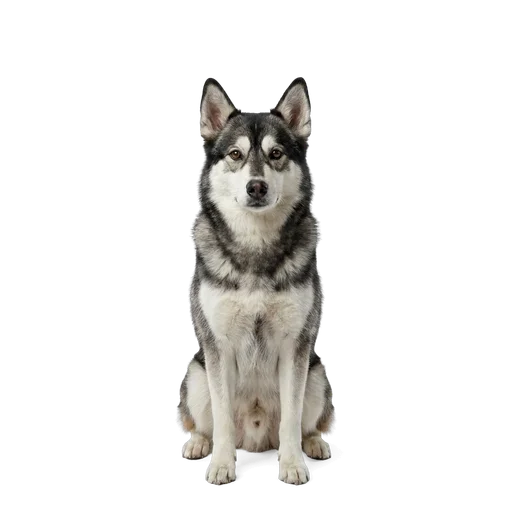
Origin: Siberia
Siberian Husky
Get reminders for your Siberian Husky's vaccines
Vaccination and parasite reminders, food-safety scans and health records — free to start in the Pethls app.


Good for
The Siberian Husky is a working sled dog built for endurance, not a couch companion who happens to look like a wolf. Owners fall for the striking eyes and easygoing nature, then quickly learn that this breed thinks for itself, talks back, and will scale a fence if left bored. Understanding Husky temperament and care upfront saves a lot of frustration. Here is what living with one actually involves, from feeding to shedding to keeping them safely contained.
Temperament & personality
Huskies are friendly to a fault. They were bred to live and work in packs, so they crave company and rarely make good guard dogs. Most greet strangers like old friends, and they get along well with kids and other dogs when socialized early. Aloofness is not in their nature.
That sociability comes paired with a stubborn independent streak. A Husky will hear your command, consider it, and decide whether complying is worth its time. Training works best with short, motivating sessions and a sense of humor. Harsh correction backfires.
Two traits define daily life with the breed: they are vocal and they are escape artists. Expect howls, chirps, and dramatic grumbling instead of standard barking. Expect digging under fences, slipping leashes, and testing every gate latch. A bored Husky is a destructive Husky, so this is a dog that genuinely needs a job to stay out of trouble.
Vaccination schedule
Puppies start the core DHPP series (distemper, hepatitis, parvovirus, parainfluenza) around 6 to 8 weeks, with boosters every 3 to 4 weeks until roughly 16 weeks of age. Parvo is a real killer in young dogs, so do not skip doses or let the schedule slip.
Rabies is given once between 12 and 16 weeks, then boosted at one year. After that, most core vaccines move to a one to three year cycle depending on the product and your local laws.
Leptospirosis is now a core vaccine recommended for every dog: a 2-dose puppy series followed by an annual booster, unlike the every-3-year DHPP core boosters. Non-core vaccines like Bordetella (kennel cough), Lyme, and canine influenza depend on lifestyle, and a Husky that visits dog parks, boarding kennels, or trails has more exposure than a homebody. Time on the water, in rural areas, or around wildlife raises leptospirosis risk and is why that annual booster matters, so confirm the full plan with your vet for your dog and region.
Best food & diet
Huskies are famously efficient eaters. The breed was developed by the Chukchi of subarctic northeastern Siberia to pull loads across long distances on limited food, and that efficient metabolism is thought to carry into the modern dog. Many owners are shocked by how little food keeps a Husky in good shape. Follow the feeding guide as a starting point, then adjust down if the waist disappears.
Choose a quality diet with real animal protein as the first ingredient. Active adults do well on food formulated for working or high-energy breeds, but portion control matters more than any label claim. Overfeeding is the fastest route to a fat Husky.
Split the daily ration into two meals and skip the free feeding. Watch body condition weekly, not the bowl, and cut treats into the daily total. If your dog turns picky or leaves food, that is often normal for the breed, though a sudden appetite change warrants a vet call.
Common health problems
Eyes are the breed's signature weak point. Like several breeds, Huskies can run into eye conditions such as juvenile cataracts, progressive retinal atrophy (PRA), and corneal dystrophy, all of which can affect vision. Responsible breeders screen their stock with an annual ophthalmologist exam, so ask for that paperwork before buying a puppy.
Hip dysplasia is worth monitoring and reviewing with your vet; it shows up less often than in larger breeds but still occurs. You can stack the odds in your dog's favor: keep the pet lean, avoid forced high-impact exercise during the puppy growth phase, and buy from parents with hip clearances.
Overall the breed is hardy, with a 12 to 15 year lifespan. Note symptoms, screening dates, and vet visits as they happen so patterns are easy to spot. A written record keeps that history in one place, and a reminder on your phone can flag when the next eye check is due. Any limping, cloudiness, or vision change deserves a professional exam.
Allergies & skin
Siberian Huskies get off comparatively lightly on allergies. They tend to have fewer atopic problems than breeds like the French Bulldog or Golden Retriever, though food allergies still occur, with salmon, beef, and chicken among the proteins most likely to trigger a reaction in this breed, and environmental allergies such as pollen can turn up too. One skin issue worth monitoring in this breed is different: zinc-responsive dermatosis, a condition where the dog cannot absorb or use enough zinc, which can produce a distinctive crusting and scaling on the skin. It is one of the first things a vet will think of when a Husky develops a particular pattern of skin lesions.
With zinc-responsive dermatosis the crusting shows up around the eyes, on the muzzle and nose, on the chin and ear edges, and around the paw pads, often looking dry, flaky and cracked rather than just itchy. This is the standout sign of Husky skin problems and it looks quite different from a typical allergy flare. Where atopy is present you may still see the usual Husky itching, paw licking and the occasional ear infection, and this breed can also have coat and follicular issues where the hair looks dull, breaks or thins in patches. Any crusting around the face or feet that keeps coming back is worth an early vet visit.
Diagnosis is where this breed differs from the others, because a skin biopsy is often used to confirm zinc-responsive dermatosis, and the good news is that it usually responds well to lifelong zinc supplementation once diagnosed. For any allergy component, the same tools apply: flea control as a baseline, an eight to twelve week elimination diet if a food allergy is suspected, and medicated shampoos plus vet-prescribed anti-itch medication or antihistamines to control the itch. It is worth not assuming every scaly patch on a Husky is a simple allergy, because the treatment for a zinc problem is completely different.
Are Siberian Huskies hypoallergenic? No, and the thick coat actually makes them a worse choice for allergy sufferers, not a better one. Huskies shed enormously, blowing their entire undercoat twice a year, and all that loose hair carries the dander and saliva proteins that people react to. There is nothing low-allergen about this breed for humans. Their own skin is often healthier than most, but the coat means dog dander will be everywhere in the home.
Exercise & containment
This is a high-energy athlete that needs real work every single day. Two solid outings, running, hiking, skijoring, or hard play, are the minimum. A quick walk around the block will not touch a Husky's reserves, and the unspent energy comes back out as howling, digging, and demolition.
Containment is non-negotiable. A Husky needs a securely fenced yard, ideally six feet high with the base buried or lined to stop digging, because this breed tunnels and climbs with real determination. Never trust one off leash in an open area; the prey drive and wanderlust are too strong, and a running Husky does not look back.
The upside is a genuine cold-weather machine. Huskies thrive in snow and cold that would sideline most breeds. In heat, flip the schedule: exercise early or late, always offer shade and water, and watch for overheating under that heavy coat.
Flea, tick & worm prevention
A dense double coat hides fleas and ticks well, so parasite prevention has to be routine rather than reactive. Use a year-round flea and tick product suited to your climate, and part the fur to check the skin after hikes in tall grass or wooded areas.
Keep monthly heartworm prevention going all year; heartworm is spread by mosquitoes and is far cheaper to prevent than to treat. Many combination products cover heartworm plus common intestinal worms in a single dose.
Run fecal checks at your regular vet visits and deworm on the schedule your vet recommends. Puppies need more frequent deworming than adults. If you travel to different regions, ask whether local parasite risks call for a different product.
Medications & dosing
Huskies are one of the healthier breeds to medicate. They are not plagued by the joint and skin problems that follow retrievers and shepherds around, so most of what a Husky needs is routine: parasite prevention for fleas, ticks, and heartworm, the occasional joint supplement or NSAID if arthritis shows up later in life, and eye medication, since the breed is prone to conditions like cataracts and corneal issues. Give every one of these exactly as your vet prescribes, for the full length of the course, and never substitute a human painkiller. Ibuprofen, aspirin, and paracetamol (acetaminophen) are all toxic to dogs.
The one thing worth watching with this breed is dosing by weight. Huskies are lean and muscular, and they often carry less fat than their frame suggests, so a dose estimated by eye can easily run high. As with any lean, muscular dog, weigh accurately so weight-based doses are not overestimated. Have your dog weighed accurately before any weight-based medication, whether that is a dewormer, a sedative, or a pain reliever, and let your vet do the math rather than guessing from an old number.
Even a healthy Husky builds up a history over the years, from parasite treatments to the odd prescription. Keep a record of what was given, the exact dose, and when the next one is due, along with your dog's current weight for quick reference. A simple written log holds all of that, and a reminder on your phone can flag when something needs a refill.
Grooming & shedding
The Husky's weatherproof double coat is beautiful and demanding. Twice a year the dog blows coat, shedding the entire undercoat in clumps over a few intense weeks. Plan for it. Daily brushing during a blow, with an undercoat rake and a slicker, is the only thing that keeps the fur tsunami manageable.
Outside of blowing season, a thorough brush once or twice a week keeps the coat healthy and cuts down on loose hair around the house. Huskies are naturally clean and mostly odor-free, so bathe only every few months or when genuinely dirty.
Never shave a Husky. The double coat insulates against both cold and heat and regulates temperature; shaving it wrecks that system and the fur often grows back patchy or damaged. Trim only the paw pads and nails, and let the coat do its job.
How the Siberian Husky compares
Deciding between similar breeds? Here is the Siberian Husky next to German Shepherd and Labrador Retriever.
| Siberian Husky | German Shepherd | Labrador Retriever | |
|---|---|---|---|
| Size | Medium | Large | Large |
| Weight | 16-27 kg | 22-40 kg | 25-36 kg |
| Lifespan | 12-14 yrs | 9-13 yrs | 10-12 yrs |
| Activity | Active | Active | Active |
| Shedding | High | High | High |
| Good with kids | Yes | Yes | Yes |
| Apartment-friendly | No | No | No |
Frequently asked questions
How much exercise does a Siberian Husky need?
At least one to two hours of vigorous activity every day. Running, hiking, and pulling sports suit them far better than a slow neighborhood walk. Skip the daily workout and you will see the energy resurface as howling, digging, and chewing.
Do Siberian Huskies shed a lot?
Yes. They shed year-round and blow their entire undercoat twice a year, releasing hair in dramatic clumps over a few weeks. Daily brushing during those stretches is essential, and even off-season you will find husky fur on everything you own.
Are Siberian Huskies good for first-time owners?
They are a challenging first dog. The combination of high energy, independent thinking, escape-artist habits, and heavy grooming needs overwhelms many new owners. A committed beginner willing to exercise, train, and contain the dog properly can absolutely succeed, but it takes real work.
How long do Siberian Huskies live?
Typically 12 to 15 years. Keeping your dog lean, staying current on eye screening and vaccines, and providing daily exercise all help a Husky reach the healthy end of that range.
Why does my Husky escape and dig so much?
It is bred into them. Sled dogs were selected to run and roam, and that wanderlust plus a strong prey drive makes fences a challenge. Bury or reinforce the fence base, keep them mentally and physically tired, and never leave a Husky loose in an unfenced space.
Related breeds

Health and care information is drawn from established veterinary sources and is general guidance, not veterinary advice. See our sources
Keep records for your Siberian Husky
Vaccinations, food and treat safety, allergy alerts and parasite reminders - all tracked for your Siberian Husky in the Pethls app.