

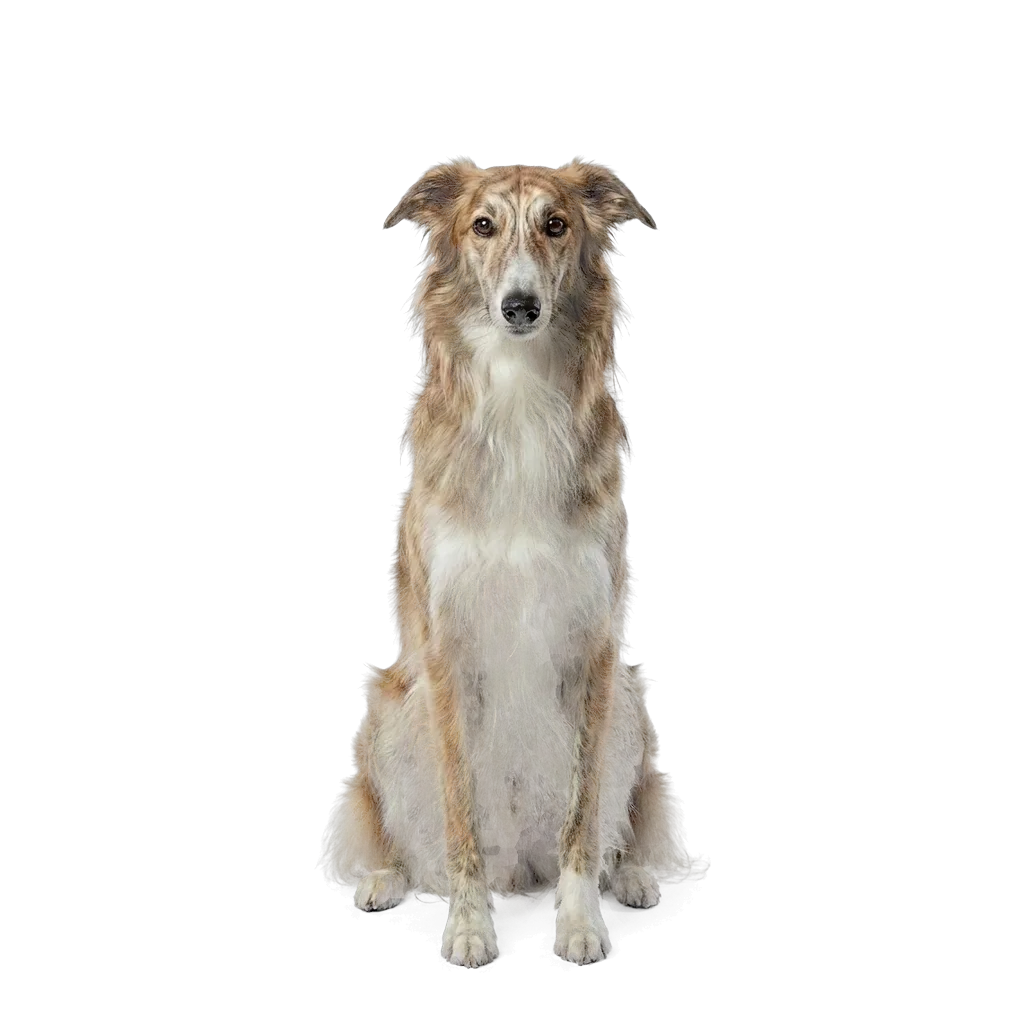
Origin: United States
Silken Windhound
Get reminders for your Silken Windhound's vaccines
Vaccination and parasite reminders, food-safety scans and health records — free to start in the Pethls app.


Good for
The Silken Windhound is a young American sighthound, developed in Texas in the 1980s from Borzoi and Long-haired Whippet (Windsprite) lines to be a smaller, silky-coated coursing dog that lives comfortably in the house. At 10 to 25 kg it is graceful rather than fragile, sweet-natured, quiet indoors, and startlingly fast outdoors. Silkens are among the longest-lived mid-size dogs, routinely reaching 14 to 16 years. Two medical notes come with the breed: the MDR1 (ABCB1) drug-sensitivity mutation is well documented in Silkens, and like all sighthounds they need thoughtful handling around anesthesia.
Temperament & personality
Silkens are the sighthound for people who want the elegance without the aloofness. Where a Borzoi may keep polite distance, a Silken leans on you, follows you upstairs, and burrows under the blanket. They are affectionate with the whole household, gentle with children, typically excellent with other dogs, and soft-tempered to the point that raised voices genuinely upset them. Train with rewards and patience; they wilt under harsh methods and blossom with cheerful ones.
Indoors this is a famously quiet, low-key dog. Expect twenty-two hours a day of decorative napping punctuated by brief zoomies. They rarely bark much, do not need constant entertainment, and fit apartment life better than almost any dog capable of 55 km/h. That speed is the catch: outdoors, a Silken is a coursing hound with real prey drive, and a squirrel across the road can override every bit of training in half a second.
The rule is simple and permanent: leash or fully fenced area, no exceptions, no matter how reliable the recall seems in the yard. Cats and small pets raised with a Silken from puppyhood are usually family, while unfamiliar small animals outdoors are quarry. With strangers, Silkens range from friendly to gently reserved and make hopeless guard dogs, which most owners consider a feature.
Vaccination schedule
Silken puppies need the core DHPP series like every dog: distemper, adenovirus (hepatitis), parainfluenza, and parvovirus, starting at 6 to 8 weeks and boosted every 3 to 4 weeks until at least 16 weeks of age. A one-year booster follows, then revaccination every one to three years depending on the product and your vet's protocol. Titers are an option for adult DHPP in some practices if you prefer to vaccinate based on measured immunity.
Rabies vaccination is legally mandated in the US. The first dose is typically given between 12 and 16 weeks, boosted at one year, then every one or three years per state law. Sighthound owners sometimes worry about vaccine reactions in lean dogs; serious reactions are rare, but it is reasonable to schedule shots for a morning appointment so you can watch the dog through the day, and to separate rabies and DHPP by a couple of weeks in a small or reaction-prone individual if your vet agrees.
Non-core vaccines depend on lifestyle. Silkens that run lure coursing, travel to shows, or board regularly should have Bordetella and possibly canine influenza. Leptospirosis makes sense for dogs with pond, creek, or heavy wildlife exposure. Discuss Lyme vaccination if you course or hike in tick-endemic regions.
Best food & diet
Feed a Silken a quality diet for medium active dogs and keep it lean, which for a sighthound is leaner than the average pet owner expects. Visible last ribs and prominent hip points are normal, correct sighthound condition, not neglect. Most adults do well on two measured meals a day of a food with moderate protein, roughly 24 to 28 percent crude protein as listed on the label; coursing athletes can move to a performance formula in season.
Because Silkens carry little body fat, they have small reserves and can lose condition quickly when ill, and they feel cold faster than heavier breeds. Do not let a picky phase slide for a week without attention. On the other side, extra weight ruins the galloping build and shortens joints' working life, so measure food rather than free-feeding.
Deep-chested breeds carry some bloat risk, and while Silkens are not a high-risk breed like Great Danes, sensible precautions cost nothing: split rations into two meals, avoid hard sprinting immediately after eating, and know the signs of a distended, unproductive-retching dog as an emergency. Puppies eat a standard puppy formula until about 12 months; the breed matures a little slowly and stays gangly well into its second year, which is normal.
Common health problems
The Silken Windhound is a genuinely healthy breed, founded recently by breeders who health-tested from the start, and its 14 to 16 year lifespan is exceptional for its size. Even so, a few documented issues deserve attention, and the first is MDR1 (ABCB1) drug sensitivity. The mutation traces to the breed's Borzoi ancestry, and a meaningful share of the breed carries at least one copy. It causes no illness by itself, but it changes which drugs are safe, so every Silken should be DNA-tested.
Sighthound physiology is the second theme. Silkens carry little fat and have naturally different blood values (higher red cell counts, sometimes lower thyroid readings) than other breeds, and they can be sensitive to anesthesia, particularly older barbiturate-type protocols. Modern anesthetic protocols are generally well tolerated when the vet knows they are treating a sighthound and plans accordingly, so choose a clinic comfortable with the family and say the word sighthound before any procedure, including routine dentals and neuters.
Congenital deafness is worth asking about, in one or both ears, and responsible breeders BAER-test litters; ask for results. Cryptorchidism, where one or both testicles fail to descend, is worth catching early and checking with your vet. It is not an emergency, but retained testicles have a higher tumor risk and should be removed at neutering. Beyond these, keep an eye out for the sports injuries of any galloping hound: toe injuries, muscle strains, and skin tears from thin sighthound skin meeting fences and brush.
Allergies & skin
Silkens have thin, fine skin under that silky coat, which is typical for sighthounds and means minor cuts and tears happen more easily than in thick-skinned breeds. Skin problems from allergy, though, are not especially common in the breed. When itching appears, work through the standard list: fleas first, since a lean single-coated dog shows flea allergy fast; then seasonal environmental allergy with its paw licking and ear trouble; and food allergy last, confirmed only by a strict 8 to 12 week elimination diet.
The silky coat itself is forgiving. It sheds lightly to moderately, does not carry a heavy undercoat, and produces less loose hair around the house than most breeds. That does not make the Silken hypoallergenic; allergic people react to dander and saliva proteins, which every dog produces. Anyone with dog allergies should spend real time with adult Silkens before bringing one home.
Two practical care notes. First, thin skin plus enthusiastic running means you should learn basic wound care and keep a stapled-or-sutured threshold in mind; sighthound skin tears that look minor often need closing. Second, lean dogs get pressure calluses and can be prone to bald thighs in some lines; soft bedding everywhere the dog sleeps prevents most callus trouble, and unexplained symmetrical hair loss is worth a thyroid check, interpreted against sighthound reference ranges.
Flea, tick & worm prevention
Year-round flea and tick prevention applies to Silkens like any dog, and the single, fine coat at least makes ticks easy to find. Monthly oral isoxazoline products or vet-approved topicals both work; if you course or hike in grassland, run a hands-on tick check over ears, armpits, groin, and between toes afterward. Because the breed runs lean at 10 to 25 kg, buy the product band matching the dog's actual current weight rather than guessing from breed size.
Heartworm prevention runs twelve months a year across most of the US, with an annual heartworm test before renewing the prescription. The reassuring detail for this breed: the tiny ivermectin dose in a labeled monthly heartworm preventive is generally considered safe even for MDR1-affected dogs, because it sits hundreds of times below the level that overwhelms the MDR1 barrier; confirm the specific product with your vet once MDR1 status is known. The danger is the opposite end of the scale, the high-dose or off-label ivermectin used for livestock, which must never touch a Silken. Same drug, completely different dose, and the dose is what makes one routine and the other an emergency.
For intestinal worms, puppies are dewormed every two weeks from 2 to 8 weeks of age, then transition to monthly prevention that covers roundworms and hookworms. Adults benefit from a fecal exam once or twice a year, and tapeworm treatment whenever fleas have gotten a foothold, since fleas transmit the common tapeworm. Silkens that catch the occasional rabbit on a course line have extra tapeworm exposure worth mentioning to the vet.
Medications & dosing
Every dose a Silken receives should be calculated from a current, accurate weight, and with a breed spanning 10 to 25 kg there is no such thing as a standard Silken dose. Their low body fat also matters pharmacologically: drugs that redistribute into fat behave differently in a lean sighthound, which is part of why anesthesia deserves special care in this family of breeds. Never give human medications without explicit veterinary direction.
MDR1 (ABCB1) is the breed's headline drug issue. The mutation is well documented in Silken Windhounds, and affected dogs cannot clear certain drugs from the brain, turning routine doses into overdoses. The list includes high-dose ivermectin and related antiparasitics, loperamide (Imodium), some sedatives such as acepromazine and butorphanol, and several chemotherapy drugs including vincristine and doxorubicin. Because the affected drug list runs long, knowing a dog's MDR1 result before any of these classes come up is what keeps a routine prescription from becoming an overdose.
Tell every vet, tech, and emergency clinic about your dog's MDR1 result, and ask that both the MDR1 status and the word sighthound be flagged in the record. The two issues stack: a Silken heading into surgery needs an anesthesia plan that respects sighthound metabolism and premedication choices that respect MDR1 status. None of this is difficult for a prepared clinic; it only goes wrong when nobody mentions it.
Day to day, follow prescriptions exactly, give NSAIDs with food, finish antibiotic courses, and report wobbliness, dilated pupils, drooling, or unusual sleepiness on any new medication immediately, since those are early signs of a drug reaction, which MDR1-affected dogs are especially prone to. Keep the dog's latest weight and drug list in your phone; it saves precious minutes in an emergency.
Grooming & coat care
The Silken's namesake coat is medium-length, soft, and silky, ranging from nearly straight to loosely curly, with feathering on the ears, tail, and backs of the legs. It looks high-maintenance and is not. A thorough brushing once or twice a week with a pin brush, plus a comb through the feathering where tangles start, keeps it in order. The coat lacks the dense undercoat of double-coated breeds, so mats are uncommon if you stay ahead of the friction zones: behind the ears, armpits, and britches.
Silkens are naturally clean, low-odor dogs, and a bath every four to eight weeks is plenty, or before shows and after muddy course days. Use a mild dog shampoo and a light conditioner to keep the silk from drying out, and towel-dry or use a cool dryer. Shedding is on the low-to-moderate side year-round with a modest seasonal uptick, manageable with regular brushing.
Round out care with nail trims every two to three weeks, since long nails genuinely hurt a galloping dog's toes, plus weekly ear checks and tooth brushing several times a week. Two sighthound-specific notes: use a wide martingale or fitted harness because a Silken's head is narrower than its neck and flat collars slip off, and give the dog a coat in cold, wet weather, since low body fat and a single coat make them feel winter quickly.
How the Silken Windhound compares
Deciding between similar breeds? Here is the Silken Windhound next to American Cocker Spaniel and Bedlington Terrier.
| Silken Windhound | American Cocker Spaniel | Bedlington Terrier | |
|---|---|---|---|
| Size | Medium | Medium | Medium |
| Weight | 10-25 kg | 9-14 kg | 8-10 kg |
| Lifespan | 14-16 yrs | 10-14 yrs | 11-16 yrs |
| Activity | Moderate | Moderate | Moderate |
| Shedding | Low | Medium | Low |
| Good with kids | Yes | Yes | Yes |
| Apartment-friendly | Yes | Yes | Yes |
Frequently asked questions
Are Silken Windhounds good apartment dogs?
Yes, surprisingly good. Indoors they are quiet, calm, and clean, content to nap most of the day. They need a daily walk plus a few chances a week to sprint flat-out in a fenced area or on a long line. Meet that need and a Silken is one of the easiest mid-size dogs to live with in an apartment.
Do Silken Windhounds carry the MDR1 mutation?
Yes, MDR1 (ABCB1) is well documented in the breed. Affected dogs react dangerously to high-dose ivermectin, loperamide, certain sedatives, and some chemotherapy drugs. A one-time cheek-swab DNA test settles your dog's status; do it early and make sure every vet who treats the dog knows the result. Standard monthly heartworm preventives at labeled doses are generally safe; confirm the product with your vet given the breed's MDR1 status.
Can a Silken Windhound ever be off leash?
Only inside a secure fence. Silkens are coursing sighthounds with strong prey drive and speeds near 55 km/h; a rabbit or cat can trigger a chase that outruns any recall. Leashes, long lines, and fenced sprint sessions give the dog everything it needs without the risk. Treat this as a lifetime rule, not a training goal.
How long do Silken Windhounds live?
Typically 14 to 16 years, which is outstanding for a 10 to 25 kg dog. The breed was founded with health testing from the beginning and has few inherited problems. Sensible owners test for MDR1, ask breeders about BAER hearing results, keep the dog lean, and use vets familiar with sighthound anesthesia.
Are Silken Windhounds good with kids and other dogs?
Generally excellent with both. Silkens are gentle, tolerant, and soft-tempered with children, and they usually enjoy other dogs, especially fellow sighthounds who share their play style. Supervise around toddlers as with any dog, and introduce cats and small pets carefully; hounds raised with them typically do fine, but unfamiliar small animals outdoors read as prey.
Related breeds


Health and care information is drawn from established veterinary sources and is general guidance, not veterinary advice. See our sources
Keep records for your Silken Windhound
Vaccinations, food and treat safety, allergy alerts and parasite reminders - all tracked for your Silken Windhound in the Pethls app.