

Origin: Scotland
Skye Terrier
Get reminders for your Skye Terrier's vaccines
Vaccination and parasite reminders, food-safety scans and health records — free to start in the Pethls app.


Good for
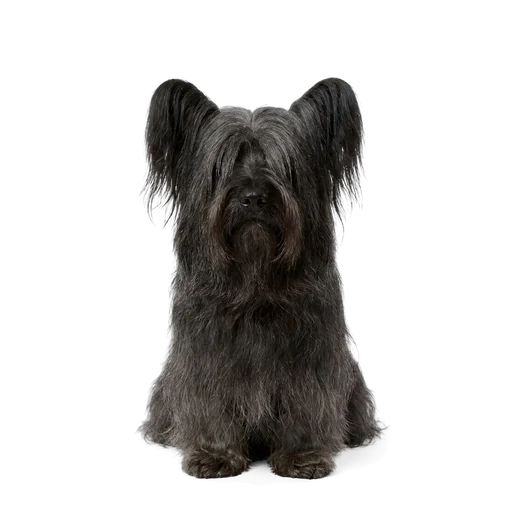
The Skye Terrier is one of Scotland's oldest terriers and today one of the most endangered native breeds in Britain, with UK registrations dipping to just 30 to 50 puppies in some years. Long, low, and draped in a flowing coat, a Skye weighs a substantial 11 to 18 kilograms despite standing only around 25 to 26 centimetres at the shoulder. The breed's devotion is the stuff of legend: Greyfriars Bobby, the Skye said to have kept watch over his owner's Edinburgh grave for 14 years, has a statue in the city to this day. Expect an elegant, dignified dog, deeply bonded to its person and politely reserved with everyone else, living 12 to 14 years.
Temperament & personality
The Skye Terrier is a one-family, often one-person breed that will follow its chosen human from room to room for a decade and a half, then greet strangers with cool, appraising politeness. That reserve is correct for the breed, not shyness, but it makes early and broad socialization essential so that aloofness never tips into suspicion.
Indoors, Skyes are calm, quiet, and rather catlike in their dignity. They are not clowns and they do not perform for attention; they prefer to be near you, participating in life at a measured pace. Outdoors the old working blood shows, the breed was bred to go to ground after fox and badger on the Isle of Skye, and squirrels, cats, and rodents can trigger an instant chase response. Recall is never fully trustworthy against prey, so use a long line in open country.
Training a Skye is a slow negotiation with an independent, opinionated dog that takes real convincing. They are intelligent, sensitive, and long-memoried; harsh handling is never forgotten and never forgiven, while fair, consistent, reward-based work earns real cooperation. They suit experienced owners, quiet households, and families with older, respectful children rather than toddler chaos. Same-sex dog aggression appears in some lines, so introductions should be managed.
Vaccination schedule
Skye puppies follow the core protocol: DHPP (distemper, hepatitis or adenovirus, parvovirus, parainfluenza) starting at six to eight weeks, repeated every three to four weeks until at least 16 weeks of age. The vaccination visits double as valuable socialization trips for this reserved breed, so make each one calm and treat-heavy to build a lasting good association with the clinic.
Rabies is given between 12 and 16 weeks as local law dictates, boosted at one year, then on a one-year or three-year cycle depending on the product and your region. DHPP boosters then move to a three-year interval after the one-year booster, in line with WSAVA guidance that core vaccines need not be repeated more often than every three years.
Non-core vaccines depend on lifestyle. Leptospirosis is worth serious consideration for a dog with regular exposure to standing water, wet ground, or rural and wildlife areas, and Bordetella (kennel cough) makes sense if your Skye boards or shows. One breed-relevant caution: because Skye puppies must not be over-exercised, do not treat the post-vaccine socialization window as a license for long walks; carry the puppy to new places instead and let it watch the world from your arms.
Best food & diet
Two facts should shape every Skye's food bowl: the long, low back and the breed's known risk of copper-associated liver disease. Take the back first. At 11 to 18 kilograms on very short legs, a Skye carrying extra weight loads its spine exactly where intervertebral disc disease strikes. Keep body condition lean, feed two measured meals daily, and weigh monthly to keep the spine from carrying any extra load.
Copper is the quieter issue. Skyes are among the breeds predisposed to copper-associated hepatopathy, where copper accumulates in the liver over years and silently damages it. It is sensible to avoid diets and supplements that are heavily copper-fortified, and to skip liver-rich treats and organ-meat-heavy raw diets unless your vet approves. For a diagnosed dog, prescription low-copper diets exist and genuinely help; for a healthy dog, moderation and routine bloodwork are the practical policy.
Puppies need controlled growth above all. Feed a quality puppy diet at the lean end of the feeding guide, because a heavy, fast-growing puppy puts more strain on the vulnerable front-leg growth plates. Adults do well on a standard quality diet with adequate omega-3 for coat and joints. Scan foods with a scanner and flag anything with added copper high in the supplement list if your vet has raised liver concerns.
Common health problems
Start with the one every Skye puppy buyer must know: premature closure of the distal radial growth plate. The Skye's front legs are short and slightly curved by design, and their growth plates are fragile. If a puppy jumps off sofas, bounds down stairs, or gets long forced walks before the plates close at around 10 to 12 months, one growth plate can shut early while the paired bone keeps growing, twisting the foreleg permanently. The rule is simple and strict: no jumping, no stairs marathons, no jogging until the vet confirms growth is finished. Carry the pup downstairs; it is cheaper than orthopaedic surgery.
Copper-associated hepatopathy is the breed's internal concern. Copper builds up in liver cells over years, often without symptoms until damage is advanced; when signs do come they are vague, poor appetite, weight loss, low energy, occasionally jaundice. Because early disease is silent, ask your vet about periodic liver enzyme bloodwork from middle age, roughly annually from age five or six. Caught early, the disease is manageable with low-copper diets and copper-binding drugs such as penicillamine.
Intervertebral disc disease (IVDD) comes with the architecture. A long spine on short legs concentrates force on the discs, and a herniation can range from pain and reluctance to move up to sudden hind-limb weakness or paralysis, which is an emergency. Reduce the risk with lean body weight, ramps to furniture, a harness instead of a collar for walks, and discouraging leaping. Any Skye that yelps when picked up, stands with an arched back, or drags a foot needs a vet the same day.
Otherwise the breed is hardy, as centuries on a Hebridean island demanded. Routine dental care, annual checks, and sensible weight take a well-bred Skye comfortably through its 12 to 14 years.
Allergies & skin
Skye Terriers are not among the heavily allergy-prone breeds, and their skin is generally sound under all that hair. When irritation does appear, the coat itself is the complicating factor: a long, floor-sweeping jacket hides hot spots, parasites, and early redness until they are well established. Get your hands on the skin weekly, parting the coat down the spine, behind the ears, in the armpits, and around the tail base.
The classic Skye skin problem is mechanical rather than allergic. Mats pull on the skin and trap moisture against it, and a dog this low picks up burrs, grass seeds, and mud constantly. Grass seeds working into the feet or ears in summer are a genuine hazard for a dog built at seed-head height; check paws and ear openings after every dry-season walk.
If true allergy does develop, itchy feet, recurrent ears, belly rash, it is handled the standard way: rule out fleas ruthlessly first, then investigate food with an elimination trial, then consider environmental allergy testing with your vet. The Skye is not hypoallergenic; it sheds moderately, and its long coat carries dander and outdoor pollens indoors, so allergic households should meet adult dogs before committing.
Flea, tick & worm prevention
Everything about a Skye favors the parasite: a chest that skims the grass, a long dense coat that hides hitchhikers, and a breed history spent in tick-rich Highland vegetation. Year-round flea and tick prevention, chosen with your vet from chewable isoxazolines, spot-ons, or collars, is the baseline. Chewables have a practical advantage in this breed because spot-on liquids can be tricky to place through a heavy coat and may affect coat condition at the application site.
Tick checks are a fingertip job on a Skye, since eyes alone will miss a poppy-seed nymph under 15 centimetres of hair. After country walks, work your fingers over the head, ear edges, neck, armpits, and groin. Remove ticks with a twisting tool and log the find; tick-borne disease signs can lag by weeks.
Worming follows the standard framework: puppies dewormed at 2, 4, 6, 8, 10 and 12 weeks of age, then monthly until six months, then every three months as adults for roundworm and tapeworm. Add monthly lungworm cover where Angiostrongylus circulates. One Skye-specific note for the pharmacy counter: the weight range runs 11 to 18 kilograms, which straddles the size bands of many parasite products, so dose off a recent scale weight rather than a guess.
Medications & dosing
Weight-based, vet-directed dosing matters more in the Skye than in the average small breed, because the floor-length coat hides the dog's real size. Under that jacket may be 11 kilograms or 18, and guessing wrong by that margin turns a safe dose into a problem. Weigh the dog at least twice a year and before any new prescription.
The liver warrants ongoing attention in this breed. Because Skyes are predisposed to copper-associated liver disease, flag the copper and liver risk to any treating vet before a long course of a hepatically-cleared drug, so they can decide whether to monitor liver bloodwork. A dog diagnosed with copper hepatopathy may be prescribed chelation therapy such as penicillamine plus a low-copper diet; both require patience and strict compliance measured in months, so track doses in a health log.
For IVDD flare-ups, vets typically prescribe precise courses of anti-inflammatories, pain relief, and enforced crate rest. Give the full course exactly as directed even when the dog seems better at day three; a Skye that feels good and jumps off the sofa mid-treatment can convert a recovering disc into an emergency. Never substitute human painkillers, which are toxic to dogs at ordinary human doses.
Grooming & coat care
The Skye's coat is its signature: a hard, straight outer layer up to 14 centimetres long over a soft insulating undercoat, parting down the spine and veiling the eyes. It looks like a show-ring nightmare and is honestly less work than it appears, but it is not casual. Plan on a thorough brush-out twice a week with a pin brush and a long-toothed comb, working in layers to the skin, plus a quick daily once-over of the friction zones: behind the ears, the armpits, under the collar line, and the trousers.
The breed is shown natural, so there is no clipping or stripping cycle to pay for; this is a brushing breed. Mist the coat lightly with water or conditioning spray before brushing, because brushing a bone-dry coat snaps the hair. A bath every three to four weeks with a moisturizing shampoo, followed by a proper comb-through while damp, keeps the jacket flowing rather than felting. Shedding is moderate; expect steady hair around the house, more during seasonal turnover.
Practical daily details make the difference. Wipe the face fall and beard after meals, check that hair around the eyes stays clean, and inspect the feet, since hair between the pads collects mud, grit, and grass seeds on a dog this close to the ground; trimming pad hair is the one scissoring job most pet owners do. Nails every three to four weeks, ears weekly, teeth several times a week.
Start young and keep sessions short and calm. A Skye handled gently on the table from eight weeks accepts lifetime grooming calmly; one that learned to hate the brush will resist it for years.
How the Skye Terrier compares
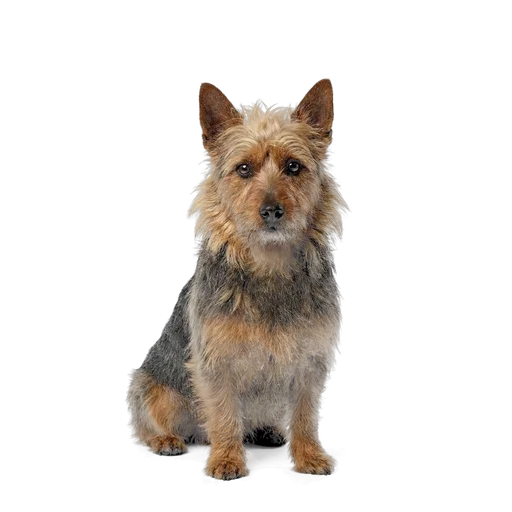
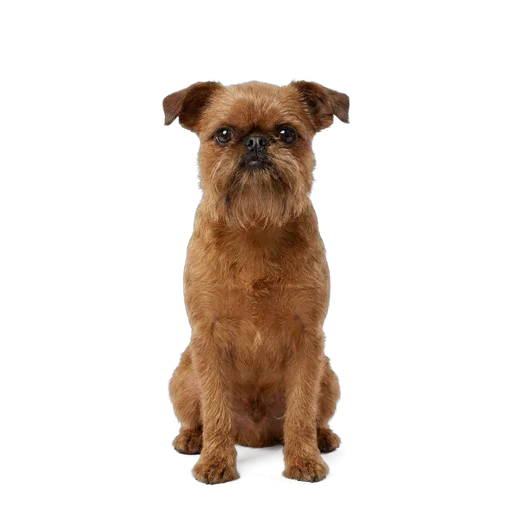
Deciding between similar breeds? Here is the Skye Terrier next to Australian Terrier and Brussels Griffon.
| Skye Terrier | Australian Terrier | Brussels Griffon | |
|---|---|---|---|
| Size | Small | Small | Small |
| Weight | 11-18 kg | 6-7 kg | 4-5 kg |
| Lifespan | 12-14 yrs | 11-15 yrs | 12-15 yrs |
| Activity | Moderate | Moderate | Moderate |
| Shedding | Medium | Low | Low |
| Good with kids | No | Yes | No |
| Apartment-friendly | Yes | Yes | Yes |
Frequently asked questions
Why can't Skye Terrier puppies run and jump like other puppies?
Because of a breed-specific orthopaedic risk called premature closure of the distal radial growth plate. The Skye's short, slightly curved front legs have vulnerable growth plates, and repeated jumping, stair running, or long forced walks before roughly 10 to 12 months can close one plate early while the paired bone keeps growing, permanently bending the foreleg. Free play on level ground is fine; jumping off furniture, stair marathons, and jogging are not until your vet confirms the plates have closed.
Is the story of Greyfriars Bobby true?
Bobby was a real Skye Terrier in 19th-century Edinburgh, and the enduring account says he kept watch near his owner John Gray's grave in Greyfriars Kirkyard for 14 years until his own death in 1872. Historians argue over the details, but the city took it seriously enough to give Bobby a statue and a licensed grave of his own. True in every particular or not, the story captures the breed accurately: a Skye attaches to its person with unusual depth.
How rare are Skye Terriers?
Critically rare. The Skye is consistently listed among the UK Kennel Club's vulnerable native breeds, with UK registrations sometimes dipping to just 30 to 50 puppies a year, and worldwide numbers are small enough that breed clubs actively coordinate to preserve genetic diversity. Expect a long waiting list, a thorough interview from the breeder, and possibly travel to reach a litter. The reward is a dog most people will never have met.
What is copper-associated hepatopathy and how would I know my Skye has it?
It is a condition, seen in Skyes among a handful of breeds, where copper gradually accumulates in the liver and damages it. The frustrating part is that early disease is silent; by the time appetite loss, weight loss, lethargy, or jaundice appear, damage is advanced. The practical defense is annual liver-enzyme bloodwork from around age five, avoiding copper-heavy diets and organ-rich treats, and acting early if enzymes rise. Diagnosed dogs are managed with low-copper prescription diets and chelating medication, and many do well when caught early.
Are Skye Terriers good family dogs for beginners?
Usually not the best first dog. Skyes bond intensely with their own people but are reserved with strangers, can be touchy about rough handling, and carry both a strong prey drive and, in some lines, selectiveness with other dogs. They suit calm households with older children and owners who understand that sensitivity plus independence needs patient, fair training. For an experienced owner wanting a quiet, dignified, one-person companion, the breed is exceptional.
Related breeds
Health and care information is drawn from established veterinary sources and is general guidance, not veterinary advice. See our sources
Keep records for your Skye Terrier
Vaccinations, food and treat safety, allergy alerts and parasite reminders - all tracked for your Skye Terrier in the Pethls app.