

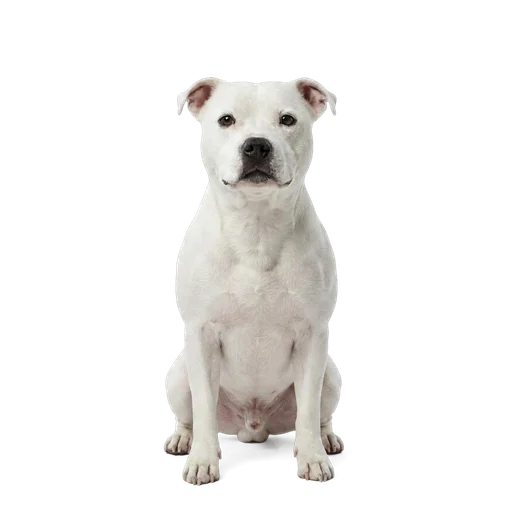
Origin: United Kingdom
Staffordshire Bull Terrier
Get reminders for your Staffordshire Bull Terrier's vaccines
Vaccination and parasite reminders, food-safety scans and health records — free to start in the Pethls app.


Good for
The Staffordshire Bull Terrier packs a lot of muscle into a compact, medium-sized frame, but the first thing owners talk about is rarely the strength. It's the affection. This is a breed that wants to be on the sofa, in your lap, and pressed against your leg while you cook dinner. Bred in the Black Country of England, the Staffie picked up the popular "nanny dog" nickname for its patience with children, though that label is folklore rather than history and no dog should be left unsupervised with young kids. Underneath the soppy, grinning exterior sits a courageous, high-energy dog that needs real daily exercise and consistent handling.
Temperament & personality
Staffies are people dogs to the core. They bond hard with their families and can be genuinely miserable when left alone for long stretches, which makes separation anxiety something to watch for. Most Staffie owners describe a dog that follows them room to room, leans in for contact, and meets you at the door with a full-body wiggle every single time.
With children the breed's reputation is well earned. Staffies tend to be tolerant, sturdy and fond of small humans, though the same enthusiasm that makes them lovely with kids means a bouncy adult can knock a toddler over by accident. Supervise interactions the way you would with any dog, and teach children to respect the dog's space around food and rest.
The one honest caveat is other dogs. Staffies can be dog-selective, and some will not tolerate unfamiliar dogs of the same sex. This is a terrier trait, not aggression toward people, and early socialization helps enormously. Keep introductions calm and controlled, watch body language at the park, and don't assume a friendly-to-people dog is automatically friendly to every dog it meets.
Mentally they are sharp and food-motivated, which makes training rewarding, but they are also stubborn and love a game. Channel that energy into fetch, tug with rules, and scent games, and you'll have a settled dog at home rather than a bored one chewing the skirting boards.
Vaccination schedule
Staffie puppies follow the standard core vaccination plan. The DHPP combination protects against distemper, hepatitis (adenovirus), parvovirus and parainfluenza, and it's given as a series starting around six to eight weeks of age, with boosters every two to four weeks until roughly sixteen weeks old. Parvovirus in particular is a serious threat to young puppies, so finishing the full course before heavy socialization in public spaces matters.
Rabies vaccination is given separately, usually from twelve weeks of age. Requirements vary by country and are mandatory for travel, so if you plan to move between regions or take your dog abroad, talk to your vet about timing and the paperwork involved.
After the puppy series, your vet will set a booster schedule for the core vaccines, typically a booster at around one year and then every one to three years depending on the vaccine and local guidance. Leptospirosis is now recommended as a core vaccine for all dogs, given as a two-dose puppy series followed by an annual booster, rather than the every-one-to-three-years schedule of the DHPP core vaccines. Dogs with access to water, rural areas or wildlife face higher exposure, which is one reason the yearly booster matters, but the vaccine is advised regardless of lifestyle. Non-core vaccines such as kennel cough (Bordetella) and, in some regions, canine influenza are worth discussing based on your dog's lifestyle, whether it goes to kennels, day care or busy parks.
Keep a written or app-based record of every dose and its due date. Boarding facilities, groomers and training classes will usually ask to see it, and it saves guesswork years down the line.
Best food & diet
Staffies are muscular, active dogs, and their food needs to support lean muscle without piling on fat. A complete diet built around a named quality protein source suits them well. Feed to body condition rather than to the number on the bag: you should be able to feel the ribs easily under a thin layer of fat and see a visible waist from above. This breed carries weight on a small frame, and extra kilos put real strain on the joints.
Portion control matters more with Staffies than with many breeds because they will happily eat well past the point of need. Split the daily ration into two meals, measure it rather than eyeballing it, and account for training treats in the daily total. If you use a lot of treats for training, subtract that from the meal portions.
Food sensitivities show up in this breed, often as itchy skin rather than an upset stomach. Common triggers include beef, chicken and wheat. If your Staffie is scratching, chewing its paws or has recurring ear trouble, an elimination diet run past your vet can help pinpoint the culprit. Novel-protein or limited-ingredient diets are a reasonable next step for confirmed sensitivities.
Fresh water always available, and adjust quantities as your dog ages. A working, young adult Staffie burns far more than a sedentary senior, so review the portions whenever activity levels change.
Common health problems
Two inherited conditions are well documented in the breed, and both have reliable DNA tests. Hereditary cataracts, which cause clouding of the lens and can lead to vision loss, are worth asking your vet about, while L-2-hydroxyglutaric aciduria (L-2-HGA) is a metabolic disorder that affects the nervous system, causing tremors, seizures and behavioral changes, typically in young dogs, and is worth discussing with your vet. Responsible breeders test their stock, so ask to see the results for both parents before buying a puppy.
Skin allergies are common and often the most persistent day-to-day issue owners face. Recurrent itching, redness and ear infections point to allergic skin disease, which may be triggered by food, environmental allergens like dust mites and grass pollen, or fleas. Management is usually lifelong and combines trigger avoidance, medicated washes and, when needed, veterinary medication.
Mast cell tumors are worth being aware of in any dog. These skin lumps vary from harmless-looking to aggressive, so any new or changing lump should be checked promptly by a vet, ideally with a fine-needle sample. Early removal gives the best outcome.
Orthopaedic problems round out the list. Hip dysplasia, where the hip joint develops abnormally and can lead to arthritis, and patellar luxation, where the kneecap slips out of position, are the main joint issues to watch for. Keeping your dog lean, providing regular controlled exercise and avoiding forced high-impact activity in growing puppies all reduce the burden on the joints.
Allergies & skin
If there's one health theme that defines the breed for many owners, it's itchy skin. Staffies can develop atopic dermatitis, an allergic reaction to environmental allergens, and the short coat means irritation, redness and self-inflicted hair loss show up clearly. The usual suspects are dust mites and grass pollen, which can make symptoms seasonal for some dogs and year-round for others.
Food allergies overlap with this picture. Beef, chicken and wheat are frequent triggers, and the signs are often the same itchy skin and inflamed ears rather than digestive upset. Working out whether the problem is food or environment usually takes a methodical elimination diet plus your vet's input, and some dogs react to both.
Practical management makes a real difference. Wipe your dog down after walks through long grass, keep bedding clean and washed, use a vet-recommended shampoo for irritated skin, and stay on top of flea control, since flea allergy dermatitis can set off a whole flare on its own. Omega-3 supplements support the skin barrier and are worth discussing.
When flares are severe, don't try to tough it out at home. Modern anti-itch medications and, in the right cases, allergen-specific immunotherapy can transform a miserable, scratching dog into a comfortable one. Your vet can build a plan matched to the severity and triggers involved.
Flea, tick & worm prevention
Given how allergy-prone Staffie skin is, flea control is not optional. A single flea bite can trigger a full-blown skin flare in a sensitive dog, so keep up year-round prevention with a vet-recommended product, whether that's a spot-on, a chewable tablet or a collar. Treat all pets in the household, since fleas move between animals and live in the environment.
Ticks are a concern for dogs that walk in grassland, woodland or areas with deer and livestock. Many modern parasite products cover both fleas and ticks in one dose. Check your dog over after countryside walks, especially around the head, ears and between the toes, and remove any attached ticks promptly with a proper tick tool to lower the risk of transmitted disease.
Worming covers a different set of parasites. Roundworms and tapeworms are the routine targets, with lungworm an added and potentially serious risk in some regions where dogs eat slugs and snails. A typical adult dog is wormed every three months, but puppies need more frequent treatment and your vet may recommend a tailored schedule based on where you live and your dog's habits.
Keep the whole prevention program on a calendar or app reminder. Missed doses are the most common reason parasites get a foothold, and it's far easier to prevent an infestation than to clear one from a house full of soft furnishings.
Medications & dosing
Almost every medication a Staffie will need is dosed by body weight, which is why an accurate, current weight matters so much. A medium Staffie typically sits somewhere between eleven and seventeen kilograms, but individuals vary, and the difference between the bottom and top of that range changes the correct dose meaningfully. Weigh your dog at vet visits and note it down.
This is exactly where owners get into trouble with parasite products and pain relief: buying a preventive sized for the wrong weight band, or worse, reaching for a human painkiller. Never give ibuprofen, paracetamol or aspirin to a dog. Common human anti-inflammatories are toxic to dogs and can cause severe stomach ulceration, kidney or liver damage. Pain relief for dogs must be a veterinary product at a veterinary dose.
For allergy medication, antibiotics or any longer course, follow the vet's instructions on timing and finish the full course even if the dog seems better. If you ever split doses or use a partial tablet, confirm the math with your vet or the practice rather than guessing.
Keep a simple log of what your dog takes, the dose and the date. It prevents accidental double-dosing in a multi-person household and gives your vet an accurate picture at each visit.
Grooming & coat care
One genuine perk of the breed is how little grooming the coat demands. The Staffie's coat is short, smooth and close-lying, and a weekly once-over with a rubber curry brush or grooming mitt is enough to lift loose hair and keep it glossy. Shedding is low compared with double-coated breeds, though you'll still find some hair around, especially with a seasonal change.
Bathe only when the dog is actually dirty or when a medicated wash is part of managing skin issues. Over-bathing strips natural oils and can make itchy skin worse, so unless your vet has prescribed a regular medicated regime, an occasional bath with a gentle dog shampoo is plenty.
The parts owners tend to forget matter most in this breed. Check the ears weekly for redness, wax or odor, since allergy-prone Staffies get ear infections readily, and clean only with a vet-approved solution rather than poking anything down the canal. Trim nails every few weeks if they aren't worn down naturally, and get into a tooth-brushing habit early, as dental disease is a common and preventable problem.
Because the coat is so short, this is also a breed that feels the cold. A well-fitted coat for winter walks is practical rather than fussy, and it stops a shivering dog from cutting the exercise short on frosty mornings.
How the Staffordshire Bull Terrier compares
Deciding between similar breeds? Here is the Staffordshire Bull Terrier next to Airedale Terrier and Bedlington Terrier.
| Staffordshire Bull Terrier | Airedale Terrier | Bedlington Terrier | |
|---|---|---|---|
| Size | Medium | Medium | Medium |
| Weight | 11-17 kg | 19-32 kg | 8-10 kg |
| Lifespan | 12-14 yrs | 11-14 yrs | 11-16 yrs |
| Activity | Active | Active | Moderate |
| Shedding | Low | Low | Low |
| Good with kids | Yes | Yes | Yes |
| Apartment-friendly | Yes | No | Yes |
Frequently asked questions
Are Staffordshire Bull Terriers good with children?
Generally yes. Staffies are famously fond of and patient with children, sturdy, tolerant and affectionate, which is where the old "nanny dog" nickname comes from. That nickname is really folklore rather than a training guarantee, so it should not replace supervision. As with any dog, supervise young children, teach them to leave the dog alone while it eats or sleeps, and remember a bouncy adult Staffie can accidentally knock a small child over through sheer enthusiasm.
Do Staffies get along with other dogs?
It varies. Staffies can be dog-selective, and some don't tolerate unfamiliar dogs well, particularly of the same sex. This is a terrier trait rather than aggression toward people. Early, positive socialization makes a big difference, but you should supervise interactions with other dogs, keep introductions calm and controlled, and not assume a dog that loves people will automatically love every dog it meets.
How much exercise does a Staffordshire Bull Terrier need?
A fair amount. These are muscular, high-energy dogs that need at least an hour or more of daily activity split across walks and play. Fetch, tug with rules and scent games all help burn energy. A well-exercised Staffie is a calm, cuddly housemate, while an under-exercised one gets bored and can become destructive. Mental stimulation matters as much as the physical side.
Why is my Staffie so itchy?
Skin allergies are common in the breed. The usual causes are environmental allergens like dust mites and grass pollen, food sensitivities to things like beef, chicken or wheat, or flea bites, and a single flea can trigger a full flare in a sensitive dog. If your dog is scratching, chewing its paws or getting repeated ear infections, see your vet, since management usually combines trigger avoidance, skin care and medication.
Are Staffordshire Bull Terriers a banned or restricted breed?
The Staffordshire Bull Terrier itself is a popular, legal breed in most places, but breed-specific legislation exists in some regions and can affect ownership, insurance, housing or travel, and rules do change. It's worth calmly checking your local laws and any restrictions that apply where you live or plan to travel, rather than assuming they're the same everywhere.
Related breeds



Health and care information is drawn from established veterinary sources and is general guidance, not veterinary advice. See our sources
Keep records for your Staffordshire Bull Terrier
Vaccinations, food and treat safety, allergy alerts and parasite reminders - all tracked for your Staffordshire Bull Terrier in the Pethls app.