

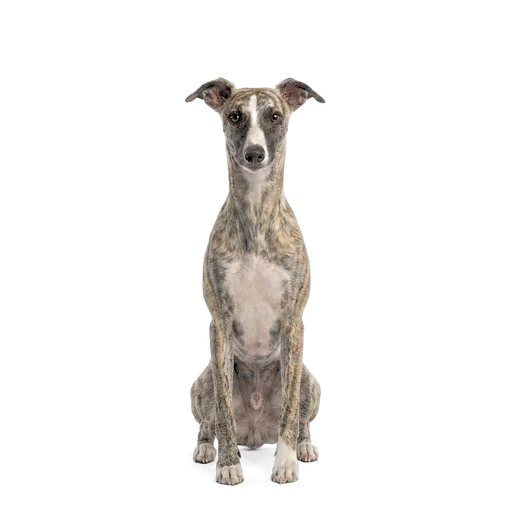
Origin: United Kingdom
Whippet
Get reminders for your Whippet's vaccines
Vaccination and parasite reminders, food-safety scans and health records — free to start in the Pethls app.


Good for
The Whippet is two dogs in one. Indoors, this medium-sized British sighthound is quiet, gentle, and famously happy to melt into the sofa for hours. Outside, the same dog turns into a blur, hitting sprint speeds that few breeds can match over a short dash. Whippets bond hard with their people and tend to be sensitive to raised voices and household tension. If you want an athletic dog that is also a genuine couch potato at home, this breed fits small apartments and busy families alike.
Temperament & personality
Whippets are affectionate and calm in the house, often described as velcro dogs that want to be near you and, ideally, under a blanket. They rarely bark much, which makes them well suited to flats and shared walls. This is a sensitive breed, so harsh training or a loud, chaotic home can make a Whippet anxious and withdrawn.
The flip side of that couch-potato calm is a powerful prey drive. A Whippet that spots a squirrel, cat, or rabbit can be gone in seconds, and their recall often fails in that moment. Keep them on a leash near roads and only let them run flat-out in a securely fenced area.
They are good with children and usually fine with other dogs, especially other sighthounds. Small pets like rabbits and, in some cases, cats can trigger the chase instinct, so introductions need care. Given a daily run or a solid play session, most Whippets are relaxed, easygoing companions. First-time owners can do well with one, provided they take the prey drive, secure fencing, and gentle handling seriously from the start.
Vaccination schedule
Whippet puppies follow the standard core vaccine plan. The DHPP combination shot (distemper, hepatitis/adenovirus, parvovirus, and parainfluenza) usually starts around six to eight weeks of age, then repeats every three to four weeks until the puppy is about sixteen weeks old. Parvovirus in particular is a serious risk for young dogs, so finishing the full series matters.
Rabies is given separately, typically at twelve to sixteen weeks depending on local law. After the puppy series, most Whippets get a booster at around one year, then move to a one-year or three-year schedule based on your vet's protocol and where you live.
Leptospirosis is now recommended as a core vaccine for all dogs, given as a 2-dose puppy series followed by an annual booster (unlike the three-year DHPP core boosters). Whippets with water, rural, or wildlife exposure face higher risk, which is part of why the yearly booster matters, but every Whippet should be vaccinated regardless of lifestyle. Bordetella (kennel cough) and canine influenza remain non-core and depend on lifestyle. A Whippet that visits dog parks, boarding kennels, or lure-coursing events is a good candidate for these. Talk through your dog's exposure with your vet and keep a written record of every date.
Best food & diet
Whippets are lean, muscular dogs by design, and you should be able to see a hint of the last couple of ribs and a clear tucked-up waist. That look is normal and healthy for the breed, so do not try to feed a Whippet to the rounded shape of a Labrador. A quality diet with real animal protein as the first ingredient supports their athletic muscle.
Beef and chicken are common food allergens in this breed, so if your Whippet develops itchy skin, recurrent ear trouble, or loose stools, a novel-protein or limited-ingredient diet can help you pin down the trigger. Change foods gradually over about a week to avoid an upset stomach.
Feeding two smaller meals a day rather than one large one is sensible, and it is best to avoid hard exercise right around mealtimes. Keep treats modest, since a light frame can carry extra weight quickly. Fresh water should always be available, especially after those explosive sprint sessions.
Common health problems
Whippets are one of the healthier purebred dogs, but they carry a few breed-specific concerns. The most important for any owner to understand is anesthesia sensitivity. Their very low body fat and lean build mean standard drug doses can hit harder and clear more slowly, so always remind your vet that your dog is a sighthound before any sedation, dental cleaning, or surgery.
Whippets naturally have a large, athletic heart, and a soft flow murmur can be a harmless, normal finding in the breed rather than a sign of disease. Even so, it is worth discussing any murmur with your vet, who may suggest an ultrasound to confirm the heart is structurally healthy. A single soft murmur noted at a routine check is not usually cause for concern in a Whippet, but it should still be looked into.
Dental disease is common, as it is in most dogs, and with a thin coat they can sometimes develop skin tears and cuts from brambles, fences, and rough play. Minor wounds can look dramatic because the skin is so fine. Keep a basic first-aid kit at home and see your vet for anything deeper than a scratch.
Allergies & skin
The Whippet's short, fine coat offers little protection, so skin problems show up quickly and visibly. Environmental allergens like grass pollen and dust mites are frequent triggers, often causing itchy paws, belly, and ears, with symptoms that flare seasonally when pollen counts climb.
Food allergies to proteins such as beef and chicken can produce similar itching along with digestive upset. Because the causes overlap, working with your vet on a methodical elimination approach beats guessing. Wiping your dog down after grassy walks and washing bedding regularly cuts down on the allergen load at home.
That thin skin also tears easily, so inspect your Whippet after runs in the countryside for nicks and grazes. Keep nails trimmed and watch for pressure marks from hard flooring. A soft, well-padded bed is more than a luxury for a bony sighthound.
Flea, tick & worm prevention
Fleas and ticks affect Whippets just like any dog, and their fine coat actually makes it easier to spot a tick during a post-walk check. Use a year-round flea and tick preventive suited to your climate, whether that is a monthly chew, a spot-on, or a treated collar. Ticks can carry serious illnesses such as Lyme disease, so prompt removal matters.
Worming covers intestinal parasites like roundworms, hookworms, tapeworms, and whipworms, plus heartworm where that is a risk. Puppies need worming often in their first months, then adults settle into a routine your vet recommends, commonly every three months.
Dose these products by your dog's current body weight, and weigh a growing Whippet puppy regularly so you stay in the right band. Never dose a lean sighthound off a weight band meant for a heavier dog. If your dog scoots, has a dull coat, or you see anything odd in the stool, book a faecal test.
Medications & dosing
All medication for a Whippet should be dosed by current body weight and directed by your vet. Their lean, low-fat build changes how some drugs behave in the body, which is exactly why sighthounds are flagged as sensitive to certain sedatives and anesthetics. Weigh your dog before dosing anything rather than guessing from an old number.
Never share human medicines with your dog. Common painkillers like ibuprofen and paracetamol are toxic to dogs, and even some dog-safe drugs need careful dosing in a slim breed. Always tell every vet who treats your Whippet that it is a sighthound, especially before any procedure needing sedation.
Keep a simple log of what your dog takes, the dose, and the date, and finish any prescribed course fully even if your dog seems better. If you ever see a reaction such as vomiting, wobbliness, or unusual drowsiness after a medication, contact your vet straight away.
Grooming & coat care
Grooming a Whippet is about as low-maintenance as dogs get. The short, fine, single coat needs only a quick weekly wipe with a grooming mitt or soft brush to keep it glossy, and shedding is light. Baths are rarely needed unless your dog rolls in something memorable.
The real coat-care priority is warmth, not brushing. With almost no body fat and a whisper-thin coat, Whippets feel the cold badly. A well-fitted fleece or padded coat is genuinely necessary for winter walks, and many owners use pyjamas or a blanket indoors on chilly nights.
Round out the routine with regular nail trims, since long nails change how a running dog lands, plus ear checks and, above all, tooth brushing several times a week to stay ahead of dental disease. Check that thin skin for tears while you groom.
How the Whippet compares
Deciding between similar breeds? Here is the Whippet next to Bedlington Terrier and Clumber Spaniel.
| Whippet | Bedlington Terrier | Clumber Spaniel | |
|---|---|---|---|
| Size | Medium | Medium | Medium |
| Weight | 11-19 kg | 8-10 kg | 25-39 kg |
| Lifespan | 12-15 yrs | 11-16 yrs | 10-12 yrs |
| Activity | Moderate | Moderate | Moderate |
| Shedding | Low | Low | Medium |
| Good with kids | Yes | Yes | Yes |
| Apartment-friendly | Yes | Yes | Yes |
Frequently asked questions
Are Whippets good apartment dogs?
Yes, they suit apartment life well. They are quiet, rarely bark, and spend most of the day sleeping. The one condition is a daily chance to sprint or play hard, ideally a run in a securely fenced space, because they need to burn that explosive energy somewhere.
Do Whippets need a lot of exercise?
Less than their speed suggests. A Whippet is happy with a couple of walks plus a short burst of full-speed running each day. They are sprinters, not endurance dogs, so a few minutes at top speed satisfies them more than a long slow march.
Why do Whippets need coats in winter?
Their coat is short and fine and they carry almost no body fat, so they lose heat fast and genuinely shiver in cold weather. A padded or fleece coat for walks, and sometimes a blanket indoors, keeps them comfortable and is not just for looks.
Can Whippets be let off the leash?
Only in a securely fenced area. Whippets have a strong prey drive and blistering speed, so a squirrel or cat can pull them into a chase before you can react, and recall often fails in that moment. Near roads or open ground, keep them leashed.
Is a heart murmur in a Whippet dangerous?
Not always. Whippets naturally have a large, athletic heart, and a soft flow murmur can be a harmless finding in an otherwise healthy dog. Even so, most murmurs are worth checking, so your vet may suggest an ultrasound to rule out disease. A single soft murmur is not usually cause for panic in this breed, but it should still be looked into.
Related breeds


Health and care information is drawn from established veterinary sources and is general guidance, not veterinary advice. See our sources
Keep records for your Whippet
Vaccinations, food and treat safety, allergy alerts and parasite reminders - all tracked for your Whippet in the Pethls app.