

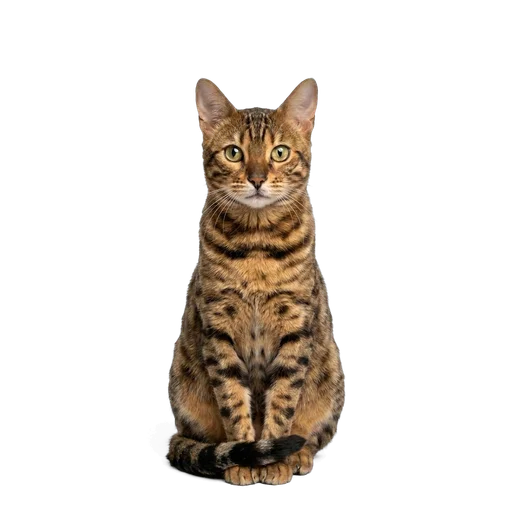
Origin: United States
Bengal
Get reminders for your Bengal's vaccines
Vaccination and parasite reminders, food-safety scans and health records — free to start in the Pethls app.


Good for
The Bengal cat looks like a miniature leopard and behaves like a four-legged athlete on a mission. Bred in the United States from crosses between domestic cats and the Asian leopard cat, this medium-sized breed pairs a short, glittering spotted coat with relentless energy. Bengal cat temperament and care ask more from an owner than most housecats do. Get the enrichment, diet, and vet schedule right, and you get a bright, affectionate companion that will happily walk on a leash.
Temperament & personality
Bengals are smart, busy, and physical. They climb to the highest shelf in the room, open cabinet doors, and treat a running faucet as a personal invitation. Many Bengals genuinely like water and will paw at the tub or join you at the sink, which is unusual for a cat.
This is a breed you can train. Bengals learn to fetch, sit, high-five, and walk in a harness, and they pick up tricks fast when you use clicker training and treats. That intelligence has a flip side: a Bengal with nothing to do invents its own entertainment, usually something you would rather it left alone.
They bond hard with their people and often shadow you room to room, chatting in chirps and trills. Bengals tend to do best with an active household, another playful pet for company, or an owner who sets aside real time each day for interaction. They are affectionate on their own terms, not lap-warmers content to nap all afternoon.
Vaccination schedule
Kittens start the core FVRCP vaccine (feline viral rhinotracheitis, calicivirus, and panleukopenia) at 6 to 8 weeks, with boosters every 3 to 4 weeks until about 16 weeks of age. Rabies is given once around 12 to 16 weeks, timing set by your state's law and the vaccine your vet uses.
The feline leukemia (FeLV) vaccine is recommended for any Bengal that goes outdoors, walks on a leash in public, or lives with cats of unknown status. Indoor-only cats at low risk may skip it after the kitten series, but confirm that call with your vet.
After the kitten series, cats get a booster at one year, then FVRCP every 1 to 3 years depending on lifestyle and local risk. Rabies boosters follow the interval printed on the product label. Your veterinarian will tailor the plan to your Bengal's exposure.
Best food & diet
Bengals are true carnivores and thrive on a high-protein, meat-first diet. Look for a named animal protein such as chicken, turkey, or fish at the top of the ingredient list, and choose a food that meets AAFCO standards for your cat's life stage. Kittens need calorie-dense growth formulas to fuel their fast development.
Some Bengals can have sensitive stomachs and loose stools, so it is worth being aware of. If your cat is one of them, switch foods slowly over 7 to 10 days, mixing more of the new food in each day, and pick a limited-ingredient or easily digestible formula. A sudden diet change is a common trigger for an upset gut.
Fresh water should always be available, and given how many Bengals love it, a pet fountain often encourages better drinking. Watch portions, since an under-exercised Bengal can still gain weight. Your vet can set a target based on your cat's frame and activity.
Common health problems
Bengals are generally healthy, but the breed carries a few known risks. Hypertrophic cardiomyopathy (HCM), a thickening of the heart muscle, is the most serious. It can progress silently, so periodic heart screening with a veterinary cardiologist is worth discussing, especially as your cat ages.
Two inherited eye and blood conditions show up in the breed: progressive retinal atrophy, which gradually reduces vision and can lead to blindness, and pyruvate kinase deficiency, which causes anemia. Both are worth asking your vet about, and both have DNA tests that responsible breeders use before pairing their cats.
Digestive sensitivity is also worth watching for, from chronic soft stool to occasional food intolerance. Keep up with annual wellness exams, and see your vet promptly if you notice labored breathing, weight loss, cloudy eyes, or ongoing diarrhea. Buying from a breeder who tests their lines is the single best way to lower these odds.
Allergies & skin
Bengals are athletic, high-energy cats, and their skin is usually robust, but they do get their share of food sensitivities and environmental allergies. A food-allergic Bengal tends to show it through the skin: itchy face and ears, overgrooming, and small crusty bumps, sometimes alongside vomiting or loose stools. Because Bengals are such enthusiastic groomers to begin with, the line between normal fastidious grooming and problem overgrooming can be blurry, so watch for the point where licking leaves a patch looking thin or sore.
Environmental allergies to pollen, dust mites, and household products are also common and produce itching that flares seasonally or after you change something at home. And as with every cat, fleas are the number one allergy trigger, causing flea allergy dermatitis with its telltale scabby bumps along the spine. Keep a Bengal on year-round flea control. When itching does not settle, the workup is the same as any cat: rule out fleas, run a proper elimination diet, and let the vet decide whether anti-itch medication is needed.
Bengal overgrooming deserves attention because these are busy, intelligent cats that can lick out of boredom or stress as readily as out of itch. A Bengal that is under-stimulated may start barbering a patch on the belly or legs, and that looks a lot like an allergy but needs a different fix. If your Bengal is pulling fur, think about both the skin and the cat's daily enrichment, and get a vet to help you tell the two apart.
The Bengal's short, fine, low-shedding pelt has fed a myth that the breed is hypoallergenic. It is not. Every cat produces Fel d1, the protein in saliva and skin that people react to, and a Bengal is no exception even though it sheds less loose hair than a fluffier cat. Less shedding can mean a bit less allergen drifting around the house, which is why some sensitive owners tolerate a Bengal better, but tolerate is not the same as safe. If you are asking whether you are allergic to Bengals or whether Bengals are hypoallergenic, spend proper time with one first, because the fine coat lowers the odds without removing the allergen.
Exercise & enrichment
A Bengal needs a job. Give it tall climbing towers, wall shelves, and window perches so it can go vertical, plus puzzle feeders that make it work for meals. Rotate toys weekly to keep novelty high, and schedule at least two solid play sessions a day with a wand toy or fetch.
Boredom is the root of most Bengal behavior problems. A cat that isn't challenged will knock things off counters, shred furniture, yowl at night, and find trouble in your cabinets. Mental work matters as much as physical burn, so teach tricks and hide treats around the house for it to hunt.
Bengals can live in an apartment, but only if you commit to the enrichment. Small spaces amplify pent-up energy, so vertical territory and daily leash walks or a secure catio go a long way. A second active pet can help share the load, though it is no substitute for your attention. Keep a written record of play sessions and vet visits so nothing slips.
Flea, tick & worm prevention
Even an indoor Bengal needs parasite protection. Fleas hitch rides on clothing and other pets, and ticks come in on anyone who has been outside. Use a vet-recommended monthly or long-acting preventive, and never apply a dog product to a cat, since some canine formulas are toxic to felines.
Bengals that walk on a leash or spend time outdoors face higher exposure and may need year-round tick coverage. Ask your vet about a product that also covers heartworm, which mosquitoes transmit to cats too and which has no cure once established.
Kittens are dewormed on a schedule starting at a few weeks old, and adults benefit from routine fecal checks at their annual exam. Many modern preventives handle common intestinal worms alongside fleas, so one product can cover several risks at once.
Medications & dosing
Bengals are generally hard-wearing, but the two areas that most often bring them to a vet's medication list are the heart and the gut. If your Bengal is diagnosed with hypertrophic cardiomyopathy (HCM), the vet may prescribe a beta-blocker like atenolol or a blood thinner such as clopidogrel to lower the risk of clots. These are not drugs you adjust on your own. Give exactly the dose and duration written on the label, and go back for the recheck echocardiograms your cardiologist schedules, because dosing often changes as the heart does.
This breed is known for a sensitive stomach, and loose stool or intermittent diarrhea comes up a lot with Bengals. The urge to reach for something in your own cabinet is understandable, but resist it. Several human anti-diarrheals are dangerous for cats, and paracetamol (acetaminophen) and ibuprofen are outright toxic to them even in small amounts. Let the vet find the cause first. The treatment might be a short course of a cat-safe medication, a probiotic, or simply a diet change, and only your vet can tell which.
Keep parasite prevention steady, since a Bengal's digestive tract does not need worms making things worse. Use a vet-recommended flea, tick, and worming product on the schedule your clinic sets, dosed to your cat's current weight. Ask the vet or a tech to show you how to pill a cat safely so tablets actually go down instead of ending up on the floor. It also helps to keep a written record of every prescription and refill date, with a reminder on your phone so a heart or parasite dose never quietly lapses.
Grooming & coat care
The Bengal's short, pelt-like coat is one of the easiest to maintain in the cat world. A quick brush once a week with a soft slicker or grooming glove lifts loose hair and keeps that signature glitter looking sharp. Most Bengals enjoy the attention and treat it as bonding time.
Shedding is very low, which is welcome news for anyone tired of fur on the furniture. No cat is truly hypoallergenic, but a Bengal's minimal shedding means less dander scattered around the home than you would get from a long-haired breed.
Round out grooming with the basics: trim the nails every couple of weeks, check the ears for wax or debris, and brush the teeth regularly to head off dental disease. Given how many Bengals like water, the occasional bath is usually a low-drama affair.
How the Bengal compares
Deciding between similar breeds? Here is the Bengal next to Abyssinian and Siamese.
| Bengal | Abyssinian | Siamese | |
|---|---|---|---|
| Size | Medium | Small | Small |
| Weight | 4-7 kg | 3-5 kg | 3-5 kg |
| Lifespan | 12-16 yrs | 12-15 yrs | 12-20 yrs |
| Activity | Active | Active | Active |
| Shedding | Low | Low | Low |
| Good with kids | Yes | Yes | Yes |
| Apartment-friendly | No | Yes | Yes |
Frequently asked questions
Are Bengal cats high energy?
Yes, very. Bengals are one of the most energetic cat breeds, built to climb, jump, and play for hours. They need daily active play and mental enrichment, and they get destructive when bored, so they suit engaged owners rather than people wanting a quiet lap cat.
Do Bengal cats shed a lot?
No. Bengals have a short, dense coat and shed very little compared to most cats. A weekly brush is usually enough to keep loose hair down. No cat is fully hypoallergenic, but their low shedding means less dander around the house.
Are Bengal cats good for apartments?
They can be, if you provide enough exercise. A Bengal in an apartment needs tall cat trees, vertical shelves, puzzle feeders, and daily play or leash walks to burn off energy. Without that outlet, the tight space tends to bring out loud, destructive behavior.
How long do Bengal cats live?
Bengals typically live 12 to 16 years, and many reach the upper end with good care. A high-quality diet, regular veterinary checkups, parasite prevention, and screening for inherited conditions all help support a long, healthy life.
What health problems do Bengal cats have?
The main concerns are hypertrophic cardiomyopathy (a heart condition), progressive retinal atrophy, which affects vision, and pyruvate kinase deficiency, which causes anemia. Some Bengals may also have sensitive digestion. DNA testing and annual vet exams help catch these issues early, so buy from a breeder who screens their cats.
Related breeds

Health and care information is drawn from established veterinary sources and is general guidance, not veterinary advice. See our sources
Keep records for your Bengal
Vaccinations, food and treat safety, allergy alerts and parasite reminders - all tracked for your Bengal in the Pethls app.