

Origin: United States
Chantilly
Get reminders for your Chantilly's vaccines
Vaccination and parasite reminders, food-safety scans and health records — free to start in the Pethls app.


Good for
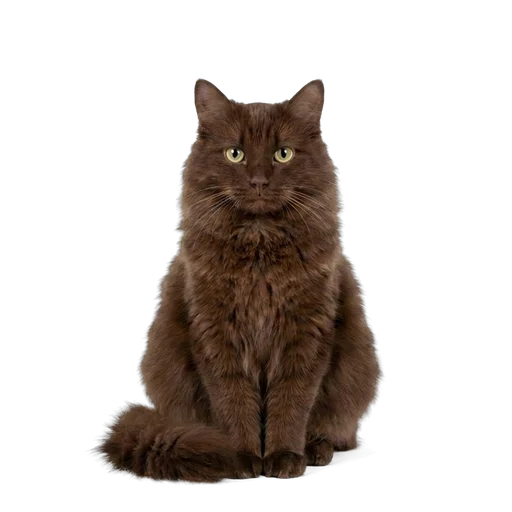
The Chantilly, also called the Chantilly-Tiffany, is a rare American breed best known for its silky semi-long coat and glowing golden eyes, most iconically in the original rich chocolate but also recognized in blue, cinnamon, fawn, lilac and black. It is a quiet cat with an unusual voice, tending to chirp and trill rather than produce a standard meow, and a devoted disposition that keeps it close to its favorite people. Adults are medium cats at 3.5 to 7 kg, with most females toward the lighter end and larger toms near the top, and they are usually cited as living 11 to 15 years, though the tiny surviving population means firm health data is scarce. This is a breed for someone who is actually home: a Chantilly left alone through long workdays becomes visibly unhappy. Be aware that the breed is extremely rare today and possibly extinct in pedigree form, so most cats matching the description are lookalikes rather than documented Chantillys. See the FAQ below on availability.
Temperament & personality
The Chantilly is a companion cat in the fullest sense. It picks its people and stays near them: on the desk during work, on the couch arm during television, at the bathroom door because closed doors are an outrage. The devotion is gentle rather than pushy. Rather than yelling for attention, a Chantilly announces itself with soft chirps and trills, a conversational habit owners find endlessly charming.
Energy sits in the comfortable middle. These cats enjoy a proper play session with a wand toy, then are content to settle and observe. They are not counter-surfers or curtain-climbers by nature, which combined with the quiet voice makes them excellent apartment cats. Wild, destructive energy is not their style; a calm, predictable household is where they do best.
The flip side of all that devotion is a genuine dislike of solitude. A Chantilly alone for ten hours a day, day after day, tends toward moping, overgrooming, or clinginess when you return. Homes with a second pet, a person around much of the day, or a flexible schedule suit the breed far better. With gentle children they are patient and sweet, and their sociable, low-conflict nature makes introductions to other cats and calm dogs relatively smooth.
Vaccination schedule
Core vaccination for a Chantilly kitten follows the standard feline protocol. The FVRCP vaccine, protecting against viral rhinotracheitis, calicivirus, and panleukopenia, starts at six to eight weeks of age and repeats every three to four weeks until the kitten is 16 weeks or older. Finishing the full series is essential; the last dose at 16 weeks or beyond is the one given after maternal antibody interference has faded.
Rabies vaccination happens between 12 and 16 weeks. Even for a homebody breed like this one, rabies coverage is required by law in most US jurisdictions and protects against the small but real chance of a bat in the house or an escape out an open door.
FeLV vaccination is advised for all kittens during the first year. For a strictly indoor, single-cat Chantilly with no exposure to cats of unknown viral status, FeLV boosters can usually be discontinued in adulthood, but keep them going if the cat has any outdoor access or lives with a cat whose viral status you do not know. From adulthood, FVRCP typically moves to a booster at one year and then every three years. Put the whole schedule into a health log when you bring the kitten home and let the reminders do the remembering.
Best food & diet
A complete, AAFCO-compliant diet with named animal protein up front suits the Chantilly well; there are no documented breed-specific nutritional needs. What the breed does have is a moderate activity level and a strong attachment to routine, which together make it a candidate for slow, steady weight gain in middle age. Feed measured meals at consistent times, skip the bottomless bowl, and check body condition monthly by feeling for ribs under that silky coat.
The semi-long coat makes hairball management part of feeding strategy. Include some fiber-rich or hairball-control food during heavier shedding periods, and lean on wet food for moisture, which supports kidney and urinary health across the cat's life.
Because the Chantilly bonds so tightly to its routine, diet changes deserve extra patience. Transition to any new food across seven to ten days, mixing increasing amounts of the new into the old. A stressed or lonely Chantilly may also go off its food, so track how much it actually eats day to day. If it refuses food for more than a day, call the vet whatever the suspected cause.
Common health problems
No major hereditary diseases were ever documented in the Chantilly, though the honest caveat is that the population was always too small for sound health data. The breed's history is a chain of near-extinctions: founded from two chocolate longhaired cats in New York in 1969, revived in the 1980s and 1990s, and then largely lost after its last dedicated breeding programs ended. Because so few pedigreed cats remain (see the intro and FAQ), any health history should come from the individual cat's records, not breed statistics.
The practical, watch-at-home issues are well defined. Hairballs are a recurring theme thanks to the semi-long coat, so regular combing pays off. Ear care is covered under Grooming below. And as with every cat, dental disease and excess weight are the two slow-burn problems that shorten lives quietly; both respond well to routine care started early.
Schedule annual veterinary exams through the cat's prime years and twice-yearly visits from about age ten, when kidney disease, hyperthyroidism, and arthritis start appearing in cats generally. A weight log and a note of anything unusual between visits, both easy to keep in a health log, give your vet far better material to work with than memory alone.
Allergies & skin
The Chantilly is not hypoallergenic. It produces typical amounts of Fel d 1, and its semi-long coat carries dander through the home as it sheds. People with cat allergies react to the protein, not the hair length, so no amount of grooming makes this breed safe for a significantly allergic household. Spend real time with a similar cat before committing.
The cat's own skin benefits from the coat's unusual structure: silky guard hairs with no downy undercoat, which means air reaches the skin easily and mats are less punishing than in double-coated breeds. Still, check the skin during comb-throughs for flakes, scabs, or red patches, especially along the spine and at the tail base where flea trouble shows first.
Flea allergy dermatitis remains the most likely itch in any cat, so prevention is skin care. Ears are worth watching too: waxy buildup can mimic or invite infection, and ear mites produce a similar dark debris. If an ear looks dirty and the cat is scratching at it or shaking its head, have a vet look before starting any cleaner, since treating the wrong problem makes things worse.
Flea, tick & worm prevention
Year-round flea prevention with a product licensed for cats is the baseline, indoors or not. Fleas arrive on clothing, dogs, and visiting pets, and a single established infestation in a semi-longhaired cat takes weeks to clear. Choose a feline spot-on such as selamectin or fluralaner, and never, under any circumstances, apply a dog product containing permethrin to a cat. Permethrin poisoning in cats causes seizures and is often fatal, and even snuggling a recently treated dog can be enough exposure.
Apply spot-ons to skin at the back of the neck, parting that silky coat properly so the dose reaches skin rather than sitting on hair. A weekly pass with a flea comb around the neck and rump doubles as early detection, with flea dirt showing as dark specks that smear red-brown on damp tissue.
For worming, kittens get roundworm treatment every two weeks from three weeks of age to eight weeks, then monthly to six months. An indoor adult Chantilly usually does fine with annual fecal testing and targeted treatment, while any outdoor access moves the cat to routine broad-spectrum worming every one to three months. Record every product, dose, and date in a health log; parasite protection fails most often through missed intervals, not wrong products.
Medications & dosing
Feline doses are calculated per kilogram, and Chantillys span 3.5 to 7 kg, so weigh the cat before any new medication and update the number in a health log at each vet visit. The plush coat makes visual weight estimates especially unreliable in this breed; plenty of fluffy cats are lighter than they appear, and underestimating weight leads to underdosing wormers and antibiotics.
Keep human medications away from this cat entirely. Paracetamol is deadly to cats even in a fraction of a human dose, ibuprofen and naproxen cause kidney failure and ulcers, and no over-the-counter human painkiller is safe. A quiet, gentle cat like the Chantilly often hides pain behind stillness, so if the chirping stops and the cat withdraws, that is a reason to call the vet, not to medicate at home.
Given the breed's soft temperament, most Chantillys are cooperative patients by cat standards, and pill pockets or flavored liquid compounds handle most courses smoothly. Give antibiotics to the end of the prescription, ask your vet before combining any supplements with prescribed drugs, and if ear medication is ever prescribed, have the clinic demonstrate the technique once so you can repeat it confidently at home.
Grooming & coat care
The Chantilly's coat is easier than it looks. The semi-long, silky fur has no downy undercoat, so it resists the dense matting that plagues Persians and requires only a comb-through two or three times a week with a stainless steel comb. Focus on the britches, chest ruff, and behind the ears, where the longer furnishings tangle first. During spring and fall shedding, step up to every other day and expect noticeably more hair in the comb.
Ear care is worth a weekly habit. Check the ears weekly and clean visible wax when needed with a vet-approved feline ear cleaner and cotton pad, never a cotton swab pushed into the canal. Healthy ears are pale pink and nearly odorless; dark debris, strong smell, or head-shaking means a vet visit rather than more cleaning.
Regular combing is also your main hairball defense, since hair caught in the comb never gets swallowed. Round out the routine with nail trims every two to three weeks and tooth brushing with feline toothpaste as many days a week as the cat accepts. The good news is that this breed usually loves the attention: for a cat that wants nothing more than time with its person, a grooming session is a feature, not a chore.
How the Chantilly compares
Deciding between similar breeds? Here is the Chantilly next to American Longhair and American Bobtail.
| Chantilly | American Longhair | American Bobtail | |
|---|---|---|---|
| Size | Medium | Medium | Medium |
| Weight | 3.5-7 kg | 3.5-7 kg | 3-7 kg |
| Lifespan | 11-15 yrs | 12-17 yrs | 13-15 yrs |
| Activity | Moderate | Moderate | Moderate |
| Shedding | Medium | High | Medium |
| Good with kids | Yes | Yes | Yes |
| Apartment-friendly | Yes | Yes | Yes |
Frequently asked questions
Is the Chantilly the same breed as the Tiffanie?
No, and the names cause endless confusion. The Chantilly, or Chantilly-Tiffany, is the rare American breed founded from two chocolate longhaired cats in New York. The Tiffanie is a British breed of Burmese and Chinchilla Persian descent. They are unrelated despite the nearly identical names.
Can I still get a pedigreed Chantilly kitten?
Almost certainly not. The last dedicated breeding programs wound down in the 2000s, and the breed is now considered extremely rare and possibly extinct in pedigreed form. Cats matching the look, semi-long chocolate coat and golden eyes, do appear in shelters and mixed litters, and they can be wonderful companions even without papers.
Are Chantilly cats really that quiet?
Yes, and it is one of their signature traits. Rather than a full meow, they mostly produce soft chirps and trills, often described as conversational. They chat with their people frequently but at a volume that neighbors through a shared wall will never notice.
Can a Chantilly be left alone during full workdays?
It is the breed's weakest point. Chantillys form strong attachments and genuinely dislike long stretches of solitude; repeated ten-hour days alone can lead to moping, overgrooming, or appetite dips. A second compatible pet, a home-based worker, or a midday visitor makes a real difference.
How demanding is Chantilly grooming?
Moderate. The silky semi-long coat lacks an undercoat, so combing two or three times a week prevents tangles and reduces hairballs. The extra task specific to this breed is ear care: the ears tend to build up wax and need weekly checks and occasional cleaning with a feline ear cleaner.
Related breeds
Health and care information is drawn from established veterinary sources and is general guidance, not veterinary advice. See our sources
Keep records for your Chantilly
Vaccinations, food and treat safety, allergy alerts and parasite reminders - all tracked for your Chantilly in the Pethls app.