

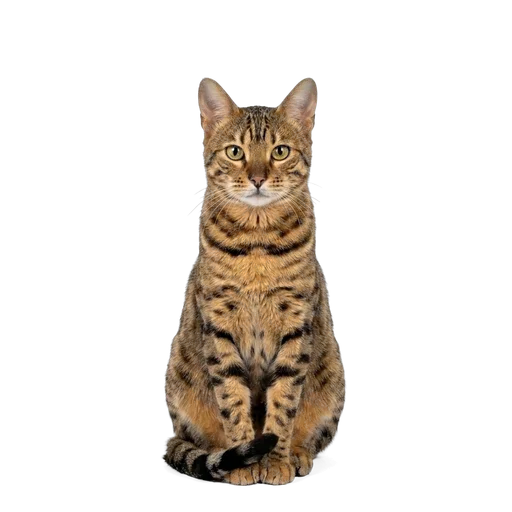
Origin: United States
Cheetoh
Get reminders for your Cheetoh's vaccines
Vaccination and parasite reminders, food-safety scans and health records — free to start in the Pethls app.


Good for
The Cheetoh is what happens when breeders cross a Bengal with an Ocicat and select hard for temperament: a big, leopard-spotted cat with a calm, sociable streak rather than a wild one. Developed in the United States in the early 2000s, large males can reach around 10 kg while staying gentle enough for a house full of kids. Expect a cat that follows you between rooms, learns to fetch, and treats the top of the bookcase as home base. This is a young, rare breed, so buy from a breeder who screens for heart disease, and be ready to schedule real play sessions every single day.
Temperament & personality
Cheetoh breeders had one goal from the start: keep the bold spotted coat of both parent breeds and breed out every trace of edginess. The result is a cat that greets visitors at the door, drapes itself over your shoulder, and stays right at your heels around the house. Many owners teach theirs to fetch, walk on a harness, or come when called, and the cats pick it up fast.
That sweetness comes packaged with serious energy. A Cheetoh in its first three years wants to climb, chase, and patrol, and if you do not provide a floor-to-ceiling cat tree it will find your curtain rail instead. Plan on two or three proper play sessions a day with wand toys, plus puzzle feeders to keep the brain busy. Bored Cheetohs open cupboards, and some figure out lever door handles.
They tend to do well with respectful children and cat-friendly dogs, partly because the Ocicat lines behind them were selected for sociability over decades. What they handle poorly is an empty house. This breed genuinely dislikes being alone all day, so a second pet or a work-from-home household suits them best.
Vaccination schedule
Cheetoh kittens follow the standard feline core schedule. The FVRCP combination vaccine, covering feline viral rhinotracheitis, calicivirus, and panleukopenia, starts at 6 to 8 weeks of age and repeats every 3 to 4 weeks until the kitten is at least 16 weeks old. That final dose at 16 weeks or later matters because maternal antibodies can block earlier shots from taking hold.
Rabies is usually given once between 12 and 16 weeks, with timing set by the specific product and your local law. Most Cheetohs live indoors, but rabies vaccination is legally required across much of the United States regardless, and a large confident cat that bolts through an open door is exactly the kind that ends up in a quarantine dispute.
FeLV (feline leukemia virus) vaccination is recommended for kittens by many vets and stays on the schedule for any cat with outdoor access, including harness walkers and catio users, or exposure to cats of unknown status. After the kitten series, adults typically get an FVRCP booster at one year and then every one to three years depending on risk. Ask your vet to set the interval rather than automatically boostering everything every year.
Best food & diet
Feed a Cheetoh like the athletic carnivore it is: a complete diet meeting AAFCO standards with animal protein listed first. Active young adults often do better with part of the ration fed wet, both for hydration and because the water content helps them feel full. A breed that ranges from roughly 4.5 to 10 kg has no single correct portion, so feed to body condition rather than the chart on the bag.
Like most cats, Cheetohs do well on a kitten formula until roughly 12 months. From there, watch the waistline. Neutered males in particular can slide from muscular to heavy without the silhouette changing much under that plush coat, and extra weight is bad news for a breed with heart disease in its background.
Use food as enrichment. Scatter feeding, treat balls, and lick mats slow this breed down and give that energy somewhere to go. Skip raw feeding unless your vet signs off; the food-safety trade-offs are real and the benefit over a good commercial diet is unproven.
Common health problems
The Cheetoh is a young breed with a small population, so there is no long registry of breed-specific disease data yet. What we know comes from its parents. Hypertrophic cardiomyopathy (HCM), a thickening of the heart muscle, is the main concern inherited from that side, so ask any breeder for echocardiogram screening results on both parents and mention the Bengal ancestry to your own vet. A murmur or gallop rhythm found at a routine exam should trigger a cardiology workup, not a wait-and-see.
Cataracts are the other flagged condition. They can appear in young cats as an inherited problem or develop later secondary to inflammation or diabetes. Cloudiness in the lens, hesitation in dim light, or bumping into furniture all warrant an ophthalmic exam. Caught early, some underlying causes are treatable, and surgery is an option for advanced cases.
Beyond that, the everyday problems do the most damage: dental disease and obesity. Cheetohs live 10 to 15 years, and the ones reaching the top of that range usually have owners who brushed teeth, kept weight lean, and booked a vet visit every year even when nothing seemed wrong.
Allergies & skin
That short, plush, spotted coat is low-maintenance, but it is not hypoallergenic. Cheetohs produce Fel d 1, the protein behind most human cat allergies, at ordinary levels. If someone in the house reacts to cats, spend time with the specific kitten before committing rather than trusting breed marketing.
The cats themselves have fairly resilient skin. When trouble shows up, it usually traces to the same three culprits as in any cat: flea-bite allergy, food allergy, and environmental allergy (atopy). Watch for a bald overgroomed stripe down the belly or spine, scabby miliary dermatitis along the back, or ears that never stay clean. Flea allergy is the most common and the cheapest to rule out, which is why vets start there even with strictly indoor cats.
Food allergy in cats is nearly always a reaction to a protein the cat has eaten for some time; beef and chicken are among the most common triggers. Diagnosing it takes a strict 8 to 12 week elimination diet run through your vet. Over-the-counter switches to grain-free foods rarely settle a genuinely allergic cat, because grain is almost never the trigger.
Flea, tick & worm prevention
Use only products labeled for cats, dosed by your cat's current weight. This matters twice over for a Cheetoh, because the weight range within the breed is huge: a preventive sized for a 4.5 kg female underdoses a 10 kg male. And never apply a dog flea product containing permethrin to any cat. Permethrin is severely toxic to cats, and exposure, even from grooming a recently treated dog, can cause tremors, seizures, and death.
Modern monthly spot-ons cover fleas, and several also handle ticks, ear mites, and some worms in a single product. Indoor cats still need cover, since fleas ride in on clothing and other pets, and a Cheetoh that walks on a harness or uses a catio counts as having outdoor exposure.
For worming, kittens are typically treated every 2 to 3 weeks from 3 weeks of age until 8 weeks, then monthly to 6 months. Adults get roundworm and tapeworm treatment based on lifestyle, commonly every 1 to 3 months for outdoor-access cats and less often for indoor ones. An annual fecal test lets your vet tailor the schedule instead of guessing.
Medications & dosing
Every medication dose for a Cheetoh starts from an accurate current weight, and with this breed spanning roughly 4.5 to 10 kg, a big male can need roughly twice the dose of a small female. Do not estimate. Weigh the cat, and reweigh before refilling anything long-term, because a dose set for a lean two-year-old can be wrong for the same cat at five.
Never give human painkillers. Paracetamol (acetaminophen) is lethal to cats at doses that would barely touch a human headache, and ibuprofen and aspirin are nearly as dangerous, because cats lack the liver enzymes to clear these drugs. If your Cheetoh seems painful, call the vet; cat-safe options like buprenorphine and feline-dosed NSAIDs exist, and they are prescription-only for good reason.
If your cat is ever diagnosed with HCM, dosing discipline becomes daily life. Drugs such as atenolol or clopidogrel run on precise schedules, and pilling a strong, clever cat takes strategy. Pill pockets, a pill gun, and treat-based training started early all pay off later. Log doses somewhere the whole household can see, so nobody double-doses and nothing gets skipped.
Grooming & coat care
This is close to a wash-and-wear cat. The short, plush coat sheds lightly, and a rubber brush or grooming mitt once a week lifts loose hair and spreads skin oils, which keeps the spotted pattern glossy. Step up to twice a week during spring and autumn coat changes. Baths are almost never needed, and many Cheetohs tolerate water surprisingly well thanks to their Bengal side, so rinsing off something sticky is not the battle it would be with other breeds.
Spend the time you save on the coat on the parts owners tend to skip: teeth, claws, and ears. Aim for tooth brushing several times a week with cat toothpaste, a claw trim every 2 to 3 weeks, and a quick ear check monthly. A big climbing cat needs functional claws, so give it tall sisal posts rather than trimming too short.
How the Cheetoh compares
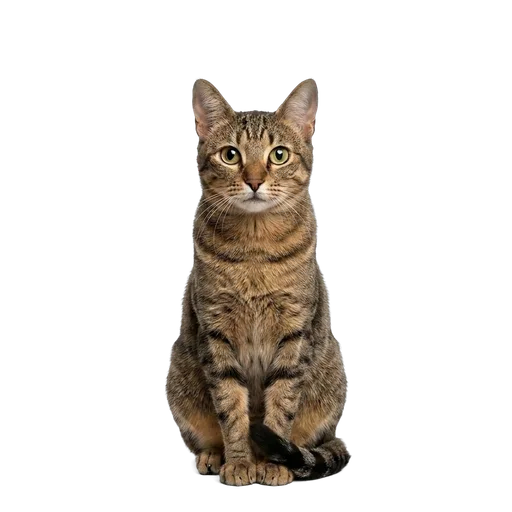
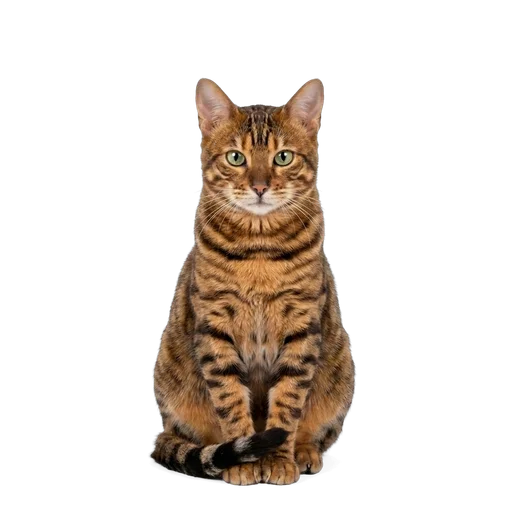
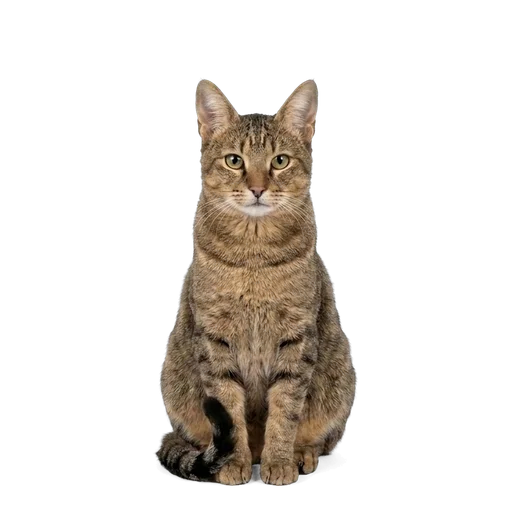
Deciding between similar breeds? Here is the Cheetoh next to Brazilian Shorthair and Toyger.
| Cheetoh | Brazilian Shorthair | Toyger | |
|---|---|---|---|
| Size | Large | Large | Medium |
| Weight | 5.5-11.5 kg | 4.5-10 kg | 3-7 kg |
| Lifespan | 10-15 yrs | 14-20 yrs | 10-15 yrs |
| Activity | Active | Active | Active |
| Shedding | Low | Low | Low |
| Good with kids | Yes | Yes | Yes |
| Apartment-friendly | No | Yes | Yes |
Frequently asked questions
Are Cheetoh cats part wild?
Only distantly. The wild ancestry comes through the Bengal side, several generations removed from the Asian leopard cat, and Cheetohs are bred specifically for a soft, social temperament. They are considered domestic cats, though a few regions restrict hybrid-ancestry breeds, so check local rules before buying.
How big do Cheetoh cats get?
Big for a house cat. Females often sit around 4.5 to 6.5 kg, while large males can reach around 10 kg of lean muscle. They keep filling out until about two years old, so do not judge adult size from a six-month-old kitten.
Are Cheetohs good with children and dogs?
Generally yes, and better than most breeds. They were bred for sociability and tend to enjoy busy households, including cat-friendly dogs. As with any cat, supervise toddlers and teach kids to let the cat walk away when it wants to.
Are Cheetoh cats hypoallergenic?
No. Despite the short coat and light shedding, Cheetohs produce normal levels of Fel d 1, the allergen that triggers most cat allergies. Allergic households should spend time with an individual cat before committing.
How much exercise does a Cheetoh need?
More than average. Plan on two or three interactive play sessions daily, plus vertical space to climb: a tall cat tree, shelves, or a catio. Without an outlet, this breed invents its own entertainment, and you will not always approve of it.
Related breeds
Health and care information is drawn from established veterinary sources and is general guidance, not veterinary advice. See our sources
Keep records for your Cheetoh
Vaccinations, food and treat safety, allergy alerts and parasite reminders - all tracked for your Cheetoh in the Pethls app.