

Origin: United States
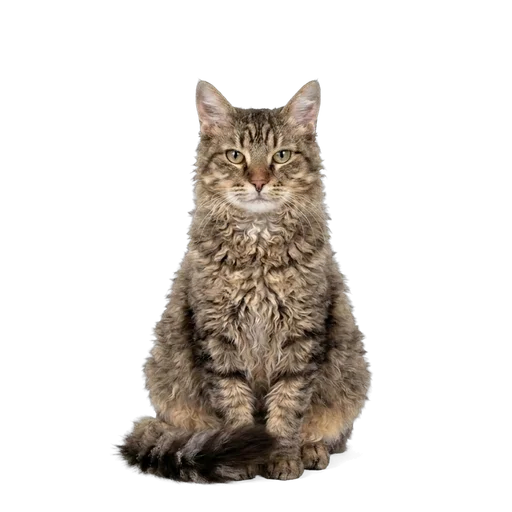
LaPerm
Get reminders for your LaPerm's vaccines
Vaccination and parasite reminders, food-safety scans and health records — free to start in the Pethls app.


Good for
The LaPerm is the rex cat with the soft, tumbling curls, a coat that came about naturally on an Oregon farm before anyone set out to breed for it. These are people's cats in the fullest sense. A LaPerm will follow you room to room, ride around on your shoulder, and reach a curious paw toward whatever you happen to be doing. They are gentle, chatty in a quiet way, and remarkably content to be handled. Under the unusual coat sits a hardy, medium-sized cat that tends to age well when its teeth and routine health are looked after.
Temperament & personality
LaPerms are affectionate to a degree that surprises people who expect a curly-coated cat to be aloof and decorative. They seek out laps, shoulders, and the crook of an arm, and many learn to gently pat your face for attention. Curiosity drives most of what they do, so open drawers, running taps, and the inside of a grocery bag all get investigated.
They are active without being frantic. A LaPerm enjoys a good play session and then settles down, which makes the balance easy to live with in a flat or a busy family home.
Sociability extends to other animals. Most LaPerms get along with dogs and other cats once introductions are done properly, and they rarely relish being left completely alone for long stretches. If your days are long, a second pet or plenty of interactive time keeps them content.
Vaccination schedule
Kittens start the FVRCP core vaccine (feline viral rhinotracheitis, calicivirus and panleukopenia) at around 6 to 8 weeks, with boosters every 3 to 4 weeks until at least 16 weeks of age. That series is what builds durable protection, so finishing it matters more than the exact starting date.
Rabies is given once between 12 and 16 weeks depending on the vaccine and local law. After the kitten course, cats move to boosters at 1 year, then every 1 to 3 years based on the product and your vet's risk assessment.
FeLV (feline leukaemia) is recommended for any LaPerm with outdoor access or contact with cats of unknown status. Indoor-only cats may not need it long term, but the initial kitten FeLV series is often advised while the future lifestyle is still unknown. A LaPerm that goes outdoors needs FeLV cover more than a strictly indoor one, so match the decision to how the cat actually lives.
Best food & diet
Feed a complete, life-stage-appropriate cat food built around animal protein. Cats are obligate carnivores, so the diet needs real meat protein and taurine rather than plant-heavy filler. Kitten formulas support growth; adult and senior formulas adjust calories as needs change.
LaPerms are a normal-weight, medium-framed breed, and portion control keeps them there. Measure meals instead of free-feeding a full bowl, and weigh your cat every few months. Including some wet food helps with hydration, which supports urinary and kidney health over a long life.
Fresh water should always be available, ideally in a wide bowl or a fountain that encourages drinking. Introduce any diet change over 7 to 10 days to avoid stomach upset.
Common health problems
The LaPerm is a natural breed with a broad genetic base, and it carries no defining hereditary disease. Most live full, healthy lives in the 10 to 15 year range with routine care.
Dental disease is the issue most likely to creep up. Tartar, gingivitis and resorptive lesions cause pain and drive systemic problems if ignored, so home tooth care plus professional cleanings when advised make a real difference.
Routine screening catches the age-related conditions common to all cats, chiefly kidney disease and hyperthyroidism. From middle age onward, annual exams with blood pressure and bloodwork let your vet spot changes early, while a cat still looks and acts normal.
Allergies & skin
LaPerms are sometimes marketed as a lower-allergen or hypoallergenic cat because of the unusual coat. That claim does not hold up. They still produce Fel d1, the protein in saliva and skin oils that triggers most cat allergies, so a truly allergic person can react to a LaPerm the same as any other cat.
If someone in the home is sensitive, spend time with adult LaPerms before committing, keep bedrooms cat-free, wash hands after handling, and run a HEPA air filter. These steps reduce exposure but do not eliminate it.
The skin under those curls is generally uncomplicated. Watch for the usual signs of trouble, such as scratching, scabs, or thinning coat, which more often point to fleas or a food sensitivity than to anything breed-specific. An itch that lingers is worth checking, since fleas and food sensitivities respond well once identified.
Flea, tick & worm prevention
Use only flea and tick products licensed for cats. Never apply a dog product containing permethrin to a cat, as permethrin is highly toxic to cats and can cause tremors, seizures and death. If a dog in the house is treated with a spot-on, keep the animals separated until it dries.
A monthly cat-safe preventive from your vet handles fleas and, where relevant, ticks. Indoor LaPerms still need cover, since fleas hitch a ride indoors on people and other pets.
Worming follows a schedule based on lifestyle. Kittens are wormed frequently in their first months, and adults are treated on a routine your vet sets, more often for hunters or outdoor-access cats. Roundworms and tapeworms are the usual targets, and many flea products cover part of the parasite picture.
Medications & dosing
All medication for a cat is weight-based and should come from your vet. Adult LaPerms vary in body weight, so an accurate current weight matters for correct dosing, especially for anaesthesia, pain relief and antibiotics.
Cats are not small dogs, and their drug metabolism proves it. Many common human and canine medicines, including paracetamol, ibuprofen and permethrin, are dangerous or lethal to cats. Never medicate from the bathroom cabinet.
Give the full course of any prescription even after your cat seems well, and use the exact product and dose your vet specified. If a pill is a struggle, ask about flavored formulations or liquids rather than skipping doses or crushing tablets that should stay whole.
Grooming & coat care
The LaPerm coat is famously low-maintenance for a rex. Because the fur is soft and curly and shedding is light, a gentle comb-through once or twice a week is usually enough to keep it tidy and remove loose hair. Heavy brushing is counterproductive.
Over-grooming can actually loosen and relax the curls, so a light hand is the rule. Long-haired LaPerms may need a little more attention around the ruff and tail, while short-haired ones need very little. Coat density changes seasonally and some cats molt and re-curl, which is normal.
Round out care with the basics all cats need: check ears, keep nails trimmed, and above all stay on top of dental care with brushing and vet cleanings. That routine does more for a LaPerm's long-term health than anything you do to the coat.
How the LaPerm compares
Deciding between similar breeds? Here is the LaPerm next to American Curl and American Wirehair.
| LaPerm | American Curl | American Wirehair | |
|---|---|---|---|
| Size | Medium | Medium | Medium |
| Weight | 2.5-5.5 kg | 2.5-5 kg | 3-7 kg |
| Lifespan | 10-15 yrs | 12-16 yrs | 12-18 yrs |
| Activity | Moderate | Moderate | Moderate |
| Shedding | Low | Low | Low |
| Good with kids | Yes | Yes | Yes |
| Apartment-friendly | Yes | Yes | Yes |
Frequently asked questions
Are LaPerms hypoallergenic?
No. They still produce Fel d1, the main cat allergen, so despite the curly coat and lower shedding they are not safe for a truly cat-allergic person. Spend time with one before deciding.
How much grooming does a LaPerm need?
Very little. A gentle comb once or twice a week removes loose hair. Over-brushing can loosen the curls, so a light touch is best.
Do LaPerms shed a lot?
No, shedding is low. Some cats go through a molt and re-curl their coat, which is normal, but day to day they leave little hair around the home.
Are LaPerms good family cats?
Yes. They are gentle, affectionate and very people-oriented, and they usually get on well with children and other pets once introductions are done properly.
How long do LaPerms live?
Typically 10 to 15 years. They are a hardy natural breed, and keeping up dental care plus routine senior screening helps them reach the top of that range.
Related breeds


Health and care information is drawn from established veterinary sources and is general guidance, not veterinary advice. See our sources
Keep records for your LaPerm
Vaccinations, food and treat safety, allergy alerts and parasite reminders - all tracked for your LaPerm in the Pethls app.