

Origin: United States
Nebelung
Get reminders for your Nebelung's vaccines
Vaccination and parasite reminders, food-safety scans and health records — free to start in the Pethls app.


Good for
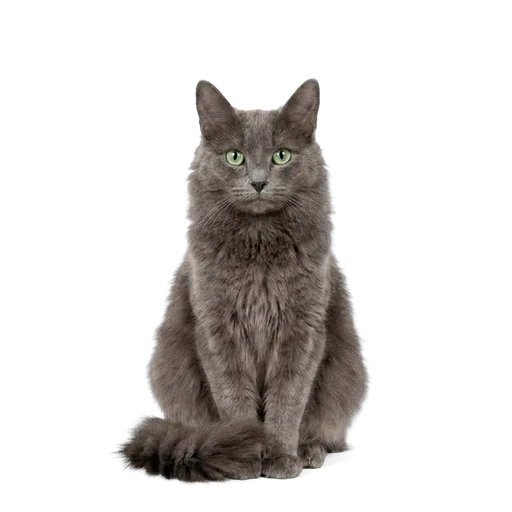
The Nebelung is, in plain terms, a longhaired Russian Blue. The name comes from the German word for mist, and it fits: a shimmering blue-gray coat with silver-tipped guard hairs that seems to glow in low light. These are quiet, gentle cats who bond hard with one or two people and stay reserved with everyone else. They notice small changes in the household and prefer a calm, predictable routine over a busy, chaotic home. If you want a devoted shadow rather than a party animal, this is your cat.
Temperament & personality
Nebelungs are soft-spoken and deeply attached to their chosen humans. They tend to pick one or two favorite people and follow them room to room, often sitting nearby rather than demanding to be held. With strangers they retreat and watch from a distance until they decide the visitor is safe, which can take a while.
This is a sensitive breed. Loud houses, frequent guests, unpredictable schedules and sudden change all put them on edge. A move, a new baby or even rearranged furniture can throw them off for a few days. They do best in a steady home where the daily rhythm stays roughly the same.
Despite the shyness they are playful in private. Once the room is quiet they will chase a wand toy, retrieve a crumpled ball and settle into a lap for the evening. They are intelligent and observant, so they learn routines fast and will let you know, quietly, when dinner is late. Beginners can absolutely keep one, but the cat's need for calm and gentle handling makes it better suited to a patient owner than a first-timer expecting a bold, social lap cat.
Vaccination schedule
Kittens start the FVRCP core vaccine (feline viral rhinotracheitis, calicivirus and panleukopenia) at 6 to 8 weeks, then get boosters every 3 to 4 weeks until they are at least 16 weeks old. That final booster past 16 weeks matters because maternal antibodies can block an earlier dose from taking full effect.
Rabies is given once between 12 and 16 weeks, depending on the vaccine brand and local law. After the kitten series, FVRCP and rabies are boosted at around one year, then every 1 to 3 years based on the product used and your vet's risk assessment.
Nebelungs are usually indoor cats, so FeLV (feline leukaemia virus) is optional and depends on lifestyle. Any cat with outdoor access, or one living with a FeLV-positive housemate, should be vaccinated. Because this breed hates handling from strangers, book slightly longer, unhurried vet visits and bring a familiar-smelling towel to keep stress down.
Best food & diet
Feed a complete, species-appropriate cat food with named animal protein as the first ingredient. Cats are obligate carnivores, so they need real meat and the amino acid taurine, not plant-heavy filler. A mix of wet and dry, or wet alone, helps with hydration and keeps calorie density in check.
Nebelungs are a lean, fine-boned breed, but the thick coat can hide gradual weight gain until it is well underway, so keep an eye on portions. Measure meals with a scale or cup instead of free-feeding, and treat the daily allowance as fixed rather than a starting point plus extras.
Watch the body condition score more than the number on the scale: you should feel the ribs with a light touch and see a slight tuck at the waist from above. If the belly starts to sag or the ribs disappear, cut portions by roughly 10 percent and add play sessions before switching foods. Fresh water should always be available, and many of these cats drink more from a wide bowl or a pet fountain.
Common health problems
The health concern that matters most in this breed is hypertrophic cardiomyopathy (HCM), a thickening of the heart muscle that runs in the Russian Blue lines the Nebelung descends from. It often shows no signs until it is advanced, then can cause laboured breathing, sudden hind-leg weakness from a clot, or collapse. Ask your vet about a screening echocardiogram, especially if you plan to breed or if a parent was affected.
Like all cats, Nebelungs may develop lower urinary tract problems such as bladder stones or cystitis, so it is worth knowing the signs. Watch for straining in the litter box, frequent small trips, blood in the urine or crying while urinating. A cat, particularly a male, who cannot pass urine at all is a genuine emergency and needs a vet the same day.
Beyond inherited disease, keep an eye on the waistline. Extra body fat raises the risk of diabetes, joint strain and urinary trouble, and makes any underlying heart disease harder on the body, so keeping a Nebelung lean and active is one of the most useful things you can do for its long-term health. With good care many live 11 to 18 years.
Allergies & skin
The Nebelung is not a hypoallergenic breed. Russian-line cats are sometimes described as lower-allergen because of how they produce the Fel d 1 protein, but no cat is truly allergy-free, and people sensitive to cats can still react. If allergies in the home are a concern, spend real time around an adult Nebelung before committing.
The cat's own skin is generally healthy under that double coat. The usual triggers for feline itching are flea-bite allergy, food sensitivities and environmental allergens like pollen or dust. Watch for over-grooming, scabs along the back, bald patches or constant scratching around the head and neck.
Because the coat is dense, skin problems can hide until they are well established. Part the fur now and then during grooming to check for flakes, redness, thinning or fleas. If you find persistent itching or skin damage, see your vet, since flea allergy, food allergy and mites look alike on the surface but need different treatment.
Flea, tick & worm prevention
Use only flea and tick products labeled for cats. This point is not negotiable: dog spot-ons containing permethrin are highly toxic to cats and can cause tremors, seizures and death. Never split a dog product or apply one to a cat, even a large one.
An indoor Nebelung still needs parasite cover, because fleas ride in on shoes, other pets and secondhand furniture. A vet-recommended monthly or every-few-months preventive keeps things simple. Many cat products cover fleas plus roundworms or ticks in one dose, so ask your vet which combination fits your cat's lifestyle.
Worming should follow your vet's schedule based on hunting and outdoor access. Indoor-only cats are usually wormed a few times a year, while any cat that hunts or goes outside needs more frequent treatment, including tapeworm cover since fleas spread tapeworm. Keep on top of flea control and you cut the worm risk at the same time.
Medications & dosing
Cat medication is dosed by body weight, so an accurate, current weight matters. A Nebelung ranges from about 3 to 7 kilograms, and dosing at the wrong weight, or reusing an old figure after the cat's weight has changed, can under- or overdose. Weigh before starting any weight-based medication.
Never give human painkillers to a cat. Paracetamol (acetaminophen) is lethal to cats even in tiny amounts, and ibuprofen and aspirin are dangerous without veterinary direction. Cats also lack some liver enzymes people rely on, so many safe-for-humans drugs are not safe for them.
Give the full course of any prescription, even once the cat seems better, and never share medication between pets. If HCM is diagnosed, the cat may need lifelong heart medication with periodic dose checks as its weight and condition change. Because Nebelungs stress easily, ask your vet about the least invasive formulation, such as a flavored liquid or a transdermal gel, when one is available.
Grooming & coat care
The medium-long double coat needs regular but not heavy grooming. Brushing twice a week keeps the fine undercoat from matting and cuts down on hairballs and shed hair around the house. During the spring and autumn coat changes, step up to every day or two, because that is when this breed drops the most fur.
Use a stainless-steel comb to work through the undercoat, then a soft slicker or grooming glove to finish the guard hairs and bring out the silvery sheen. Pay attention to the areas that mat first: behind the ears, in the armpits and around the britches at the back legs. A shy cat tolerates grooming best when you keep sessions short, calm and predictable.
Round out coat care with the basics: check and gently clean the ears if they look waxy, trim the nail tips every couple of weeks, and brush the teeth with cat-safe toothpaste to head off dental disease. Overall this is a moderate-maintenance coat that looks far more high-maintenance than it actually is, as long as the twice-weekly routine stays consistent.
How the Nebelung compares
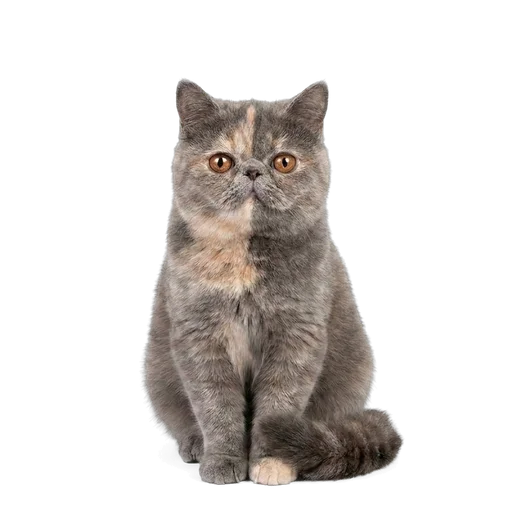
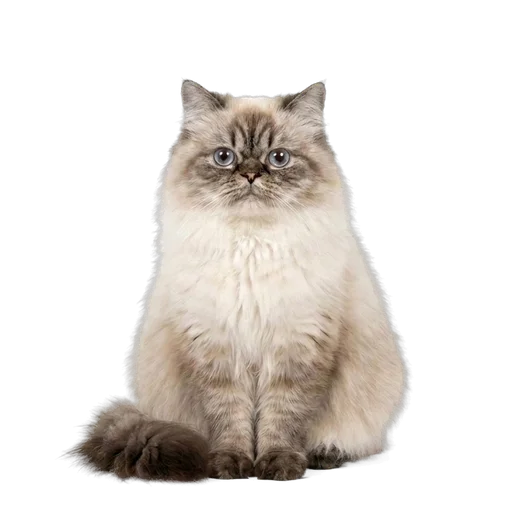
Deciding between similar breeds? Here is the Nebelung next to Exotic Shorthair and Himalayan.
| Nebelung | Exotic Shorthair | Himalayan | |
|---|---|---|---|
| Size | Medium | Medium | Medium |
| Weight | 3-7 kg | 3-6 kg | 3.5-5.5 kg |
| Lifespan | 11-18 yrs | 12-15 yrs | 9-15 yrs |
| Activity | Calm | Calm | Calm |
| Shedding | Medium | Medium | High |
| Good with kids | Yes | Yes | Yes |
| Apartment-friendly | Yes | Yes | Yes |
Frequently asked questions
Is the Nebelung just a longhaired Russian Blue?
Essentially yes. The Nebelung shares the Russian Blue's build, color and quiet temperament but carries a medium-long coat instead of a short one. The breeds are closely related, and Russian Blues sometimes appear in Nebelung pedigrees.
Are Nebelungs good for first-time cat owners?
They can be, but they are sensitive and shy, so they suit a patient owner and a calm, stable home more than a busy household expecting a bold, social cat. If your home is quiet and your routine steady, a beginner can do well with one.
Do Nebelungs get along with children and other pets?
Yes, with gentle, calm ones. They tolerate respectful older children and other easygoing pets, but noisy, grabby handling stresses them and they will retreat. Slow introductions and quiet spaces to escape to help a lot.
How much grooming does a Nebelung need?
Brush the double coat about twice a week, and daily during the spring and autumn sheds. That keeps mats away, reduces hairballs and keeps shedding around the home manageable. It is a moderate-maintenance coat, not a high-maintenance one.
What health problem should Nebelung owners watch for most?
Hypertrophic cardiomyopathy, an inherited thickening of the heart muscle, is the main concern and can be silent until advanced. Ask your vet about echocardiogram screening, and also keep an eye out for bladder stones and weight gain.
Related breeds
Health and care information is drawn from established veterinary sources and is general guidance, not veterinary advice. See our sources
Keep records for your Nebelung
Vaccinations, food and treat safety, allergy alerts and parasite reminders - all tracked for your Nebelung in the Pethls app.