

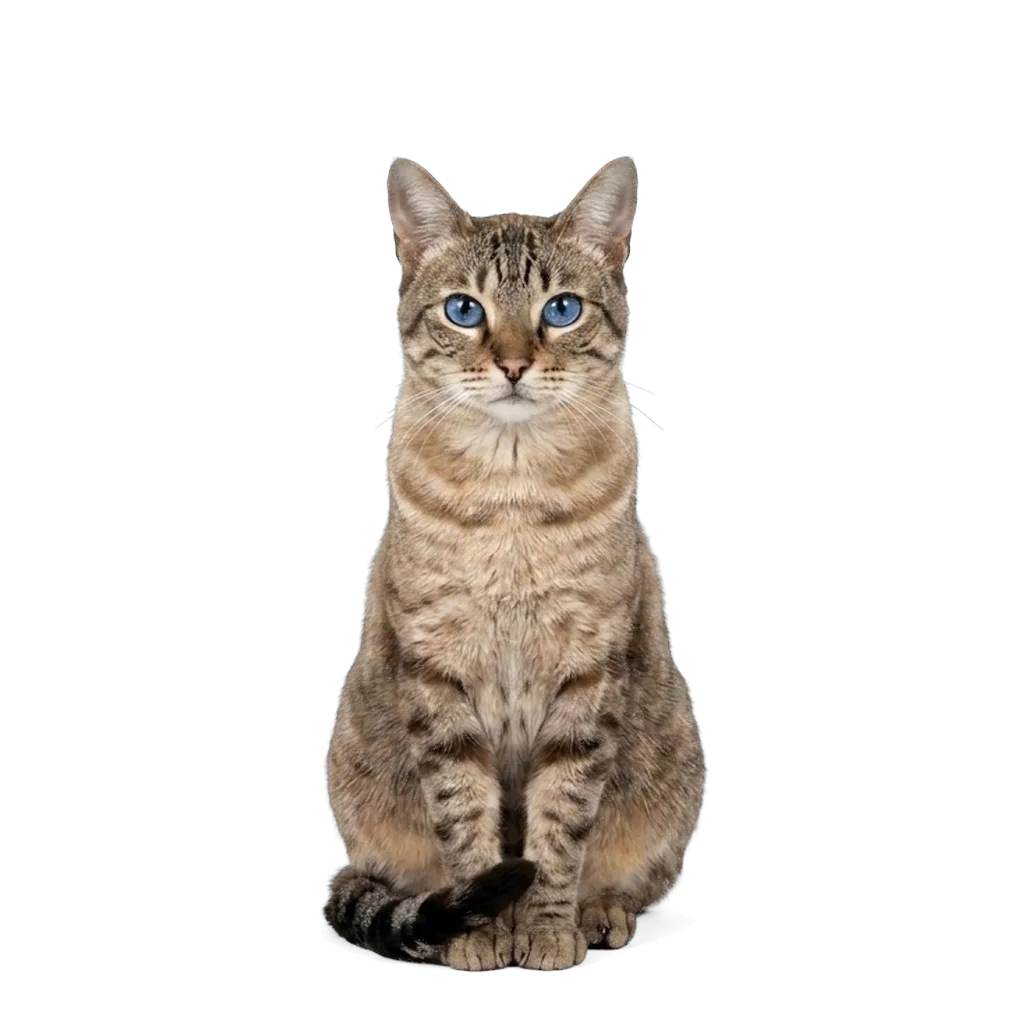
Origin: United States
Ojos Azules
Get reminders for your Ojos Azules's vaccines
Vaccination and parasite reminders, food-safety scans and health records — free to start in the Pethls app.


Good for
The Ojos Azules is one of the rarest cat breeds in the world, defined by a single striking feature: deep blue eyes in cats whose coats are neither colorpoint nor white, combinations where blue eyes should be genetically impossible. The trait traces to a dominant gene first documented in a New Mexico cat named Cornflower in 1984. By the few accounts that exist, the cats are affectionate, gentle, and adaptable housemates suited to quiet homes and busy ones alike. There is a serious genetic catch, though: the blue-eye gene is safe in one copy but lethal in two, which shapes every responsible breeding decision, and every buyer should understand why.
Temperament & personality
Strip away the remarkable eyes and you find an easygoing, people-oriented cat. Ojos Azules tend to be affectionate without being demanding, happy to share a sofa, follow the household routine, and greet visitors once the initial commotion passes. They are gentle by disposition, which makes them a comfortable match for considerate children and for homes that already have a cat or a calm dog.
Adaptability is the breed's quiet strength. Because the founding gene appeared in ordinary domestic shorthair populations, the temperament base is that of a well-socialized house cat rather than a highly strung specialist. They handle apartment living, schedule changes, and new furniture with less drama than many pedigreed breeds.
Energy sits in the middle of the feline range. Expect a few lively play bursts a day, an interest in window watching, and long stretches of companionable napping. This is a playful cat that also bonds closely and stays loyal to its people, so a couple of wand-toy sessions, a scratching post, and a perch with a view keep an Ojos Azules content.
Vaccination schedule
Rare breed or not, an Ojos Azules kitten needs the same core protection as every cat. The FVRCP vaccine, covering feline viral rhinotracheitis, calicivirus, and panleukopenia, begins at 6 to 8 weeks of age with repeat doses every 3 to 4 weeks until at least 16 weeks. Finishing the series at or after 16 weeks is what closes the immunity gap left as maternal antibodies wane.
A rabies vaccine follows between 12 and 16 weeks, with the exact timing driven by the licensed product and your local requirements. Given how few of these cats exist, most live entirely indoors, but rabies vaccination remains legally required in many areas and protects the cat if it ever slips out.
FeLV vaccination is commonly recommended at the kitten stage, and it stays essential for any cat with outdoor access or contact with cats of unknown status. Adult boosters then settle into a rhythm: FVRCP every one to three years and rabies per label and law. Keep records tidy; with a breed this rare, your vaccination history may also matter to a breed registry.
Best food & diet
Feeding an Ojos Azules is refreshingly uncomplicated. A medium cat of 4 to 5.5 kg does well on any complete, AAFCO-compliant diet with animal protein leading the ingredient list, fed in measured meals rather than an always-full bowl. Including wet food helps overall water intake, which supports urinary and kidney health across the breed's 10 to 12 year lifespan.
Portion to the individual, not the label. A moderate-energy indoor cat needs fewer calories than feeding guides often suggest, and the difference accumulates quietly. Run a monthly body-condition check: ribs easy to feel under a light fat cover, a visible waist from above. Adjust the portions if the cat starts to gain.
Treats are fine inside a budget of about ten percent of daily calories, and they double as training currency; a food-motivated, people-oriented cat learns carrier tolerance, claw-trim patience, and recall faster than you might expect. There are no breed-specific dietary restrictions, and the blue-eye gene has no known connection to nutrition or metabolism.
Common health problems
The main health consideration for the Ojos Azules is genetic. The breed's blue eyes come from a dominant gene, so a cat needs only one copy to show the trait. In that single dose, the gene appears to cause no harm: heterozygous cats are ordinary, healthy cats with extraordinary eyes. The danger arrives when two copies meet. Kittens inheriting the gene from both parents suffer lethal cranial deformities, and affected pregnancies typically end in stillbirth or death shortly after birth.
That is why no ethical breeder ever pairs two blue-eyed Ojos Azules. Matings are always blue-eyed to non-blue-eyed, which statistically gives about half the litter the signature eyes with one safe copy of the gene, and the other half normal eye color and no copy of the gene at all. It also means the breed can never breed true, one of several reasons it remains vanishingly rare and why major registries never granted it full recognition and active breeding has all but ceased. Most sources today describe the Ojos Azules as effectively extinct, with no established programs producing kittens.
It is worth being clear about what this condition is. The lethal cranial deformities are an embryonic outcome of inheriting two copies of the gene, so they affect pregnancies rather than any cat you could actually keep. A single-copy Ojos Azules, the only kind that survives, has no documented breed-specific disease burden and needs the same preventive care as any domestic cat: annual exams, dental attention, weight management, and parasite control. One practical note: because outcrossing to non-pedigreed cats is built into the breed, individual lines vary, so judge the health of the actual cat and its parents rather than leaning on breed generalizations.
It is also worth separating this gene from the deafness many people associate with blue eyes. That link belongs to blue-eyed white cats carrying the dominant white gene. The Ojos Azules gene works differently and produces blue eyes on non-white, non-pointed coats without the same deafness association.
Allergies & skin
The Ojos Azules carries a short-to-medium coat in almost any color, and none of those coats are hypoallergenic. These cats produce typical amounts of Fel d 1, the protein responsible for most human cat allergies, and shed a medium amount year-round with seasonal peaks. An allergic household should arrange real contact time with the individual cat before committing to such a hard-to-find breed.
Skin problems are no more common in this breed than in other cats. When itching, overgrooming, bald patches, or crusty scabs appear, work through the standard feline checklist with your vet: fleas first, since flea-bite allergy is the most common feline skin disease even in indoor cats, then food allergy, then environmental atopy.
A genuine food allergy investigation means a strict elimination diet for 8 to 12 weeks using a novel or hydrolyzed protein chosen with your vet, no off-plan treats included. Environmental allergy is managed rather than cured, through flea control, medication where needed, and sometimes allergy testing. None of this is more likely in an Ojos Azules than in any other cat; it is simply standard feline skin care.
Flea, tick & worm prevention
Parasite prevention for an Ojos Azules follows one iron rule shared by all cats: cat-labeled products only, dosed to actual body weight. Dog flea and tick products containing permethrin are acutely toxic to cats, even through indirect contact with a freshly treated dog, causing tremors and seizures that need emergency care. With a 4 to 5.5 kg cat, most feline products fall in a single mid-range dose band, but confirm the weight rather than assume it.
Even a fully indoor cat, which most Ojos Azules are, benefits from year-round flea prevention, because fleas arrive on clothing, secondhand furniture, and other pets. Add tick coverage if the cat uses a balcony, catio, or garden. Many modern spot-ons combine flea, tick, mite, and some worm control in one monthly application, which simplifies the calendar considerably.
Worming starts early: every 2 to 3 weeks from 3 weeks of age until 8 weeks, then monthly to 6 months. Adult frequency depends on lifestyle, from quarterly for indoor cats to as often as monthly for hunters. If you would rather treat only when needed, an annual fecal test through your vet does the deciding.
Medications & dosing
Every drug your Ojos Azules ever takes should be dosed against a current, accurate weight and directed by a vet. At 4 to 5.5 kg the margin for error is small: a dose that suits a 5.5 kg cat can overshoot a 4 kg one by more than a third. Weigh the cat at home between visits and keep the number logged where the whole household can find it.
The non-negotiables apply here as everywhere in feline medicine. No paracetamol, ever; it destroys feline red blood cells and liver tissue at tiny doses. No ibuprofen or aspirin without explicit veterinary direction. No dog products, no leftover human prescriptions, and no doubling a missed dose. Cats metabolize drugs differently from both dogs and people, and the safe list is shorter than most owners expect.
The good news is that the breed carries no known drug sensitivities beyond standard feline ones, and its gentle, handleable temperament makes medicating easier than average. Pair pills with treats from a young age, ask your vet about flavored compounded liquids for longer courses, and log every dose so a routine antibiotic course actually gets finished.
Grooming & coat care
Grooming an Ojos Azules is a light workload. The short-to-medium coat needs brushing once or twice a week with a slicker or rubber brush to lift loose hair, manage its medium shedding, and cut down hairballs. During spring and autumn molts, add an extra session rather than a bath; bathing is rarely needed for this breed and the coat rewards consistency more than intensity.
The famous eyes need no special grooming, just normal observation. Blue eyes in this breed are structurally normal and require no special routine, just the same watchfulness you would give any cat: squinting, discharge, redness, or a sudden color change all mean a vet visit. Photograph the eyes when the cat is young; subtle changes are easier to spot against a baseline.
Fill out the routine with claw trims every 2 to 3 weeks, a monthly ear check, and regular tooth brushing with feline toothpaste, since dental disease remains the most common medical problem in adult cats of every breed. An adaptable, gentle cat like this one usually accepts the whole program readily if you start young and keep sessions short.
How the Ojos Azules compares
Deciding between similar breeds? Here is the Ojos Azules next to American Bobtail and American Shorthair.
| Ojos Azules | American Bobtail | American Shorthair | |
|---|---|---|---|
| Size | Medium | Medium | Medium |
| Weight | 4-5.5 kg | 3-7 kg | 3.5-7 kg |
| Lifespan | 10-12 yrs | 13-15 yrs | 15-20 yrs |
| Activity | Moderate | Moderate | Moderate |
| Shedding | Medium | Medium | Medium |
| Good with kids | Yes | Yes | Yes |
| Apartment-friendly | Yes | Yes | Yes |
Frequently asked questions
Why can two blue-eyed Ojos Azules never be bred together?
The blue-eye gene is dominant and safe in one copy, but kittens who inherit it from both parents develop lethal cranial deformities and do not survive. Responsible breeders therefore always pair a blue-eyed cat with a non-blue-eyed mate, producing litters where roughly half the kittens carry one safe copy of the gene.
Are Ojos Azules cats deaf like other blue-eyed cats?
No, that association belongs to blue-eyed white cats carrying the dominant white gene. The Ojos Azules gene produces blue eyes on non-white, non-colorpoint coats through a different mechanism and does not carry the same deafness link.
How rare is the Ojos Azules?
Extremely rare, effectively extinct. Only a handful of cats were registered in the years after the founding cat was documented in 1984, the breed cannot breed true because of its genetics, and it is widely reported that no active breeding programs remain today.
Is every blue-eyed cat an Ojos Azules?
No. Most blue-eyed cats owe their eyes to colorpoint (Siamese-type) genetics or to the dominant white gene. An Ojos Azules is specifically a cat with deep blue eyes on a coat that is neither pointed nor white, caused by its own distinct dominant gene.
What kind of home suits an Ojos Azules?
Almost any stable one. The breed is gentle, adaptable, and moderately active, comfortable in apartments, and fine with considerate children and other calm pets. Its care would be straightforward for anyone, but with the breed effectively extinct, acquiring one is unlikely to be possible at all. Daily play, routine preventive care, and indoor living cover its needs well.
Related breeds



Health and care information is drawn from established veterinary sources and is general guidance, not veterinary advice. See our sources
Keep records for your Ojos Azules
Vaccinations, food and treat safety, allergy alerts and parasite reminders - all tracked for your Ojos Azules in the Pethls app.