

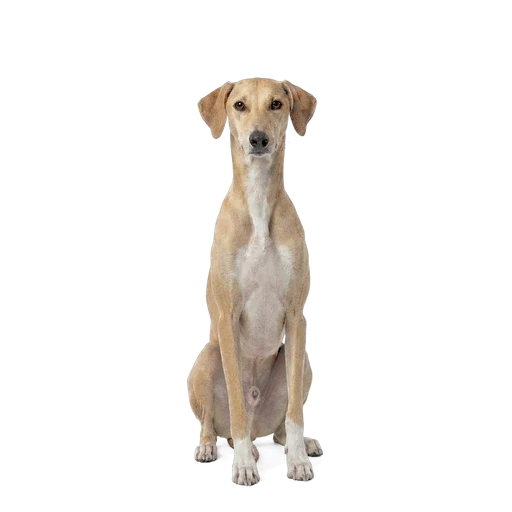
Origin: Mali
Azawakh
Get reminders for your Azawakh's vaccines
Vaccination and parasite reminders, food-safety scans and health records — free to start in the Pethls app.


The Azawakh is a rare sighthound from the Sahel region of West Africa, bred for centuries by Tuareg and other nomadic peoples of Mali, Niger and Burkina Faso to guard camps and course gazelle and hare. Standing tall and almost shockingly lean at 15 to 25 kg, it carries visible bone structure that is correct for the breed, not a sign of neglect. At home it is quiet, gentle and deeply attached to its own people; with strangers it is watchful and aloof, and outside it becomes an explosive runner. Lifespans of 12 to 15 years are normal. Still, this desert bred body has a few particulars that every owner and every vet should understand: thin skin, almost no body fat, and lab values that read outside the usual canine range.
Temperament & personality
The Azawakh loves narrowly and completely. Within its own family the breed is affectionate in an undemonstrative way, following its person from room to room, leaning against legs, sleeping pressed close for warmth. This is not a dog that transfers that bond easily. Rehomed adults can take months to attach to new people, and even a well socialized Azawakh will treat visitors with cool, formal distance. That aloofness is written into the standard and should never be trained or scolded out of the dog.
Guarding instinct runs deeper here than in most sighthounds, a legacy of protecting nomad camps at night. Expect alert barking at anything unusual near the home and a genuine willingness to place itself between its people and a perceived threat. Early, patient socialization from puppyhood is essential so that watchfulness stays discriminating rather than becoming suspicion of everything.
This is a sensitive dog that shuts down under harsh handling. Training works through consistency, calm and reward, never through force, and recall off lead can never be fully trusted around anything that runs. Small pets, including cats, are a genuine risk given the coursing history, and rough and tumble young children overwhelm the breed's reserved nature. An adult household or one with calm older children, plus an experienced owner who respects the independence, is the right home.
Vaccination schedule
Azawakh puppies follow the standard core protocol: DHPP shots against distemper, hepatitis, parvovirus and parainfluenza starting at six to eight weeks, repeated every three to four weeks until sixteen weeks or older, then boosted at one year. After that, core boosters run on the one to three year cycle your vet recommends, depending on the product and local disease pressure.
Rabies vaccination is given from twelve weeks of age and is legally required in most of the US and much of Europe, with renewal every one to three years by jurisdiction. For a rare breed whose puppies often travel internationally from specialist breeders, rabies paperwork and timing deserve extra care, since import rules typically demand the vaccine plus a waiting period before the flight.
Two breed notes for vaccine visits. First, the Azawakh's minimal body fat and thin skin mean injections are given with a little more care over placement, and some individuals are dramatic about needles despite being stoic otherwise. Second, use the appointment to establish baseline bloodwork while the dog is young and healthy, because a baseline makes future results far easier to interpret against a healthy starting point.
Best food & diet
The first thing to accept about feeding an Azawakh is that a correct one looks underfed to the average person. Visible ribs, hip bones and vertebrae are the breed standard, and strangers will comment on it. Do not feed the dog fat to silence them. Extra weight strains joints built for speed and hides nothing but health problems. Judge condition by energy, coat shine and muscle over the back rather than by padding.
A quality complete food with good animal protein suits the breed. Adults at 15 to 25 kg typically need somewhere around 900 to 1400 kcal daily depending on size, weather and how much sprinting they do, split into two meals. Many Azawakh are naturally light, self regulating eaters that walk away from a half finished bowl, which unnerves owners used to Labradors. Free feeding rarely works; offer meals, lift what is left, and track weight monthly instead of worrying meal by meal. That range is a starting estimate, not a prescription: check your dog's body condition every few weeks and let your vet adjust portions.
Bloat is worth being mindful of with any deep chested dog, so avoid hard exercise for an hour either side of meals and split rations rather than feeding one large meal. Puppies do best on a large breed puppy formula that keeps growth slow and steady. Picky periods are common in adolescents; warming food slightly or adding a spoon of wet food usually resolves them without turning dinner into a negotiation.
Common health problems
The Azawakh is, on the whole, a robust breed shaped by centuries of harsh natural selection in the Sahel rather than by show ring fashion. Many live to 12 to 15 with little more than routine care. The problems that do occur are specific and worth knowing by name.
Generalized progressive axonopathy is a rare inherited nerve disorder documented in the breed. It typically shows in early puppyhood, often within the first few months, as progressive hindlimb weakness and incoordination, and there is no cure. Because it is recessive and the gene pool is small, buy only from breeders who discuss the condition openly and can explain how their pairings manage the risk.
Hypothyroidism appears on the breed's list, but with a major caveat: healthy sighthounds, Azawakh included, naturally run thyroid hormone values below the standard canine reference range. A low T4 on a routine panel is not, by itself, a diagnosis. Treatment should only follow a full thyroid panel read by a vet who knows sighthound norms, ideally alongside real clinical signs like weight gain, lethargy and coat thinning. Beyond that, the main risks are traumatic: skin tears and toe or muscle injuries from running flat out, which come with the territory.
Allergies & skin
The Azawakh is not hypoallergenic. The coat is extremely short and sheds lightly, which means less hair around the house than most breeds, but allergen load comes from dander and saliva proteins, not hair length. Mildly allergic people sometimes tolerate the breed better than heavier coated dogs; strongly allergic people usually do not. Test with real exposure before committing to a puppy from a breeder who may be on another continent.
The breed's skin is its most distinctive feature and its most vulnerable one. It is thin, tight and stretched over almost no subcutaneous fat, so scrapes that a Labrador would shrug off open into tears on an Azawakh that needs stitches. Check the dog over after every off lead run, especially flanks and legs, and keep a basic wound kit at home. Pressure sores can sometimes develop on elbows and hips if the dog sleeps on hard floors, so provide thick, padded bedding everywhere it likes to lie.
Actual allergic skin disease is not especially common in the breed, and the sparse coat means anything wrong is caught early because the skin is fully exposed. Flea bites show quickly, and a single flea can cause outsized irritation on skin this exposed. In cold, dry winter climates the skin can flake and the dog will genuinely suffer without protection, so a coat is not optional in cold weather.
Flea, tick & worm prevention
The Azawakh's tissue paper skin and lack of fat change the calculus on parasites: bites are more irritating, ticks are easier to spot but attach to very exposed skin, and any product reaction shows immediately. Use year round flea and tick prevention prescribed for the dog's exact weight, and note that a growing Azawakh can cross weight bands quickly during its long adolescence, so reweigh before each repurchase.
Many sighthound owners prefer oral flea and tick products over spot ons for this breed, partly because there is minimal coat to distribute a topical through and partly to avoid skin reactions at the application site. Discuss the choice with your vet. Whichever route you pick, run hands over the whole dog after field running, since ticks in the groin and armpit folds are easy to feel on such a short coat.
Worming follows the standard pattern: every two weeks from two to twelve weeks of age, monthly to six months, then per your vet's risk assessment, typically quarterly or via regular faecal testing. Heartworm prevention is essential in the US and southern Europe, and a dog that courses rabbits or catches rodents needs a tapeworm plan too. Log every dose in a health log with the product name, because the sighthound sensitivity conversation is easier when you can show the vet exactly what the dog has had.
Medications & dosing
Medication in the Azawakh starts with one sentence you should say at every new clinic: this is a sighthound. The breed's extreme leanness changes how drugs behave. Doses are calculated on body weight, but with almost no fat compartment, fat soluble drugs distribute differently, and lean muscle mass makes some standard weight based calculations run hot. A good vet adjusts for this; your job is to make sure they know the breed in front of them.
Anaesthesia is the big one. Sighthounds metabolize certain anaesthetic agents, notably older barbiturates, poorly, and recovery can be prolonged. Modern protocols handle this well, but confirm before any dental or surgery that the practice uses sighthound aware anaesthesia and monitors body temperature closely, since a dog with no fat loses heat fast on a surgical table.
Bloodwork is the other place to speak up. Sighthounds as a group tend to run higher red cell counts and lower thyroid values than the generic canine range, and the Azawakh almost certainly follows that pattern, though the breed is too lightly studied to have its own established reference ranges. The practical risk is the same: an unwary clinician can treat a healthy dog for hypothyroidism on numbers alone. Ask that results be read with sighthound norms in mind. For everyday medication, wormers, antibiotics, pain relief, the rules are universal: vet directed, dosed to a current accurate weight, never human painkillers, and record everything so patterns are visible.
Grooming & coat care
Grooming an Azawakh takes minutes, not hours. The coat is very short, fine and lies flat against the skin, sometimes so sparse on the belly that skin shows through, which is normal. A weekly once over with a soft rubber grooming mitt lifts dead hair and doubles as the health check this thin skinned breed needs. Shedding is light year round; you will find some short hairs on dark fabric but nothing like a double coated breed.
Bathing is rarely needed, every couple of months at most or after something genuinely dirty, using a gentle dog shampoo. The breed has little odor and minimal skin oil, and overwashing dries skin that has no fat layer to protect it. Dry the dog thoroughly and keep it warm afterwards, because a wet Azawakh in a cool room gets cold fast.
The real coat care for this breed is the wardrobe. With thin skin, one layer of short hair and essentially no insulation, the Azawakh has no cold tolerance and needs a proper fitted coat for cold weather walks and a warm house in winter. Nails need trimming every two to three weeks since sprinting on grass does not wear them, and long nails genuinely alter a running sighthound's gait. Add weekly ear checks and regular tooth brushing and the routine is complete.
How the Azawakh compares
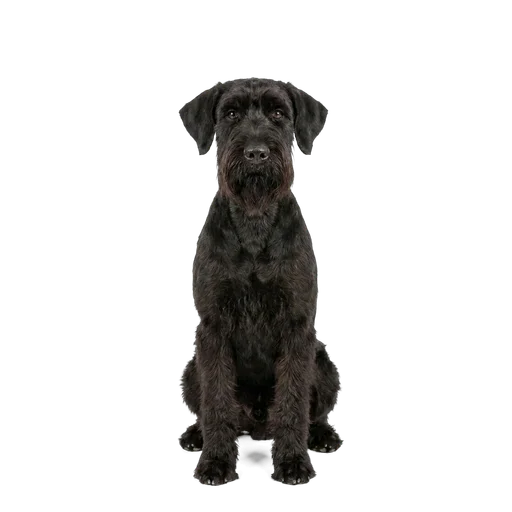
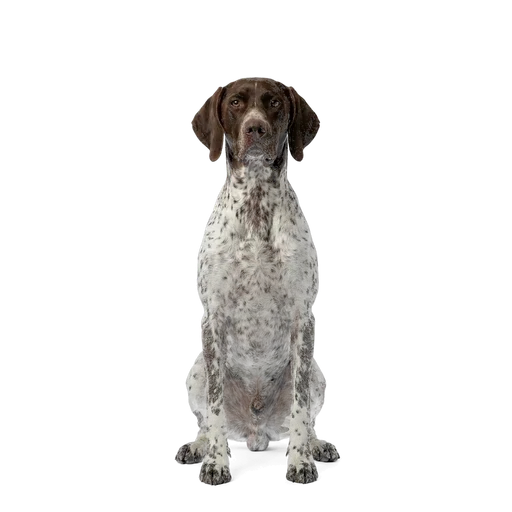
Deciding between similar breeds? Here is the Azawakh next to Giant Schnauzer and Pointer.
| Azawakh | Giant Schnauzer | Pointer | |
|---|---|---|---|
| Size | Large | Large | Large |
| Weight | 15-25 kg | 25-48 kg | 20-34 kg |
| Lifespan | 12-15 yrs | 12-15 yrs | 12-17 yrs |
| Activity | Active | Active | Active |
| Shedding | Low | Low | Low |
| Good with kids | No | Yes | Yes |
| Apartment-friendly | No | No | No |
Frequently asked questions
Is the Azawakh a good family dog?
For the right family, yes, but the fit is narrow. The breed is gentle and quietly devoted at home, yet reserved with strangers, sensitive to chaos and rough handling, and strong willed. Calm adult households or families with respectful older children suit it best. Homes with toddlers, frequent visitors or small pets like cats and rabbits are usually a poor match.
How much exercise does an Azawakh need?
More than its calm indoor manner suggests. Plan on a solid daily walk plus several sprint sessions a week in a securely fenced area, since this is a coursing hound that needs to open up at full speed. Off lead exercise in unfenced spaces is not safe; an Azawakh chasing something can be out of sight in seconds and recall will not stop it. Lure coursing clubs are an excellent outlet.
Can an Azawakh live in a cold climate?
Yes, with management. The breed has thin skin, a very short coat and almost no body fat, so it needs a fitted winter coat outdoors, short walks in freezing weather, padded bedding away from drafts and a warm house. Snow sprints are fine in a coat; standing around at a cold bus stop is not. If you resent dressing a dog, this is the wrong breed.
Why does my Azawakh look so skinny, and should I feed more?
Visible ribs, hip bones and spine are correct for the breed and written into its standard; nomadic breeders selected for a dog that runs in desert heat, not one that carries reserves. Judge health by energy, muscle over the back and coat condition. If those are good, do not add food because strangers comment. If the dog is losing weight or lacks muscle, see a vet rather than simply feeding more.
What should my vet know before treating an Azawakh?
Three things. It is a sighthound, so anaesthesia protocols need adjusting and recovery needs warmth and monitoring. Its normal bloodwork differs from generic canine ranges, including naturally low thyroid values and high red cell counts, so numbers need sighthound context before any diagnosis like hypothyroidism. And its thin, low fat skin tears easily and heals with less margin, so wounds that look minor may still need closing.
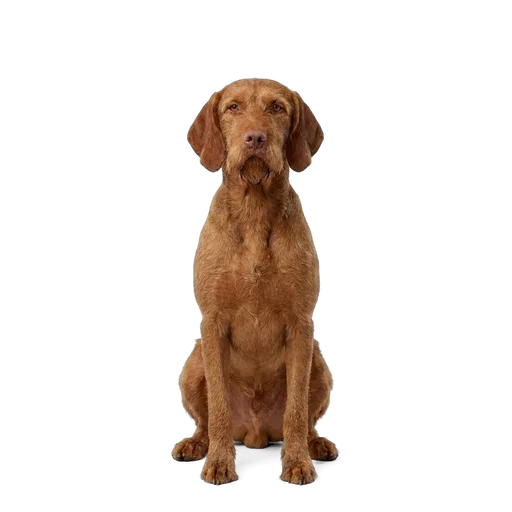
Related breeds
Health and care information is drawn from established veterinary sources and is general guidance, not veterinary advice. See our sources
Keep records for your Azawakh
Vaccinations, food and treat safety, allergy alerts and parasite reminders - all tracked for your Azawakh in the Pethls app.