

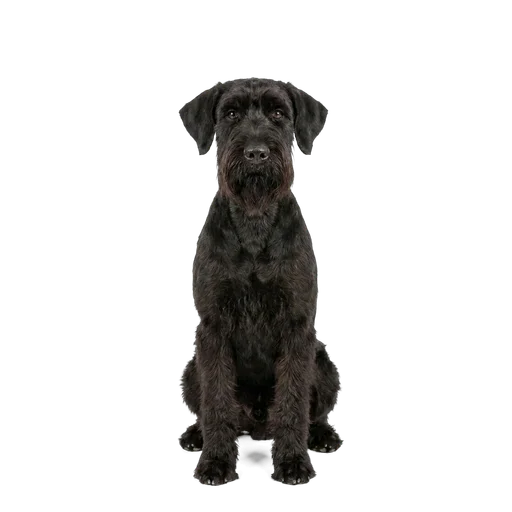
Origin: Germany
Giant Schnauzer
Get reminders for your Giant Schnauzer's vaccines
Vaccination and parasite reminders, food-safety scans and health records — free to start in the Pethls app.


Good for
The Giant Schnauzer is the largest of the three schnauzer breeds, developed in Germany to drive cattle and later put to work guarding breweries, farms, and eventually police and military posts. He is a big, powerful, square-built dog with a serious mind and an even more serious need for a job. Bold, confident, and deeply loyal to his own people, he watches the world with a working dog's eye and takes his responsibilities to heart. This is not a dog you can bore or under-exercise without consequences. In the right experienced hands he is one of the most capable and rewarding companions in the working group, but he is genuinely not a beginner's dog.
Temperament & personality
Giant Schnauzers are intense, intelligent, and territorial, a combination that produces a magnificent partner for the right owner and a real handful for the wrong one. They bond fiercely with their family and are naturally protective, reserved with strangers, and quick to notice anything out of place. Early, thorough, ongoing socialization is not optional with this breed; it is the difference between a confident, discerning adult and a suspicious, over-reactive one.
These dogs are whip-smart and learn fast, which cuts both ways. Give them structured training, problem-solving, and a purpose and they thrive. Leave them idle and they will invent their own projects, usually involving your fence, your furniture, or the neighborhood cats. They want to be with their people and do not do well shut away in a yard alone.
With children in their own family, a well-raised Giant Schnauzer is affectionate and protective, though their size and energy mean interactions with small kids need supervision. They can live happily with other pets they are raised with, but their guarding instinct and strength call for an owner who sets clear boundaries and provides consistent, reward-based leadership. First-time dog owners almost always underestimate what this breed asks of them.
Vaccination schedule
Giant Schnauzer puppies follow the core vaccine schedule every puppy needs. The DHPP combination, protecting against distemper, hepatitis (adenovirus), parvovirus, and parainfluenza, begins around 6 to 8 weeks and repeats every 3 to 4 weeks until at least 16 weeks of age. Rabies is given once between roughly 12 and 16 weeks, according to local law.
Boosters follow about a year later, after which core vaccines usually move to a three-year interval. Leptospirosis is now a core vaccine recommended for every dog, so it follows a 2-dose puppy series and then an annual booster rather than the three-year interval, and a Giant Schnauzer's frequent outdoor, rural, and wildlife exposure is a good reminder of why that yearly booster matters. Given how active and social these working dogs tend to be, non-core vaccines are also often worth discussing: Bordetella for those attending training classes, dog sports, or boarding, and canine influenza where it circulates.
Because a Giant Schnauzer's life often involves group training, trials, or protection work, keeping vaccination records current and organized pays off. Many facilities require proof, and staying on schedule protects a dog whose lifestyle brings frequent contact with other dogs.
Best food & diet
This is a large, athletic breed, so feed a good quality diet built for a big active dog and matched to your dog's life stage. Giant Schnauzer puppies should grow on a large breed puppy formula with controlled calcium and steady calorie levels, since too-fast growth stresses developing joints and raises the risk of hip and other orthopedic problems later.
Adults working in dog sports, protection, or long daily exercise burn real energy and need feeding to match, while a more sedentary companion can gain weight quickly if you free-feed. Keep an eye on body condition, split the daily ration into two meals, and adjust portions to keep your dog lean and muscular rather than heavy.
Like many large, deep-chested breeds, Giant Schnauzers can develop bloat and gastric torsion (GDV), a sudden, life-threatening emergency that needs immediate veterinary care. Feeding two smaller meals rather than one big one, using a slow-feeder bowl for fast eaters, and avoiding strenuous exercise right around mealtimes all help reduce that risk. Ask your vet whether a preventive gastropexy makes sense for your individual dog.
Common health problems
Hip dysplasia is the orthopedic issue to watch. In this inherited condition the hip joint forms poorly, leading over time to looseness, arthritis, pain, and reduced mobility. Responsible breeders screen breeding stock with hip scoring or evaluation, so ask to see results. Keeping your dog lean and avoiding over-exercising a growing puppy both help protect the joints.
Hypothyroidism, an underactive thyroid gland, is common in the breed. It tends to appear in middle age and can cause weight gain, lethargy, hair loss or a poor coat, and skin problems. It is easy to diagnose with a blood test and straightforward to manage with an inexpensive daily thyroid hormone tablet, so ask for a blood test when these signs show up.
Osteosarcoma, an aggressive bone cancer, occurs in the breed more than most, as it does in a number of larger dogs. It typically shows as lameness or a firm swelling on a limb and needs prompt veterinary assessment, so never dismiss a persistent limp in an adult Giant Schnauzer.
Autoimmune thyroiditis, in which the immune system attacks the thyroid gland, is the underlying cause behind many hypothyroid cases in this breed and can be screened for in breeding dogs. Choosing a breeder who tests for it, along with hips and eyes, stacks the odds in your favor. Overall the breed is fairly long-lived for its size, often reaching 12 to 15 years.
Allergies & skin
Giant Schnauzers can be prone to skin issues, some tied to their health profile and some to their coat. Hypothyroidism, discussed above, frequently shows up first as skin and coat trouble, so recurrent skin infections, a dull coat, or unexplained hair loss are worth a thyroid blood test rather than just topical treatment.
The dense, wiry double coat needs to be kept clean and well-groomed to avoid trapped moisture and matting close to the skin, which can lead to hot spots and irritation. The beard is a particular hotspot: it traps food, water, and bacteria, so wiping and drying it regularly heads off the smelly, inflamed skin that can sometimes develop underneath.
Like any breed, Giant Schnauzers can occasionally develop environmental allergies (atopy) or food sensitivities, which usually show as itching, ear infections, and paw licking. If you see that pattern, work with your vet on identifying the trigger rather than guessing, since chronic scratching quickly turns into secondary skin infection.
Flea, tick & worm prevention
An active outdoor dog needs consistent parasite control. A reliable flea and tick preventive, whether a monthly chewable, a spot-on, or a long-acting collar, keeps your dog protected through the seasons; your vet can recommend the right product for the ticks and tick-borne diseases in your area. The wiry coat and full beard can hide ticks, so run your hands through the coat after country walks.
Intestinal worming should follow a regular schedule, commonly around every three months for an adult but more or less often depending on your dog's lifestyle and risk, and more frequently for puppies. Where heartworm is present, monthly heartworm prevention is essential and is often combined with intestinal worm coverage in one convenient product.
Most of these preventives are dosed by weight, and a full-grown Giant Schnauzer sits in the large-dog band, so always dose to current weight and update it as a puppy grows into its adult size. Underdosing a big dog leaves gaps that let parasites through.
Medications & dosing
All medications for a Giant Schnauzer should be prescribed by your vet and dosed to your dog's current body weight. As a large breed, they need doses set for a big dog, so never scale down using guidance meant for the far lighter Standard or Miniature Schnauzer.
Never give human painkillers such as ibuprofen or paracetamol/acetaminophen, which are toxic to dogs. When your dog needs pain relief or anti-inflammatories, the dog-specific medications your vet prescribes are the safe route, at the dose set for your individual dog.
If your dog is diagnosed with hypothyroidism, expect a lifelong daily thyroid hormone tablet with periodic blood tests to fine-tune the dose. Keeping an accurate, up-to-date record of medications, doses, and test dates makes those recheck appointments smoother and helps any vet who treats your dog.
Grooming & coat care
The Giant Schnauzer's harsh, wiry double coat is the reason the breed sheds very little and is considered a good fit for many allergy sufferers, but that low shedding comes with real grooming commitment. The dead hair does not fall out on its own, so it has to be removed either by hand-stripping, which preserves the crisp texture and rich color, or by clipping, which is easier and more common for pets but softens the coat over time.
Between those hand-stripping or clipping sessions every few months, brush the coat several times a week to prevent mats, especially in the softer furnishings on the legs and the distinctive beard and eyebrows. The beard needs the most day-to-day care of all: wipe it after meals and drinks and dry it out, or it turns into a damp, smelly trap for food and bacteria.
Plan on professional grooming every 6 to 8 weeks for most pet owners, or learn to hand-strip yourself if you want to keep the correct working coat. Round out the routine with regular nail trims, ear checks and cleaning, and tooth brushing. This is a high-maintenance coat, and a Giant Schnauzer is a poor choice for anyone hoping to skip regular grooming.
How the Giant Schnauzer compares
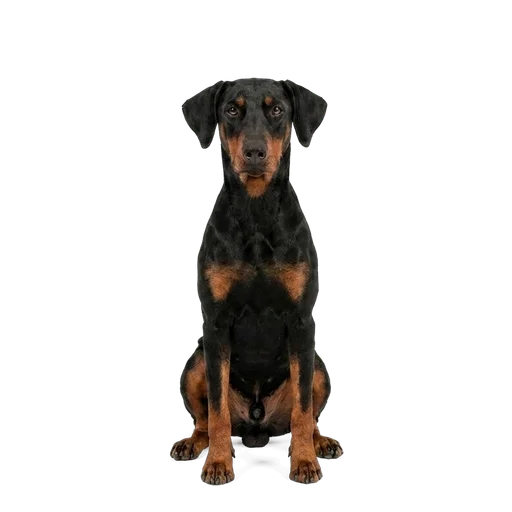
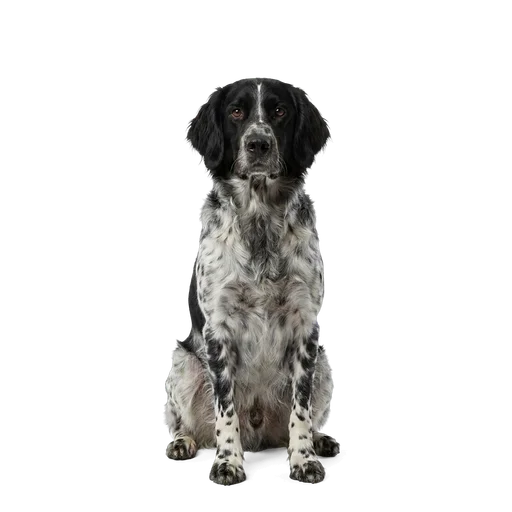
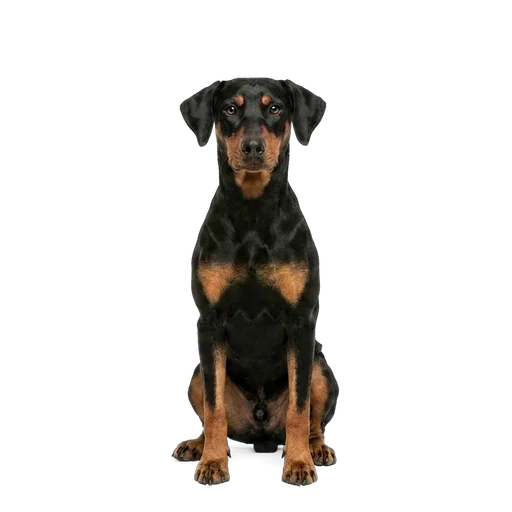
Deciding between similar breeds? Here is the Giant Schnauzer next to Doberman Pinscher and Large Munsterlander.
| Giant Schnauzer | Doberman Pinscher | Large Munsterlander | |
|---|---|---|---|
| Size | Large | Large | Large |
| Weight | 25-48 kg | 30-45 kg | 25-32 kg |
| Lifespan | 12-15 yrs | 10-13 yrs | 11-13 yrs |
| Activity | Active | Active | Active |
| Shedding | Low | Medium | Medium |
| Good with kids | Yes | Yes | Yes |
| Apartment-friendly | No | No | No |
Frequently asked questions
Are Giant Schnauzers good for first-time owners?
Honestly, no. They are powerful, strong-willed, highly intelligent working dogs with a protective streak, and they need an owner who can provide firm, consistent leadership, thorough socialization, serious daily exercise, and a real job to do. Without that structure they become bored, pushy, and difficult to manage. They are a superb dog for an experienced, active owner, and a genuinely tough dog for a novice.
Are Giant Schnauzers hypoallergenic?
They are about as close as a dog gets. The wiry double coat sheds very little and traps loose hair rather than dropping it around the house, which many allergy sufferers tolerate better. No dog is truly 100 percent hypoallergenic, since allergies also react to dander and saliva, but Giant Schnauzers are a common choice for allergy-sensitive homes. Spend time with one before committing to be sure.
How much exercise does a Giant Schnauzer need?
A lot. Plan on at least one to two hours of real physical and mental activity every day, ideally a mix of vigorous exercise like running, hiking, or dog sports plus training and problem-solving to occupy that busy mind. These are working dogs that need a job. A Giant Schnauzer left under-exercised will find its own outlet, and you will not enjoy what it chooses.
Do Giant Schnauzers shed?
Very little. Their harsh double coat holds onto dead hair instead of shedding it, which is why they suit many allergy sufferers. The trade-off is grooming: that dead hair has to be removed by hand-stripping or clipping every few months, with brushing several times a week and daily beard care in between. Low shedding here means high grooming, not low maintenance.
How long do Giant Schnauzers live?
Typically 12 to 15 years, which is good for a dog of this size. The health issues most likely to affect them are hip dysplasia, hypothyroidism (often driven by autoimmune thyroiditis), and osteosarcoma. Choosing a breeder who screens for hips, thyroid, and eyes, keeping your dog lean and fit, and staying on top of veterinary checkups all support a long, healthy life.
Related breeds
Health and care information is drawn from established veterinary sources and is general guidance, not veterinary advice. See our sources
Keep records for your Giant Schnauzer
Vaccinations, food and treat safety, allergy alerts and parasite reminders - all tracked for your Giant Schnauzer in the Pethls app.