

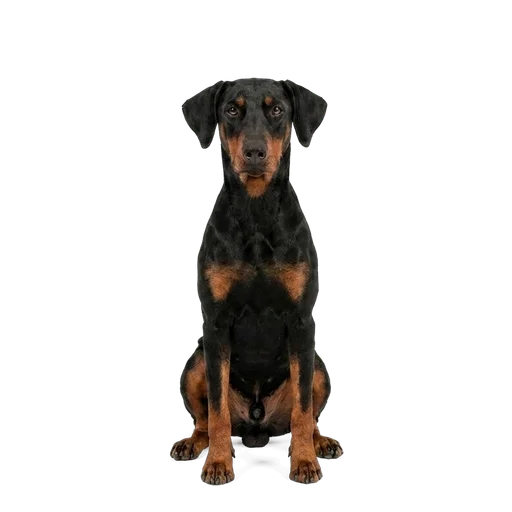
Origin: Germany
Doberman Pinscher
Get reminders for your Doberman Pinscher's vaccines
Vaccination and parasite reminders, food-safety scans and health records — free to start in the Pethls app.


Good for
The Doberman Pinscher was bred in 1890s Germany by a tax collector who wanted a protective dog to walk his rounds, and that job still shows in the breed today. This is a large, athletic dog of 30 to 45 kg, quick to learn and quick to read the mood of the people around it. Dobermans are among the most trainable dogs you will meet, but that intelligence cuts both ways: a bored or under-exercised Doberman finds its own projects, few of them helpful. The one thing every prospective owner needs to know up front is the breed's heart. Dilated cardiomyopathy is common enough in Dobermans that annual cardiac screening is not optional, and we will come back to it in detail below.
Temperament & personality
A well-raised Doberman is a velcro dog. It wants to be in the same room as you, ideally touching, and it tracks your mood closely. That sensitivity is why harsh training backfires so badly with this breed. Dobermans respond to clear rules and consistency, and they shut down or get anxious under heavy-handed correction.
The guarding instinct is real but often misunderstood. A stable Doberman is not aggressive by default; it is alert and discerning, watching for something out of place and looking to you for the cue. Early, ongoing socialization is what turns that watchfulness into good judgment rather than reactivity. Puppies who meet many people, surfaces, and situations before 16 weeks grow into far steadier adults.
This is not a beginner's dog. A Doberman needs an owner who exercises the body and the mind daily and who enjoys training as an ongoing activity rather than a one-time class. With small children the breed can be wonderful with its own family, but the size, speed, and drive mean you supervise interactions and teach both dog and child their limits. Around unfamiliar dogs, especially same-sex adults, many Dobermans are selective, so introductions should be slow and controlled.
Vaccination schedule
Doberman puppies follow the standard core vaccine plan. The combination DHPP shot (distemper, hepatitis/adenovirus, parvovirus, parainfluenza) starts at 6 to 8 weeks, then repeats every 3 to 4 weeks until the puppy is at least 16 weeks old. Parvovirus hits this breed hard, so do not cut the series short or let the puppy meet unvaccinated dogs before it finishes.
Rabies is given once at 12 to 16 weeks depending on local law, boosted at one year, then every 1 to 3 years according to the vaccine used and your regional requirements. A first booster of DHPP also falls at around 12 months.
Leptospirosis is now recommended for every dog as a core vaccine. It needs a 2-dose puppy series followed by an annual booster, unlike the every-3-years DHPP core boosters, and that yearly booster matters most if your Doberman drinks from ponds, hikes, or has contact with wildlife or standing water where the bacteria spread. Other non-core vaccines depend on lifestyle and location. Bordetella (kennel cough), Lyme, and canine influenza are worth discussing if your Doberman boards, hikes, visits dog parks, or lives where those diseases are present. Your vet will tailor the plan; there is no single correct list for every dog.
Best food & diet
Feed a complete, life-stage-appropriate diet from a manufacturer that does its own feeding trials. Because of the breed's cardiac risk, many owners and vets have grown cautious about grain-free and boutique diets after these were linked to diet-associated dilated cardiomyopathy. A well-established formula with named animal protein and adequate taurine is the safer default; talk to your vet before choosing anything grain-free.
Like many large, deep-chested breeds, Dobermans may develop bloat (gastric dilatation-volvulus). Split the daily ration into two meals rather than one large bowl, use a slow-feeder if your dog inhales food, and avoid hard exercise in the hour before and after eating. These habits do not guarantee prevention, but they lower the odds.
Watch body condition rather than the number on the bag. You should feel the ribs easily under a thin layer of fat and see a waist from above. Adult Dobermans typically eat well and stay lean when active, but treats and table food add up fast. Puppies grow quickly, so use a large-breed puppy formula and follow the growth-focused feeding guidance to avoid pushing weight on too fast.
Common health problems
Dilated cardiomyopathy is the defining health concern of the breed. The heart muscle weakens and enlarges, and in Dobermans the disease can progress silently for a long time before causing sudden collapse or death. This is why annual cardiac screening from around 3 years of age matters: an echocardiogram plus a 24-hour Holter monitor catches the electrical and structural changes long before symptoms appear, which buys time for medication. Ask breeders about cardiac testing in the parents and grandparents.
Von Willebrand disease is an inherited clotting disorder common in the breed. Affected dogs bleed more than they should after injury or surgery. A DNA test identifies carriers and affected dogs, and you should know your Doberman's status before any planned surgery or dental so the surgical team can prepare.
Hip dysplasia occurs in the breed and is worth screening for in breeding stock. Two other conditions to watch for are a neurological one, wobbler syndrome, and an endocrine one, hypothyroidism. Cervical vertebral instability, known as wobbler syndrome, is compression of the spinal cord in the neck that causes an unsteady, wobbly gait; if you see it, get your vet to assess it. Hypothyroidism causes weight gain, lethargy, and coat changes; a simple blood test confirms it, and daily medication manages it well.
Blue and fawn (color-diluted) Dobermans can occasionally develop color dilution alopecia, where the coat thins and the skin over dilute-colored areas becomes flaky and itchy. It is a lifelong cosmetic and skin-care issue rather than a dangerous one, but it is a reason many people choose the standard black-and-rust or red-and-rust colors.
Allergies & skin
Dobermans sometimes run into food sensitivities, with beef, chicken, and dairy among the more frequent culprits. Food allergy usually shows up as year-round itching, recurrent ear infections, or licking at the paws and belly rather than as digestive upset. If you suspect it, your vet may run a strict 8-week elimination diet using a novel or hydrolyzed protein, which is the only reliable way to confirm a food trigger.
Environmental allergies are common too. Dust mites, pollens, and mold spores trigger atopic dermatitis, which tends to be seasonal at first and then year-round. The short coat means skin problems are easy to spot early: watch for redness, a rash on the belly, or repeated ear flare-ups. Washing bedding weekly in hot water and using a HEPA filter helps with dust-mite-sensitive dogs.
Because color dilution alopecia affects the skin directly in blue and fawn dogs, those individuals need gentle, moisturizing shampoos and prompt treatment of any secondary bacterial infection. For allergic dogs generally, options range from medicated shampoos and omega-3 supplements to modern prescription medications; your vet will match the approach to how much the dog is suffering.
Flea, tick & worm prevention
Keep your Doberman on year-round flea and tick prevention. The short, sleek coat makes ticks easier to find than on a fluffy breed, but easier to find is not the same as protected, and ticks carry Lyme, ehrlichiosis, and anaplasmosis in many regions. Monthly chews or topicals, or one of the longer-acting collars, all work; pick based on your dog's lifestyle and your local parasite pressure.
Worming starts in puppyhood. Pups are typically dewormed every 2 weeks from 2 weeks of age until 12 weeks, then monthly to 6 months, because roundworms and hookworms are nearly universal in young dogs. Adults need routine intestinal worming plus, critically, year-round heartworm prevention if you live where heartworm exists. Heartworm is transmitted by mosquitoes and is far cheaper to prevent than to treat.
Many modern products combine several jobs in one dose, covering fleas, ticks, heartworm, and intestinal worms together. A yearly fecal test catches anything the preventive misses. Your vet will build a schedule around your climate and how much your dog hikes, travels, or mixes with other animals.
Medications & dosing
Almost every canine medication is dosed by body weight, and at 30 to 45 kg a Doberman sits at the large end of the dosing charts. Never split a product meant for a small dog or assume a leftover prescription from another pet is the right size. Weigh your dog before treatment and dose to that current weight, especially with a growing puppy whose weight changes month to month.
The breed's von Willebrand status changes the medication picture. Avoid drugs that impair clotting, such as aspirin and other NSAIDs, around any bleeding risk or surgery unless your vet has specifically cleared them, and make sure any surgical team knows the dog's status in advance.
Dobermans on cardiac medication (for example pimobendan and others once dilated cardiomyopathy is diagnosed) need those doses given consistently and reviewed regularly as the disease progresses. Never start, stop, or change a dose on your own.
Grooming & coat care
Grooming a Doberman is refreshingly simple. The coat is short, hard, and lies flat, needing little more than a weekly once-over with a rubber curry brush or a grooming mitt to lift dead hair and spread skin oils. Shedding is low to moderate and steady through the year rather than in big seasonal blowouts.
Bathe only when the dog is actually dirty, roughly every couple of months, since over-washing strips the coat and dries the skin. Blue and fawn dogs with any coat thinning benefit from gentler, more frequent skin-focused bathing on a schedule your vet sets.
Do not neglect the details: trim nails every 3 to 4 weeks, brush the teeth several times a week to head off dental disease, and check the ears regularly, particularly if your dog is prone to allergies, since ear infections are a common flare point in this breed. Whether or not the ears are cropped, keeping them clean and dry is what matters.
How the Doberman Pinscher compares
Deciding between similar breeds? Here is the Doberman Pinscher next to Giant Schnauzer and Large Munsterlander.
| Doberman Pinscher | Giant Schnauzer | Large Munsterlander | |
|---|---|---|---|
| Size | Large | Large | Large |
| Weight | 30-45 kg | 25-48 kg | 25-32 kg |
| Lifespan | 10-13 yrs | 12-15 yrs | 11-13 yrs |
| Activity | Active | Active | Active |
| Shedding | Medium | Low | Medium |
| Good with kids | Yes | Yes | Yes |
| Apartment-friendly | No | No | No |
Frequently asked questions
Are Doberman Pinschers good family dogs?
Yes, with the right family. A well-socialized Doberman is devoted, gentle with its own people, and protective in a measured way. The caveats are that it needs an experienced, active owner, plenty of daily exercise and training, and supervision around small children given its size and drive. It is not a good match for a first-time dog owner or a household that wants a low-effort pet.
Why do Dobermans need heart screening?
Dilated cardiomyopathy is common in the breed and can progress silently until it causes sudden collapse or death. Annual screening from around age 3, using an echocardiogram plus a 24-hour Holter monitor, catches the disease before symptoms appear so medication can start early. Ask any breeder for proof of cardiac testing in the parents.
How much exercise does a Doberman need?
A lot. Plan on at least an hour to two hours of real activity daily, split between physical exercise like running or fetch and mental work like training and scent games. An under-exercised Doberman becomes restless, anxious, and destructive. This is a working breed that genuinely needs a job to do.
Do Dobermans shed much?
Not much compared with double-coated breeds. The short, sleek single coat sheds at a low to moderate level year-round. A weekly brush with a rubber curry or grooming mitt keeps loose hair under control. They are not hypoallergenic, though, so they are not a good choice for someone with a dog allergy.
What is von Willebrand disease and should I test for it?
It is an inherited bleeding disorder common in Dobermans, where the blood does not clot properly. A simple DNA test tells you whether your dog is clear, a carrier, or affected. Knowing the status before any surgery or dental procedure lets the veterinary team take precautions, so testing is well worth it.
Related breeds


Health and care information is drawn from established veterinary sources and is general guidance, not veterinary advice. See our sources
Keep records for your Doberman Pinscher
Vaccinations, food and treat safety, allergy alerts and parasite reminders - all tracked for your Doberman Pinscher in the Pethls app.