

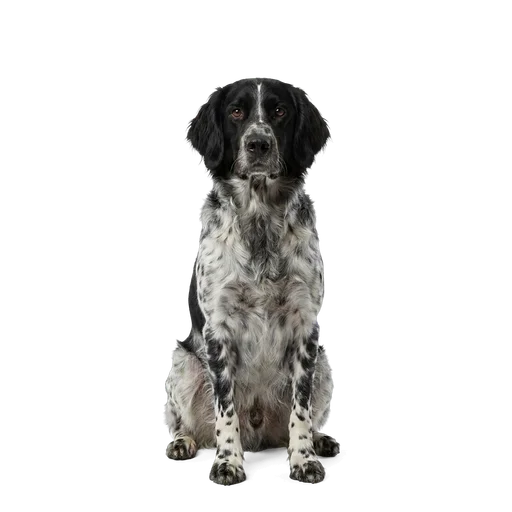
Origin: Germany
Large Munsterlander
Get reminders for your Large Munsterlander's vaccines
Vaccination and parasite reminders, food-safety scans and health records — free to start in the Pethls app.


Good for
The Large Munsterlander is Germany's striking black-and-white all-rounder, a versatile hunting dog expected to point, track and retrieve from land or water in a single day's work. It carries that work ethic into family life: clever, cooperative and genuinely people-oriented, but restless without a job to do. Most weigh 25 to 32 kg and live 11 to 13 years. Give one enough exercise and mental work and it becomes a calm, devoted housemate; shortchange it and you will hear about it.
Temperament & personality
Large Munsterlanders were bred to work all day beside a single hunter, and that cooperative streak defines them. They watch their people constantly, pick up new tasks fast, and want to be included in whatever the household is doing. Shutting one alone in the garden is the quickest way to create a barker and a digger.
Family life suits them well. They are affectionate with children they know, usually sociable with other dogs, and typically fine with cats raised alongside them, though birds and small pets test a strong hunting instinct. Early socialization smooths out a mild natural reserve with strangers.
The breed needs a job more than it needs miles. A Munsterlander that gets a good 90 minutes to two hours of running plus scent work, gundog training, canicross or serious trick training will lie flat and quiet indoors all evening. Physical exercise alone, without any thinking work, leaves a smart dog bored, and a bored Munsterlander finds its own entertainment.
Vaccination schedule
Puppies need the core DHPP series: first dose at 6 to 8 weeks, then repeats every 3 to 4 weeks until at least 16 weeks of age. The combination protects against distemper, adenovirus (hepatitis), parvovirus and parainfluenza. Do not skip the final 16-week dose; it is the one most likely to take once maternal antibodies fade.
Rabies follows local law, usually a single dose at 12 to 16 weeks with a booster one year on, then every 1 to 3 years. Dogs that travel across borders for hunting trials need their rabies timing documented precisely in the pet passport.
For a dog that works in water and rough cover, leptospirosis vaccination is strongly advised, and Bordetella (kennel cough) makes sense for any Munsterlander that trains in groups or boards. Discuss the local risk picture with your vet at the puppy visits.
Best food & diet
Growth is the danger window for this breed. Feed a large-breed puppy formula with controlled calcium and energy, and keep the puppy lean, because rapid weight gain in a fast-growing gundog raises the risk of osteochondrosis and worsens any hip dysplasia tendency. If you can't easily feel ribs on your pup, cut the portions.
Adults thrive on a good complete food matched to workload. A Munsterlander in full hunting season burns dramatically more than the same dog in July, so feed to body condition and adjust every few weeks rather than fixing one portion for life.
Two meals a day is sensible for a deep-chested breed, with quiet time around feeding. Working dogs benefit from a small energy top-up during long field days, but save the main meal until an hour or so after work ends.
Common health problems
The Large Munsterlander is generally a sound, functional breed, but hip dysplasia occurs, as in most larger gundogs. Insist on parents with official hip scores, keep weight down and build fitness gradually. Stiffness after rest, bunny-hopping or reluctance to jump into the car all warrant an early vet visit.
Osteochondrosis (OCD) affects some fast-growing puppies, typically showing as a limp in the shoulder, elbow or hock between 4 and 10 months of age. Prevention is mostly management: controlled feeding, lean body condition, and no forced running, stair marathons or repeated ball-launcher sprints before the skeleton matures at 12 to 18 months.
The long, feathered ear flaps predispose the breed to otitis externa, especially in dogs that swim regularly. Head shaking, scratching and a sour smell mean the ear needs a vet look. Black hair follicular dysplasia is a mostly cosmetic condition where the black-coated areas develop dry, brittle hair that thins over time. Mention it to your vet if the coat starts to look patchy.
Allergies & skin
This is not a hypoallergenic breed. The medium-length feathered coat sheds moderately through the year with heavier seasonal turnover, and it carries the dander that human allergy sufferers react to. Regular brushing outdoors keeps loose hair off the furniture but does not make the dog allergy-safe.
Munsterlanders can occasionally develop the usual canine allergies. Environmental atopy tends to show as paw licking, belly redness and recurrent ear trouble; food sensitivity looks similar and sometimes adds digestive upset. Because the ears are already infection-prone in this breed, an allergic dog often flags the problem there first.
Swimming dogs deserve one extra habit: rinse pond or lake water out of the coat and dry the feathering and ear canals afterward. Damp feathering against the skin invites hot spots, which can blossom from a small itch to a raw patch within a day.
Flea, tick & worm prevention
A dog built to quarter through undergrowth will meet ticks weekly in season. Keep a year-round flea and tick preventive going, chewable or spot-on, and physically check the dog after outings, parting the feathering on legs, chest and ears where ticks hide. Tick-borne diseases such as Lyme and anaplasmosis are established across the breed's north-European heartland.
Worm puppies every 2 weeks until 12 weeks, then monthly until 6 months. Adult working dogs that retrieve game or scavenge should be wormed monthly or faecal-tested quarterly; tapeworm cover matters for any dog with access to raw game or carrion.
Add heartworm prevention if you live in or travel through southern and eastern Europe or other endemic regions, and ask about lungworm where slugs and snails are common. Prevention plans should follow the dog's actual lifestyle, so tell your vet honestly how much field work yours does.
Medications & dosing
Dog medications are dosed by body weight, and a Large Munsterlander's 25 to 32 kg range sits right on the boundary between dose bands for many products. Use a real scale reading, not a guess, and recheck weight yearly since dose creep in either direction reduces safety or protection.
Human painkillers are off the table. Ibuprofen, naproxen and paracetamol are toxic to dogs at surprisingly low doses. Post-exercise soreness or a limp in a young dog needs a vet assessment anyway, because in this breed a limp can be the first sign of osteochondrosis rather than a simple strain.
Give every prescribed course in full, including ear medications, which owners routinely stop the moment the head shaking eases. Half-treated ear infections come back harder and more resistant. When in doubt about any dose, call the practice before giving the tablet.
Grooming & coat care
The dense, medium-length coat with feathering on the legs, chest and tail needs brushing two or three times a week. A slicker brush plus a metal comb through the feathering prevents the matting that starts behind the ears, in the armpits and around the trousers. During spring and autumn shedding, daily sessions save your floors.
Field dogs collect burrs, grass seeds and twigs in the feathering. Check paws, armpits and ears after every outing; a grass awn that migrates into an ear canal or between the toes needs a prompt vet visit before it burrows deeper. Trim the hair between the paw pads to reduce what gets picked up.
Ear care is non-negotiable. Inspect twice weekly, clean when waxy, and dry after every swim. Add a nail trim every 3 to 4 weeks and an occasional bath, and the grooming budget for this breed stays firmly at home rather than at the salon.
How the Large Munsterlander compares
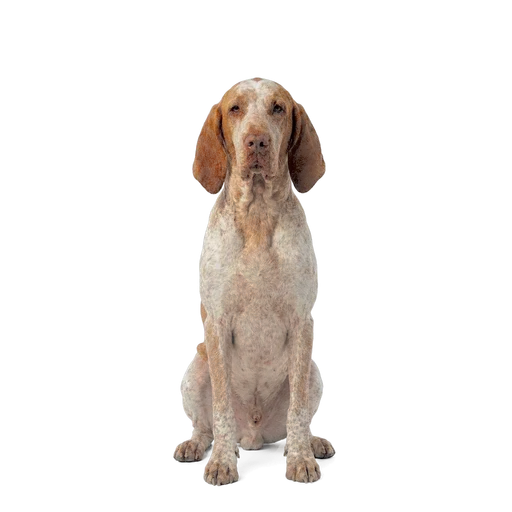
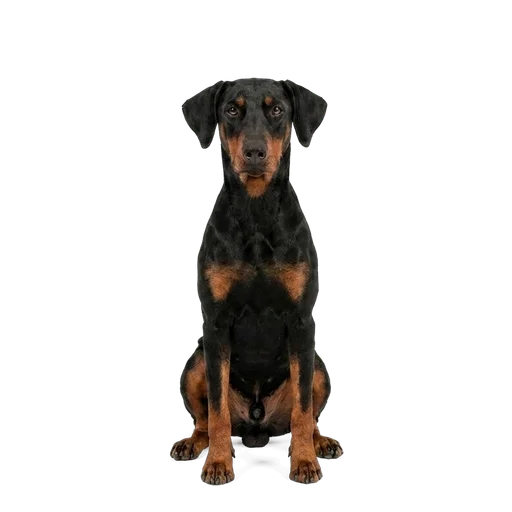
Deciding between similar breeds? Here is the Large Munsterlander next to Bracco Italiano and Doberman Pinscher.
| Large Munsterlander | Bracco Italiano | Doberman Pinscher | |
|---|---|---|---|
| Size | Large | Large | Large |
| Weight | 25-32 kg | 25-40 kg | 30-45 kg |
| Lifespan | 11-13 yrs | 12-13 yrs | 10-13 yrs |
| Activity | Active | Active | Active |
| Shedding | Medium | Medium | Medium |
| Good with kids | Yes | Yes | Yes |
| Apartment-friendly | No | No | No |
Frequently asked questions
Is the Large Munsterlander a good family dog?
Yes, for active households. The breed is affectionate, patient with children and strongly people-oriented. It does need serious daily exercise plus mental work, so it fits families who hike, run or train rather than those wanting a low-effort pet.
How much exercise does a Large Munsterlander need?
Around 90 minutes to 2 hours daily for an adult, ideally mixing free running with scent work or training. Puppies need much less, with forced exercise avoided until 12 to 18 months to protect growing joints from osteochondrosis.
Do Large Munsterlanders shed?
Moderately, all year, with heavier spring and autumn molts. The black-and-white coat shows on most fabrics. Brushing two to three times a week manages it, but this is not a hypoallergenic breed.
Can a Large Munsterlander live with cats?
Usually yes if raised with them from puppyhood, since the breed is cooperative and trainable. Cats introduced to an adult dog need slow, managed introductions, and pet birds or rabbits are a harder ask given the strong hunting background.
What health problems affect the Large Munsterlander?
It is a fairly robust breed. The main concerns are hip dysplasia, osteochondrosis in fast-growing puppies, ear infections linked to the feathered ear flaps and swimming, and black hair follicular dysplasia, which is worth going over with your vet. Health-tested parents and lean growth prevent much of it.
Related breeds
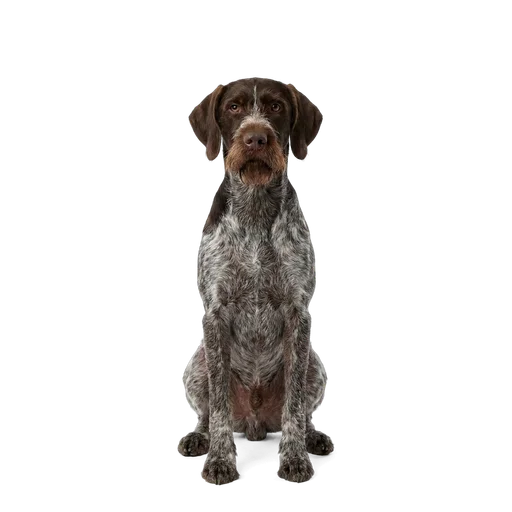
Health and care information is drawn from established veterinary sources and is general guidance, not veterinary advice. See our sources
Keep records for your Large Munsterlander
Vaccinations, food and treat safety, allergy alerts and parasite reminders - all tracked for your Large Munsterlander in the Pethls app.