

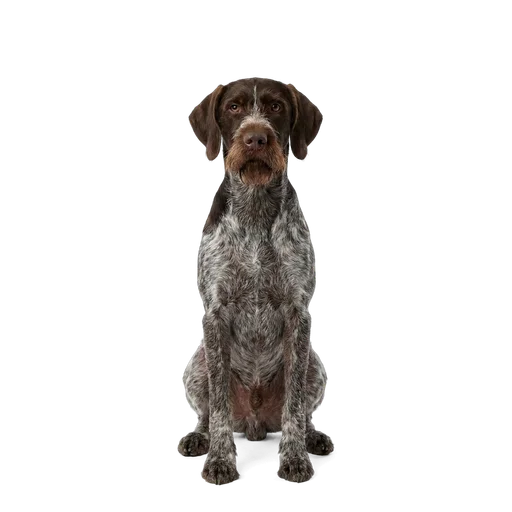
Origin: Germany
German Wirehaired Pointer
Get reminders for your German Wirehaired Pointer's vaccines
Vaccination and parasite reminders, food-safety scans and health records — free to start in the Pethls app.


Good for
The German Wirehaired Pointer, or Deutsch Drahthaar in its homeland, is the most popular hunting dog in Germany, and German hunters are not sentimental about their choices. Built in the late 1800s as an all-purpose gun dog, the GWP points, retrieves on land and water, tracks wounded game and guards the truck in between. At 20 to 32 kg with a typical lifespan of 14 to 16 years, this is a large, driven, weatherproof athlete that bonds hard to its family and stays politely aloof with everyone else. It is a working dog to its bones and a poor match for apartments or first-time owners. Give it a job and serious daily exercise, and you get one of the most capable dogs on earth.
Temperament & personality
The GWP splits the world into two groups: its people and everyone else. With family it is loyal, affectionate and often clingy, following its person from room to room and leaning against legs. With strangers it is reserved and watchful, sometimes standoffish, and it makes a genuinely alert watchdog. That aloofness is bred in, not a training failure, but it does mean early and broad socialization matters more here than in softer sporting breeds.
Drive is the defining trait. This dog was designed to work before breakfast and again after dinner, and that engine does not idle well. A GWP without a job becomes destructive, noisy and pushy in ways that overwhelm inexperienced owners. Hunting is the obvious outlet, but tracking, agility, bikejoring, serious scent work or long daily runs also satisfy the need. Budget 90 minutes to 2 hours of activity a day, more for young dogs.
Intelligence is high and comes with opinions. GWPs test boundaries, remember inconsistencies and take charge if nobody else does, which is why the breed suits experienced handlers who train with clear, fair structure. With children in their own family they are typically good, if boisterous. Same-sex dog aggression appears in some lines, and prey drive is strong: cats and small pets are a gamble, and off-lead reliability around wildlife takes real training.
Vaccination schedule
GWP puppies need the core DHPP series (distemper, hepatitis/adenovirus, parvovirus, parainfluenza) starting at 6 to 8 weeks and repeating every 3 to 4 weeks until at least 16 weeks of age. Do not shortcut the final dose; a fair number of parvo cases occur in puppies whose series stopped at 12 weeks, before maternal antibody interference had fully faded. A booster follows at one year, then revaccination every 1 to 3 years per your vet's protocol.
Rabies goes in once between 12 and 16 weeks, as local regulations dictate, with a booster at one year and then on the legally required cycle. Hunting travel makes tidy rabies paperwork essential, and if you ever plan to hunt or test the dog across borders in Europe, an EU pet passport with current rabies vaccination is the entry ticket.
For a dog that will spend its life in fields, forests and duck marshes, lifestyle vaccines deserve serious discussion rather than a polite decline. Leptospirosis vaccination is strongly advisable for any dog working around standing water and wildlife urine. Lyme vaccination makes sense in endemic tick regions. Bordetella protects dogs that train in groups, board during hunting trips or attend tests and trials.
Best food & diet
A GWP's energy needs swing wildly between a summer of daily runs and an autumn of full hunting days, and the feeding plan should swing with them. Base the diet on a quality complete food with named animal protein, fed in two meals. Working days can double or triple calorie burn, so many owners run a performance formula with around 30 percent protein and 20 percent fat in season, then step down to a maintenance food when the dog is idling. Judge success by body condition: visible waist, ribs easy to feel, no fat pad over the hips.
Growth is the critical window for a breed carrying hip and elbow dysplasia risk. Feed a large-breed puppy formula that controls calcium and energy density, keep the puppy lean and resist the urge to overfeed, and do not add calcium supplements. Fast, heavy growth is a proven contributor to developmental joint disease, and no amount of adult supplementation undoes it.
Like many deep-chested breeds, the GWP may develop bloat (gastric dilatation-volvulus), a genuine emergency worth watching for. Sensible precautions cost nothing: split the ration into two meals, avoid one huge daily feed, leave a gap of an hour or two before and after meals for hard exercise, and discourage frantic gulping with a slow-feed bowl. Learn the signs, a distended abdomen, unproductive retching and restlessness, and treat them as a drive-to-the-vet-now situation.
Common health problems
The GWP is a long-lived, robust breed, but it carries the orthopedic baggage common to large sporting dogs. Hip dysplasia and elbow dysplasia both occur, and both are heritable, so insist on documented hip and elbow scores from both parents before taking a puppy. Signs range from subtle, a shortened stride or reluctance to jump, to obvious lameness after work. Early diagnosis matters because weight management, controlled fitness and modern arthritis care change the long-term picture dramatically.
Von Willebrand disease, an inherited clotting disorder, runs in the breed. Many affected dogs live entirely normal lives until something makes them bleed: a surgery, a dew claw torn in the field, a tooth extraction. The message for owners is simple and worth repeating: have your GWP DNA-tested or blood-tested for von Willebrand factor before any planned surgery, including routine spay or neuter, so the surgical team can prepare. Unexplained nosebleeds, prolonged bleeding from small cuts or bleeding gums warrant testing too.
Ear infections (otitis externa) are a constant risk in a water dog with ears that hang close to the head, unless you get ahead of them. Moisture trapped in the canal after retrieves breeds yeast and bacteria; head shaking and a sour smell are your early warnings. Dry the ears after every swim and clean them routinely. Like many breeds, GWPs can develop hypothyroidism as they reach middle age. It shows up as weight gain without extra food, a thinning coat, skin infections and low energy. A simple blood panel confirms it, and daily thyroid hormone manages it inexpensively, so it pays to catch early.
Allergies & skin
The GWP's wire jacket sheds less than a Labrador's coat but more than a Griffon's, a fair description is low to medium, with a noticeable undercoat drop in spring and autumn. Nobody should choose this breed hoping for a hypoallergenic dog; dander and saliva allergens are all present and accounted for, and seasonal coat blows will find your car seats.
Skin trouble in GWPs usually traces back to one of three sources: parasites, work or allergy. Field work delivers cuts, thorn scratches and grass awns that migrate under the skin, so a post-hunt inspection should be as routine as cleaning the shotgun. Awns between the toes are a classic; a dog licking one paw obsessively a day or two after a hunt very likely has one embedded.
Atopic dermatitis shows up in some dogs as seasonal paw licking, face rubbing, belly redness and repeat ear infections. Because hypothyroidism can also cause skin and coat problems in any dog, a middle-aged GWP with recurring skin infections and a dull, thinning coat is worth a thyroid panel alongside the allergy workup rather than bouncing between shampoos. Fish oil supplementation supports skin barrier function and is a low-risk addition for most dogs; confirm dosing with your vet.
Flea, tick & worm prevention
Few breeds meet more ticks than a GWP in season. Pushing through bracken, following blood tracks through forest and sitting in duck blinds all put this dog in prime tick habitat for hours at a time, with exposure to Lyme disease, anaplasmosis, ehrlichiosis and, in parts of Europe, babesiosis. Year-round prevention with a fast-kill isoxazoline product or a proven spot-on is the foundation, chosen with your vet against local disease risk. Some working-dog owners add a permethrin-based repellent product in peak season; combine products only under veterinary guidance.
The manual tick check is where field owners earn their keep. After every outing, work through the coat with your fingers, concentrating on ears, eyelids, lips, armpits, groin and between the toes; the dense wire coat hides ticks better than smooth coats do. Remove attached ticks promptly with fine tweezers at skin level. A GWP that turns up lame, feverish or flat in the weeks after tick exposure should be tested for tick-borne disease, not just rested.
Worm exposure is equally elevated. GWPs track wounded game, mouth carcasses and drink from field water, so tapeworm, roundworm, hookworm and whipworm are constant possibilities. Puppies need worming every 2 to 3 weeks until 12 weeks, then monthly to 6 months. For working adults, most vets recommend either monthly broad-spectrum dewormers or quarterly fecal testing, with tapeworm treatment after seasons involving carcass contact. In heartworm areas, monthly prevention is mandatory. Flea control rides along with modern combination products and also blocks the flea-tapeworm cycle.
Medications & dosing
Every routine medication a GWP receives, parasite preventives, NSAIDs, antibiotics, thyroid hormone, is dosed on body weight, and a 20 kg female and a 32 kg male sit in different brackets for most products. Weigh the dog, do not estimate, and recheck the weight after a hard hunting season or a soft winter because working dogs swing several kilograms across the year. Give prescribed courses to the end even when the dog looks fine at the halfway mark.
The von Willebrand factor issue changes the medication conversation for this specific breed. Beyond testing before surgery, tell every vet who treats your GWP about its vWD status or that it is untested, because certain drugs, including aspirin and some NSAIDs, impair platelet function and can tip a borderline dog into clinically significant bleeding. This is exactly the kind of detail that gets lost between an emergency clinic and your regular practice, so keep it in the dog's records and on your phone.
Never give human painkillers. Ibuprofen causes gastric ulcers and kidney injury in dogs at low doses, and paracetamol is not a safe substitute. Post-hunt soreness gets rest and a vet call, not the medicine cabinet. Long-term arthritis management in older GWPs typically combines weight control, omega-3s, prescription NSAIDs with periodic blood monitoring, and newer options like monthly anti-NGF injections when needed. If a dog is on levothyroxine for hypothyroidism, the dose should be rechecked by blood test whenever weight changes meaningfully, since the dose is weight-based.
Grooming & coat care
The functional GWP coat is harsh, flat-lying and about 2 to 5 cm long, with a dense undercoat in winter that thins out for summer. It was engineered to repel water, thorns and cold, and a correct coat does exactly that with modest help from you. A weekly session with a slicker brush and metal comb removes dead undercoat and keeps the beard and leg furnishings from matting. During spring and autumn coat drops, step up to several sessions a week or resign yourself to drifts of undercoat.
Hand-stripping a few times a year keeps the jacket harsh and tidy, particularly for dogs with heavier furnishings; many pet GWPs get by with thorough raking instead, but never clip the body coat. Clipping softens texture and ruins the coat's weatherproofing, which this dog actually uses. Coat quality varies within the breed, and softer, woollier coats need more frequent stripping to stay functional.
Bathing is rare, a handful of times a year unless the dog finds something dead to roll in, because the coat's oils are part of its water resistance. The high-maintenance zones are the extremities: rinse and towel the beard after meals and swims, dry the ear canals after water work, check and trim between the paw pads, and keep nails short with monthly trims. A quick daily hands-on check doubles as grooming and health surveillance for lumps, awns and ticks.
How the German Wirehaired Pointer compares
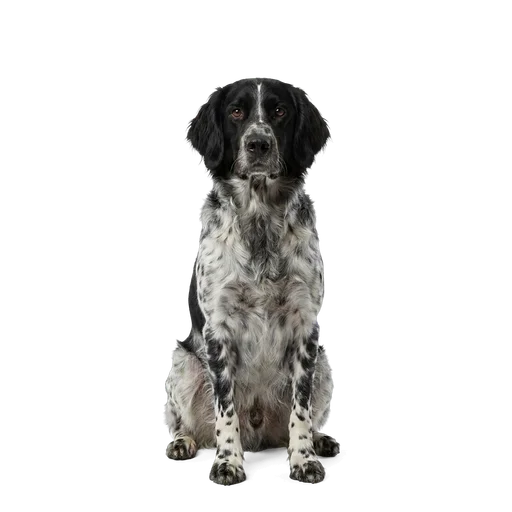
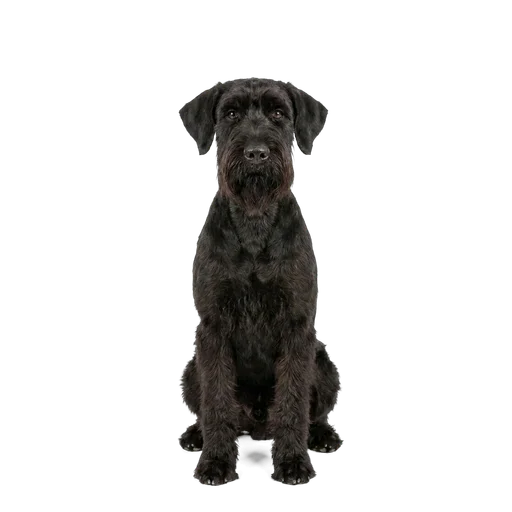
Deciding between similar breeds? Here is the German Wirehaired Pointer next to Large Munsterlander and Giant Schnauzer.
| German Wirehaired Pointer | Large Munsterlander | Giant Schnauzer | |
|---|---|---|---|
| Size | Large | Large | Large |
| Weight | 20-32 kg | 25-32 kg | 25-48 kg |
| Lifespan | 14-16 yrs | 11-13 yrs | 12-15 yrs |
| Activity | Active | Active | Active |
| Shedding | Medium | Medium | Low |
| Good with kids | Yes | Yes | Yes |
| Apartment-friendly | No | No | No |
Frequently asked questions
Is a German Wirehaired Pointer a good first dog?
Honestly, no. The drive, strength and independent streak that make the GWP a superb hunting dog overwhelm most first-time owners. It needs 90 minutes to 2 hours of daily exercise, consistent training and a real job. Experienced, active owners get a phenomenal dog; novices often get chaos.
Can a GWP live in an apartment?
It is a poor fit. This is a large, vocal, high-drive working breed that needs space to move and a serious daily outlet. Without land or committed daily field time, a GWP in an apartment tends toward destructiveness and noise complaints.
What is von Willebrand disease and why does it matter for GWPs?
It is an inherited clotting disorder found in the breed. Affected dogs may seem healthy but bleed excessively after injury or surgery. Test your GWP (DNA or blood test) before any planned procedure, including spay or neuter, and make sure every treating vet knows the result.
Are German Wirehaired Pointers good with cats and other pets?
It depends heavily on the individual dog and early exposure. Prey drive is strong, some lines carry same-sex dog aggression, and small pets are risky. Dogs raised with cats from puppyhood often coexist fine, but a GWP is not the breed to add to a multi-pet household on hope alone.
How long do German Wirehaired Pointers live?
Around 14 to 16 years is typical. Keeping the dog lean, screening for joint problems and staying on top of preventive care all help. Screening for hip and elbow dysplasia at purchase, staying on top of tick prevention and catching hypothyroidism early all help the breed live well through those years.
Related breeds
Health and care information is drawn from established veterinary sources and is general guidance, not veterinary advice. See our sources
Keep records for your German Wirehaired Pointer
Vaccinations, food and treat safety, allergy alerts and parasite reminders - all tracked for your German Wirehaired Pointer in the Pethls app.