

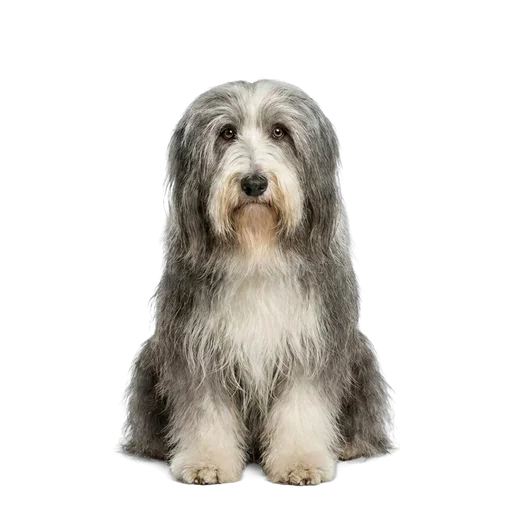
Origin: Scotland
Bearded Collie
Get reminders for your Bearded Collie's vaccines
Vaccination and parasite reminders, food-safety scans and health records — free to start in the Pethls app.


Good for
The Bearded Collie is Scotland's shaggy, bouncing herding dog, and the bounce is not a figure of speech: Beardies genuinely spring straight up on all fours when excited, a habit shepherds once used to spot sheep in bracken. Under the tousled gray, brown, blue or fawn coat is a clever, exuberant, endlessly cheerful dog that weighs 20 to 25 kg and lives 12 to 14 years. Beardies adore children, get on well with other dogs and turn any walk into a party. The trade-offs are real, though: this coat demands serious brushing several times a week, and a bored Beardie is a loud, muddy force of chaos.
Temperament & personality
Joy is the Beardie's default setting. This is a breed that greets mornings, guests, rain and dinner with the same full-body enthusiasm, and the famous vertical bounce appears whenever excitement outruns vocabulary. They are affectionate without being clingy, sociable with visitors, and typically excellent with children, matching kid energy hour for hour. Most Beardies also do well with other dogs and can share a home with cats they were raised alongside, although a fleeing cat may still trigger a joyful pursuit.
Under the clown exterior sits a genuine herding brain. Beardies were bred to work Highland sheep independently, making their own decisions far from the shepherd, and that independence survives in the modern dog. They learn fast but see obedience as a negotiation: a Beardie asked to repeat the same exercise five times will improvise a funnier version by the third. Keep training short, upbeat and varied, use rewards generously, and never bother with harsh methods, which just teach a Beardie to tune you out.
The breed's real enemy is boredom. A Beardie without enough exercise and company becomes a barker, a digger and an escape artist, and the herding heritage can surface as circling and poking at running children until you channel it elsewhere. An hour or more of proper daily activity, plus games, training or dog sports for the brain, produces the easy-going family dog the breed is famous for. They want to be where the people are; a Beardie banished to the garden is a miserable, noisy Beardie.
Vaccination schedule
Beardie puppies follow the standard core protocol. DHPP, the combination vaccine against distemper, hepatitis (adenovirus), parvovirus and parainfluenza, begins at six to eight weeks and repeats every three to four weeks until at least sixteen weeks of age, usually three or four visits in total. Rabies is given once between twelve and sixteen weeks depending on where you live.
Both are boosted at around one year, after which DHPP typically moves to every three years and rabies to the one-year or three-year schedule your local law sets. Beardies are sociable dogs that tend to rack up daycare days, group classes and holiday boarding, so Bordetella (kennel cough) vaccination is usually worthwhile, and vets in wet, rural or wildlife-heavy areas often add leptospirosis. Discuss your dog's actual lifestyle at the annual visit rather than defaulting either way.
One breed-specific point: because Addison's disease is a known Beardie issue and can be unmasked by stress, tell your vet about any vague recent symptoms, such as lethargy or gut upsets, before routine visits. Record every vaccine and due date somewhere you will see it; a reminder before the kennel-cough booster expires is what saves a cancelled boarding reservation.
Best food & diet
A complete, balanced diet for medium breeds suits the Bearded Collie well. Puppies should eat a quality puppy formula until around twelve months, and since hip dysplasia occurs in the breed, keep growth lean and steady rather than fast and chubby. A typical adult companion generally needs somewhere around 900 to 1,300 kcal per day, split into two meals, with active herding or sport dogs needing more.
Weight creep is sneaky in this breed for one simple reason: the coat hides everything. A Beardie can gain three kilos before anyone notices, and by then the shaggy silhouette just looks fluffier. Get hands on the ribs weekly; you should feel them easily under a modest fat cover. Adjust food before the scale gets away from you, because extra weight loads hips that this breed cannot always spare.
Two Beardie-specific notes. First, the beard itself: it drags through the water bowl and dinner, staying damp and collecting food, which can lead to skin irritation and impressive smells. Wipe and dry the beard after meals, and consider a narrow, deep water bowl. Second, appetite is a health signal here. In a breed prone to Addison's disease and autoimmune conditions, recurring appetite loss or intermittent vomiting points to a checkup rather than a food switch. Keep a dated log of gut upsets; with Addison's, the pattern of vague, on-and-off illness is exactly what clinches the diagnosis.
Common health problems
Addison's disease (hypoadrenocorticism) is the Beardie's signature health concern, occurring in this breed at well above the general dog population rate. The adrenal glands stop producing adequate cortisol and aldosterone, and the result is a masterclass in vague symptoms: intermittent vomiting or diarrhea, lethargy, poor appetite, weight loss, shaking, weakness that comes and goes and often worsens with stress. Many Beardies are treated for months for suspected gut trouble before anyone runs the right test. If your Beardie has repeated unexplained off-color spells, ask your vet directly about testing for Addison's; a baseline cortisol or ACTH stimulation test settles it. Untreated Addison's can crash into a life-threatening crisis, but diagnosed dogs live normal lives on replacement hormones.
Autoimmune conditions are worth being aware of in the breed. Pemphigus, an autoimmune skin condition that can cause crusting and pustules often starting on the face and ear tips, and symmetrical lupoid onychodystrophy (SLO), which makes nails crack, lift and fall out, can develop in some dogs and both warrant a proper diagnosis. Autoimmune thyroiditis leading to hypothyroidism is on the same list, showing as weight gain, lethargy and a deteriorating coat, and is easily managed with daily thyroid hormone once blood tests confirm it.
Hip dysplasia is the main orthopaedic issue. Good breeders hip-score their stock through OFA, BVA or equivalent schemes, so ask for the paperwork. Keep adult Beardies lean and well-exercised, and take persistent stiffness, bunny-hopping or reluctance to jump seriously rather than filing it under age.
The encouraging news is that with screening, a sensible weight and an owner who acts on vague symptoms early, Beardies routinely reach 12 to 14 years and some sail past that. Track episodes of lethargy, gut upsets, lameness and nail problems with dates. In this breed more than most, the diagnostic gold is in the pattern, not the single incident.
Allergies & skin
Beardies are not hypoallergenic. The long shaggy double coat sheds moderately rather than spectacularly, and much of the loose hair lodges in the coat instead of on the sofa, but dander production is normal and allergy sufferers will react. People sometimes assume shaggy equals allergy-friendly; it does not.
Beyond ordinary itches, the breed's autoimmune leanings show up in the skin. Pemphigus foliaceus produces crusts, scabs and pustules, typically starting on the bridge of the nose, around the eyes and on the ear tips, and needs veterinary diagnosis by biopsy plus immunosuppressive treatment. SLO attacks the nails: if your Beardie starts losing nails, or several nails crack and lift within weeks, that is not bad luck on gravel paths, it is a vet visit. Both conditions respond far better when caught early.
The everyday problems still apply. Flea allergy dermatitis causes rump-chewing and is the first rule-out for any itchy Beardie, since the dense coat gives fleas excellent cover. Environmental atopy shows as paw licking, face rubbing and ear infections. And the coat itself creates a housekeeping problem: matted areas trap moisture against the skin and brew hot spots and infections underneath, invisible until they are nasty. During each brushing session, part the coat to the skin in the usual trouble zones, armpits, groin, behind the ears, under the tail, and investigate anything red, crusty or smelly.
Flea, tick & worm prevention
Year-round prevention suits the Beardie lifestyle, which tends to involve fields, woods, mud and other dogs. Fleas exploit that coat brilliantly: by the time you see one flea on a Beardie, there is an established population. Use a vet-recommended preventive on a strict schedule. Oral chewables have a real advantage in this breed because the coat makes spot-on application to skin fiddly and because Beardies find every puddle in a five-mile radius.
Ticks disappear completely into Beardie coat, so checks must be done by hand. After walks in grass, bracken or woodland, work fingertips against the skin over the ears, face and beard, neck, armpits, groin, belly and between the toes. Remove ticks with a twisting tick tool and note the date; if a fever or lameness turns up two weeks later, that record shortens the diagnostic path for tick-borne disease considerably.
Worming is standard: puppies every two weeks from two to twelve weeks of age, then monthly to six months; adults every three months against roundworms and tapeworms, moving to monthly for scavengers, rodent-catchers and households with young children, which describes many Beardie homes. Add monthly heartworm prevention in affected regions. One extra note for this breed: some herding breeds carry the MDR1 gene mutation affecting drug sensitivity, and although it is uncommon in Beardies, a cheap DNA test settles the question before any high-dose ivermectin product is used to treat mange or other conditions. Note that this only matters for those high doses: the low doses in routine monthly parasite preventives are safe for every dog, MDR1 carrier or not.
Medications & dosing
All Beardie medication is weight-based and vet-directed, and at 20 to 25 kg the breed sits in the middle weight bands for most products. Weigh your dog every few months and keep a record; the coat makes visual weight assessment nearly useless, so the scale is the only honest reference for both dosing and diet.
Addison's disease brings the most important dosing conversation in the breed. Treated Beardies receive mineralocorticoid replacement, either daily fludrocortisone tablets or a monthly injection of desoxycorticosterone pivalate (DOCP), usually alongside a small daily glucocorticoid dose. Doses are set per kilogram, refined by regular electrolyte blood tests, and must never be skipped or stopped; a missed stretch of treatment risks an Addisonian crisis. Owners also learn to give a temporarily increased steroid dose during stress such as boarding, surgery or travel, exactly as the vet directs. Keep every dose and blood-test date on record, because this is lifelong management where consistency is the whole game.
The same weight-based, vet-directed rule covers thyroid hormone for hypothyroid dogs, immunosuppressives for pemphigus or SLO, and routine parasite products with their weight bands. Never dose from the human medicine cabinet: ibuprofen, naproxen and paracetamol are dangerous to dogs at small doses. And whenever a vet prescribes long-term steroids or immunosuppression for a Beardie, make sure everyone involved knows the dog's full history, since Addison's, thyroid disease and autoimmune skin disease can coexist and their treatments interact.
Grooming & coat care
Be honest with yourself before taking on a Beardie: this coat is a hobby. The long, harsh outer coat over a soft dense undercoat needs thorough brushing several times a week, and a full session takes thirty to forty-five minutes done properly. Skip a week and mats form; skip two and you are booking a groomer to strip out felt, which is miserable for the dog. Line-brush in layers with a pin brush, then work through with a comb, using a light misting spray because brushing the coat bone-dry breaks the hair.
The technique matters as much as the frequency. Surface brushing over the top leaves the undercoat matting quietly next to the skin, so part the coat and work from skin outward, section by section. Priority zones are behind the ears, the armpits, the groin, the breeches, under the collar and the beard itself. Puppies go through a coat change at around nine to fourteen months when the adult coat comes in through the puppy fluff, and for those months daily brushing is genuinely necessary. Survive the coat change and adult maintenance feels almost relaxing.
Shedding is moderate; much of the loose hair stays caught in the coat until you brush it out, which is precisely why the brushing schedule cannot slip. Bathe every six to eight weeks or when the mud wins, always brushing out mats first because water sets them like felt. Dry thoroughly down to the skin afterwards. Some pet owners keep Beardies in a shorter puppy cut to reduce workload, which is a perfectly reasonable choice for a non-show dog and still leaves plenty of scruffy charm.
Daily small jobs round it out: wipe and dry the beard after meals, check the ears weekly since hair and flop trap moisture, trim nails every three to four weeks, and brush teeth several times a week. Keep an eye on the nails beyond mere length, because cracking or lifting nails in this breed can signal SLO rather than wear and tear.
How the Bearded Collie compares
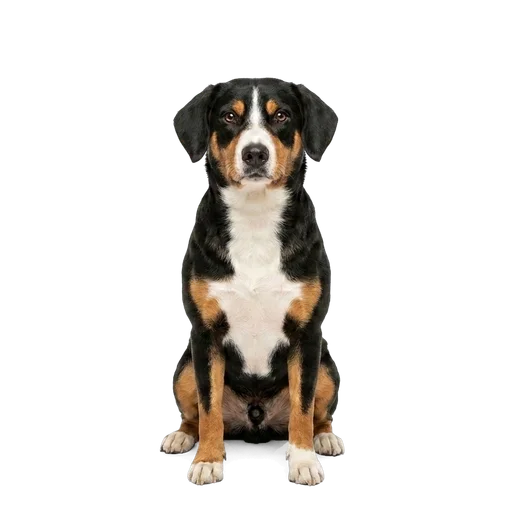
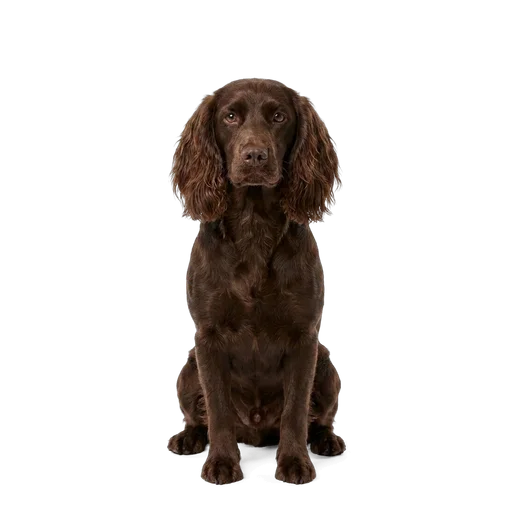
Deciding between similar breeds? Here is the Bearded Collie next to Entlebucher Mountain Dog and Boykin Spaniel.
| Bearded Collie | Entlebucher Mountain Dog | Boykin Spaniel | |
|---|---|---|---|
| Size | Medium | Medium | Medium |
| Weight | 20-25 kg | 20-30 kg | 11-18 kg |
| Lifespan | 12-14 yrs | 11-13 yrs | 10-15 yrs |
| Activity | Active | Active | Active |
| Shedding | Medium | Medium | Medium |
| Good with kids | Yes | Yes | Yes |
| Apartment-friendly | No | No | No |
Frequently asked questions
Are Bearded Collies good family dogs?
Yes, among the best of the herding breeds for families. Beardies are playful, gentle and tireless with children and usually friendly with other dogs. Supervise toddlers, since an exuberant bouncing Beardie can flatten a small child out of pure enthusiasm, and expect some herding behavior around running kids until it is trained out.
How much grooming does a Bearded Collie need?
A lot. Plan on thorough line-brushing several times a week, thirty minutes or more per session, plus daily attention during the adolescent coat change. Without it the coat mats down to the skin and causes real welfare problems. A shorter pet trim reduces the workload if you are not showing the dog.
What is Addison's disease in Bearded Collies?
Addison's disease (hypoadrenocorticism) means the adrenal glands stop producing vital hormones, and Beardies get it far more often than most breeds. Signs are vague and intermittent: gut upsets, lethargy, poor appetite, weakness after stress. It is fatal untreated but fully manageable with lifelong hormone replacement, so persistent vague illness in a Beardie should prompt specific testing.
Do Bearded Collies shed a lot?
Moderately. Much of the dead hair stays tangled in the long coat rather than falling straight onto the floor, which is exactly why frequent brushing is essential; the hair has to come out on the brush or it becomes mats. The breed is not hypoallergenic.
How much exercise does a Bearded Collie need?
At least an hour of real activity daily, and ideally more: off-lead running, hikes, fetch, plus mental work like training games or agility. Beardies were bred to work sheep all day in Scottish weather, and rain does not count as an excuse in their view. A bored Beardie barks, digs and redecorates.
Related breeds
Health and care information is drawn from established veterinary sources and is general guidance, not veterinary advice. See our sources
Keep records for your Bearded Collie
Vaccinations, food and treat safety, allergy alerts and parasite reminders - all tracked for your Bearded Collie in the Pethls app.