


Origin: Russia
Black Russian Terrier
Get reminders for your Black Russian Terrier's vaccines
Vaccination and parasite reminders, food-safety scans and health records — free to start in the Pethls app.


Good for
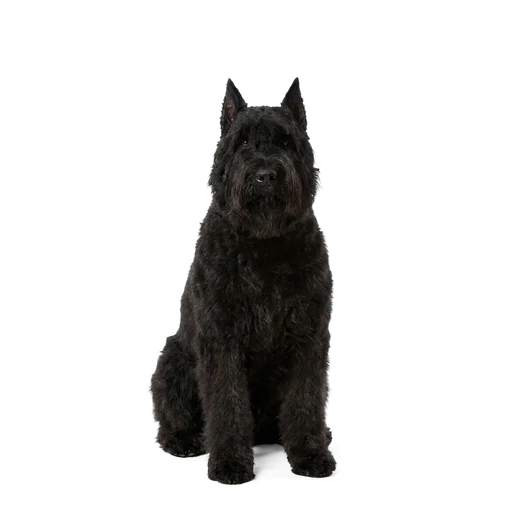
The Black Russian Terrier was built by the Soviet military's Red Star Kennel after World War II to patrol borders and guard installations, and everything about the modern dog still says working guardian. Adults run from about 36 kg for a smaller female to 60 kg for a large male, putting the BRT firmly in the large-breed class, with a 10 to 12 year lifespan. Behind the imposing black coat and beard is a calm, confident, deeply loyal dog that takes its family seriously and strangers with polite suspicion. This is emphatically not a first dog: it needs an experienced owner, early socialization, consistent training, and real space. Get those right and you have one of the most devoted protection breeds in existence.
Temperament & personality
Inside the family circle, a Black Russian Terrier is a shadow. The breed was designed to work alongside one handler, and that heritage shows: your BRT wants to be in the same room as you, always, and many lean their considerable weight against your legs as a greeting. They are calm and quiet in the house, surprisingly still for their size, and genuinely gentle with the children of their own household. Most are patient, watchful babysitters, though their sheer mass means supervision around small kids is common sense.
With strangers, the switch flips to reserved. A well-socialized BRT is not aggressive at the door; it is watchful, aloof, and unimpressed, assessing every guest before deciding they may pass. This guarding instinct does not need to be trained in. What needs training, heavily and early, is the judgment around it. Puppy socialization from 8 weeks onward, exposure to many people and places, and ongoing obedience work through adolescence are non-negotiable with a dog that will weigh as much as an adult human.
This is why the breed suits experienced owners only. BRTs are highly intelligent and learn fast, but they were bred to make independent decisions, and they will test a handler who is inconsistent. They respond to firm, fair, reward-based leadership and shut down or push back against bullying. Other pets are a mixed picture: many live peacefully with the family cat they grew up with, but same-sex dog aggression and a low tolerance for pushy strange dogs are common, so assume careful management rather than dog-park sociability. An under-exercised, under-trained BRT in an apartment is up to 60 kg of problem; a house with a fenced yard and a committed owner gets the best of the breed.
Vaccination schedule
Core puppy vaccination is the DHPP combination (distemper, hepatitis or adenovirus, parainfluenza, parvovirus), given as a series starting at 6 to 8 weeks and repeated every 3 to 4 weeks until at least 16 weeks of age. Large and giant breeds like the BRT often get a final dose at 18 to 20 weeks because maternal antibodies can persist longer in big puppies. A booster follows at one year, then every 1 to 3 years per your vet's protocol.
Rabies vaccination is required by law in most places: first dose at 12 to 16 weeks, booster at one year, then every 1 to 3 years depending on the vaccine and local regulations. Because BRTs travel to training clubs and working trials more than most breeds, keep certificates current and accessible.
Leptospirosis is now a core vaccine recommended for every dog, so plan on it regardless of lifestyle; the risk runs higher for a breed that spends time in yards and rural training grounds, which is one reason the annual booster matters. It needs a 2-dose puppy series and then a yearly booster, unlike the DHPP core boosters that can run every 3 years. Discuss non-core vaccines with your vet based on lifestyle: Bordetella is required by most training facilities and boarding kennels. One practical note for giant puppies: they grow through the vaccine series fast, and it is easy to lose track of which dose is next during the chaos of raising a fast-growing giant puppy. Track the series in a health log and set the reminders on day one.
Best food & diet
Feeding a Black Russian Terrier starts with one rule: control puppy growth. Giant-breed puppies that grow too fast on calorie-dense or calcium-heavy food face dramatically higher rates of hip and elbow dysplasia, both already documented problems in this breed. Feed a large-or-giant-breed puppy formula (not regular puppy food, and not adult food) from weaning until 18 to 24 months, keep the puppy lean enough to feel ribs easily, and never free-feed. Slightly slow, steady growth produces the same adult size with much better joints.
Adults weighing 36 to 60 kg typically need somewhere between 1,800 and 2,800 kcal per day depending on size, season, and workload, fed as two meals. Never one large meal, since like many deep-chested large breeds a BRT can develop bloat (gastric dilatation-volvulus). Use a slow-feed bowl for gulpers, avoid heavy exercise for an hour after eating, and learn the emergency signs of bloat, because it kills within hours.
There is a breed-specific dietary wrinkle: hyperuricosuria. BRTs carrying two copies of the HUU mutation excrete excess uric acid and form urate bladder stones. If your dog tests affected, your vet will likely recommend a lower-purine diet (moderating organ meat and certain fish), generous water intake, and periodic urine monitoring. This is exactly the kind of detail to confirm with a DNA test rather than discover via emergency surgery for a urinary blockage.
Joint support is reasonable insurance in a giant breed: omega-3 fatty acids from fish oil have decent evidence for joint comfort, and your vet may suggest glucosamine-chondroitin from middle age. Skip calcium supplements entirely unless a vet prescribes them; in growing giants, extra calcium actively causes skeletal disease.
Common health problems
Start with the one every puppy buyer must know: JLPP, juvenile laryngeal paralysis and polyneuropathy. This inherited nerve disease appears in young puppies, progressing from a changed bark and noisy breathing to swallowing problems, weakness in all four legs, and death, usually before six months of age. There is no treatment. There is, however, a definitive DNA test, and the disease only occurs when both parents carry the gene. The rule is absolute: buy only from breeders who show JLPP test results for both parents. A breeder who cannot produce them is not a breeder to buy from.
Hip and elbow dysplasia are the breed's major orthopedic problems, as in most giants. Reputable breeders screen breeding stock with OFA or FCI hip and elbow scores; ask to see them. As an owner, your levers are slow puppy growth on giant-breed food, lean body condition for life, and avoiding forced running or stair marathons before 18 months. Signs like bunny-hopping, stiffness after rest, or reluctance to jump warrant X-rays, and early management ranges from weight control and physiotherapy to surgery.
Hyperuricosuria (HUU) is the third DNA-testable condition in the breed. Affected dogs form urate stones in the bladder, which can cause straining, bloody urine, or a life-threatening blockage, especially in males. A cheek-swab test tells you whether your dog is affected; if so, dietary management and monitoring usually keep stones at bay.
Round out the watch list with general giant-breed guidance worth reviewing with your vet: bloat (know the signs: unproductive retching, swollen abdomen, restlessness; it is a veterinary emergency). With good breeding and lean condition, BRTs live 10 to 12 years, respectable for their size. Twice-yearly vet exams from age 6 or 7 catch the age-related problems while they are still manageable.
Allergies & skin
First, clear up a common misunderstanding: the Black Russian Terrier sheds very little, but it is not hypoallergenic. The dense coat traps loose hair and dander instead of dropping it around the house, which some allergy sufferers tolerate better, but the allergenic proteins are still there, in the coat, the saliva, and especially that magnificent wet beard. Spend real time with an adult BRT before assuming your allergies can handle one.
The dog's own skin generally holds up well under the weatherproof double coat, but that same density creates the breed's main skin problem: hidden trouble. Hot spots (acute moist dermatitis) can brew unseen under matted or damp coat, particularly after swimming or rainy walks, and by the time you smell it the lesion is large. Dry the coat properly after it gets wet, and let your hands, not just your eyes, do the weekly skin check.
Beard and facial skin deserve daily attention. Food debris and water trapped in the beard cause lip-fold irritation and yeasty odor; a quick rinse and towel-dry after meals prevents most of it. Ears hidden under coat need weekly checks too, since airflow is poor. Environmental allergies do occur in the breed, showing as paw chewing and recurrent ear infections; they are managed the same way as in any dog, with vet-guided treatment, flea control, and sometimes diet trials. Any BRT scratching persistently has something going on under that coat that you cannot see, so part the hair and look.
Flea, tick & worm prevention
A dense, black, full-body coat is a parasite's dream hiding place. You will almost never spot a flea or tick on a Black Russian Terrier by looking, which makes year-round chemical prevention essential rather than optional. Oral isoxazoline chews (monthly or every 12 weeks depending on product) are popular in heavily coated breeds precisely because, unlike spot-ons, they do not depend on spreading across the skin under all that hair. If you do use a spot-on, part the coat to the skin when applying.
Dosing is where giant breeds get shortchanged. Many products top out at a 40 or 50 kg band, and a 60-plus kg male BRT may need a specific large-dog formulation or a vet-calculated combination. Never round down to save money; underdosing fails and breeds resistance. Weigh the dog, then buy.
Worming follows the standard protocol: puppies every 2 to 3 weeks until 12 weeks old, monthly until 6 months, then adult dogs typically every 3 months or per fecal-exam results. Add monthly heartworm prevention wherever heartworm is endemic. After training sessions in fields or forest, run your hands through the beard, armpits, groin, and between toes; ticks that beat the preventive tend to lodge exactly where the coat is thickest. Log every dose in a health log, because with 12-week products and quarterly wormers on different cycles, memory alone will fail.
Medications & dosing
Every canine medication is dosed by body weight, and the BRT's range is enormous: a 36 kg female and a 60 kg male are practically different animals for prescribing purposes. Keep a current weight on file (weigh at least twice a year, more during growth), and expect adult dosing needs to change again as seniors lose muscle. Giant-breed dosing also runs into practical limits: some drugs get expensive at 60 kg, and some products simply are not made in big enough sizes, so your vet may combine tablets. That is normal; owners doing their own combining is not.
Two breed facts belong in your dog's permanent medication record. First, hyperuricosuria status: flag HUU-affected status so your vet can weigh the purine and urinary-stone load of any long-term medication or diet. Second, orthopedic status: many BRTs end up on long-term joint medication (vet-prescribed NSAIDs like carprofen or meloxicam) in later years, and long NSAID courses need periodic liver and kidney bloodwork. Budget for the monitoring, not just the tablets.
For anesthesia and sedation, giant breeds often need proportionally lower doses per kilogram than small dogs, and a good clinic calculates on lean body mass rather than the number on the scale. Mention your dog's exact weight and body condition when booking any procedure.
House rules: no human painkillers ever (one ibuprofen dose scaled to a 60 kg dog sounds safe and is not), no doubling a missed dose, and no starting supplements without telling your vet, since even fish oil and joint products can interact with prescriptions. Store the full medication list, HUU and JLPP test results, and current weight in a health log so any emergency clinic gets the picture instantly.
Grooming & coat care
Be honest with yourself before buying this breed: the coat is a part-time job. The coarse, weatherproof double coat sheds remarkably little, but the trade-off is that dead hair stays in the coat until you remove it, and untended coat turns into felt. Plan on thorough brushing and combing two to three times a week, 20 to 40 minutes per session, working in layers down to the skin with a slicker brush and a sturdy metal comb. Legs, armpits, behind the ears, and the rear feathering mat first.
Professional trimming every 6 to 8 weeks is standard. The BRT has a specific trim that keeps the working outline: shaped head with the characteristic fall over the eyes, full beard, and tidied body coat, and a groomer familiar with the breed (or with Kerry Blue and Giant Schnauzer trims) will do it justice. Between appointments, keep hair around the ear canals and paw pads tidy, and never shave the coat down for summer; the double coat insulates against heat as well as cold, and shaving wrecks its texture.
The beard is daily maintenance, full stop. It soaks up water, collects food, and drips across your floors, and left damp it breeds odor and skin irritation. Rinse or wipe it after meals and towel it dry. Many owners keep a dedicated beard towel by the water bowl within the first week of ownership, having learned why.
Bathe every 4 to 8 weeks, always brushing out mats first, because water tightens mats into felt. Dry thoroughly with a high-velocity or stand dryer; a damp undercoat on a black dog in summer is a hot-spot factory. Add nail trims every 2 to 3 weeks, weekly ear checks under all that hair, and regular tooth brushing, and you have the full routine. It is a lot. The breed's admirers consider the grooming table time with a devoted giant leaning into the brush a fair trade.
How the Black Russian Terrier compares
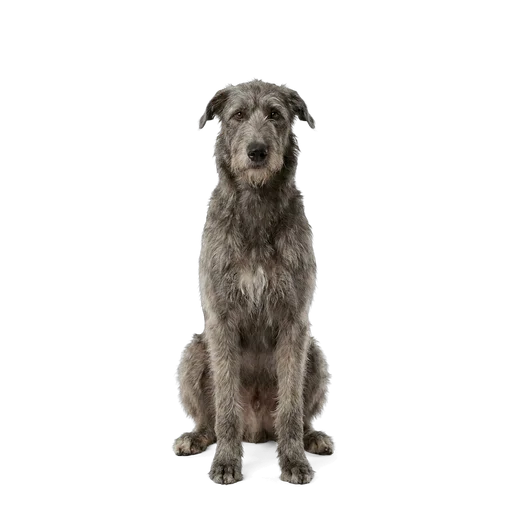
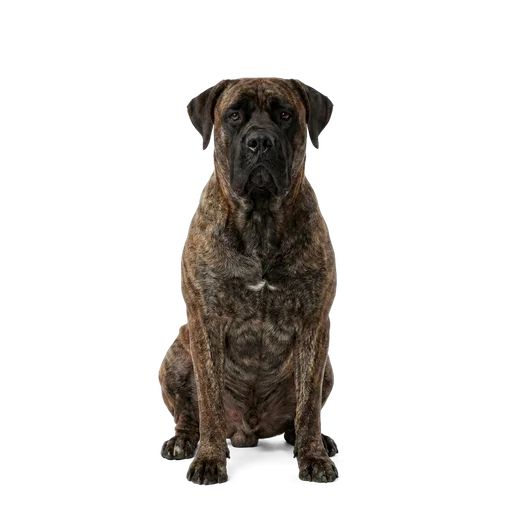
Deciding between similar breeds? Here is the Black Russian Terrier next to Irish Wolfhound and Boerboel.
| Black Russian Terrier | Irish Wolfhound | Boerboel | |
|---|---|---|---|
| Size | Large | Large | Large |
| Weight | 36-68 kg | 48-82 kg | 68-91 kg |
| Lifespan | 10-12 yrs | 6-10 yrs | 9-11 yrs |
| Activity | Moderate | Moderate | Moderate |
| Shedding | Low | Medium | Low |
| Good with kids | Yes | Yes | Yes |
| Apartment-friendly | No | No | No |
Frequently asked questions
What is JLPP and how do I make sure my puppy does not have it?
Juvenile laryngeal paralysis and polyneuropathy is a fatal inherited nerve disease of Black Russian Terrier puppies: affected pups develop breathing and swallowing problems and progressive weakness, and die young. There is no cure, but there is a reliable DNA test, and puppies can only be affected if both parents carry the gene. Buy exclusively from breeders who show you JLPP results for both parents, with at least one parent tested clear.
Is the Black Russian Terrier a good choice for a first-time dog owner?
No, and the breed community is refreshingly blunt about it. This is a powerful guardian bred to make its own decisions, and it will exploit inconsistent handling. It needs early socialization, structured ongoing training, and an owner who has already raised a strong-willed dog. In experienced hands it is calm, devoted, and reliable; in inexperienced hands it is 50-plus kilograms of unmanaged suspicion.
How much grooming does a BRT really need?
Plan on brushing down to the skin two to three times a week, professional trimming every 6 to 8 weeks, and daily beard care after meals. The payoff is minimal shedding: what other breeds leave on your sofa, this coat holds until you brush it out. Skipping the routine leads to matting, hidden hot spots, and a very expensive de-matting appointment.
Are Black Russian Terriers good with children?
With the children of their own family, generally yes: they were selected for stable nerves and tend to be patient, watchful guardians of their kids. Two caveats apply. Their size means a friendly bump can flatten a toddler, so supervise. And their protectiveness means rough play between your kids and visiting friends can be misread, so teach the dog early that children's wrestling is normal.
Can a BRT live with other dogs or cats?
Sometimes, with work. Many BRTs live peacefully with cats or dogs they were raised alongside. But same-sex dog aggression is a known issue in the breed, tolerance for rude strange dogs is low, and the guarding instinct extends to resources and family. Assume careful introductions, ongoing management, and no dog parks, and treat a genuinely dog-social BRT as a bonus rather than an expectation.
Related breeds
Health and care information is drawn from established veterinary sources and is general guidance, not veterinary advice. See our sources
Keep records for your Black Russian Terrier
Vaccinations, food and treat safety, allergy alerts and parasite reminders - all tracked for your Black Russian Terrier in the Pethls app.