


Origin: United Kingdom
Border Collie
Get reminders for your Border Collie's vaccines
Vaccination and parasite reminders, food-safety scans and health records — free to start in the Pethls app.


Good for
The Border Collie is widely rated the most intelligent dog breed, bred on the hill farms of the Scottish and English borders to move sheep all day on a whistle and a glance. It reads people fast, learns commands in a handful of repetitions, and needs a real job to stay sane. Give it hard exercise and daily mental puzzles and you get a focused, biddable partner. Skip that, and the same brain invents its own work: pacing, spinning, chewing, herding whatever moves. This is a dog for someone ready to commit hours a day, not a casual first pet.
Temperament & personality
Border Collies are intense. They watch you constantly, anticipate the next move, and want to be doing something useful. That intelligence is the whole appeal and also the whole challenge. A bored Border Collie is not a lazy dog lying around, it is a stressed dog looking for an outlet, and the outlets it picks are rarely ones you want.
The herding drive runs deep. Many will circle, crouch, and stalk, and some will nip at the heels of running children, cyclists, or other pets. This is instinct, not aggression, but it needs managing. Supervise play with young kids and redirect the behavior onto a ball or a training task rather than punishing it.
With their own family they are affectionate and deeply bonded, often attaching hardest to one person. They can be reserved with strangers and sensitive to noise and chaos. Early, steady socialization helps a lot. Handled right, a Border Collie is loyal, funny, and endlessly trainable. Handled wrong, it becomes anxious and reactive.
Vaccination schedule
Border Collie puppies follow the standard core vaccine plan. The DHPP combination covers distemper, hepatitis (adenovirus), parvovirus, and parainfluenza. Puppies usually start at 6 to 8 weeks, with boosters every 2 to 4 weeks until they are at least 16 weeks old, so most get three rounds. Parvo hits herding-line puppies just as hard as any breed, so do not cut the series short.
Rabies vaccination is region-dependent. In the UK and Ireland, which are rabies-free, it is not part of the routine puppy course and is generally only needed for pet travel. Where it is required, it is usually given once from 12 weeks of age, then boosted per local law. Keep the puppy away from unvaccinated dogs and public ground until roughly a week after the final puppy shot.
Non-core vaccines depend on lifestyle, and Border Collies tend to live active outdoor lives. Leptospirosis matters for dogs working near water, livestock, or wildlife. Kennel cough (Bordetella) makes sense for dogs at agility trials, training classes, or boarding. Your vet will match the plan to how you actually use the dog.
Best food & diet
A working-type Border Collie burns serious calories, but many pet Border Collies are less active than their breeding assumes, so match the food to the real workload. Pick a complete diet with a named animal protein first and enough fat to fuel exercise. Puppies do best on food formulated for growth until roughly 12 months.
Beef, chicken, and dairy are common triggers in this breed, so if you see itching, ear trouble, or loose stools, talk to your vet about a diet trial using a single novel protein or a hydrolyzed formula. Do not swap foods randomly, an eight-week controlled trial is the only way to read the result.
Split the daily ration into two meals and weigh it rather than eyeballing a scoop. Because these dogs are so food-motivated, training treats add up fast, so subtract them from the daily total. Keep a lean body condition, you should feel the ribs easily, since extra weight strains active joints and raises the risk of hip and cruciate problems.
Common health problems
Hip dysplasia is the main joint concern, so ask breeders for the parents' hip scores. Responsible breeders hip-score their stock before mating. Signs include stiffness after rest, a bunny-hop gait, and reluctance to jump. Keeping the dog lean and building muscle with steady exercise protects the joints.
The eyes need attention. Collie eye anomaly is an inherited condition present from birth and detectable in puppies at 6 to 8 weeks by an eye specialist. Progressive retinal atrophy causes gradual vision loss later in life. DNA tests exist for both, so buy from breeders who screen.
Epilepsy can appear as seizures starting between 1 and 5 years of age and is usually manageable with medication once diagnosed. One drug-handling issue worth checking is the MDR1 gene mutation, which changes how some dogs process certain drugs. It is uncommon in Border Collies, far more so than in true Collies and Australian Shepherds, but it is easy to test for. See the medications section below.
Allergies & skin
Border Collies can react to both food and environmental allergens. On the food side, beef, chicken, and dairy are the usual suspects, and reactions tend to show as itchy skin, recurrent ear infections, and paw licking rather than an upset stomach. A controlled diet trial with your vet sorts food allergy from the rest.
Environmental allergies (atopic dermatitis) are common, driven by grass pollen and dust mites. These often flare seasonally, worst in spring and summer for pollen-sensitive dogs. Wiping the coat and paws down after walks removes a surprising amount of pollen and cuts the itch.
The double coat can hide developing skin problems, so part the fur and check the skin during grooming, especially around the ears, armpits, and belly. Persistent scratching, hot spots, or a yeasty smell means a vet visit rather than another shop-bought shampoo. Left alone, these dogs will lick and chew a small irritation into a raw sore.
Flea, tick & worm prevention
Border Collies spend a lot of time in long grass, fields, and woodland, which is prime tick country. Keep them on a year-round flea and tick product and check the coat after every rural walk, paying attention to the ears, neck, and between the toes. Ticks carry Lyme disease and other infections, so remove any you find promptly with a proper tick tool.
Worming is routine. Puppies are wormed every 2 weeks until 12 weeks old, then monthly to 6 months, then usually every 3 months for adults. Dogs that hunt, scavenge, or eat livestock waste need more frequent treatment. A yearly lungworm discussion matters too, since it is spread by slugs and snails and can be fatal.
There is one catch worth knowing. Some flea, tick, and worm products contain drugs affected by the MDR1 gene mutation, and standard doses that are safe for other dogs can be dangerous for an affected dog. Never assume an over-the-counter parasite product is fine, run the plan past a vet who knows the dog's MDR1 status.
Medications & dosing
Nearly all dog medication is dosed by body weight, so an accurate weight matters, and a 12 kg Border Collie needs a very different dose from a 20 kg one. Never split tablets or reuse another dog's prescription without veterinary advice, and always finish a full course of antibiotics even if the dog looks better.
One thing worth knowing is the MDR1 (ABCB1) gene mutation. It is far more common in Rough and Smooth Collies and Australian Shepherds than in Border Collies, where it is uncommon, but it is still worth testing for because the consequences are serious. In an affected dog it stops the body from clearing certain drugs from the brain. Affected dogs can have severe, sometimes fatal reactions to normal doses. Drugs your vet may flag can include high-dose ivermectin and some other dewormers, several sedatives and anaesthetic agents, the anti-diarrheal loperamide, and some chemotherapy drugs.
Get your dog MDR1 tested, it is a simple cheek swab or blood test, and put the result on the file at every clinic you use. Tell any vet, including out-of-hours and emergency staff, that you own a Border Collie and share the status before sedation, worming, or surgery. Many drugs are fine at adjusted doses or have safe alternatives, so testing does not limit care, it simply guides it. When in doubt, ask before you give anything.
Grooming & coat care
Border Collies come in two coat types, rough (medium length with feathering on the legs and tail) and smooth (shorter and coarser). Both are double coats that shed steadily year-round and blow out heavily twice a year in spring and autumn. Brush two or three times a week normally, and daily during a molt, to keep loose undercoat under control.
Use a slicker brush and an undercoat rake to reach below the topcoat, and check for mats behind the ears, in the armpits, and around the britches where feathering tangles. Bath only when the dog is genuinely dirty, over-washing strips the natural oils that keep the coat weatherproof.
Round out grooming with the basics. Trim nails every few weeks, check and clean ears especially in feathered-ear dogs, and brush teeth several times a week. A grooming session is also your best chance to run hands over the body and catch lumps, ticks, or skin trouble early.
How the Border Collie compares
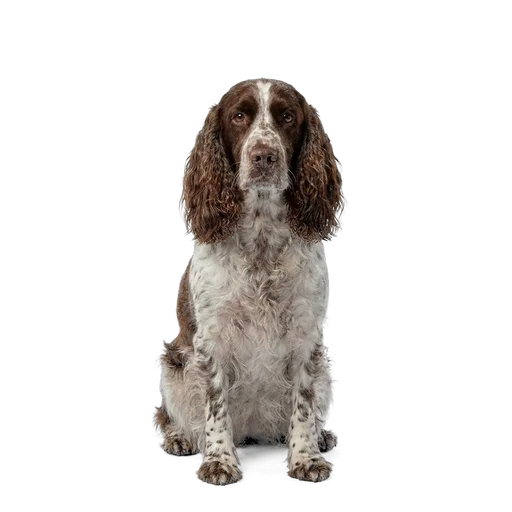
Deciding between similar breeds? Here is the Border Collie next to English Springer Spaniel and Harrier.
| Border Collie | English Springer Spaniel | Harrier | |
|---|---|---|---|
| Size | Medium | Medium | Medium |
| Weight | 12-20 kg | 18-25 kg | 20-27 kg |
| Lifespan | 12-15 yrs | 12-14 yrs | 12-15 yrs |
| Activity | Active | Active | Active |
| Shedding | High | Medium | Medium |
| Good with kids | Yes | Yes | Yes |
| Apartment-friendly | No | No | No |
Frequently asked questions
Is a Border Collie a good first dog?
For most first-time owners, no. The breed's intelligence and energy demand hours of exercise and training every day, and without it these dogs develop destructive and anxious habits fast. They suit experienced, active owners who want a canine sport, farm work, or a genuinely busy outdoor life.
How much exercise does a Border Collie really need?
Plan on at least two hours a day of real activity, and crucially it must include mental work, not just walking. Training, scent games, agility, or herding tire a Border Collie far more effectively than distance alone. A dog exercised in body but not in mind still gets restless.
What is the MDR1 gene and why does it matter?
MDR1 is an inherited mutation that stops the body clearing certain drugs from the brain, so normal doses of some dewormers, sedatives, and other medicines can cause severe or fatal reactions. It is much more common in Rough and Smooth Collies and Australian Shepherds than in Border Collies, where it is uncommon, but a simple test still reveals your dog's status, which any vet treating an affected dog needs to know before prescribing.
Are Border Collies good with children?
They can be, but the herding instinct means some will chase and nip at running children's heels. Supervise interactions, teach kids not to trigger the chase, and redirect the behavior onto toys and tasks. With guidance most Border Collies are gentle and playful family dogs.
Do Border Collies shed a lot?
Yes. Both coat types are double coats that shed year-round and molt heavily twice a year. Expect to brush two or three times a week, daily during seasonal molts, and to find hair on furniture and clothes. They are not a low-maintenance or hypoallergenic breed.
Related breeds


Health and care information is drawn from established veterinary sources and is general guidance, not veterinary advice. See our sources
Keep records for your Border Collie
Vaccinations, food and treat safety, allergy alerts and parasite reminders - all tracked for your Border Collie in the Pethls app.