

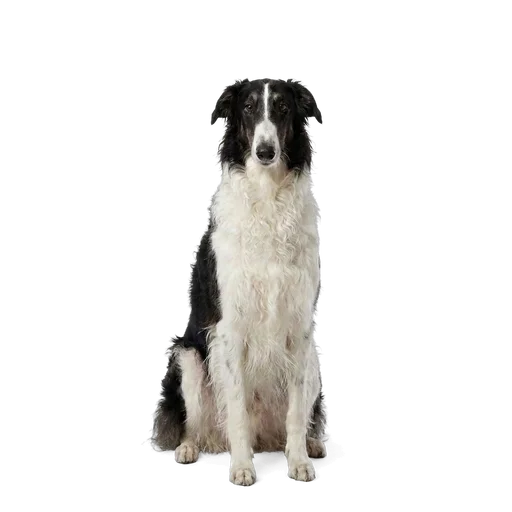
Origin: Russia
Borzoi
Get reminders for your Borzoi's vaccines
Vaccination and parasite reminders, food-safety scans and health records — free to start in the Pethls app.


Good for
The Borzoi, once known as the Russian wolfhound, was bred by Russian nobility to course wolves across open country, and the job left its mark: a tall, narrow, elegant dog built for silent speed. Despite that dramatic history, the Borzoi at home is one of the calmest, quietest large breeds you can live with, content to drape itself across a sofa for hours. They are gentle and aloof, affectionate with their people in a dignified rather than needy way, and notably sensitive to rough handling. The flip side of all that grace is an enormous prey drive that makes them unsafe around small animals off-leash. Owners fall for the breed's beauty and stay for its serene, almost regal presence indoors.
Temperament & personality
Borzoi are famously quiet and undemanding inside the house. They rarely bark without reason and often move through the home like tall, elegant ghosts, settling into whichever spot has the best sun. That calm can fool people into thinking they are low-energy, but a Borzoi still needs regular chances to stretch out and run. The temperament is gentle and reserved, warm with the family and cool with strangers, and most Borzoi form deep but understated bonds with their people.
Sensitivity is central to the breed. Borzoi do not cope well with harsh voices, rough corrections, or heavy-handed training. Push too hard and they retreat or simply refuse to engage. They respond to calm, patient, reward-based methods and to a handler who treats them as a partner rather than a subordinate. There is an independent streak here too, a legacy of a breed expected to think for itself at a full gallop, so expect a dog that sometimes considers your request before deciding.
The prey drive is huge and hardwired. Bred to chase and hold wolves, Borzoi will pursue cats, small dogs, rabbits, and other running animals with startling speed and focus. Off-leash in an open area, a Borzoi that spots something to chase is essentially gone until the chase ends. This is why they must be leashed anywhere unfenced and kept behind tall, secure fencing at home. Some Borzoi live peacefully with cats they were raised with, but you can never fully trust the instinct around small, fast-moving pets.
With children the breed is typically gentle, patient, and tolerant. Their size means small kids should be supervised so nobody gets knocked over, and because Borzoi dislike rough treatment, they suit calm, respectful children better than boisterous ones.
Vaccination schedule
Borzoi puppies get the same core vaccines every dog needs. The DHPP shot covers distemper, hepatitis (adenovirus), parvovirus, and parainfluenza, given in a series that starts around 6 to 8 weeks and repeats every 3 to 4 weeks until about 16 weeks old. Until that series is complete, keep your puppy away from unvaccinated dogs and places where lots of dogs gather, since parvovirus is especially dangerous to the young.
Rabies is the second core vaccine and is required by law almost everywhere. It is generally given once between 12 and 16 weeks, boosted a year later, and then repeated every 1 to 3 years according to the vaccine used and local rules.
Beyond the core, your vet may suggest non-core vaccines based on how your Borzoi lives. Dogs that compete in lure coursing, attend shows, board in kennels, or mix with many other dogs may benefit from protection against Bordetella (kennel cough), leptospirosis, or canine influenza. As with any sighthound, mention to the clinic that your dog runs very lean, and keep an eye on the injection site for the mild, short-lived soreness that sometimes follows a shot.
Best food & diet
A Borzoi should look lean and athletic, with a clear waist and a hint of the last ribs, never heavy or barrel-bodied. Because they are tall and deep-chested, owners sometimes misread the natural leanness as being underweight and overfeed, which is a mistake for a breed already at risk of joint strain and, more seriously, bloat. Feed a quality diet with a good animal-protein base and adjust the amount to hold that racy, muscular outline.
Feeding management matters more for Borzoi than for most breeds because of their bloat risk (more on that below). Split the daily ration into two or more smaller meals rather than one large one. Avoid heavy exercise for at least an hour before and after eating, and discourage frantic, gulping eating with a slow-feeder bowl if your dog bolts its food. Elevated feeders were once recommended for deep-chested breeds, but the research linking bowl height to bloat is conflicting, so a floor-level bowl is a reasonable default unless your vet advises otherwise for your dog.
Borzoi puppies grow into big dogs and should grow slowly and steadily. A large-breed puppy formula with controlled calcium and calorie levels supports healthy bone and joint development without pushing growth too fast. Feed puppies three or four small meals a day, tapering to two as they mature. Keep fresh water available at all times, but if your dog drinks a huge amount in one go right after exercise, spread it out, since rapid gulping of water and air is part of the bloat picture.
Common health problems
The condition that should be at the front of every Borzoi owner's mind is bloat, or gastric dilatation-volvulus (GDV). The breed's deep, narrow chest is a classic high-risk build. The stomach fills with gas and can twist on itself, cutting off blood supply, and without emergency surgery it is rapidly fatal. Warning signs include a swollen, tight belly, unproductive retching or trying to vomit with nothing coming up, drooling, restlessness, and pacing. This is a genuine emergency: get to a vet immediately. Because the risk is so high, many Borzoi owners discuss a preventive gastropexy, a surgery that tacks the stomach in place so it cannot twist, often done at the same time as spaying or neutering.
Osteosarcoma, an aggressive bone cancer, is more common in large and giant breeds like the Borzoi, where the risk rises with large, tall body size, and the breed's height is part of why it sits in a higher-risk group. It often shows first as lameness or a firm swelling on a leg. Any persistent, unexplained limp in an adult Borzoi deserves prompt veterinary assessment and X-rays.
Dilated cardiomyopathy (DCM) affects the breed too. The heart muscle weakens and enlarges, and early signs, reduced stamina, coughing, faster breathing, or fainting, can be easy to miss. Regular heart checks and, where indicated, an echocardiogram help catch it while treatment is most useful.
Progressive retinal atrophy (PRA) is an inherited eye disease that gradually destroys the retina, leading to night blindness and eventually full blindness. It is not painful and dogs adapt remarkably well, but knowing it can happen helps you plan. Like other sighthounds, Borzoi can also be more sensitive to anesthesia because of their low body fat; see Medications & dosing for how this affects sedation.
Allergies & skin
Borzoi generally have healthy skin, but the long, silky coat can hide problems, so regular hands-on grooming doubles as a skin check. Like many dogs, Borzoi can run into environmental allergies (atopy), where common triggers such as pollen, grass, dust mites, or mold may show up as itching, paw licking, reddened skin, or repeated ear trouble. Because the coat is long, a developing hot spot or patch of irritation can stay hidden until it worsens, which is why parting the coat to look at the skin now and then is worth doing.
Food sensitivities are less frequent than environmental ones and usually appear as itchiness or loose stools. If your vet suspects a food trigger, the reliable test is a proper elimination diet over 8 to 12 weeks with a novel or hydrolyzed protein, rather than switching randomly between commercial foods.
The long feathering on the legs, chest, and tail picks up burrs, grass seeds, and mud, and mats there can pinch and irritate the skin underneath. Check and comb those areas after outdoor runs. Being tall and lean, Borzoi can also develop pressure calluses on elbows and hocks from lying on hard surfaces, so a soft, supportive bed helps protect the skin over those bony points.
Flea, tick & worm prevention
Consistent, year-round parasite prevention keeps your Borzoi healthy and blocks the diseases parasites spread. Fleas cause itching and can set off flea-allergy dermatitis, and ticks pass on Lyme disease, anaplasmosis, and other infections, which matters for a dog that runs through tall grass and woodland edges. Prevention options include monthly chews, monthly spot-on liquids, and longer-lasting collars; your vet will help you choose based on your area's parasite pressure.
Worming targets intestinal parasites such as roundworms, hookworms, tapeworms, and whipworms. Puppies need several rounds of deworming in early life because they often inherit worms from the dam, then move to a routine adult schedule. Many owners prefer a single combination product that covers intestinal worms and heartworm together each month for simplicity.
Heartworm, carried by mosquitoes, is much safer and cheaper to prevent than to treat, so keep your Borzoi on year-round prevention as a monthly chewable or a periodic injection per your vet's recommendation. Dose every parasite product to your dog's accurate current weight, and because sighthounds can be sensitive to certain drugs, clear any new preventive with your vet before starting it.
Medications & dosing
For a Borzoi, medication should always be weight-based and directed by your vet. The breed's lean, low-fat body affects how it handles many drugs, so a dose that suits an average dog of the same weight may be too strong. Do not guess doses, do not share medication prescribed for another pet, and never give human pain relievers such as ibuprofen or paracetamol, which are poisonous to dogs.
Anesthesia is the critical topic. Like all sighthounds, Borzoi carry very little body fat and may be more sensitive to some anesthetic and sedative drugs, so standard protocols can risk over-sedation and a slower recovery. Tell every vet, before every procedure that involves sedation, that your dog is a sighthound. Clinics that know the breed will select safer drugs, use lower doses, and monitor recovery carefully. This is doubly relevant for Borzoi because a preventive gastropexy is worth discussing, and that surgery means anesthesia.
Two more practical notes. Borzoi feel the cold despite their long coat, because that coat is fine and they carry no fat padding, so they chill in harsh winter weather and appreciate a coat on cold walks and a warm indoor spot. And if your Borzoi is ever on long-term medication, for a heart condition, for example, stick precisely to the prescribed dose and timing, and never stop or adjust it without talking to your vet first.
Grooming & coat care
The Borzoi's long, silky coat looks high-maintenance but is more manageable than it appears. A thorough brush and comb two or three times a week keeps it from matting and removes loose hair, with extra attention to the softer, finer feathering on the legs, chest, tail, and behind the ears, where tangles form fastest. During the seasonal shed, usually once or twice a year, you will need to brush more often and can expect a good deal of hair around the house.
Shedding sits in the medium range: heavier than a smooth-coated sighthound, lighter than a heavy double-coated working breed. Regular brushing is the best tool for keeping the loose hair under control and the coat healthy. A grooming rake or slicker brush works well on the body, and a comb helps with the feathering.
Fill out the routine with the usual care. Trim the nails every few weeks so they do not click on the floor or throw off the dog's long-legged gait. Check the ears and clean them gently when needed. Brush the teeth regularly to prevent dental disease, which is easy to overlook in a narrow-muzzled breed. Bathe only occasionally, when the dog is genuinely dirty, since frequent bathing strips the natural oils that keep that silky coat in good condition.
How the Borzoi compares
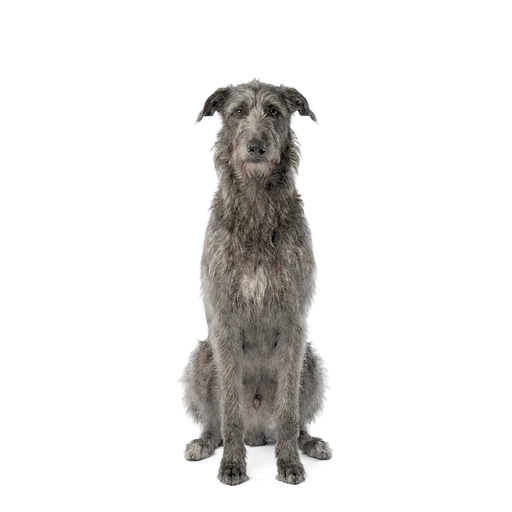
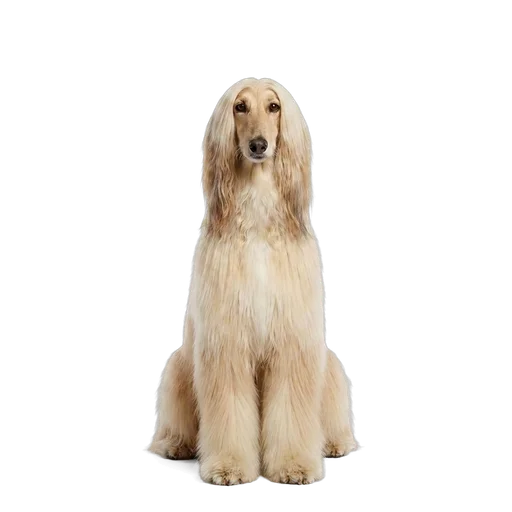
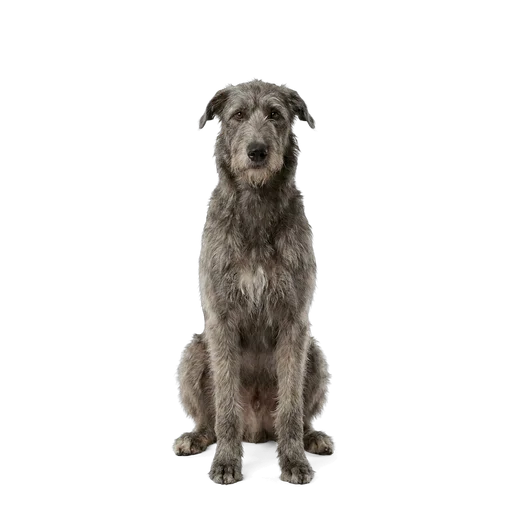
Deciding between similar breeds? Here is the Borzoi next to Scottish Deerhound and Afghan Hound.
| Borzoi | Scottish Deerhound | Afghan Hound | |
|---|---|---|---|
| Size | Large | Large | Large |
| Weight | 27-48 kg | 34-50 kg | 23-27 kg |
| Lifespan | 9-14 yrs | 8-11 yrs | 12-15 yrs |
| Activity | Moderate | Moderate | Moderate |
| Shedding | Medium | Medium | Low |
| Good with kids | Yes | Yes | Yes |
| Apartment-friendly | No | No | No |
Frequently asked questions
Are Borzoi calm enough for apartment living?
Borzoi are remarkably quiet and calm indoors, which tempts people toward apartments, but their size and need to run make a home with secure outdoor space a much better fit. If someone is committed to apartment life with a Borzoi, it can work only with daily access to a safely fenced area where the dog can gallop, since walks alone will not satisfy a sighthound.
Why is bloat such a big concern for Borzoi?
The Borzoi's deep, narrow chest is a classic high-risk shape for bloat (gastric dilatation-volvulus), where the stomach fills with gas and twists, which is fatal without emergency surgery. Owners reduce the risk by feeding smaller split meals, avoiding hard exercise around mealtimes, and discussing a preventive gastropexy with their vet. Learn the warning signs: a swollen belly, unproductive retching, drooling, and restlessness mean get to a vet at once.
Can Borzoi live safely with cats or small dogs?
It depends and it is never guaranteed. Borzoi have an enormous prey drive and may chase small, fast-moving animals. Some live peacefully with cats or small dogs they were raised alongside, but the instinct can surface unexpectedly, especially with running or outdoor animals. Careful introductions, supervision, and never trusting them off-leash around small pets are essential.
How much exercise does a Borzoi need?
Less than their racing build suggests, but the exercise must include real running. A couple of daily walks plus regular chances to sprint in a securely fenced space usually keeps a Borzoi happy. After a good run they are content to lounge for hours. Lure coursing is an ideal outlet that channels the breed's natural chasing instinct safely.
Do Borzoi need a lot of grooming?
Their long silky coat needs brushing two or three times a week to prevent mats, with extra attention to the feathering, and more frequent brushing during seasonal sheds. It is moderate work rather than heavy. Add routine nail trims, ear checks, and dental care, and bathe only when the dog is genuinely dirty to protect the coat's natural oils.
Related breeds
Health and care information is drawn from established veterinary sources and is general guidance, not veterinary advice. See our sources
Keep records for your Borzoi
Vaccinations, food and treat safety, allergy alerts and parasite reminders - all tracked for your Borzoi in the Pethls app.