

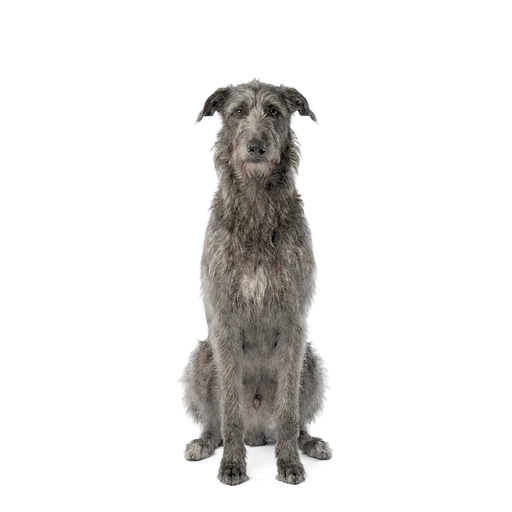
Origin: Scotland
Scottish Deerhound
Get reminders for your Scottish Deerhound's vaccines
Vaccination and parasite reminders, food-safety scans and health records — free to start in the Pethls app.


Good for
The Scottish Deerhound looks like something out of a medieval hunting scene, and for centuries that is roughly where he lived, coursing red deer across the Highlands for Scottish nobility. He is a giant sighthound built for the sprint, standing nearly as tall as an Irish Wolfhound but leaner through the body. Indoors he is famously mellow, a quiet, dignified dog who wants to lean against your leg and doze on the largest sofa he can find. Outdoors, given a safe space, that same dog turns into a blur of long legs and pure joy. He is gentle to a fault with people, which makes him a poor guard dog and a wonderful, if oversized, family companion.
Temperament & personality
Deerhounds are sweet-natured, sensitive dogs who bond hard with their families. They tend to be soft in personality, meaning harsh corrections shut them down fast, and they respond far better to patience and calm consistency. Most are polite and reserved with strangers rather than suspicious, and they rarely have much interest in barking. If you want a watchdog, look elsewhere; a Deerhound is more likely to greet an intruder with a slow tail wag.
The catch is the prey drive. This is a sighthound bred to spot movement at a distance and give chase at speeds approaching 40 miles per hour, and no amount of training reliably overrides that instinct in open ground. A squirrel, a cat, or a bolting rabbit can trigger an instant flat-out run, so off-leash freedom belongs only in fully fenced areas or securely enclosed fields. Recall is unreliable once the chase is on.
Because of that same drive, Deerhounds are often iffy with small pets and cats they do not grow up alongside, and even then supervision matters. With children they are typically gentle and tolerant, though their sheer size means a happy tail or a turning body can knock a toddler flat without any bad intent. They are not a good match for a first-time owner or a small apartment, but for someone with space, time, and a fenced yard, they are deeply rewarding.
Vaccination schedule
Deerhound puppies follow the standard core protocol. The DHPP combination vaccine, which covers distemper, hepatitis (adenovirus), parvovirus, and parainfluenza, starts at around 6 to 8 weeks and repeats every 3 to 4 weeks until the puppy is at least 16 weeks old. Rabies is given once, usually between 12 and 16 weeks depending on local law.
A first booster follows about a year later, then core vaccines typically move to a three-year cycle. Leptospirosis is now a core vaccine recommended for every dog, given as a two-dose puppy series and then an annual booster rather than on the three-year cycle used for DHPP; dogs with water, rural, or wildlife exposure face higher risk, which is part of why that yearly booster matters. Your vet may also add non-core vaccines such as Bordetella (kennel cough), Lyme, or canine influenza based on where you live and whether your dog visits kennels, shows, or group training.
One breed-specific point to flag before any procedure: Deerhounds carry very little body fat and are unusually sensitive to anesthesia and some sedatives. That sensitivity does not change the vaccine schedule itself, but it is a good reason to build a relationship with a vet who knows sighthounds before your dog ever needs surgery.
Best food & diet
A giant breed grows into a lot of dog, and how you feed the puppy matters as much as what you feed the adult. Deerhound puppies should grow slowly and steadily on a large or giant breed puppy formula with controlled calcium and calorie levels; pushing rapid growth stresses developing joints and bones. Many breeders and vets transition giant pups to a large breed adult food earlier than you would with a small dog.
Adults do well on a good quality diet appropriate to their age and activity. Because Deerhounds are lean by design, you should be able to feel ribs easily under the coat, and their tucked-up waist is normal rather than a sign of being underweight. Keeping them slim protects joints and reduces strain on a heart that this breed is already prone to trouble with.
This is one of the breeds most associated with bloat and gastric torsion (GDV), a deep-chested-dog emergency. Feed two or three smaller meals a day rather than one large one, use a slow-feeder bowl if your dog gulps, and avoid heavy exercise for at least an hour on either side of a meal. Discuss the pros and cons of a preventive stomach-tacking surgery (gastropexy) with your vet, since many giant breed owners choose to have it done, often at the same time as spay or neuter.
Common health problems
Dilated cardiomyopathy (DCM) is the health concern that shadows the breed. In DCM the heart muscle weakens and enlarges, pumping less effectively, and it can lead to heart failure or sudden arrhythmias. Signs include tiring easily, coughing, a swollen belly, or fainting, though sometimes the first sign is sudden collapse. Annual cardiac checks, and heart screening before breeding, are strongly recommended.
Osteosarcoma, an aggressive bone cancer, is sadly common in large and giant sighthounds. It usually shows up as lameness or a firm swelling on a leg, often near the shoulder, wrist, or knee, and it needs prompt veterinary attention. Any persistent limp in a Deerhound deserves an x-ray rather than a wait-and-see approach.
Factor VII deficiency is an inherited bleeding disorder found in the breed. Most dogs with the mutation are only mildly affected clinically and may never show a problem, but they can bleed more than expected during surgery or after injury. A simple DNA test identifies carriers and affected dogs, and knowing your dog's status ahead of any operation lets your vet plan accordingly.
Add bloat/GDV to the list, covered above, plus the general anesthesia sensitivity that comes with low body fat. Taken together, this list makes a strong case for choosing a breeder who health-tests, and for budgeting for the shorter lifespan and heavier medical care that giants typically bring.
Allergies & skin
The Deerhound's harsh, wiry coat is fairly low-maintenance from a skin-health point of view, and the breed is not especially prone to the chronic skin allergies that plague some dogs. Most skin issues you will see are mechanical rather than allergic: pressure calluses on elbows and hocks from lying on hard floors, and the occasional graze from tearing around rough ground.
Giant dogs carrying their weight on bony joints benefit from soft, padded bedding, which prevents the thickened, hairless callus patches that can crack and get infected. Check those pressure points, along with the feet and between the toes, when you groom.
If your Deerhound does develop itchy skin, recurrent ear infections, or paw licking, treat it as you would in any dog and involve your vet, since food sensitivities and environmental allergies (atopy) do turn up across all breeds. These dogs feel the cold because they carry so little body fat, so a coat or blanket in cold weather helps, and dry, chapped skin in winter is worth guarding against.
Flea, tick & worm prevention
Deerhounds spend a lot of time in long grass and open country, which is prime territory for ticks, so a reliable flea and tick preventive matters year-round in most regions. Options include monthly chewable tablets, spot-on treatments, and long-acting collars; your vet can steer you toward what covers the tick species and tick-borne diseases common in your area.
Intestinal worming should follow a routine schedule, usually every three months for an adult, with more frequent treatment for puppies. Heartworm prevention is essential wherever the parasite is present, and it is typically given as a monthly chewable, often bundled with intestinal worm coverage in a single product.
One giant-breed practicality: many parasite preventives are dosed by weight, and a full-grown Deerhound sits at the very top of the weight bands. Always dose to your dog's actual current weight and re-check the band as a puppy grows, since underdosing a big dog leaves gaps in protection. After walks in tick country, run your hands through the coat and check ears, armpits, and between the toes.
Medications & dosing
Every medication for a Deerhound should be dosed by current body weight and directed by your vet, and with this breed that guidance carries extra weight. The low body fat that makes them elegant also changes how they process certain drugs, so anesthetics, sedatives, and some pain medications need careful, sighthound-aware dosing. Tell any vet who has not treated the breed before that you have a sighthound.
Never share medications between dogs or reach for human painkillers. Ibuprofen, paracetamol/acetaminophen, and similar over-the-counter drugs can be toxic to dogs, and the safe dog-specific alternatives still need a prescription and the right dose for your dog's size.
Because of the factor VII bleeding risk and the anesthesia sensitivity, always disclose your dog's full history, DNA test results, and any current medications before surgery or dental work. Keep a simple written record of what your dog takes and when, so it is easy to share at the clinic.
Grooming & coat care
The Deerhound wears a harsh, wiry, weather-resistant coat, about 3 inches long over the body and softer on the belly, chest, and head. It is a comparatively easy coat to live with. A thorough brush once or twice a week keeps it free of tangles and removes dead hair, and shedding is moderate rather than heavy.
Some owners have the coat lightly hand-stripped or tidied a couple of times a year to keep that crisp, natural texture, but most pet Deerhounds get by with regular brushing alone and only occasional baths when they are genuinely dirty. Over-bathing softens the coat and strips its natural oils.
Round out the routine with the usual basics: trim or grind nails every few weeks, since these are big dogs and long nails throw off their gait, check and clean ears, and brush teeth regularly. Pay attention to the beard and the hair around the mouth, which can trap food and moisture. Given how much time these dogs spend lying down, keep an eye on elbows and hocks for calluses.
How the Scottish Deerhound compares
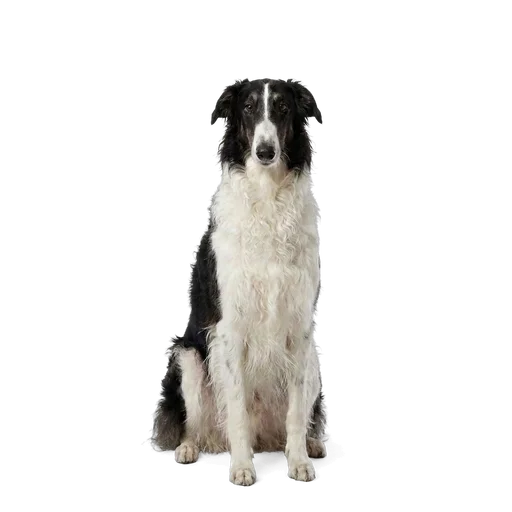
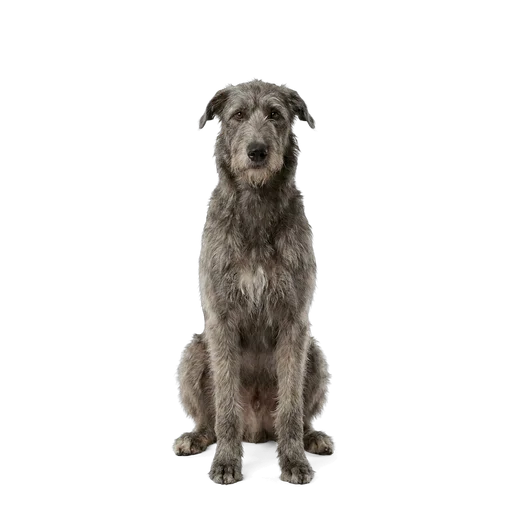
Deciding between similar breeds? Here is the Scottish Deerhound next to Borzoi and Irish Wolfhound.
| Scottish Deerhound | Borzoi | Irish Wolfhound | |
|---|---|---|---|
| Size | Large | Large | Large |
| Weight | 34-50 kg | 27-48 kg | 48-82 kg |
| Lifespan | 8-11 yrs | 9-14 yrs | 6-10 yrs |
| Activity | Moderate | Moderate | Moderate |
| Shedding | Medium | Medium | Medium |
| Good with kids | Yes | Yes | Yes |
| Apartment-friendly | No | No | No |
Frequently asked questions
Are Scottish Deerhounds good family dogs?
Yes, for the right family. They are gentle, affectionate, and famously tolerant with children, and indoors they are calm and quiet. The caveats are size and prey drive: their bulk can bowl over a small child by accident, they need a securely fenced space to run, and they are usually unreliable around cats and small pets. A home with room, a fenced yard, and older or supervised children suits them best.
How much exercise does a Scottish Deerhound need?
Less than their racing build suggests, but the exercise has to be the right kind. Adults do well with a couple of good daily walks plus regular chances to sprint flat-out in a safe, enclosed area. They are sofa dogs at heart who need short bursts of speed rather than hours of endurance work. Puppies and young dogs should have their exercise limited to protect growing joints.
Do Scottish Deerhounds shed a lot?
They shed a moderate amount, less than many double-coated breeds but more than truly low-shedding dogs. Their harsh, wiry coat needs brushing once or twice a week to remove dead hair and prevent tangles. They are not hypoallergenic, so they are not a good choice for allergy sufferers.
What is the lifespan of a Scottish Deerhound?
Around 8 to 11 years, which is typical for a giant breed. The main health concerns that affect longevity are dilated cardiomyopathy (a heart muscle disease), osteosarcoma (bone cancer), and bloat. Buying from a breeder who does cardiac screening and DNA testing, keeping your dog lean, and feeding to reduce bloat risk all help you make the most of those years.
Are Scottish Deerhounds easy to train?
They are intelligent and eager to please, but they are also soft and sensitive, so they need gentle, positive, consistent training rather than firm corrections. The bigger challenge is not obedience but instinct: their sighthound prey drive means recall around moving animals is genuinely hard to rely on. Keep them leashed or in fenced areas, and manage the environment rather than expecting perfect off-leash control.
Related breeds
Health and care information is drawn from established veterinary sources and is general guidance, not veterinary advice. See our sources
Keep records for your Scottish Deerhound
Vaccinations, food and treat safety, allergy alerts and parasite reminders - all tracked for your Scottish Deerhound in the Pethls app.