

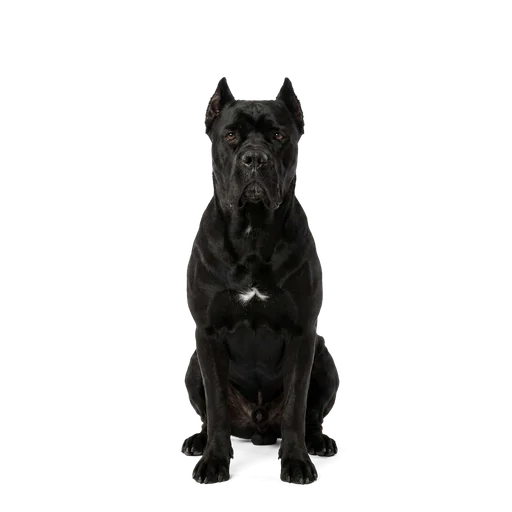
Origin: Italy
Cane Corso
Get reminders for your Cane Corso's vaccines
Vaccination and parasite reminders, food-safety scans and health records — free to start in the Pethls app.


Good for
The Cane Corso is an Italian mastiff-type guardian built for the job of protecting property and family. Behind the blocky head and heavy musculature sits a sharp, thinking dog that reads its people constantly and forms an intense bond with its household. This is not a breed for a first-time owner. A Corso needs early, heavy socialization and steady, fair training from puppyhood, because a 45 kg dog that decides for itself who is a threat is a serious liability. Give it structure and a clear job, and you get one of the most devoted and level-headed guardians in the working group.
Temperament & personality
Corsos are confident, watchful, and deeply loyal to their own people. They tend to be calm and quiet indoors, then switch on fast when something feels off. That responsiveness is exactly what the breed was shaped for, but it means the dog looks to you to define what is normal. Owners who set clear rules early get a stable, discerning adult. Owners who leave the dog to make its own calls get a reactive one.
Socialization is not optional with this breed. From 8 weeks onward the puppy needs to meet a wide range of people, dogs, surfaces, and situations under calm, controlled conditions. A well-raised Corso can be affectionate and gentle with children it grows up with, but the sheer size and guarding drive mean supervision around kids, strangers, and other animals is a permanent responsibility, not a puppy-stage phase.
They are highly trainable and enjoy working with a person they respect. Harsh, punishment-heavy methods backfire and can create a defensive dog. Reward-based training with consistent boundaries suits their intelligence. Expect a dog that will test soft handling, and plan for a handler who can stay calm and consistent rather than reactive.
Vaccination schedule
Corso puppies follow the standard core vaccine series. The DHPP combination vaccine (distemper, hepatitis/adenovirus, parvovirus, parainfluenza) is given as a series starting around 6 to 8 weeks, then repeated every 3 to 4 weeks until the puppy is at least 16 weeks old. Parvovirus hits large-breed puppies hard, so do not cut this series short or let the puppy meet unvaccinated dogs before it is finished.
Rabies is given once at 12 to 16 weeks depending on local law, then boostered at one year and afterward every 1 to 3 years according to the vaccine used and regional requirements. Keep the paperwork; giant breeds travel and board, and proof of rabies is usually mandatory.
Leptospirosis is now recommended as a core vaccine for every dog: it needs a 2-dose puppy series followed by an annual booster, unlike the DHPP core boosters that run every 3 years. Non-core vaccines such as Bordetella and canine influenza depend on where you live and how your dog spends its time. Wildlife, standing water, and rural walks raise the leptospirosis risk, which is part of why the annual lepto booster matters, and a Corso around lots of dog traffic is a reasonable candidate for Bordetella too. Your vet will tailor the plan to your region and lifestyle.
Best food & diet
Feed a Cane Corso puppy a large-breed puppy formula, not a standard or adult food. Large-breed puppy diets control calcium and calories to slow the growth rate, which protects developing hips, elbows, and long bones. Pushing a giant-breed puppy to grow fast is one of the most avoidable causes of joint disease. Follow the feeding chart for the dog's projected adult weight, not its current size.
Adults do well on a high-quality diet with real animal protein as the base and enough fat to fuel a working body without adding fat to the frame. Keep the dog lean; you should feel ribs easily under a light cover. Excess weight loads the joints and raises the risk of the orthopedic problems the breed is already prone to.
Because the Corso is a deep-chested breed at real risk of bloat, feeding management matters as much as the food itself. Split the daily ration into two meals rather than one large one, use a slow-feeder bowl if the dog gulps, and avoid heavy exercise right before and after eating. Beef, chicken, and dairy are common triggers for this breed, so if you see itching or digestive upset, an elimination diet trial with your vet is the way to pin it down.
Common health problems
Hip and elbow dysplasia are the leading orthopedic concerns. These are malformations of the joint that lead to pain and arthritis, and they have a strong genetic component. Buy only from breeders who screen breeding stock and share the results. Keeping the dog lean and avoiding forced high-impact exercise while the growth plates are open lowers the risk of clinical problems.
Gastric dilatation-volvulus, or bloat, is a life-threatening emergency in this deep-chested breed. The stomach fills with gas and can twist, cutting off blood supply. Signs include a swelling belly, unproductive retching, drooling, and restlessness. This is a get-to-the-emergency-vet-now situation. Many owners of at-risk breeds elect a prophylactic gastropexy, often done at the same time as spay or neuter, which tacks the stomach in place to prevent the twist.
Idiopathic epilepsy shows up in some lines, usually as seizures beginning between roughly 1 and 5 years of age with no other identifiable cause. Most dogs are well controlled on daily medication. A few eye and skin problems also turn up in the breed. Cherry eye, a prolapse of the third-eyelid tear gland, turns up in some Corsos, as do eyelid conformation faults tied to the breed's loose facial skin: ectropion, an outward-rolling or droopy lower lid, and entropion, an inward-rolling lid, which can occur together as the combined 'diamond eye' seen in heavy-jowled mastiff types. These usually need a vet to correct. On the skin, watch for demodectic mange, a hair-loss condition linked to the immune system that typically appears in young dogs. Get any of these looked at once you spot them.
Allergies & skin
Food-related reactions in Corsos most often trace back to common protein and dairy ingredients. Beef, chicken, and dairy top the list for this breed. A true food allergy usually shows as year-round itching, recurrent ear infections, or licking at the paws and belly rather than as an upset stomach alone. The reliable way to diagnose it is an 8 to 12 week elimination diet using a novel or hydrolyzed protein, run under veterinary supervision.
Environmental allergies are just as common. Dust mites and grass pollen are frequent triggers, and pollen-driven itch tends to be seasonal while dust-mite reactions run year-round. Look for face-rubbing, chewed feet, red belly skin, and repeat ear flare-ups. Wiping the coat down after walks and washing bedding on a hot cycle cuts the allergen load the dog carries.
The Corso's short coat makes skin easy to inspect, so check regularly for hot spots, thinning patches, and the mite-driven hair loss of demodectic mange. Any patch that is spreading, weeping, or foul-smelling needs a vet visit rather than a wait-and-see approach. Skin infections can take hold quickly in any damp folds around the face and neck, so keep those areas clean and dry.
Flea, tick & worm prevention
Keep a Cane Corso on year-round flea and tick prevention. A dog this large that patrols a yard picks up parasites easily, and ticks in particular carry diseases like Lyme and ehrlichiosis. Products come as monthly chews, topical spot-ons, and long-acting collars; your vet will match the choice to your climate and tick pressure. Dose is set by body weight, so a giant-breed Corso needs the largest weight-band product.
Intestinal worms (roundworm, hookworm, whipworm, tapeworm) and heartworm need their own coverage. Puppies are dewormed on a schedule starting at 2 to 3 weeks, and adults stay on routine deworming or a combination preventive. Heartworm is spread by mosquitoes and is far cheaper to prevent than to treat, so monthly heartworm prevention should run through mosquito season or year-round depending on your region.
Many modern products bundle heartworm, intestinal worm, and flea or tick coverage into one monthly dose, which simplifies a giant dog's routine. Confirm the exact combination with your vet, because no single product covers everything and the right mix depends on where you live.
Medications & dosing
Almost every canine medication is dosed by body weight, and with a 40 to 50 kg Corso that means you are usually at the top of the dosing charts. Never split or estimate doses from a smaller dog's prescription, and never give human medications without veterinary direction. Common human pain relievers like ibuprofen and paracetamol are toxic to dogs.
For pain and the arthritis that often follows dysplasia, vets reach for dog-specific NSAIDs and, increasingly, joint-support options and monoclonal antibody injections for chronic pain. These require baseline and periodic bloodwork because long-term NSAID use can affect the kidneys and liver, and a big dog on a lifelong anti-inflammatory needs monitoring.
If your Corso develops epilepsy, anti-seizure medication is dosed to the individual and adjusted using blood-level testing over time. Give it exactly on schedule and never stop abruptly. Weigh the dog accurately before any weight-based medication; guessing at a giant breed's weight can put the dose meaningfully off.
Grooming & coat care
The Corso's short, stiff double coat is low-maintenance. A weekly once-over with a rubber curry brush or grooming mitt lifts dead hair and keeps shedding manageable. The breed sheds a moderate amount year-round with heavier drops in spring and fall, when a few extra brushing sessions a week keep loose hair down. Baths are needed only every couple of months or when the dog is genuinely dirty.
The face needs specific attention. Corsos can carry loose skin and some drool, so wipe any skin folds and the lip area to keep them dry and clean, which heads off the yeast and bacterial infections that thrive in damp creases. Check and clean the ears regularly, since floppy or cropped ears both trap moisture, and watch for the redness or odor that signals an infection.
Round out the routine with nails and teeth. A dog this heavy needs nails kept short so they do not alter its gait or load the joints, so trim every few weeks. Brush the teeth several times a week with dog toothpaste. Handling the paws, ears, and mouth from puppyhood makes all of this far easier once the dog is at full adult strength.
How the Cane Corso compares
Deciding between similar breeds? Here is the Cane Corso next to Boerboel and Spinone Italiano.
| Cane Corso | Boerboel | Spinone Italiano | |
|---|---|---|---|
| Size | Large | Large | Large |
| Weight | 40-50 kg | 68-91 kg | 29-39 kg |
| Lifespan | 9-12 yrs | 9-11 yrs | 10-12 yrs |
| Activity | Moderate | Moderate | Moderate |
| Shedding | Medium | Low | Medium |
| Good with kids | Yes | Yes | Yes |
| Apartment-friendly | No | No | No |
Frequently asked questions
Is a Cane Corso a good breed for first-time dog owners?
Not really. The combination of size, strength, intelligence, and a real guarding drive means this breed needs an owner who can provide early heavy socialization and consistent, fair training. A first-time owner can succeed with serious commitment and professional help, but for most people a Corso is best as a second or third dog after gaining experience with training and handling.
How much exercise does a Cane Corso need?
This is a moderate-energy breed rather than a high-drive one. Plan on a solid hour or more of daily activity split into walks, structured play, and mental work like training or scent games. Avoid forced running and repetitive jumping while the puppy is still growing to protect the joints. A bored, under-exercised Corso will find its own outlets, usually destructive ones.
Are Cane Corsos good with children and other pets?
A Corso raised with children can be gentle and protective of them, but the size and guarding instinct mean supervision is always required, especially with young kids. Other pets are harder. Many Corsos do not tolerate strange dogs well, and same-sex dog aggression is common. Early socialization helps, but this is not a breed to assume will get along with everyone.
What is the biggest health risk in the breed?
Bloat (gastric dilatation-volvulus) is the most immediately dangerous, because it kills quickly without emergency surgery. Feed two smaller meals a day, avoid hard exercise around mealtimes, and ask your vet about a preventive gastropexy. Hip and elbow dysplasia are the most common long-term problems, which is why buying from a breeder who screens their dogs matters so much.
How long do Cane Corsos live?
Typically 9 to 12 years, which is normal for a giant breed. Keeping the dog lean throughout its life is the single biggest thing you can do to protect its joints and heart and reach the upper end of that range. Regular vet checks, good early nutrition with large-breed puppy food, and staying on top of orthopedic and cardiac screening all help.
Related breeds



Health and care information is drawn from established veterinary sources and is general guidance, not veterinary advice. See our sources
Keep records for your Cane Corso
Vaccinations, food and treat safety, allergy alerts and parasite reminders - all tracked for your Cane Corso in the Pethls app.