

Origin: Italy
Spinone Italiano
Get reminders for your Spinone Italiano's vaccines
Vaccination and parasite reminders, food-safety scans and health records — free to start in the Pethls app.


Good for
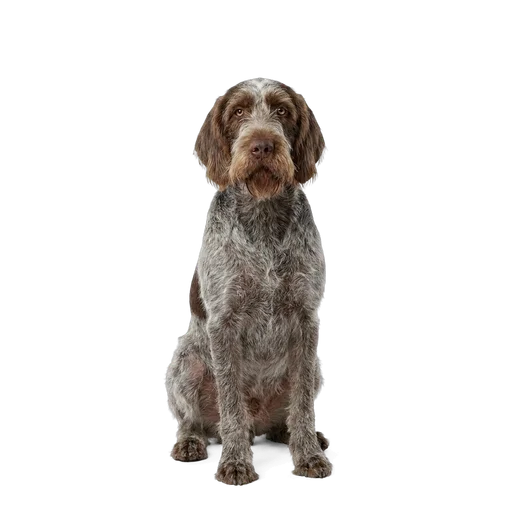
The Spinone Italiano is Italy's wire-coated gun dog, a large, shaggy pointer of 29 to 39 kg with kind ochre eyes, expressive eyebrows and a face people describe as soulful before they describe anything else. In the field it hunts at a deliberate trot, methodical where other pointers are flashy; at home it is patient, deeply affectionate and remarkably easygoing, one of the gentlest large breeds with children. The trade-offs are honest ones: some drool, a beard that transports water from the bowl to your lap, and a wiry coat that needs hand-stripping a few times a year. Expect 10 to 12 years from a breed whose worst enemy is a rare inherited puppy disease that a simple DNA test on the parents can rule out entirely.
Temperament & personality
Ask Spinone people to describe the breed and the same words keep surfacing: gentle, patient, docile, devoted. This is a gun dog built for the marshes and thick cover of northern Italy, working close to the hunter at a distinctive relaxed trot rather than ranging at a gallop, and that steadiness runs all the way through its character. At home a Spinone is calm to the point of comedy, happy to drape itself across a sofa or a child's lap for hours, then genuinely enthusiastic the moment boots come out.
With children the breed is exceptional. Spinoni tolerate toddler chaos with remarkable patience, and their sturdiness means they are not knocked over by enthusiastic hugs; supervise as with any large dog, but child-friendliness is a defining breed trait rather than a hopeful claim. They are sociable with other dogs, generally fine with cats they are raised with, and soft-tempered with strangers after a moment's polite assessment. Guarding is limited to a deep announcement bark.
Training a Spinone works through the stomach and the relationship. The breed is intelligent and willing but sensitive; harsh handling shuts it down completely, while cheerful, food-driven sessions get eager cooperation with an occasional streak of Italian stubbornness when the reward does not seem worth the effort. Exercise needs are real but reasonable: an hour or so daily of walking, sniffing and off-lead time in a safe area keeps an adult content. This is also a breed that loves its people to a fault and does poorly left alone for long workdays. Budget for towels; the drool is modest by mastiff standards but the beard soaks up water at every drink and shares it generously.
Vaccination schedule
A Spinone puppy follows the standard core protocol. The DHPP combination, protecting against distemper, adenovirus (hepatitis), parainfluenza and parvovirus, starts at six to eight weeks and is repeated every three to four weeks until at least 16 weeks of age. That last puppy dose is the one that seals protection, because maternal antibodies can interfere with the earlier shots. Rabies is given once between 12 and 16 weeks according to local law.
At around one year the dog receives a DHPP and rabies booster, after which DHPP usually moves to a three-year interval and rabies to a one-year or three-year cycle depending on vaccine and jurisdiction. For a hunting breed bred to work wet ground, leptospirosis vaccination is more than a formality; the bacteria spread through standing water and wildlife urine, exactly the environments a Spinone was designed to wade through. Discuss Lyme vaccination in tick-endemic areas and Bordetella if the dog boards or trains in groups.
Because a Spinone often splits life between sofa and field, its risk profile can change season to season. Keep the vaccine record current in a health log and review non-core choices with your vet annually rather than assuming last year's plan still fits.
Best food & diet
Feed the Spinone as the large, slow-maturing breed it is. Puppies belong on a large-breed growth formula with controlled calcium and calories, because a dog heading for 29 to 39 kg that grows too fast loads joints already carrying genetic risk for hip and elbow dysplasia. Spinoni mature slowly, often not fully until two and a half or three years, so resist the urge to switch to adult food early without your vet's input, and keep puppies lean with ribs easy to feel.
Adults do well on a quality large-breed food fed in two measured meals a day. The breed's easygoing metabolism matches its easygoing temperament, and a Spinone that hunts on autumn weekends but naps through winter weeks needs its portions adjusted with the calendar, not set once and forgotten. Obesity is the quiet threat: extra kilos on dysplastic hips and elbows bring arthritis forward by years. You should feel ribs under light pressure and see a waist behind the ribcage.
Like many deep-chested large breeds, the Spinone can be affected by bloat, so it is worth raising with your vet and applying the standard precautions: no single giant daily meal, no hard exercise right after eating, and a slow-feeder if the dog inhales food. A skin-and-coat note as well: the harsh wire coat and the skin under it benefit from a diet with decent omega-3 levels, and dogs with recurrent ear trouble sometimes improve when an underlying food sensitivity is identified through a proper elimination diet run with the vet, not a shelf-label grain swap.
Common health problems
Joint disease leads the list. Both hip and elbow dysplasia occur in the breed, so buy only from parents with formal hip and elbow scores, keep the dog lean through the long growth phase, and avoid forced repetitive exercise like jogging on pavement before skeletal maturity. Signs range from a bunny-hopping rear gait and stiffness after rest (hips) to a subtle front-leg lameness that worsens with exercise (elbows). Managed early with weight control, controlled exercise and vet-directed pain relief, most affected dogs live comfortable lives.
Cerebellar ataxia is the condition every Spinone buyer must know about, less because it is common and more because it is completely avoidable. It is an inherited, invariably fatal neurological disease of puppies: affected pups develop a wobbly, uncoordinated gait around four months of age and decline rapidly, rarely living past a year. It is recessive, which means both parents must carry the gene, and a DNA test identifies carriers. A responsible breeder shows you test results for both parents, or a clear-by-parentage certificate, before you hand over a deposit. Never buy a Spinone puppy without seeing that paperwork.
Otitis externa, plain ear infection, is the breed's everyday nuisance. Heavy drop ears covered in hair sit over a canal that stays warm and damp, especially in a dog that swims and works wet cover. Watch for head shaking, ear scratching, odor or brown discharge, and treat early, because chronic untreated otitis thickens the canal and becomes progressively harder to cure. Routine ear checks weekly and drying the ears after swimming prevent most episodes. Overall the breed is sound for its size, with a typical lifespan of 10 to 12 years.
Allergies & skin
The Spinone is not hypoallergenic. The wiry single-layer coat sheds lightly and drops less hair than a Labrador's, which allergy-prone visitors sometimes misread as safety, but dander and saliva carry the allergens and this is a breed that drools and leans on people. Anyone with dog allergies should spend unhurried time around adult Spinoni before committing.
Skin under a harsh wire coat is generally resilient, and the breed does not rank among the itchy dogs of the veterinary waiting room. When allergic disease does appear it follows the usual canine pattern: flea allergy first on the list, then environmental allergy to pollens, molds and dust mites showing as paw licking, face rubbing and recurrent ear or skin infections, then food allergy as the least common cause. In a Spinone, recurring ear infections are often the loudest allergy signal, since inflamed ears are where the breed's conformation and an allergic tendency meet.
The coat and lifestyle create a few specific care points. A dog that pushes through brambles collects seeds, burrs and small wounds that the dense coat hides, so run your hands over the whole dog after field work, checking armpits, groin, beard and between the toes. Grass awns are a genuine hazard for working Spinoni, migrating into ears, paws and skin. And keep the beard clean; a beard that stays wet with drool and water may develop yeasty dermatitis at the chin, which a quick towel-dry after meals prevents.
Flea, tick & worm prevention
A gun dog that works marsh edges and thick cover meets ticks constantly in season, and the dense wire coat gives them cover on the way to skin. Year-round prevention with a vet-recommended product, an oral isoxazoline chew or a proven spot-on, is the baseline for the breed, with orals a practical choice for dogs that swim, since repeated water exposure can shorten the working life of some topical products.
Hands-on checks still matter. After hunting or hiking, work your fingers through the coat at the ears, neck, armpits, groin and between the toes, feeling for the small bumps a visual check misses in shaggy hair. Fleas announce themselves late in a coat like this, so watch for flea dirt during grooming rather than waiting for scratching.
Worming follows the standard structure: puppies every two weeks from two weeks of age to 12 weeks, then monthly to six months, then a lifestyle-based adult plan. A Spinone with field access needs tapeworm coverage, since dogs that catch or mouth game and pick up fleas are the classic tapeworm patients, plus routine roundworm and hookworm treatment and monthly heartworm prevention in any heartworm region. Lungworm, spread by slugs and snails, is worth raising with your vet for a dog that noses through wet undergrowth in affected areas. Annual fecal exams verify the plan is working, and every product is dosed to actual weight somewhere in that 29 to 39 kg span, so weigh rather than estimate.
Medications & dosing
Medication for a Spinone, like any dog, is dosed strictly by body weight, and the breed's 29 to 39 kg range spans real dosing differences. A 10 kg spread can move a dog across the weight bands of flea, tick and wormer products and changes the milligram dose of most prescriptions by a third. Weigh the dog at every vet visit, keep the current figure in a health log, and confirm the weight band whenever you buy preventives.
Human painkillers are off the table. Ibuprofen, naproxen and paracetamol are all toxic to dogs, and a big shaggy dog's size tempts owners into thinking a human tablet is safe; it is not. Arthritis from hip or elbow dysplasia, the likeliest reason an older Spinone needs long-term medication, is managed with veterinary NSAIDs such as carprofen or meloxicam at precise mg-per-kg doses, with periodic blood work to check liver and kidney function, sometimes alongside omega-3 supplements and other vet-directed joint support.
Practical dosing notes for the breed: ear medications for otitis externa only work if the canal is clean and the full course is finished, so complete the bottle even after symptoms fade, and have the ear rechecked before stopping if the vet asked for it. Pills disappear conveniently into a Spinone's food bowl given the breed's appetite, but check the bowl afterwards; more than one Spinone has eaten around a tablet with surgical precision. For sedation or anesthesia, the vet will dose to lean body weight, one more reason an accurate, current weight matters.
Grooming & coat care
The Spinone wears a single-layer coat of harsh, dense, wiry hair about four to six centimeters long, with longer furnishings forming the trademark eyebrows, mustache and beard. It is a protective field coat, designed to shrug off thorns and cold water, and it asks for moderate rather than heavy upkeep: a thorough once-a-week session with a slicker or a pin brush and a comb through the furnishings keeps it tidy and catches debris from walks.
Wire coats work differently from shedding double coats. Dead hairs loosen but often stay anchored until removed, so a few times a year the coat benefits from hand-stripping, plucking the dead hairs out with fingers or a stripping knife so a fresh harsh coat grows in. Done properly it does not hurt the dog. Clipping is the easier alternative many pet homes choose, but repeated clipping softens the texture and dulls the color over time, so working and show dogs stay stripped. Either way, shedding around the house stays on the low side of medium.
The beard is a daily-life item rather than a grooming-day item. It dips in the water bowl, catches food and carries drool, so a quick towel wipe after meals keeps the chin skin healthy and your trousers drier. Check the eyebrows and beard for burrs and seeds after field outings. Bathing is occasional, every couple of months or when the dog has found something wonderful to roll in, with a shampoo that does not soften the harsh coat.
The rest of the routine: nails every three to four weeks, teeth brushed several times a week, and ears weekly without fail. Those heavy, hair-fringed drop ears are the breed's weak point, so lift them, look, sniff and dry them after every swim; some dogs need the vet or groomer to thin hair around the canal opening. Five minutes of ear care a week prevents most of the otitis externa this breed is otherwise prone to.
How the Spinone Italiano compares
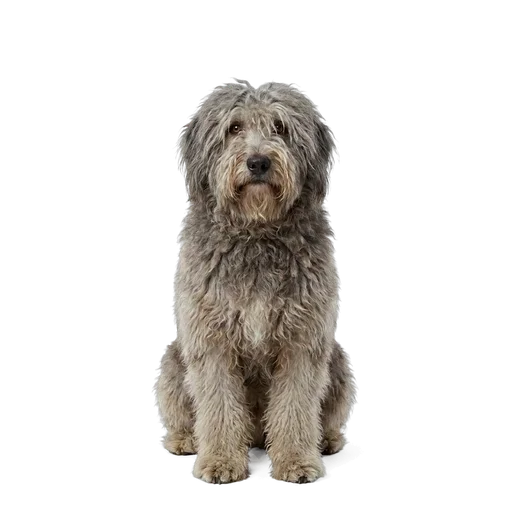
Deciding between similar breeds? Here is the Spinone Italiano next to Bergamasco Sheepdog and Great Dane.
| Spinone Italiano | Bergamasco Sheepdog | Great Dane | |
|---|---|---|---|
| Size | Large | Large | Large |
| Weight | 29-39 kg | 26-38 kg | 45-90 kg |
| Lifespan | 10-12 yrs | 13-15 yrs | 7-10 yrs |
| Activity | Moderate | Moderate | Moderate |
| Shedding | Medium | Low | Medium |
| Good with kids | Yes | Yes | Yes |
| Apartment-friendly | No | No | No |
Frequently asked questions
Is the Spinone Italiano good with children?
Exceptionally so. The breed is patient, gentle and sturdy, and tolerance of children is one of its defining traits. Standard supervision rules for large dogs still apply, especially with toddlers, simply because a 35 kg dog can knock a small child over by accident.
What is cerebellar ataxia in Spinoni and should I worry?
It is an inherited neurological disease of puppies that causes progressive loss of coordination from around four months of age and is always fatal, usually before one year. Both parents must carry the recessive gene for a puppy to be affected, and a DNA test identifies carriers, so insist on seeing test results for both parents before buying. From tested parents the risk is eliminated.
Do Spinoni drool a lot?
Some, and the beard makes it feel like more. Drool is moderate rather than mastiff-level, but the beard soaks up water at every drink and deposits it on floors, laps and furniture. Most owners keep a towel by the water bowl and wipe the beard after meals.
How much exercise does a Spinone Italiano need?
Around an hour a day of walking, sniffing and free running in a safe area suits most adults. This is a gun dog with real stamina in the field, but at home it is calm and settles easily, which makes it less demanding day to day than most pointers of similar size.
Does the Spinone coat need professional grooming?
It needs weekly brushing at home plus hand-stripping a few times a year to remove dead hair and keep the harsh texture, which many owners hand to a groomer familiar with wire coats. Clipping is a lower-effort option for pet dogs but gradually softens the coat. Ear care is the non-negotiable part: check and dry those heavy ears weekly, since ear infections are the breed's most common everyday problem.
Related breeds

Health and care information is drawn from established veterinary sources and is general guidance, not veterinary advice. See our sources
Keep records for your Spinone Italiano
Vaccinations, food and treat safety, allergy alerts and parasite reminders - all tracked for your Spinone Italiano in the Pethls app.