

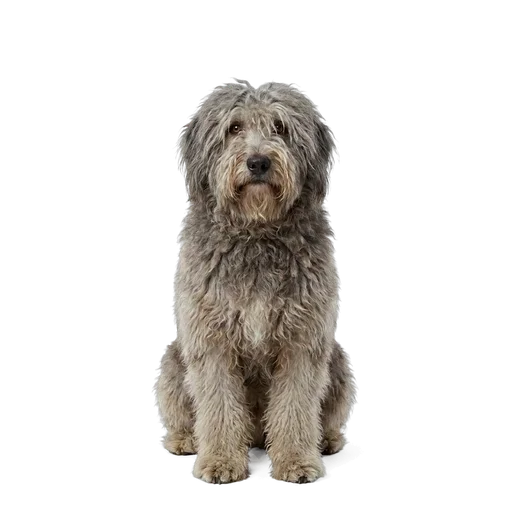
Origin: Italy
Bergamasco Sheepdog
Get reminders for your Bergamasco Sheepdog's vaccines
Vaccination and parasite reminders, food-safety scans and health records — free to start in the Pethls app.


Good for
The Bergamasco Sheepdog spent centuries moving flocks through the Italian Alps, and everything about the breed still makes sense in that context. The famous coat is made of three hair types that felt together into flat mats called flocks, starting at around a year old, and once set it shields the dog against the cold and rain of alpine work. Underneath the mop is a patient, observant dog that weighs 26 to 38 kg and typically lives 13 to 15 years, a good lifespan for a dog of this size. Bergamascos think for themselves, guard quietly rather than loudly, and form deep, calm bonds with children. If you can accept the unusual coat routine and a dog that considers your requests before acting, this is a remarkably easy large breed to live with.
Temperament & personality
Bergamascos were bred to make decisions alone on a mountainside, so expect an independent thinker rather than a dog that hangs on your every word. That independence rarely reads as stubbornness. A well-raised Bergamasco watches everything, weighs the situation, and then does something sensible. With a stranger, the typical pattern is a deliberate once-over: the dog holds back and watches at first, then greets warmly once the newcomer has passed inspection.
With family, the breed is gentle to the point of softness. Bergamascos historically worked alongside shepherd children and it shows; they tolerate toddler chaos with more patience than most large breeds and tend to position themselves between kids and anything they consider a risk. Guarding behavior is quiet and low-key, more presence than noise. They bark when there is a genuine reason and generally not otherwise.
Energy is moderate. A Bergamasco enjoys a proper daily walk, some play and a job to think about, but this is not a dog that paces the house demanding action. Training works best with variety and respect. Repeat the same drill ten times and the dog will visibly lose interest, so keep sessions short, purposeful and fair. Harsh corrections backfire with this breed; a Bergamasco that decides you are unreasonable simply stops cooperating.
Vaccination schedule
Bergamasco puppies follow the standard canine core schedule. The DHPP combination vaccine, which covers distemper, hepatitis (adenovirus), parvovirus and parainfluenza, is given as a series starting at 6 to 8 weeks of age, then repeated every 3 to 4 weeks until the puppy is at least 16 weeks old. Most pups receive three or four doses in total. The rabies vaccine is given once between 12 and 16 weeks, with exact timing set by local law.
Boosters matter as much as the puppy series. DHPP is typically boosted at one year, then every one to three years depending on the vaccine used and your vet's protocol. Rabies boosters follow the legal requirement where you live, usually every one to three years. Because a Bergamasco's flocked coat makes injection sites hard to see afterwards, note which leg or shoulder was used in case of a local reaction.
Ask your vet about non-core vaccines based on lifestyle. Leptospirosis is a sensible addition for a breed that historically works around livestock, standing water and wildlife, and Bordetella makes sense if the dog will board, attend classes or meet many other dogs. Keep every dose logged; a complete record avoids unnecessary repeat vaccinations later.
Best food & diet
Feed a Bergamasco a complete large-breed diet matched to life stage. Puppies should eat a large-breed puppy formula until 12 to 15 months, because these foods control calcium and energy levels to slow bone growth, which is the single most useful dietary lever against hip dysplasia in a breed this size. Do not free-feed a growing Bergamasco and resist the urge to raise a fat, roly-poly puppy; lean growth protects joints for life.
Adults weighing 26 to 38 kg land somewhere in the 1,400 to 2,100 kcal per day range, but that spread is wide because activity drives it: a working dog sits near the top, a sedate family companion near the bottom. Rather than guess, ask your vet to set a daily calorie target for your dog's weight and lifestyle and adjust from there. Split food into two meals to reduce the risk of bloat, which is a consideration for any deep-chested large breed even though the Bergamasco is not among the worst affected. Avoid vigorous exercise for an hour either side of meals.
Most Bergamascos do well on a good-quality commercial diet with a named animal protein, but beef, chicken and dairy are worth watching if your dog shows digestive upset or itchy skin. Introduce new proteins one at a time and note anything that disagrees. Watch body condition by hand rather than by eye, since the flocks hide weight change completely. You should feel ribs easily under the coat with light pressure. Weigh the dog every month or two, because a Bergamasco can gain several kilograms before anyone notices visually.
Common health problems
The Bergamasco is generally regarded as a sturdy, long-lived large breed, helped by centuries of function-first breeding and a small but careful gene pool. It is not free of health concerns, though, so preventive care still matters. Reaching the top of that 13-to-15-year range with no significant medical history is common, but a healthy baseline is something to protect, not a reason to skip preventive care.
Hip dysplasia is the main condition to screen for. Reputable breeders hip-score both parents, so ask to see the certificates before committing to a puppy. In an affected dog you might notice a bunny-hopping gait, reluctance to jump into the car, or stiffness after rest. Diagnosis is by X-ray, and management ranges from weight control and joint supplements to surgery in severe cases. Keeping the dog lean from puppyhood dramatically lowers both the risk and the severity.
Beyond hips, the breed's issues are mostly the generic ones of ageing large dogs: arthritis in the senior years and occasional dental disease. The flocked coat can hide skin problems and lumps, so make a habit of feeling through the flocks to the skin during your regular checks. Annual vet visits, moving to twice a year after age eight or nine, catch most problems while they are still cheap and treatable.
Allergies & skin
The Bergamasco is often marketed as a low-allergen breed, and there is a kernel of truth in it: the coat sheds very little, and the felted flocks trap loose hair and dander instead of releasing them around the house. That said, no dog is truly hypoallergenic, because the allergens live in saliva, skin flakes and urine rather than in the hair itself, and the Bergamasco produces all of those like any other dog. Allergy sufferers sometimes tolerate the breed better than a heavy shedder, but spend real time with an adult Bergamasco before deciding.
The dog's own skin is generally sound. Problems usually arise from the coat's environment rather than from any inherited weakness: a flock that stays wet at the root can develop a hot spot or a yeasty smell underneath. After swimming or a bath, drying properly matters more for this breed than almost any other, and a full dry can genuinely take a day. Separate flocks with your fingers so air reaches the skin.
Signs of skin trouble under a flocked coat are easy to miss, so rely on smell and behavior as much as sight. A sour or musty odor, sudden chewing at one spot, or head shaking that suggests an ear issue all deserve a part-the-flocks inspection. Ear care deserves special mention: hair and felt around the ear openings hold moisture, so check ears weekly and clean them when they look waxy.
Flea, tick & worm prevention
Parasite prevention needs extra discipline with a Bergamasco because the flocked coat is superb at hiding hitchhikers. A tick can attach, feed and drop off without ever being seen, and fleas can build a population close to the skin under the mats. Year-round prevention is the answer: a vet-prescribed oral or spot-on flea and tick product given on schedule, every single month or per the product's dosing interval, without gaps in summer or winter.
Oral chewable preventives are often the practical choice for this breed, since spot-on liquids must reach the skin and parting felted flocks to apply them correctly takes care. If you do use a spot-on, part the flocks fully at the application site and apply directly to skin, not onto the mat. After walks in tall grass or woodland, run your hands slowly through the flocks to the skin, paying attention to the ears, armpits, groin and between the toes where the coat is thinner and ticks prefer to attach.
Worming follows standard canine practice: puppies are wormed every 2 weeks from 2 weeks of age until 12 weeks, then monthly until 6 months, then adults are treated or faecal-tested every 3 months. A dog with any farm or livestock contact should stay on a strict tapeworm schedule. Heartworm prevention is essential in regions where it occurs; ask your vet whether your area qualifies. All doses are weight-based, so keep the dog's current weight on record.
Medications & dosing
Every medication a Bergamasco receives should be dosed by current body weight and directed by a vet. With a healthy range of 26 to 38 kg, two Bergamascos can differ by nearly 50 percent in weight, so never borrow a dose from another dog or reuse a prescription from years past. Weigh the dog before any new course of treatment; the flocks add visual bulk but also real mass when damp, so use a proper scale rather than an estimate.
Common prescriptions in this breed follow the large-dog pattern: NSAIDs such as carprofen or meloxicam for arthritis or post-operative pain, antibiotics for the occasional skin or ear infection, and joint support for older dogs with hip changes. Never give human painkillers. Ibuprofen and paracetamol are toxic to dogs at doses people consider small, and a single lapse can mean kidney or liver damage.
Giving oral medication to a Bergamasco is usually easy because the breed is food-motivated and placid, but confirming a spot-on or topical treatment reached the skin takes a moment of extra care under the coat. Finish every antibiotic course completely, report vomiting, black stools or lethargy on NSAIDs the same day, and keep a simple log of what was given and when. A dated medication record makes every future vet visit faster and safer.
Grooming & coat care
Bergamasco coat care is unlike any other breed's, and the biggest surprise is how little routine work it involves once you understand the cycle. The coat has three components: a fine oily undercoat, long harsh 'goat hair' and a woolly outer layer. Puppies have a soft, fairly ordinary coat that needs no special attention. At around one year, the wool starts coming in and the coat begins to mat. This is the one labour-intensive phase.
During that first flocking year, the owner's job is to tear the forming mats into flocks by hand, splitting the coat down to the skin into sections roughly the width of a palm. Done over several sessions, this sets the pattern the coat will keep for life. Get guidance from the breeder or a Bergamasco club the first time, because flocks set wrong can fuse into one uncomfortable pelt. Once set, the flocks grow slowly toward the ground over five or six years.
After the coat is set, forget brushing. A mature Bergamasco needs no brushing at all, just an occasional check that flocks have not fused at the base, tearing them apart by hand where they have. Baths are rare, two or three times a year is typical, and drying is the real event: expect most of a day, ideally warm and breezy, and make sure the flocks are dry to the root. Trim hair between the paw pads, keep nails short, and check ears weekly. Many owners tie the face hair up or trim around the eyes so the dog can see; the veil of hair is traditional but visibility matters more than tradition.
How the Bergamasco Sheepdog compares
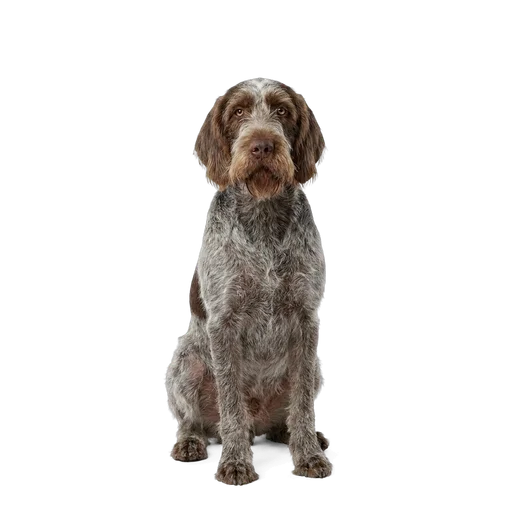
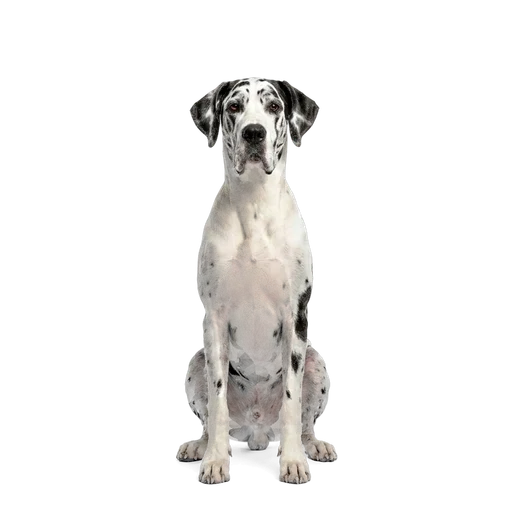
Deciding between similar breeds? Here is the Bergamasco Sheepdog next to Spinone Italiano and Great Dane.
| Bergamasco Sheepdog | Spinone Italiano | Great Dane | |
|---|---|---|---|
| Size | Large | Large | Large |
| Weight | 26-38 kg | 29-39 kg | 45-90 kg |
| Lifespan | 13-15 yrs | 10-12 yrs | 7-10 yrs |
| Activity | Moderate | Moderate | Moderate |
| Shedding | Low | Medium | Medium |
| Good with kids | Yes | Yes | Yes |
| Apartment-friendly | No | No | No |
Frequently asked questions
Is the Bergamasco Sheepdog hypoallergenic?
No, and be wary of listings that claim otherwise. The breed sheds very little and its felted coat traps dander, so some allergy sufferers react less to a Bergamasco than to a heavy shedder. But the allergens come from saliva and skin, which every dog produces. Spend time with an adult Bergamasco before committing if allergies are a concern.
Do you ever brush a Bergamasco's coat?
Not once the flocks are set. The coat mats naturally into flat felted sections from about one year of age, and the owner's job that first year is to separate the mats into flocks by hand. After that, brushing would actually damage the coat. Maintenance drops to occasional checks that flocks have not fused, plus two or three baths a year.
Is the Bergamasco good with children?
Yes, notably so. The breed worked alongside shepherd families for centuries and tends to be patient, gentle and quietly protective with kids. As with any large dog, supervise interactions with small children and teach kids to respect the dog's space, but the Bergamasco's calm temperament makes it one of the better large breeds for family life.
What health problems do Bergamascos have?
Remarkably few. The Bergamasco is generally a robust, long-lived large breed (typically 13 to 15 years). Hip dysplasia is the main condition worth screening, so buy from a breeder who hip-scores both parents and keep the dog lean throughout its life. Routine care should also include ear checks and parasite inspections under the flocked coat.
How much exercise does a Bergamasco Sheepdog need?
A moderate amount for a large breed. A good daily walk of an hour or so, plus play and some mental work, keeps most Bergamascos content. They enjoy hiking and cool weather and were built for endurance rather than speed. Avoid heavy exercise in hot weather, since the dense coat holds warmth, and offer shade and water in summer.
Related breeds
Health and care information is drawn from established veterinary sources and is general guidance, not veterinary advice. See our sources
Keep records for your Bergamasco Sheepdog
Vaccinations, food and treat safety, allergy alerts and parasite reminders - all tracked for your Bergamasco Sheepdog in the Pethls app.