

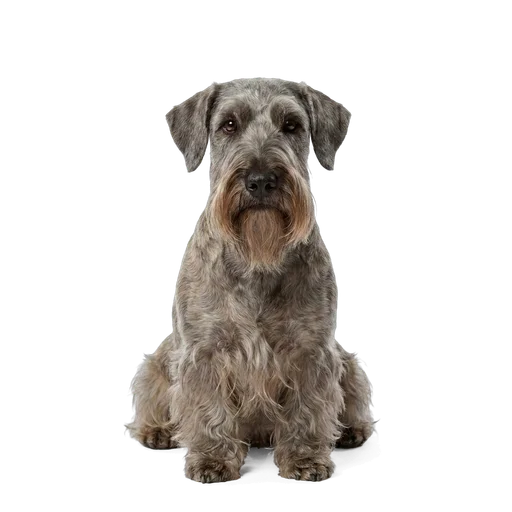
Origin: Czech Republic
Cesky Terrier
Get reminders for your Cesky Terrier's vaccines
Vaccination and parasite reminders, food-safety scans and health records — free to start in the Pethls app.


Good for
The Cesky Terrier is one of the rarest terriers in the world, created in the Czech Republic in the 1940s by crossing the Scottish Terrier with the Sealyham to produce a milder, more cooperative hunting dog. The experiment worked. This small 6 to 10 kg dog keeps the terrier's game spirit but trades the usual fire for calm and biddability, and it typically lives a healthy 12 to 15 years. The silky gray coat is clipped rather than hand-stripped, which is unusual among terriers and shapes the grooming routine. For families wanting terrier character without terrier arguments, the Cesky is a well-kept secret.
Temperament & personality
Frantisek Horak, the Czech breeder who created the Cesky, wanted a terrier that could hunt in a pack without fighting and live in the house without chaos. That intent still defines the breed. Ceskys are calm, sensible and noticeably more biddable than their Scottie and Sealyham ancestors. They listen, they think, and they generally decide cooperation is worthwhile, which anyone who has trained a classic terrier will recognize as remarkable.
At home they are quiet companions who enjoy a lap as much as a walk. They bond deeply with their family and are famously good with children: patient, gentle and sturdy enough for play without being rough. With strangers they start reserved and warm up on their own schedule. They make sensible watchdogs, alerting you to visitors without the constant barking common in many terriers. For all their calm, they keep a cheerful, easygoing streak that shows in how readily they settle into family life.
The hunting heritage has not vanished. A Cesky on a scent trail develops selective hearing, and small wildlife in the garden will be pursued with genuine intent. Recall training deserves real work, and a secure fence is wise. With household pets they are among the most tolerant terriers, usually fine with other dogs and with cats they are raised alongside, though a strange cat sprinting across the garden is a different proposition.
Exercise needs are moderate: a couple of good daily walks plus sniffing time and some play keeps a Cesky content. They suit apartments, first-time owners and quieter households, provided someone is home a fair amount, because this is a companion breed at heart and it does not enjoy long days alone.
Vaccination schedule
Cesky puppies follow the same core schedule as every dog. The DHPP combination (distemper, adenovirus, parvovirus, parainfluenza) begins at six to eight weeks, with repeat doses every three to four weeks until at least 16 weeks of age. The final dose timing matters most: puppies finished too early can be left with a gap between fading maternal immunity and their own protection, and parvovirus finds those gaps.
Rabies vaccination is given between 12 and 16 weeks depending on local requirements, boosted at one year, then every one to three years according to the product license and your region. Because Ceskys are rare, many owners import puppies or travel internationally to breeders; pet travel schemes have their own strict rabies timing and paperwork rules, so plan those dates with your vet well ahead of any trip.
Non-core vaccines follow lifestyle. Leptospirosis is sensible for a dog that will hunt, hike or swim; Bordetella for boarding, shows or daycare. After the one-year booster, adults typically receive DHPP every three years with annual lepto where relevant. Vaccine visits double as health checks, a good moment to have the heart checked given the cardiomyopathy seen in some lines (see the health section for what to watch for).
Best food & diet
Feed a complete small-breed diet in measured portions. At 6 to 10 kg, a Cesky does not need much food, and that is precisely the trap: this breed has a hearty appetite, real culinary enthusiasm and a well-documented tendency to gain weight. A slightly chunky Cesky looks cuddly and ages badly, since extra kilos load kneecaps already at risk of luxation and add work for the heart. Keep a visible waist and ribs you can feel easily.
Small-breed formulas suit the Cesky's needs: appropriately sized kibble, energy density matched to a moderate activity level, and puppy formulas until around 10 to 12 months. Two meals daily for adults is standard. Weigh the food; the difference between the right portion and 20 percent too much is only a couple of tablespoons a day for a dog this size, easy to miss at each meal but enough to add up to noticeable weight gain over a few months.
Count treats in the daily ration. Ceskys beg readily, and training treats, table scraps and dental chews all count toward the daily total. Reserve part of the measured daily ration for training, or use vegetables like carrot pieces. Fresh water always. For seniors, ask your vet whether a joint supplement or a weight-management formula makes sense; keeping an older Cesky lean is the cheapest arthritis prevention available.
Common health problems
The Cesky is a generally healthy breed with a long 12 to 15 year lifespan, but three conditions travel with its ancestry. The best known is Scotty cramp, inherited from the Scottish Terrier side. It is a movement disorder, not a seizure: during excitement or intense exercise, affected dogs develop a stiff, arched, goose-stepping gait or may tumble over, stay fully conscious, and recover within minutes once they calm down. It is not painful and not progressive, and most affected dogs live entirely normal lives with a little management of the excitement triggers. Video the episode on your phone; it is the single most useful thing you can show your vet.
Cardiomyopathy, disease of the heart muscle, has been reported in the breed. Early signs are subtle: tiring on walks, breathing faster at rest, an occasional soft cough or reluctance to play. Because early disease is often silent, the annual vaccine visit is the natural time for your vet to listen carefully to the heart, and any murmur or rhythm finding is worth following up with a cardiac ultrasound. Caught early, heart disease in dogs is increasingly manageable with medication.
Patellar luxation, the slipping kneecap common to many small breeds, appears in the Cesky as well. Watch for the tell-tale skipping stride where a back leg is carried for a few steps. Mild grades often need nothing beyond lean body weight and muscle-maintaining exercise; higher grades can require surgery. Beyond these three, the main risks are the ordinary ones of a food-loving, long-lived small dog: obesity, dental disease and age-related arthritis. Sensible weight control addresses all three at once.
Allergies & skin
The Cesky's soft, silky coat and long facial furnishings keep the skin fairly protected, and the breed is not particularly allergy-prone compared with many terriers. Even so, individual dogs can develop the usual suspects: flea allergy dermatitis, environmental atopy and occasional food sensitivities. Persistent paw licking, face rubbing, recurring ear trouble or a dull, greasy patch in the coat are the signs worth a vet visit rather than a new shampoo.
The clipped coat creates one breed-specific consideration: clipper irritation. A Cesky is machine-clipped every six to eight weeks for life, and dull blades, hot clippers or sensitive individuals can end up with clipper rash, especially on the throat and belly where the coat is taken short. A groomer familiar with the breed, clean sharp blades and a soothing rinse afterwards prevent most of it. Mention any redness after grooming so technique can be adjusted next time.
The drop ears and generous furnishings also deserve attention. Hair around the ear opening reduces airflow and can set the stage for yeast infections, so check ears weekly and keep the area tidy. The beard traps food and water and may develop odor or dermatitis if left permanently damp; a quick wipe after meals solves it. The Cesky sheds very little, and loose hair tends to stay caught in the coat until brushed out, but it is not a hypoallergenic breed: the dander and saliva proteins that trigger human allergies are all still present. Allergy sufferers should spend time with an adult Cesky before committing.
Flea, tick & worm prevention
A low-slung dog with a soft, fairly long coat is prone to picking up ticks. The Cesky stands roughly 27 to 30 cm at the shoulder, moves through undergrowth right at tick height, and the silky coat conceals them easily. Year-round flea and tick prevention from your vet, as a monthly spot-on or a chewable lasting one to three months, is the foundation. After country walks, comb through the coat and check ears, beard, armpits, groin and between the toes; on a clipped gray coat, fingers find ticks faster than eyes do.
Fleas are harder to spot in this coat than on a smooth-coated dog, so do not wait for visible evidence. If one pet in the house has fleas, treat all of them and expect to treat the home environment too, since most of the flea population lives in carpets and bedding rather than on the dog.
Worming follows the standard lifetime pattern: every two weeks for puppies from two weeks of age until 12 weeks, monthly to six months, then at least every three months for adults. A Cesky that hunts, scavenges on walks or lives with young children is better on monthly treatment. Ask about lungworm prevention if slugs and snails are common where you live. Dosing is weight-based, and at 6 to 10 kg the breed spans a band boundary on many products, so weigh your dog rather than guessing, particularly since this is a breed where weight quietly creeps upward.
Medications & dosing
Every medication for a Cesky should be dosed against an up-to-date body weight and given under veterinary direction. Small dogs have small margins: a dosing error that a Labrador would shrug off can matter at 7 kg. Keep a current weight on record, use the syringe or measure supplied rather than kitchen spoons for liquids, and confirm the weight band whenever you buy flea or worm products off the shelf.
Human medications are off the table without explicit vet approval. Ibuprofen is outright toxic to dogs, paracetamol dosing is unforgiving at this size, and seemingly gentle remedies like decongestants can be dangerous. If your Cesky is ever diagnosed with cardiomyopathy, the stakes rise further: heart patients need every new drug, including some flea products and anaesthetic protocols, cross-checked against their cardiac medication, so make sure any prescribing vet knows the diagnosis.
For dogs with Scotty cramp, treatment is usually unnecessary because episodes are brief and harmless, but severely affected individuals sometimes benefit from vet-prescribed medication, and there are drug classes that can worsen episodes. That is one more reason the condition belongs in your dog's clinical notes, not just in your memory. Finish prescribed courses fully, store chewable medications securely, and call the practice about vomiting, diarrhea or lethargy that starts on a new drug rather than waiting it out.
Grooming & coat care
Grooming is where the Cesky differs from every classic terrier. Instead of hand-stripping a wiry jacket, the Cesky's soft, silky, slightly wavy gray coat is machine-clipped, typically every six to eight weeks for life. The traditional pattern takes the body short while leaving a longer skirt on the lower chest and belly, full furnishings on the legs, and the characteristic beard and eyebrows. Most owners use a professional groomer; hands-on owners can learn the pattern themselves with decent clippers and some patience.
Between clips, the coat needs brushing two or three times a week, working through the longer furnishings with a slicker brush and metal comb to catch tangles before they become mats. The skirt, armpits, and leg feathering mat first, especially in wet weather when the silky coat picks up debris like Velcro. Five minutes of combing after muddy walks saves an uncomfortable dematting session later. Shedding is minimal; what little hair drops tends to stay in the coat until brushed out, which is why the breed is popular with house-proud owners.
Bathing every six to eight weeks, often timed with the clip, keeps the coat clean and the skin comfortable; use a mild dog shampoo and dry the furnishings properly. The beard needs a wipe after meals and drinks to stay fresh. Check and clean ears weekly, since the drop ears and surrounding hair hold moisture; trim nails every three to four weeks; and brush teeth several times a week, because small breeds lose teeth to dental disease far too young. Puppies should meet clippers, dryers and grooming tables early and cheerfully, so that a lifetime of six-week salon visits is a routine rather than a wrestling match.
One quirk worth knowing: Cesky puppies are born nearly black, and the coat lightens gradually over the first two to three years into the adult gray, anywhere from dark charcoal to soft silver. A young dog changing color is not a health problem; it is the breed doing exactly what it is supposed to do.
How the Cesky Terrier compares
Deciding between similar breeds? Here is the Cesky Terrier next to Dachshund and Australian Terrier.
| Cesky Terrier | Dachshund | Australian Terrier | |
|---|---|---|---|
| Size | Small | Small | Small |
| Weight | 6-10 kg | 7-15 kg | 6-7 kg |
| Lifespan | 12-15 yrs | 12-16 yrs | 11-15 yrs |
| Activity | Moderate | Moderate | Moderate |
| Shedding | Low | Medium | Low |
| Good with kids | Yes | Yes | Yes |
| Apartment-friendly | Yes | Yes | Yes |
Frequently asked questions
Are Cesky Terriers really calmer than other terriers?
Yes, and it is by design. The breed was deliberately created in the Czech Republic by crossing the Scottish Terrier and Sealyham Terrier to get a hunting dog that was less fiery and easier to handle. Ceskys still have terrier instincts, especially on a scent, but at home they are notably quieter, more patient and more willing to cooperate with training than most of their cousins.
What is Scotty cramp and is it dangerous?
Scotty cramp is an inherited movement disorder the Cesky can carry from its Scottish Terrier ancestry. During excitement or hard exercise, an affected dog's gait becomes stiff and arched, sometimes to the point of tumbling over, then returns to normal within minutes. The dog stays conscious throughout and the condition is neither painful nor progressive. Most affected dogs need no treatment, just some management of overexcitement, but get a vet diagnosis to rule out look-alike conditions.
Is the Cesky Terrier hypoallergenic?
No. The breed sheds very little, which keeps homes cleaner, but human allergies are triggered by dander and saliva proteins that every dog produces regardless of coat type. Some allergy sufferers tolerate low-shedding breeds better; the only reliable test is spending real time around adult Ceskys before bringing one home.
How much grooming does the clipped coat actually need?
Plan on a full clip every six to eight weeks, usually at a groomer, plus brushing and combing the longer furnishings two or three times a week at home to prevent mats. Add beard wipes after meals, weekly ear checks and regular baths. It is more upkeep than a smooth-coated dog but less specialist work than hand-stripped terrier breeds, and no stripping is ever required.
Are Cesky Terriers good for first-time owners and families with kids?
They are one of the best terrier choices for both. Ceskys are patient and gentle with children, sturdy enough for family life, moderate in exercise needs and unusually trainable for a terrier. The commitments to weigh up are the regular clipping schedule, their dislike of being left alone for long days, and the waiting list: this is a rare breed, so expect to search for a responsible breeder and possibly wait for a litter.
Related breeds
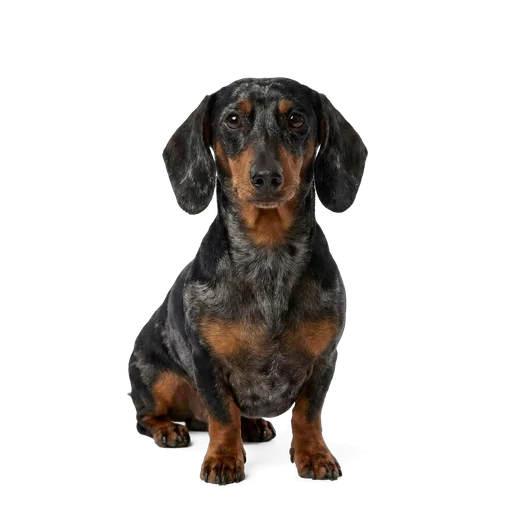
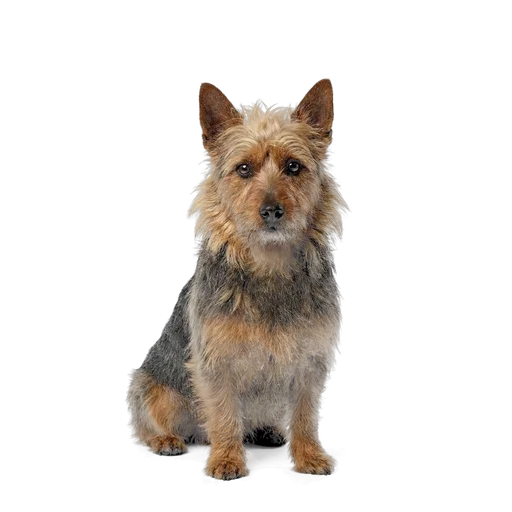
Health and care information is drawn from established veterinary sources and is general guidance, not veterinary advice. See our sources
Keep records for your Cesky Terrier
Vaccinations, food and treat safety, allergy alerts and parasite reminders - all tracked for your Cesky Terrier in the Pethls app.