

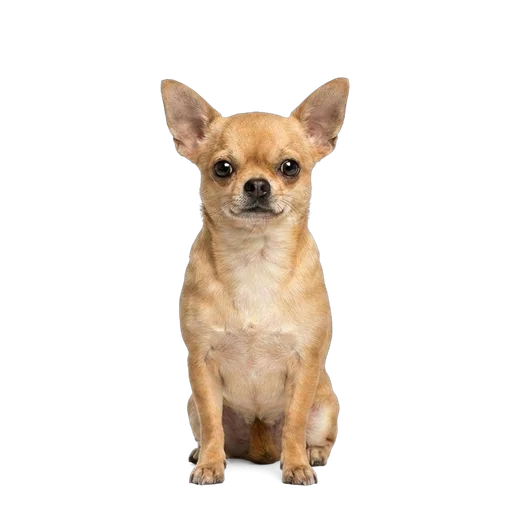
Origin: Mexico
Chihuahua
Get reminders for your Chihuahua's vaccines
Vaccination and parasite reminders, food-safety scans and health records — free to start in the Pethls app.


Good for
The Chihuahua weighs somewhere between 1.5 and 3 kg, which makes it the smallest dog breed in the world and one of the longest lived, often reaching 12 to 20 years. It came out of Mexico, named after the state of Chihuahua, and it carries itself like a dog ten times its size. You get two coat types: a smooth, glossy short coat and a longer, softer variety with feathering on the ears and tail. What surprises most first-time owners is the personality. There is a bold, self-assured personality packed into a tiny frame, and the dog will bond hard, usually to one person.
Temperament & personality
Chihuahuas are bold, alert, and fiercely loyal. Most pick a favorite human early and stick with them, following that person room to room and getting genuinely put out when left behind. That devotion is the breed's best feature. Well socialized, a Chihuahua is affectionate and easygoing at home; the flip side is that one who thinks it is protecting its person may bark, posture, and sometimes snap at strangers or other dogs.
They are smarter than people give them credit for and respond well to short, reward-based training. The problem is rarely intelligence and usually consistency. Because they are small and cute, owners let a lot slide, and a Chihuahua that has never been told no becomes territorial and reactive. Early socialization to new people, sounds, and dogs makes a large difference.
With small children the honest advice is to supervise closely. A Chihuahua does not tolerate rough handling, and it has the teeth and the temper to say so. They do far better in calm adult households or with older, gentle kids who understand the dog is fragile. Around other pets they can be fine, though they often prefer the company of other Chihuahuas.
They are excellent apartment dogs. A few short walks and some indoor play cover their exercise needs, and they are content to spend hours curled against you under a blanket. Just watch the barking, which they will happily do at every hallway noise unless you train an off switch.
Vaccination schedule
Chihuahua puppies follow the standard core vaccine plan. The DHPP combination shot, which covers distemper, hepatitis (adenovirus), parvovirus, and parainfluenza, starts at 6 to 8 weeks and repeats every 3 to 4 weeks until the puppy is at least 16 weeks old. That usually means three or four rounds, because the mother's antibodies can block an early dose and the series has to run long enough to catch the gap.
Rabies is given once at 12 to 16 weeks depending on local law, then boosted a year later, and after that every 1 to 3 years based on the vaccine used and your region's rules.
Leptospirosis is now a core vaccine recommended for every dog, so a Chihuahua should get it regardless of lifestyle. It needs a 2-dose puppy series followed by an annual booster, unlike the DHPP core boosters that run every 1 to 3 years, and dogs with water, rural, or wildlife exposure face higher risk, which is part of why the yearly booster matters. Other non-core vaccines like Bordetella (kennel cough), Lyme, and canine influenza still depend on lifestyle. A Chihuahua that goes to grooming salons, boarding, or dog parks benefits from them; a dog that mostly stays home may not need all of them, so ask your vet which apply.
One practical note for toy breeds: some owners and even some clinics worry about vaccine reactions in very small dogs. Reactions are uncommon, but because a Chihuahua is so light, keep an eye on the puppy for a few hours after shots and call your vet if you see facial swelling, hives, or vomiting.
Best food & diet
Feed a high-quality small-breed formula. The kibble size matters because a Chihuahua's mouth is tiny and crowded, and standard-sized pieces are hard to chew. Small-breed diets also run more calorie-dense, which suits a dog that eats very little by volume but has a fast metabolism.
Portion control is the whole game. A 2 kg dog needs only a small amount of food per day, and even a few extra treats can tip it into obesity fast. Measure meals rather than free-feeding, and factor treats into the daily total. Overweight Chihuahuas put more strain on their knees and their already-vulnerable trachea.
Puppies and very small adults may develop hypoglycemia, a drop in blood sugar that can cause weakness, wobbliness, or collapse. Feed puppies small meals several times a day rather than one or two large ones, and never let a young Chihuahua go many hours without food.
Beef, chicken, and dairy are common triggers for this breed, so if you see itching, ear infections, or loose stools, a diet review is worth doing with your vet. Fresh water always available, and go easy on the human-food scraps that Chihuahuas are so good at begging for.
Common health problems
Chihuahuas are generally long-lived, but the small frame comes with a specific set of orthopedic and dental issues. Luxating patella, where the kneecap slips out of its groove, is common in the breed and worth raising with your vet. You may notice a skip in the back-leg gait or the dog holding a leg up for a stride or two. Mild cases are managed conservatively; severe ones need surgery.
Like many toy breeds, a Chihuahua can sometimes develop a collapsing trachea, where the windpipe weakens, producing a honking, goose-like cough, especially when the dog pulls against a collar or gets excited. This is the single biggest reason to walk a Chihuahua on a harness, never a neck collar, so leash pressure sits on the chest instead of the windpipe.
Dental disease is very common in this breed and worth staying ahead of. A full set of teeth crammed into a miniature jaw means crowding, plaque traps, and early tooth loss. Daily brushing and regular professional cleanings genuinely extend both comfort and lifespan for this breed.
Other concerns worth checking with your vet include hydrocephalus (fluid on the brain, sometimes seen in domed-skull puppies), heart murmurs that can progress to mitral valve disease in older dogs, and sensitivity to cold. A Chihuahua has almost no body fat, so a coat or sweater in winter is function, not fashion. They chill quickly and will shiver and seek heat.
Allergies & skin
Chihuahuas are not hypoallergenic. They shed, and they produce the same dander and saliva proteins that trigger human allergies, so no Chihuahua is a safe bet for an allergic household despite the small size.
For the dog's own allergies, the usual suspects are food proteins like beef, chicken, and dairy, plus environmental triggers like dust mites, and sometimes pollen or grass. Signs show up as itchy skin, red or infected ears, licking or chewing at the paws, and sometimes recurrent hot spots. Smooth-coated Chihuahuas make skin problems easy to spot; long-coats need a parting of the fur to check.
If itching is persistent, work with your vet on an elimination diet or allergy testing rather than guessing. Wiping the dog down after walks removes pollen and dust, and keeping bedding washed cuts the dust-mite load, which is one of the more manageable triggers indoors.
Because the breed feels the cold and has thin skin, avoid harsh shampoos that strip natural oils. A gentle, hydrating dog shampoo used only when needed keeps the skin barrier intact.
Flea, tick & worm prevention
A Chihuahua needs the same parasite protection as any dog, but the dosing math is unforgiving. Most flea and tick products are sold in weight bands, and a 2 kg dog sits at the very bottom of the range. Using a large-dog product or splitting a pill is dangerous. Buy the product formulated for the smallest weight class and confirm your dog's exact weight first.
For fleas and ticks you can choose a monthly spot-on, an oral chewable, or a long-acting collar, all in the correct toy-breed weight band. Ticks are easy to miss on a long-coated Chihuahua, so run your fingers over the skin after time outdoors, checking around the ears, neck, and between the toes.
Worming covers roundworms, hookworms, tapeworms, and, depending on where you live, heartworm. Puppies are dewormed on a schedule starting at 2 to 3 weeks, then adults are treated on a routine your vet sets, often quarterly. In heartworm regions a monthly preventive is essential, and it is prescribed by weight, so an accurate figure matters.
Never combine products without checking. Some flea treatments and some wormers overlap in what they cover, and doubling up on a tiny dog is a real overdose risk. One coherent schedule from your vet keeps the coverage from stacking.
Medications & dosing
With a dog this small, exact body weight is everything. A Chihuahua may weigh under 2 kg, and most medications are dosed per kilogram, so a rounding error that would be harmless in a Labrador can be a serious overdose here. Always weigh the dog on an accurate scale rather than estimating, and re-weigh before any dose change.
Never give human medications on your own judgment. Common painkillers such as ibuprofen and paracetamol (acetaminophen) are toxic to dogs, and the tiny margin in a Chihuahua leaves no room for error. Only give a drug your vet has prescribed for this specific dog at this specific weight.
Because the doses are so small, your vet may need to compound a liquid or use partial tablets to get an accurate amount. Follow the exact measurement, use the syringe or dropper provided, and do not eyeball it. If you are ever unsure whether you gave a dose, call the clinic rather than risk doubling.
Keep all human pills, especially the tempting sweet-coated ones, well out of reach. A dropped tablet a large dog would shrug off can hospitalize a Chihuahua.
Grooming & coat care
Grooming depends on which coat you have. The smooth-coated Chihuahua is close to wash-and-wear: a weekly once-over with a soft brush or grooming mitt lifts loose hair and spreads skin oils, and that is most of the job. The long-coated variety needs a bit more, a brush two or three times a week to keep the feathering on the ears, legs, and tail from tangling.
Both types shed, generally at a low to moderate level with a heavier push in spring and autumn. Regular brushing keeps loose hair off your clothes and furniture and doubles as a chance to check the skin.
Bathe only when the dog is actually dirty, roughly every few weeks at most, using a gentle dog shampoo. Overbathing dries out the skin. Dry the dog thoroughly and keep it warm afterward, since Chihuahuas lose heat fast.
Do not skip the small stuff. Nails grow quickly on a dog that does little pavement walking and need trimming every few weeks. Ears should be checked and cleaned to head off infections, and teeth need daily brushing, which for this breed is the most important grooming task of all given how prone they are to dental disease.
How the Chihuahua compares
Deciding between similar breeds? Here is the Chihuahua next to Affenpinscher and Australian Terrier.
| Chihuahua | Affenpinscher | Australian Terrier | |
|---|---|---|---|
| Size | Small | Small | Small |
| Weight | 1.5-3 kg | 3-6 kg | 6-7 kg |
| Lifespan | 12-20 yrs | 12-15 yrs | 11-15 yrs |
| Activity | Moderate | Moderate | Moderate |
| Shedding | Low | Low | Low |
| Good with kids | No | No | Yes |
| Apartment-friendly | Yes | Yes | Yes |
Frequently asked questions
Why should I use a harness instead of a collar on my Chihuahua?
Because a Chihuahua can occasionally develop a collapsing trachea, like many toy breeds. Pressure from a collar on that already-fragile windpipe can trigger a honking cough and, over time, worsen the collapse. A harness spreads the leash force across the chest and keeps the neck clear. It is one of the simplest things you can do to protect a Chihuahua's health.
Are Chihuahuas good with young children?
Not usually the easiest match. Chihuahuas are tiny and fragile, they do not tolerate rough or unpredictable handling, and they will snap to defend themselves. They tend to do best with calm adults or older, gentle children. If you have toddlers, close supervision every time they are together is non-negotiable, for the dog's safety as much as the child's.
How long do Chihuahuas live?
They are one of the longest-lived breeds, commonly 12 to 20 years. Good dental care, keeping the dog at a healthy weight, protecting the trachea with a harness, and staying on top of the knees all help a Chihuahua reach the upper end of that range in good shape.
Why does my Chihuahua shiver so much?
Chihuahuas have almost no body fat and a small surface area to hold heat, so they genuinely feel the cold and shiver easily. A sweater or coat in cold weather is practical, not pampering. Even then, shivering can also come from excitement, anxiety, or low blood sugar, so if it happens alongside weakness or wobbliness, check in with your vet.
Do Chihuahuas need a lot of exercise?
No, their needs are modest. A couple of short daily walks plus some indoor play keep a Chihuahua fit and mentally satisfied, which makes them ideal for apartments. Mental stimulation and gentle training matter as much as physical exercise. Watch that they do not overheat or get chilled, since the small body reacts fast to temperature either way.
Related breeds



Health and care information is drawn from established veterinary sources and is general guidance, not veterinary advice. See our sources
Keep records for your Chihuahua
Vaccinations, food and treat safety, allergy alerts and parasite reminders - all tracked for your Chihuahua in the Pethls app.