

Origin: China
Chinese Crested
Get reminders for your Chinese Crested's vaccines
Vaccination and parasite reminders, food-safety scans and health records — free to start in the Pethls app.


Good for
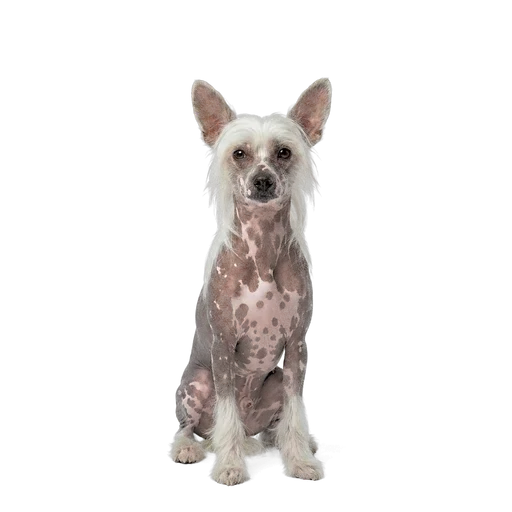
The Chinese Crested is a tiny toy dog that comes in two looks from the same litter: the mostly bare Hairless, with tufts on the head, feet and tail, and the fully coated Powderpuff. Weighing roughly 4 to 5 kilograms and living 13 to 18 years, this is a soft, sensitive velcro dog that wants to be on your lap or under a blanket at all times. They are playful and affectionate, bond hard with their people, and settle happily into apartment life. The Hairless variety needs genuine skin care, since bare skin can sunburn, dry out and break out in acne. Expect a shadow: this is a dog that will follow you from room to room and want to be tucked against you whenever you sit down.
Temperament & personality
Chinese Cresteds are gentle, people-focused little dogs that form intense attachments. They follow their owner room to room, press into laps, and often burrow under covers to stay warm. That closeness has a flip side: left alone for long stretches, many become restless and unsettled.
They are playful and surprisingly agile, happy to chase a toy across the living room or learn small tricks for a treat. Because they are sensitive, harsh corrections backfire fast. These dogs shut down or grow anxious under pressure, so gentle, reward-based training gets far better results.
With early socialization they are friendly toward children and other pets, though their small size means play with young kids should always be supervised. Many Cresteds are a little reserved with strangers at first, then warm up quickly once they decide a new person is safe.
Vaccination schedule
Puppies start their core vaccination series at around 6 to 8 weeks with DHPP, which covers distemper, hepatitis (adenovirus), parvovirus and parainfluenza. Boosters follow every 3 to 4 weeks until the puppy is about 16 weeks old, so the series usually finishes with a final dose at 16 weeks or slightly later.
Rabies is given as a single dose, typically between 12 and 16 weeks depending on local law, then boosted at one year. After that, most dogs move to a rabies booster every 1 to 3 years based on the vaccine used and regional rules.
Leptospirosis is now considered a core vaccine and is recommended for all dogs, given as a 2-dose puppy series followed by an annual booster (unlike the every-3-years DHPP core boosters). Non-core vaccines such as Bordetella and canine influenza are optional and depend on lifestyle, and Lyme may be added based on regional risk. A toy dog that visits groomers, boarding or dog parks may benefit from Bordetella. Water, rural or wildlife exposure raises the risk and is why the annual leptospirosis booster matters, but every dog should be covered regardless of lifestyle. Your vet will confirm the plan based on your dog's exposure and local disease risk.
Best food & diet
Feed a complete, balanced dog food formulated for small or toy breeds. The small kibble size suits their tiny mouths, and the calorie density fits a dog that only eats a small amount each day. Because a 4 to 5 kilogram dog needs very few calories, accurate portioning matters, and even a few extra treats can tip them into weight gain.
Toy-breed puppies burn through their energy reserves quickly and can drop into low blood sugar (hypoglycemia), which is why young Cresteds do better on several small meals a day rather than one large one. Once mature, two measured meals a day works well for most.
Dental disease is a real concern in this breed, particularly in the Hairless variety, so anything that supports oral health helps. Talk to your vet about dental-friendly diets or dental chews. Keep treats to roughly 10 percent or less of daily calories, and make sure fresh water is always available.
Common health problems
The Chinese Crested lives a long time for a dog its size, but it carries several inherited conditions worth knowing about. Primary lens luxation is a painful eye condition where the lens slips out of position and can lead to glaucoma and vision loss if not treated quickly. Progressive retinal atrophy, a gradual degeneration of the retina that ends in blindness, also occurs in the breed. Both have DNA tests available, so ask breeders about parent screening.
Dental disease is especially important here. The Hairless variety often has poor, crowded or missing teeth as part of the same genetics that reduce their coat, so lifelong dental care is not optional. Patellar luxation, where the kneecap slips out of its groove, is common in toy dogs and ranges from mild to needing surgery.
Legg-Calve-Perthes disease affects the hip in small breeds, where the head of the femur loses its blood supply and degenerates, usually showing up in young dogs as limping and pain. Early diagnosis gives the best outcome, so have any persistent limp checked promptly.
Allergies & skin
The Hairless Chinese Crested has exposed skin that behaves more like human skin than typical dog coat. It can sunburn, so a pet-safe sunscreen is important before time outdoors. The skin also dries out easily and needs a gentle, non-comedogenic moisturizer, plus warmth in cold weather, since these dogs get chilled fast and often wear sweaters in winter.
Acne and blackheads can appear, particularly on the back and body, and usually respond to gentle cleansing and a vet-recommended routine rather than harsh scrubbing. Avoid heavy human lotions with fragrance, which can irritate or clog the skin.
People sometimes assume the Hairless is hypoallergenic, but that is not really true. Bare skin still sheds dander, which is the main trigger for most dog allergies, so this is not a reliable choice for allergy sufferers. If your dog develops itchy skin, recurrent rashes or ear inflammation, ask your vet to check for allergies rather than assuming it is just the breed's normal skin.
Flea, tick & worm prevention
Year-round parasite prevention keeps a small dog safe, and dosing is strictly by weight, which matters a lot for a 4 to 5 kilogram Crested. Flea and tick products come as monthly chews, topical spot-ons or longer-acting collars, and your vet will pick a product rated for your dog's exact weight band.
On the Hairless variety, fleas and ticks are easier to spot on bare skin, which is a small advantage, but the skin can also react more visibly to bites. Check the tufted areas and skin folds during grooming.
Worming covers intestinal parasites such as roundworms, hookworms, tapeworms and whipworms. Puppies are dewormed on a set schedule, then adults are treated on a routine your vet recommends. In regions with heartworm, monthly heartworm prevention is essential, and many products combine flea, worm and heartworm cover in one dose to keep things simple.
Medications & dosing
Every medication for a Chinese Crested should be weight-based and vet-directed. In a dog this small, the margin for error is tiny, so never split or estimate doses meant for a larger dog, and never give human medicines like ibuprofen or paracetamol, which can be toxic to dogs.
For pain, such as after dental work or knee surgery, vets use dog-specific anti-inflammatories at doses calculated to the gram of body weight. Because dental extractions are common in this breed, you may deal with short courses of pain relief and antibiotics, so follow the exact schedule on the label.
Keep an up-to-date weight for your dog, since a small change makes a bigger proportional difference in a toy breed. Always finish prescribed courses, store medicines out of reach, and check with your vet before combining any new product with existing treatments.
Grooming & coat care
Grooming depends entirely on which variety you have. The Hairless needs skin care more than coat care: regular gentle bathing, moisturizing, sunscreen before outings and warm layers in cold weather. The tufts of hair on the head, tail and feet should be brushed and kept tidy.
The Powderpuff has a full double coat that needs regular brushing, usually several times a week, to prevent tangles and mats. The soft undercoat can knot quickly, especially behind the ears and under the legs, so a steady brushing routine keeps the coat comfortable.
Both varieties benefit from routine nail trims, ear checks and, above all, dental care. Brush the teeth several times a week if you can, since dental disease is one of the breed's most common problems. Shedding is low for both types, but low shedding does not equal allergy-free.
How the Chinese Crested compares
Deciding between similar breeds? Here is the Chinese Crested next to Australian Terrier and Norfolk Terrier.
| Chinese Crested | Australian Terrier | Norfolk Terrier | |
|---|---|---|---|
| Size | Small | Small | Small |
| Weight | 4-5 kg | 6-7 kg | 5-5 kg |
| Lifespan | 13-18 yrs | 11-15 yrs | 12-15 yrs |
| Activity | Moderate | Moderate | Moderate |
| Shedding | Low | Low | Low |
| Good with kids | Yes | Yes | Yes |
| Apartment-friendly | Yes | Yes | Yes |
Frequently asked questions
Are Chinese Cresteds hypoallergenic?
Not really. Even the Hairless variety sheds dander from its bare skin, and dander is the main allergy trigger. Shedding of hair is low, but that does not make them a safe pick for allergy sufferers.
What is the difference between the Hairless and Powderpuff?
They come from the same litters. The Hairless is mostly bare with tufts of hair on the head, feet and tail, while the Powderpuff has a full soft double coat. The Hairless needs skin care and sun protection; the Powderpuff needs regular brushing.
Do Chinese Cresteds have dental problems?
Often, yes, especially the Hairless variety, which frequently has poor, crowded or missing teeth. Lifelong dental care, including regular brushing and vet checkups, is essential for this breed.
Are they good apartment dogs?
Very much so. They are small, quiet enough for close quarters, and want to be near their people. They do need daily play and short walks, and they dislike being left alone for long periods.
Do Chinese Cresteds get cold easily?
The Hairless does, since it has almost no coat. Sweaters or coats in cold weather are genuinely useful, and warm bedding helps. The Powderpuff tolerates cold better thanks to its full coat.
Related breeds



Health and care information is drawn from established veterinary sources and is general guidance, not veterinary advice. See our sources
Keep records for your Chinese Crested
Vaccinations, food and treat safety, allergy alerts and parasite reminders - all tracked for your Chinese Crested in the Pethls app.