

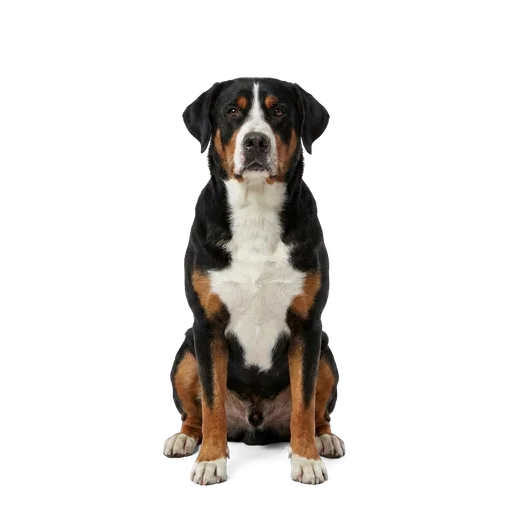
Origin: Switzerland
Greater Swiss Mountain Dog
Get reminders for your Greater Swiss Mountain Dog's vaccines
Vaccination and parasite reminders, food-safety scans and health records — free to start in the Pethls app.


Good for
The Greater Swiss Mountain Dog is the largest of Switzerland's mountain breeds, a big tricolor draft dog once used to pull carts, drive cattle, and guard farms in the Alps. Adults weigh 39 to 64kg and carry that bulk with a calm, steady, gentle temperament. Swissies are devoted, good-natured, and famously patient with children, which makes them a wonderful family dog for a household with the room a giant breed needs. This is not an apartment breed. They need room, they lean into their people literally and figuratively, and they reward you with quiet, loyal companionship.
Temperament & personality
The word most owners reach for is gentle. Greater Swiss Mountain Dogs are big, mellow, easygoing dogs that want to be near their families and are content to lie at your feet for hours. They are confident and alert without being nervous, and their size alone makes them natural watchdogs, though their instinct is to alert rather than to attack.
With children they are outstanding, patient and tolerant and fond of being part of the action, though their sheer size means supervision around small kids is sensible; a happy Swissy tail or a leaning 60kg dog can knock a toddler over without meaning any harm. They generally get on well with other pets, especially when raised alongside them.
Swissies mature slowly, staying puppyish in body and mind well into their second and even third year, so patience during adolescence pays off. They are intelligent and willing but can have a stubborn, independent streak inherited from their working past. Early socialization and consistent, kind training shape them into the steady, biddable adults the breed is known for. They bond deeply and do not do well left alone for long stretches.
Vaccination schedule
Greater Swiss puppies begin their core vaccinations at around 6 to 8 weeks of age with DHPP, protecting against distemper, hepatitis (adenovirus), parvovirus, and parainfluenza. Boosters are given every 3 to 4 weeks until the puppy reaches roughly 16 weeks, ensuring protection continues as maternal antibodies fade.
Rabies is administered between 12 and 16 weeks depending on local requirements, then boosted with DHPP at about one year old. Beyond that, both are repeated every 1 to 3 years according to your vet's protocol and the rules where you live.
Which non-core vaccines make sense comes down to where you live and how your dog spends its time. Leptospirosis is worth considering for a dog with access to rural land, standing water, or wildlife, and Bordetella or canine influenza may be sensible if your Swissy boards, is groomed regularly, or mixes with other dogs. Tailor the plan to real exposure.
Best food & diet
Feed a Greater Swiss puppy a large-breed puppy formula, which is designed to control the rate of growth so bones and joints develop steadily rather than too fast. Overfeeding or the wrong food can drive rapid growth that contributes to hip, elbow, and shoulder problems in giant breeds.
Adult Swissies are calm, low-energy dogs and do not need the huge calorie intake their size might suggest. Feed a quality large-breed adult food and keep the dog lean, because every extra kilo weighs on giant-breed joints and shortens the already modest lifespan. Check the body condition regularly and adjust portions rather than free-feeding.
As a deep-chested giant breed, the Greater Swiss is at real risk of bloat/GDV, so feeding management matters. Split food into two meals a day, use a slow-feeder bowl if your dog gulps, and avoid vigorous exercise for an hour or so before and after eating. Do not let the dog drink a large volume of water in one go right after a meal.
Common health problems
Greater Swiss Mountain Dogs are a giant breed with a shorter lifespan of 8 to 11 years and several conditions worth knowing. Hip and elbow dysplasia are common orthopedic issues where the joints develop imperfectly, leading to arthritis and lameness; screening breeding dogs and raising puppies lean and slow-growing both help. Osteochondritis dissecans (OCD) of the shoulder can affect Greater Swiss pups too, as with other fast-growing giant breeds: cartilage fails to form properly and causes front-leg lameness.
The breed is prone to epilepsy, a seizure disorder that usually appears in young to middle-aged adults and is managed with lifelong medication once diagnosed. Urinary incontinence, particularly a dribbling of urine during rest, turns up in the breed more than in most and is often treatable with medication after your vet rules out infection and other causes.
The most serious risks involve the abdomen. Bloat/GDV, where the stomach twists and fills with gas, is a life-threatening emergency needing immediate surgery. Splenic torsion, where the spleen twists, can also occur in deep-chested giant breeds and can present with vague signs like a swollen belly, lethargy, and pale gums. Learn the warning signs of both: a distended or hard abdomen, unproductive retching, restlessness, drooling, and collapse mean you go to an emergency vet without delay.
Allergies & skin
The Greater Swiss has a short, dense double coat and is not especially known for skin trouble, but like any dog it can occasionally develop allergies. Environmental triggers such as pollen, grass, and dust mites are the usual culprits, and food sensitivities are possible too. Watch for itching, paw licking, red or inflamed skin, and repeated ear infections.
Those medium, triangular drop ears deserve regular attention, since the shape traps warmth and moisture that let yeast and bacteria thrive. Check inside the ears weekly for redness, odor, or discharge, and clean them with a vet-approved product when needed. Catching an ear issue early is far easier than clearing a deep-seated infection.
If your vet suspects a food allergy, an elimination diet using a novel or hydrolyzed protein over several weeks helps identify the trigger. Environmental allergies are usually managed rather than cured, with a combination your vet recommends, often including omega-3 fatty acid supplements to support skin health and reduce inflammation.
Flea, tick & worm prevention
Year-round flea and tick prevention keeps your Swissy comfortable and protects against tick-borne diseases, which matter especially for a big dog that enjoys time outdoors and in rural areas. Your vet will recommend a product dosed to the dog's considerable weight, available as a monthly chew, a topical spot-on, or a long-acting collar.
Worming addresses intestinal parasites, including roundworms, hookworms, whipworms, and tapeworms. Puppies are wormed every couple of weeks through the early months, then adults are treated on a schedule your vet tailors to lifestyle and risk. Many monthly preventives conveniently combine worm and flea protection in a single dose.
Heartworm, spread by mosquitoes, is far easier to prevent than to treat, and a monthly preventive keeps your dog safe. After walks through long grass or woodland, run your hands through that dense coat to check for ticks, paying attention to the ears, neck, and between the toes, and remove any promptly with fine-tipped tweezers.
Medications & dosing
With a dog that can top 60kg, weight-based dosing is not a formality, it is essential. Always dose to your dog's current, accurate weight, and keep in mind that a Greater Swiss puppy grows steadily over a long adolescence, so preventive and treatment doses need updating regularly as the dog fills out.
For a breed prone to epilepsy and urinary incontinence, some Swissies end up on daily long-term medication. If your dog is prescribed anti-seizure drugs, give them at the same times every day without missing doses, since consistent blood levels are what keep seizures controlled. Never stop or change a chronic medication without talking to your vet first.
Never give human painkillers such as ibuprofen or paracetamol, which are toxic to dogs; use only vet-prescribed, dog-specific medication at the stated dose. Finish the full course of anything prescribed, store medicines as the label directs, and keep a written record of what your dog takes. When you are unsure about a dose, call the clinic rather than guessing.
Grooming & coat care
For such a large dog, the Greater Swiss is low-maintenance in the grooming department. That weather-resistant double coat needs only a weekly brush most of the year to remove loose hair and keep the skin healthy. There is no trimming or clipping to worry about, which fits the breed's plain, hard-working heritage.
Shedding is the one thing to plan for. Swissies shed steadily year-round and blow their undercoat heavily twice a year, and during those seasonal sheds the amount of fur is striking. Brushing daily through a shed, using an undercoat rake or de-shedding tool, keeps loose hair under control and helps the new coat come in cleanly.
Bathe only when the dog is genuinely dirty, so you do not strip the coat's natural oils. The rest of the routine is basic but important: trim the nails regularly, especially if your dog does not wear them down naturally, brush the teeth to protect against dental disease, and clean the ears to head off infections before they start.
How the Greater Swiss Mountain Dog compares
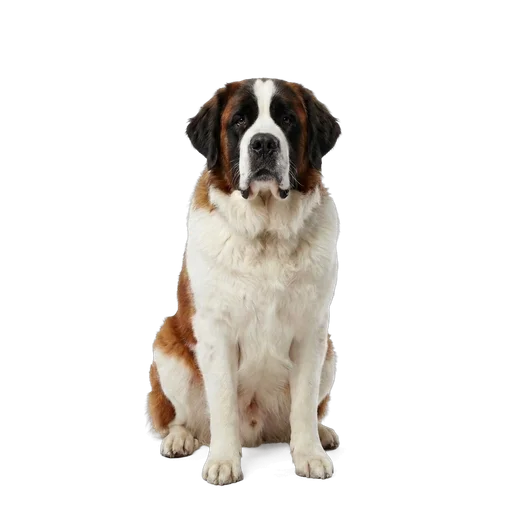
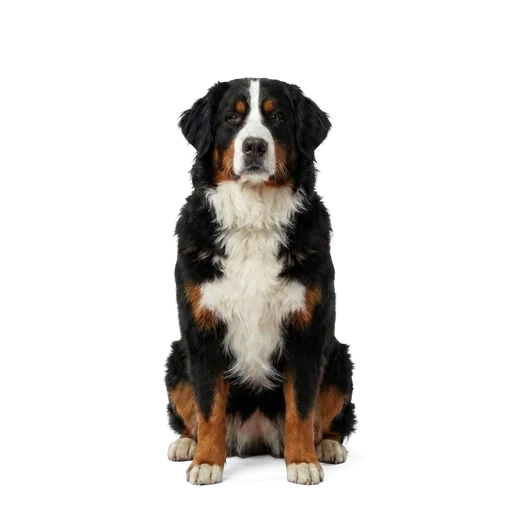
Deciding between similar breeds? Here is the Greater Swiss Mountain Dog next to Saint Bernard and Bernese Mountain Dog.
| Greater Swiss Mountain Dog | Saint Bernard | Bernese Mountain Dog | |
|---|---|---|---|
| Size | Large | Large | Large |
| Weight | 39-64 kg | 64-82 kg | 35-55 kg |
| Lifespan | 8-11 yrs | 8-10 yrs | 7-10 yrs |
| Activity | Calm | Calm | Moderate |
| Shedding | High | High | High |
| Good with kids | Yes | Yes | Yes |
| Apartment-friendly | No | No | No |
Frequently asked questions
Are Greater Swiss Mountain Dogs good family dogs?
Yes, they are one of the better giant breeds for families. Swissies are calm, gentle, devoted, and famously patient with children. Their size means you should supervise around small kids, since a friendly lean or wagging tail can easily knock a toddler over.
Can a Greater Swiss Mountain Dog live in an apartment?
No. Despite their calm nature, these are large dogs that need space to move and stretch out comfortably. They are best suited to a home with room and ideally a securely fenced yard, not apartment living.
How long do Greater Swiss Mountain Dogs live?
Typically 8 to 11 years, which is normal for a giant breed. Keeping your dog lean, feeding a large-breed puppy formula while growing, and staying alert to bloat and joint problems all support the healthiest possible lifespan.
Do Greater Swiss Mountain Dogs shed a lot?
Yes. They have a short but dense double coat that sheds steadily year-round and heavily during two seasonal blowouts. Weekly brushing keeps it manageable most of the year, with daily brushing needed during the big sheds.
What is the biggest health risk for the breed?
Bloat, or gastric dilatation-volvulus, is the most urgent. This deep-chested breed can suffer a stomach twist that is fatal within hours without emergency surgery. Splenic torsion is also a concern. Feed in two smaller meals and learn the warning signs of a swollen, hard abdomen and unproductive retching.
Related breeds
Health and care information is drawn from established veterinary sources and is general guidance, not veterinary advice. See our sources
Keep records for your Greater Swiss Mountain Dog
Vaccinations, food and treat safety, allergy alerts and parasite reminders - all tracked for your Greater Swiss Mountain Dog in the Pethls app.