

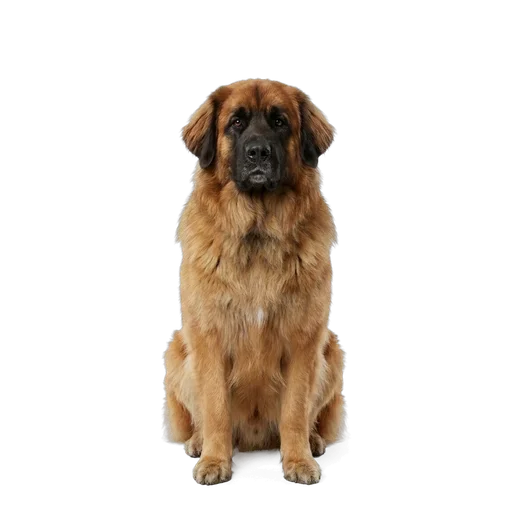
Origin: Germany
Leonberger
Get reminders for your Leonberger's vaccines
Vaccination and parasite reminders, food-safety scans and health records — free to start in the Pethls app.


Good for
The Leonberger is one of the true giants of the dog world, a lion-maned German breed where a fully grown male can tip the scales at 77kg. Under all that fur sits a remarkably steady, soft-natured dog that was bred to work farms and pull carts, and to be trusted around the whole family. They are patient with children, tolerant of other animals, and happiest when they can lean their considerable weight against the people they love. What they are not is a dog for small spaces, and they can be a lot to handle for a complete first-time owner. A giant this size needs land, daily walks, careful growth management as a puppy, and an owner ready for a heartbreakingly short life of only seven to nine years.
Temperament & personality
Leonbergers are famous for their calm, almost dignified temperament. They tend to move through the house at their own unhurried pace, unbothered by noise and chaos, and they have a real soft spot for children. A well-raised Leonberger will let a toddler climb on it and simply sigh. All the same, sheer size means supervision is non-negotiable; a friendly swing of the head or a happy body-check can knock a small child flat without any bad intent behind it.
This is a social, people-oriented breed that does poorly left alone in a yard. They want to be indoors with the family, following someone from room to room. Early socialization matters a great deal because you are shaping a dog that will eventually be too big to physically overpower. Expose puppies to visitors, other dogs, traffic and handling from the start.
They are intelligent and willing but not frantic to please the way a Border Collie is. Training works best with patience, food and a light hand. Harsh corrections tend to make a sensitive Leonberger shut down. They are moderate in energy for their size, content with a couple of good walks and some space to amble, rather than needing hours of hard running.
Vaccination schedule
Leonberger puppies follow the same core vaccine plan as any dog, built around the DHPP combination that covers distemper, hepatitis (adenovirus), parvovirus and parainfluenza. The series usually starts at six to eight weeks, then repeats every three to four weeks until the puppy is at least sixteen weeks old, because maternal antibodies can otherwise block an early dose from taking hold.
Rabies is given as a separate vaccine, typically at twelve to sixteen weeks depending on local law, with a booster one year later. After that, DHPP core boosters typically move to a three-year schedule, while leptospirosis needs a two-dose puppy series followed by an annual booster; confirm the exact plan with your vet based on their protocol and regional requirements.
Because giant-breed puppies grow slowly and stay vulnerable longer, keep a new Leonberger away from unvaccinated dogs and high-traffic dog areas until the full puppy series is complete. Leptospirosis is now recommended as a core vaccine for every dog, so plan on it too; the risk is higher for dogs that spend as much time outdoors around water and wildlife as Leonbergers do. Non-core vaccines such as Bordetella (kennel cough), Lyme and canine influenza are also worth discussing with your vet.
Best food & diet
Diet during the first eighteen months is arguably the single most important thing you control with a Leonberger. Feed a large or giant-breed puppy formula with carefully controlled calcium and a moderate calorie level. Overfeeding and rapid growth are directly linked to hip, elbow and joint problems later, so the goal is steady, lean growth, not a fat, fast-growing puppy.
As adults, Leonbergers get through a large amount of food overall but need fewer calories per kilo of bodyweight than a small dog does. Split the daily ration into two or three meals rather than one large bowl. Smaller, spaced meals and avoiding heavy exercise right after eating are sensible steps given how prone deep-chested giants are to bloat. Skip raised feeders, which have been linked to a higher risk of bloat in large and giant breeds.
Keep this breed lean throughout life. Every extra kilo lands on joints that are already carrying an enormous frame. You should be able to feel the ribs easily under the coat. Get any major diet change, especially a raw or homemade plan, checked by your vet so calcium, phosphorus and calorie levels stay right for the size.
Common health problems
The Leonberger carries several serious health concerns, and the short average lifespan of seven to nine years reflects them. Hip and elbow dysplasia are common; responsible breeders screen and score parents before breeding. Osteosarcoma, an aggressive bone cancer, is sadly one of the leading causes of death in the breed and often strikes in middle age.
Leonberger polyneuropathy is a breed-specific nerve disease that causes progressive weakness, exercise intolerance, a bunny-hopping gait and voice changes. Several forms exist and DNA tests are available for known variants, so ask any breeder for results. Heart disease, including forms of cardiomyopathy, is worth being aware of in any giant dog, and periodic cardiac checks are a reasonable precaution.
Bloat, or gastric dilatation-volvulus (GDV), is a life-threatening emergency where the stomach fills with gas and twists. A Leonberger showing a swollen belly, unproductive retching, drooling and restlessness needs an emergency vet immediately, not in the morning. Some owners of deep-chested giants choose a preventive gastropexy, often done at the same time as spay or neuter; discuss it with your vet.
Allergies & skin
The Leonberger's dense double coat is both protection and a management job. Trapped moisture, debris and dead undercoat can lead to hot spots, especially in the thick fur around the neck and hindquarters during humid weather or after swimming. Drying the coat properly after water play and keeping the undercoat brushed out goes a long way toward preventing skin flare-ups.
Environmental allergies (atopy) show up as itching, ear infections, licked paws and reddened skin, often seasonally. Food allergies are less common but possible, usually tied to a specific protein. If your dog is scratching persistently or getting repeat ear infections, see your vet rather than guessing; identifying the trigger is what actually stops the cycle.
Check the ears regularly. Heavy coat and floppy ears trap warmth and moisture, which yeast and bacteria love. A gentle routine of regular ear checks and cleaning, plus prompt attention to any smell or head-shaking, keeps small problems from becoming chronic ones.
Flea, tick & worm prevention
Leonbergers spend a lot of time outdoors and near water, which puts them squarely in tick and flea territory. Use a year-round parasite plan suited to your region and, importantly, dosed to the dog's true weight. A giant breed needs the largest weight bracket of any product, so never split a smaller dose or guess; the wrong amount either fails to protect or risks toxicity.
Ticks matter especially for outdoor giants because of diseases like Lyme, anaplasmosis and ehrlichiosis. Check the coat by hand after walks in long grass or woodland, paying attention to the ears, armpits, groin and between the toes where ticks hide under thick fur.
Worming covers roundworms, hookworms, whipworms and tapeworms, while a monthly heartworm preventive is essential in areas where heartworm is present. Puppies need frequent worming early on, then adults settle into a routine set by your vet. Because product ranges cap out at certain weights, confirm your Leonberger's dose with the vet rather than assuming an over-the-counter pack covers a dog this large.
Medications & dosing
With a giant breed, dosing is genuinely high-stakes, and every drug should be calculated on current bodyweight and given under veterinary direction. A dose that is correct for a 20kg dog is nowhere near right for a Leonberger, and getting an accurate, up-to-date weight before any medication is essential. Weigh at the clinic rather than estimating.
Some medications behave differently in giant breeds, and certain sedatives and anaesthetics need careful adjustment because these dogs do not simply scale up linearly. Always tell your vet about any Leonberger-specific conditions, especially suspected polyneuropathy or heart disease, as these affect which drugs are safe.
Never give human painkillers such as ibuprofen or paracetamol; they are toxic to dogs. Stick to vet-prescribed medications, follow the timing exactly, and finish full courses of antibiotics. If you are managing joint pain or arthritis long term, your vet will monitor with periodic bloodwork to keep an eye on the liver and kidneys.
Grooming & coat care
That glorious lion's mane comes at a price: the Leonberger is a heavy shedder with a thick, water-resistant double coat that needs work. Plan on brushing several times a week to stay ahead of tangles, and expect two big seasonal molts each year when the undercoat blows out in impressive quantities. During those weeks, daily brushing with an undercoat rake or slicker is realistic, not optional.
Pay special attention to the friction areas that mat quickly: behind the ears, in the mane, the feathering on the legs and the trousers on the back legs. Working through a mat gently before it tightens saves both fur and skin. Bathe only as needed; over-bathing strips the coat's natural oils.
Round out grooming with regular nail trims, ear checks and dental care. Nails on a dog this heavy need to stay short so they do not alter the gait or stress the toes. Getting a Leonberger used to full-body handling as a puppy pays off hugely, because grooming an uncooperative giant is a very different task.
How the Leonberger compares
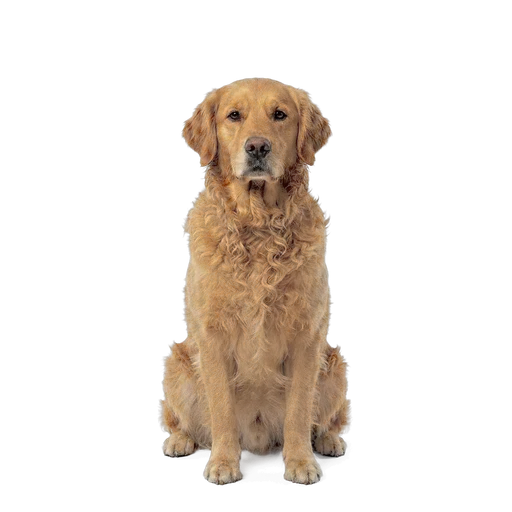
Deciding between similar breeds? Here is the Leonberger next to Great Dane and Golden Retriever.
| Leonberger | Great Dane | Golden Retriever | |
|---|---|---|---|
| Size | Large | Large | Large |
| Weight | 45-77 kg | 45-90 kg | 25-34 kg |
| Lifespan | 7-9 yrs | 7-10 yrs | 10-12 yrs |
| Activity | Moderate | Moderate | Active |
| Shedding | High | Medium | High |
| Good with kids | Yes | Yes | Yes |
| Apartment-friendly | No | No | No |
Frequently asked questions
How big does a Leonberger get?
Leonbergers are a giant breed. Adults typically weigh between 45kg and 77kg, with males at the top of that range, and stand roughly 60cm to 80cm at the shoulder. They keep filling out until around two to three years of age, so the puppy you bring home will change dramatically.
Are Leonbergers good family dogs?
Yes, they are known as gentle, patient family dogs that do well with children and other pets. Their calm temperament is a real strength. The main caution is size: supervise interactions with small children, because an accidental bump from a dog this heavy can knock a child over even when the dog means no harm.
Why do Leonbergers have such a short lifespan?
Like most giant breeds, Leonbergers live only about seven to nine years. Their size puts strain on the heart and joints, and the breed is prone to bone cancer (osteosarcoma) and other serious conditions. Choosing a breeder who health-tests parents and keeping your dog lean helps you make the most of those years.
Can a Leonberger live in an apartment?
It is not a good fit. Leonbergers are calm indoors but they are simply enormous, and they need space to move plus a garden and daily walks. Apartment living leaves too little room for a dog of this scale and makes their heavy shedding and exercise needs much harder to manage.
Do Leonbergers shed a lot?
A great deal. The thick double coat sheds year-round and blows out heavily twice a year during seasonal molts. Expect to brush several times a week, and daily during molting season, plus a steady presence of fur around the home. They are not a hypoallergenic breed.
Related breeds

Health and care information is drawn from established veterinary sources and is general guidance, not veterinary advice. See our sources
Keep records for your Leonberger
Vaccinations, food and treat safety, allergy alerts and parasite reminders - all tracked for your Leonberger in the Pethls app.