

Origin: United Kingdom
Parson Russell Terrier
Get reminders for your Parson Russell Terrier's vaccines
Vaccination and parasite reminders, food-safety scans and health records — free to start in the Pethls app.


Good for
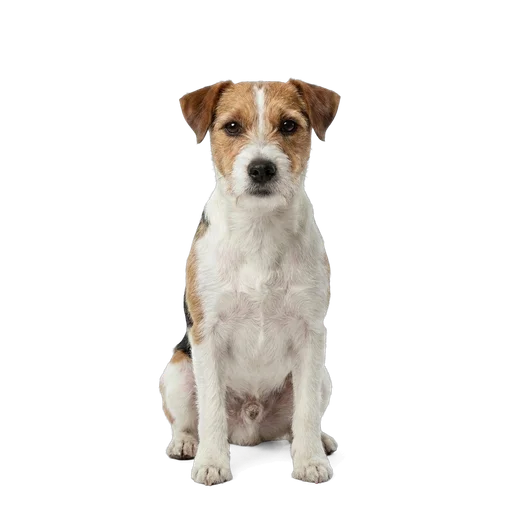
The Parson Russell Terrier is the taller, squarer cousin of the Jack Russell, bred in the West Country of England, in the line developed by Rev. John Russell, to run with foxhounds and go to ground after a fox. Stand one next to a classic short-legged Jack and the difference is obvious: longer legs, a more balanced square outline, and enough reach to keep up with horses across country. What hasn't changed is the wiring inside. This is a bold, clever, tireless little terrier that needs a real job and a lot of exercise, not a lapdog that happens to be small. Give one the right home and you get a witty, affectionate, endlessly game companion for 13 to 15 years.
Temperament & personality
Parson Russells are working terriers first and pets second, and it shows in everything they do. They are fearless, quick to make up their own minds, and happiest when they have a task, a trail, or a problem to solve. Owners often describe living with one as living with a small, furry athlete who never quite runs out of battery. Bored Parsons dig, bark, and take it out on your skirting boards, so the answer is always more activity and more thinking, not less.
They bond hard with their people and tend to be genuinely funny, affectionate dogs at home once the day's exercise is behind them. Most are good with children who understand how to handle a busy dog, though the terrier temperament means they won't tolerate rough handling forever. Early, consistent socialization matters a great deal here.
The prey drive is the thing to respect. These dogs were built to chase and dispatch small animals underground, so cats, rabbits, and pocket pets are a real management issue, and other dogs can trigger a scrappy streak if socialization was skipped. Recall around wildlife is genuinely hard to train and never fully reliable, which is why so many Parsons live behind secure fencing and go on lead near livestock. First-time owners often underestimate all of this, which is why the breed suits an experienced, active home best.
Training works well when it is short, upbeat, and reward-based. They are smart enough to learn almost anything and stubborn enough to argue about it, so patience and a sense of humor go a long way.
Vaccination schedule
Parson Russell puppies follow the standard canine core schedule. The main course is DHPP, which covers distemper, hepatitis (adenovirus), parvovirus, and parainfluenza, given as a series of injections starting around 6 to 8 weeks of age and repeated every 2 to 4 weeks until the puppy is at least 16 weeks old. Parvovirus in particular is a killer of unvaccinated puppies, so finishing the full course before heavy outdoor exposure is not optional.
Rabies is the other core vaccine, usually given once from 12 weeks of age depending on local law and where you live. In the UK it is only required for travel, while in much of the rest of the world it is legally mandatory. Your vet will tell you what applies to you.
After the puppy series, dogs typically get a booster at around 12 months, then core vaccines every 1 to 3 years depending on the product and your vet's protocol. Leptospirosis is now a core vaccine recommended for every dog, given as a 2-dose puppy series followed by an annual booster (unlike the every-1-to-3-years DHPP boosters). Non-core vaccines such as kennel cough (Bordetella and parainfluenza) and Lyme disease are worth discussing for an active terrier that spends time in fields, kennels, and standing water. A working or countryside Parson that spends time around standing water, wildlife, and rural land faces higher leptospirosis exposure, which is why the annual lepto booster matters, though the plan for the non-core vaccines is worth confirming with your vet.
Keep a written or in-app record of every vaccine date so boosters don't quietly lapse.
Best food & diet
Feed a complete, balanced food formulated for the right life stage, with real animal protein high on the ingredient list. Parsons are small but astonishingly active, so they need calorie-dense, good quality food rather than a lot of low-value bulk. Match portions to the individual dog: a working terrier running all day needs noticeably more than a companion doing two walks and a garden patrol.
Portion control is the single biggest thing you control. A lean Parson moves better, protects those small joints and kneecaps, and lives longer. You should be able to feel the ribs easily under a light covering and see a waist from above. Because they are small, even a few extra biscuits a day adds up fast, so weigh meals rather than eyeballing them and count treats as part of the daily total.
Two meals a day suits most adults; puppies need three or four smaller meals while they are growing. Fresh water should always be available. Use part of the daily ration for training rewards instead of adding extra food on top, which keeps the calories honest and the terrier motivated.
If you want to change diets, do it gradually over 7 to 10 days to avoid an upset stomach, and check with your vet before adding supplements, which a healthy dog on a complete food rarely needs.
Common health problems
The Parson Russell is a fairly hardy breed, but it carries a handful of known conditions worth understanding. Patellar luxation, where the kneecap slips out of its groove, is seen in small terriers and shows up as a skipping or hopping gait; mild cases are managed conservatively, while more severe ones may need surgery. Legg-Calve-Perthes disease, in which the head of the femur loses its blood supply and degenerates, tends to appear in young dogs as gradual hindlimb lameness and is also surgically treated when needed.
Two inherited conditions in this breed have DNA tests, which is a real advantage. Primary lens luxation (PLL) causes the lens inside the eye to slip from its normal position; it is painful, can lead to glaucoma and blindness, and is a genuine emergency when it happens. Late-onset ataxia (LOA) is a breed-specific neurological disease that causes progressive loss of coordination in young adult dogs. Responsible breeders test parents for both, so ask to see PLL and LOA results before buying a puppy.
Deafness turns up occasionally and can affect one or both ears, though it is not a hallmark concern of the breed the way it is in predominantly white dogs like Dalmatians. A dog deaf in one ear generally lives a completely normal life, while a bilaterally deaf dog needs adapted, hand-signal-based training.
Ask a breeder for the parents' health results and the DNA test certificates before you buy, and keep up regular vet checks so anything that does crop up gets caught early as your dog ages.
Allergies & skin
Parson Russells are not an especially allergy-prone breed, but no dog is immune. The most common culprits tend to be environmental allergens such as pollen, grass and dust mites, and flea allergy dermatitis, where a single flea bite triggers days of intense itching in a sensitive dog. Food allergies happen too but are rarer than most owners assume.
Watch for the usual signs: persistent licking or chewing of the paws, scratching at the ears, red or inflamed skin, recurrent ear infections, and rubbing the face along the floor. Because these terriers spend so much time nose-down in grass, hedgerows, and burrows, seasonal contact irritation is fairly common. A quick rinse or wipe-down after a muddy country walk removes a lot of the pollen and grit before it causes trouble.
If itching is persistent, book a vet visit rather than guessing. Diagnosis usually starts with ruling out fleas and infection, and a strict elimination diet is the only reliable way to pin down a food trigger. Modern treatments for environmental allergy are far better than they used to be, ranging from medicated washes to targeted anti-itch medication.
Keep flea prevention year-round, since flea allergy is both the most common and the most easily prevented skin problem in the breed.
Flea, tick & worm prevention
An active terrier that goes to ground, works hedgerows, and roams fields is a parasite magnet, so prevention should be routine rather than reactive. Fleas and ticks are handled with a regular product, either a spot-on or an oral tablet, given on a schedule that matches the season and your local risk. In warm climates and for a dog with heavy outdoor exposure, year-round cover is the sensible default.
Ticks deserve particular attention in this breed because of where Parsons like to poke about. Check the dog over after walks in long grass and woodland, especially around the head, ears, neck, and armpits, and remove any tick promptly with a proper tick tool. Ticks in many regions carry Lyme disease and other infections, so fast, clean removal matters.
Worming covers roundworms, tapeworms, and hookworms; tapeworm risk in particular rises in dogs that hunt and eat prey, which describes most Parsons perfectly. Adult dogs are typically wormed every 3 months, though a keen hunter may need more frequent treatment. Puppies need worming much more often, usually every 2 weeks until 12 weeks old, then monthly to 6 months.
Where heartworm is present, year-round preventive medication is essential and is prescribed by your vet. Your vet can build a single combined parasite plan that covers fleas, ticks, worms, and heartworm without doubling up, which is easier to stick to than juggling separate products.
Medications & dosing
Because the Parson is a small dog, often around 6 to 9 kg, medication doses are calculated on body weight and there is little margin for error. A dose that is fine for a Labrador can be dangerous for a terrier a fraction of its size, so never split, share, or estimate. Weigh your dog accurately before dosing, and keep the number current, since even 1 kg makes a difference in a dog this size.
Give all prescription medicine exactly as directed and finish the full course of any antibiotic, even once your dog looks better. For pain and inflammation, use only a vet-prescribed canine anti-inflammatory (NSAID) at the stated dose. Never give human painkillers such as ibuprofen or paracetamol, which are toxic to dogs and can be fatal.
Preventive products like flea, tick, and worm treatments are also weight-banded, so buy the pack that matches your dog's current weight rather than reusing an old size as a growing puppy fills out. If your Parson is on long-term medication, your vet may want periodic blood tests to check organs are coping.
Store all medicines out of reach, note the doses and timings somewhere you will actually see them, and call your vet if you miss a dose rather than doubling up the next one.
Grooming & coat care
Parson Russells come in two coat types, smooth and broken (rough). The smooth coat is genuinely low-maintenance; the broken coat needs a little more, since it wants stripping to stay neat. Either way, a weekly brush with a bristle brush or grooming mitt removes loose hair and keeps the coat and skin healthy. They do shed a moderate amount despite the short coat, and you will find white hairs on dark clothing, so regular brushing keeps that in check.
Broken and rough-coated dogs benefit from occasional hand-stripping a couple of times a year to keep the jacket weatherproof and neat, though many pet owners simply tidy up with a stripping knife or leave it natural. Clipping a rough coat softens the texture over time, so hand-stripping is preferred if you want the correct terrier look. Bathe only when the dog is genuinely dirty, which for a burrowing terrier can be surprisingly often; over-bathing strips the coat's natural oils.
Nails need trimming every few weeks if they aren't worn down by activity, and long nails change how the dog stands and moves. Check and gently clean the ears, especially in a dog prone to ear issues, and look for redness or a bad smell.
Brush the teeth several times a week with dog toothpaste to head off dental disease, which is common in small breeds. A quick post-walk check for grass seeds, ticks, and cuts rounds out the routine and takes only a minute.
How the Parson Russell Terrier compares
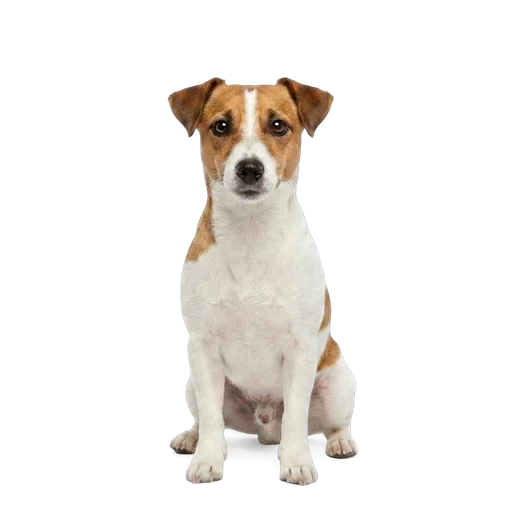
Deciding between similar breeds? Here is the Parson Russell Terrier next to Lakeland Terrier and Jack Russell Terrier.
| Parson Russell Terrier | Lakeland Terrier | Jack Russell Terrier | |
|---|---|---|---|
| Size | Small | Small | Small |
| Weight | 6-8 kg | 7-8 kg | 6-8 kg |
| Lifespan | 13-15 yrs | 12-15 yrs | 13-16 yrs |
| Activity | Active | Active | Active |
| Shedding | Medium | Low | Medium |
| Good with kids | Yes | Yes | Yes |
| Apartment-friendly | No | Yes | No |
Frequently asked questions
What is the difference between a Parson Russell and a Jack Russell Terrier?
They share the same working origins but are now separate breeds. The Parson is taller and more square in outline, with longer legs and a build meant to run alongside horses and foxhounds. The classic Jack Russell is usually shorter in the leg and longer in the body. Temperament and energy levels are very similar in both.
Are Parson Russell Terriers good for first-time dog owners?
Not usually. They are clever, bold, and extremely high-energy with a strong prey drive and an independent streak, which can overwhelm someone new to dogs. They do far better with an active, experienced owner who can provide daily exercise, mental work, and consistent training.
How much exercise does a Parson Russell need?
A lot. Plan on at least an hour or two of real activity every day, split between physical exercise and brain work such as scent games, training, or dog sports. A Parson that is under-exercised will find its own entertainment, and you rarely like the results.
Do Parson Russell Terriers get along with cats and other pets?
It depends on the individual and on early socialization, but the breed was built to hunt small animals, so caution is wise. Many live peacefully with a cat they were raised alongside, yet the same dog may chase an unfamiliar cat, rabbit, or rodent. Small pets should always be kept safely separate.
What health tests should a Parson Russell breeder have done?
Ask specifically for DNA test results for primary lens luxation (PLL) and late-onset ataxia (LOA), both of which have reliable genetic tests in this breed. A responsible breeder will also be open about patellar luxation and Legg-Calve-Perthes disease, which are worth discussing with them.
Related breeds

Health and care information is drawn from established veterinary sources and is general guidance, not veterinary advice. See our sources
Keep records for your Parson Russell Terrier
Vaccinations, food and treat safety, allergy alerts and parasite reminders - all tracked for your Parson Russell Terrier in the Pethls app.