

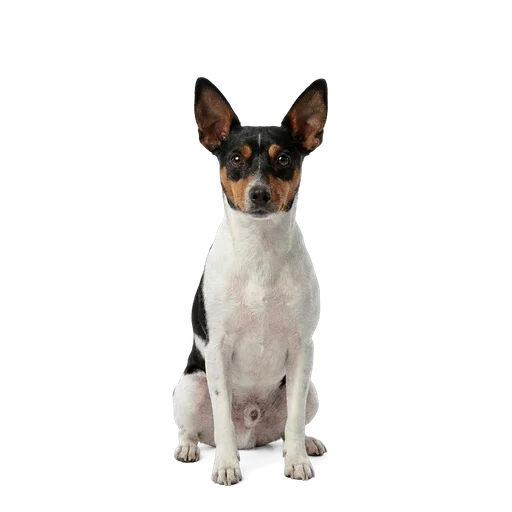
Origin: United States
Rat Terrier
Get reminders for your Rat Terrier's vaccines
Vaccination and parasite reminders, food-safety scans and health records — free to start in the Pethls app.


Good for
The Rat Terrier is a true all-American farm dog, bred to clear barns of vermin and turn a hand to just about any job on the homestead. Smart, sturdy, and endlessly game, it comes in a range of sizes but keeps the same eager, affectionate character throughout. These are dogs who want to be part of everything, following their people room to room, then switching to full-speed chase mode the moment a squirrel appears. They're versatile enough to suit active families, first-time owners willing to put in the training, and anyone who likes a terrier with a soft, loving streak. With a short coat and simple grooming, most of the effort goes into exercise and keeping that clever brain busy.
Temperament & personality
Rat Terriers are friendly, alert, and deeply attached to their families. Unlike some of the more aloof terriers, they tend to be openly affectionate, keen to cuddle, and happiest when they're included in daily life. That people-focus makes them responsive and rewarding to train, though it also means they don't do well left alone for long stretches.
The working instinct is alive and well. They love to chase and dig, and a Rat Terrier will happily excavate a flowerbed or bolt after a rabbit given the chance. Channelling that drive into games, fetch, scent work, or a dedicated digging pit keeps them satisfied and your garden intact. A secure, fenced yard is a real asset.
They're highly intelligent and pick up commands quickly, which suits owners who enjoy training, though the terrier independence means they can turn stubborn if a session drags on. They can be a little wary of strangers and will bark to announce visitors, so early socialization helps them grow into confident, settled adults rather than nervy or over-reactive ones. Firm but kind, consistent guidance brings out the best in them.
Around other pets, most Rat Terriers do well with dogs and with animals they're raised alongside, though small pets like hamsters or pet rats trigger the prey drive and are best kept well apart. With people, they're loyal, playful, and genuinely fun companions.
Vaccination schedule
Rat Terrier puppies begin core vaccinations at about 6 to 8 weeks with the DHPP combination, which protects against distemper, hepatitis (adenovirus), parvovirus, and parainfluenza. Boosters continue every 2 to 4 weeks until roughly 16 weeks of age, because immunity from the mother can otherwise blunt an early dose. Your vet will confirm the exact timing.
Rabies vaccination is standard for this breed's home country and is often legally required, typically given from around 12 to 16 weeks of age and then boosted on the schedule your local rules and vet recommend. Keep the certificate safe, as it's needed for boarding, travel, and licensing in many areas.
Non-core vaccines depend on where and how your dog lives. Leptospirosis suits dogs with access to water, wildlife, or rural land, which describes a lot of Rat Terriers. Bordetella (kennel cough) is worth having before boarding, daycare, or group classes, and Lyme vaccination may be advised in tick-heavy regions.
Once the puppy course is complete, adults move to boosters every 1 to 3 years depending on the specific vaccine and local disease risk. Keep a written record and bring it to each visit so nothing slips.
Best food & diet
Feed a complete, balanced diet matched to life stage. Puppies need a growth formula, and because the Rat Terrier is a small-to-medium breed, a standard puppy food suits them at every point in the size range; large-breed puppy formulas are meant for dogs that mature at 25 kilograms or more and aren't appropriate here. Move to adult food once growth finishes, usually somewhere between 10 and 14 months.
Because the breed spans roughly 4 to 11 kilograms, portions vary a lot from one dog to the next, so follow feeding guides as a starting point and adjust to the individual. These are active dogs with good appetites, and it's easy to let a food-motivated terrier gain weight. Feed measured meals twice a day, and keep an eye on body condition: the ribs should be easy to feel and the waist visible from above.
Extra weight is hard on the knees and hips, which matters for a breed prone to patellar luxation and hip issues, so lean is genuinely healthier here. If your dog is very active on the farm or in dog sports, they'll need more calories than a couch-loving housemate, so match intake to output.
Keep training treats small and count them toward the daily total. Fresh water should always be available, particularly for dogs working or playing hard in warm weather.
Common health problems
Rat Terriers are a hard-wearing, long-lived breed, often reaching 12 to 18 years, but a few conditions run in the type. Patellar luxation, where the kneecap slips out of its groove, is the most common. You might notice an occasional skip or hop in the back leg, or the dog holding a leg up briefly before carrying on. Mild cases are managed conservatively, while more severe ones may need surgery.
Hip dysplasia, a malformation of the hip joint, can also occur and leads to stiffness, reduced activity, and arthritis over time. Keeping your dog lean, fit, and steadily exercised protects the joints, and reputable breeders screen breeding dogs for both hips and knees.
Primary lens luxation is an inherited eye condition in which the lens slips from its normal position, and it can cause pain and lead to glaucoma and vision loss if not treated. Signs include a suddenly cloudy, red, or painful eye. Treat this as an emergency. A DNA test exists, so ask breeders whether the parents were tested.
Some individuals are also prone to skin allergies (see below). Routine annual checks, prompt attention to any limp, eye change, or skin flare, and a healthy weight go a long way to keeping this generally sturdy breed thriving into old age.
Allergies & skin
Skin allergies are one of the more common complaints in Rat Terriers. Environmental triggers such as pollen, grass, dust mites, and mold can cause itching, paw-licking, ear irritation, and red or inflamed skin, often flaring seasonally. Some dogs also react to ingredients in their food, with beef, chicken, and wheat among the more common triggers, which can show up as itching plus tummy upset.
Flea allergy is a frequent culprit and a miserable one, since a flea-sensitive dog reacts strongly to just a few bites, chewing and scratching around the rump and tail base. Reliable year-round flea control is the simplest way to prevent this whole category of problem.
The short coat makes it easy to spot trouble early, so run your hands over your dog regularly and look for red patches, scabs, thinning hair, or a change in smell. Repeated ear infections often go hand in hand with underlying allergies, so recurring head-shaking or waxy, smelly ears is worth investigating at the source, not just wiping clean.
If itching is persistent, see your vet rather than cycling through shampoos. Modern allergy management, from diet trials to medication to control the itch, works well once the cause is pinned down, and getting ahead of a flare keeps your dog comfortable and the skin healthy.
Flea, tick & worm prevention
A year-round prevention routine is the foundation of Rat Terrier health, especially given how prone the breed is to flea-related skin trouble. Use a vet-recommended flea product every month or on the product's schedule, and treat all pets in the home together so an infestation can't bounce between them. Washing bedding regularly helps break the flea life cycle.
Ticks are a real risk for a breed that loves the outdoors and rural life. They can carry Lyme disease and other infections, so choose a product with tick cover if you walk in grassy or wooded areas, and check your dog thoroughly after outings, paying attention to the ears, neck, armpits, and between the toes. Remove any tick promptly and in one piece using a proper tick tool.
Worming protects against roundworms, tapeworms, hookworms, and heartworm, which is spread by mosquitoes and is a serious, preventable disease in many regions. Heartworm prevention in particular is given on a strict monthly schedule where the parasite is present, so follow your vet's plan closely.
Puppies are wormed frequently, usually every 2 weeks until 12 weeks old, then monthly to 6 months. Adults follow a routine based on their lifestyle and local risk. Combination products that cover fleas, ticks, and worms make it easier to stay consistent, and dosing by weight keeps it safe.
Medications & dosing
Rat Terriers range widely in size, so medication must always be dosed to the individual dog's current weight and given under veterinary direction. A dose calculated for an 11-kilogram dog can be too much for a 4-kilogram one, and weighing before treatment removes the guesswork. Never share medicine between pets or estimate a dose at home.
For the joint conditions common in this breed, your vet may prescribe anti-inflammatory pain relief during a flare or after surgery. These are effective but must be given at the correct dose with food, and never combined with human painkillers. Over-the-counter drugs like ibuprofen and paracetamol are toxic to dogs and must never be used.
If your dog is diagnosed with the inherited eye condition (primary lens luxation), medication may become part of daily life, and doses often need reviewing over time. Give every course exactly as prescribed and finish antibiotics fully, even once your dog looks better.
Keep all medicines stored safely out of reach, since a food-driven terrier will happily raid a dropped tablet. If a dose is missed, doubled, or the dog seems to react badly, call your vet straight away.
Grooming & coat care
The Rat Terrier's short, smooth coat is about as low-maintenance as it gets. A weekly brush with a rubber curry mitt or soft bristle brush lifts the loose hair and keeps the coat sleek. They do shed a moderate amount, with heavier bursts a couple of times a year, and stepping up brushing during those weeks keeps the fur off your furniture.
Bathing is only needed occasionally, when your dog is actually dirty or after a muddy day in the field. Use a gentle dog shampoo and don't overdo it, since frequent washing can dry out the skin and, in an allergy-prone breed, make itching worse rather than better.
The routine care is simple and important. Trim nails every few weeks, brush the teeth several times a week to prevent the dental disease small terriers often develop, and check the ears regularly for wax or redness, wiping only when needed. Because allergies and ear infections often travel together in this breed, staying on top of ear checks pays off.
The thin coat gives little protection from cold, so a jacket is welcome on chilly, wet walks. Beyond that, most owners find the grooming side of Rat Terrier ownership takes only a few minutes a week.
How the Rat Terrier compares
Deciding between similar breeds? Here is the Rat Terrier next to Nederlandse Kooikerhondje and Boykin Spaniel.
| Rat Terrier | Nederlandse Kooikerhondje | Boykin Spaniel | |
|---|---|---|---|
| Size | Small | Small | Medium |
| Weight | 4-11 kg | 9-16 kg | 11-18 kg |
| Lifespan | 12-18 yrs | 12-15 yrs | 10-15 yrs |
| Activity | Active | Active | Active |
| Shedding | Medium | Medium | Medium |
| Good with kids | Yes | Yes | Yes |
| Apartment-friendly | Yes | Yes | No |
Frequently asked questions
Are Rat Terriers good family dogs?
Yes. They're affectionate, playful, and loyal, and they usually do well with children when raised with them and socialized early. As with any terrier, supervise interactions with very young kids and teach gentle handling. Their people-focused nature makes them wonderful, involved family companions.
Do Rat Terriers bark a lot?
They're alert and will bark to announce visitors or unusual activity, which makes them useful little watchdogs. Excessive barking usually points to boredom or too little exercise. Plenty of activity, mental stimulation, and early training keep the noise at a reasonable level.
How much exercise does a Rat Terrier need?
These are energetic dogs that need a good hour or more of activity daily, mixing walks with off-lead running, fetch, and games. They also thrive on mental work and dog sports like agility. A secure yard where they can chase and dig helps burn off that farm-terrier energy.
Are Rat Terriers easy to train?
Very. They're among the smartest small terriers and love working with their people, so they respond well to reward-based training. They can be a little stubborn and wary of strangers, so keep sessions short and fun and prioritize early socialization and reliable recall around small animals.
Do Rat Terriers have many health problems?
They're a hardy, long-lived breed, often reaching 12 to 18 years. The main concerns are patellar luxation, hip dysplasia, an inherited eye condition called primary lens luxation, and skin allergies. Buying from a breeder who screens for these and keeping your dog lean and fit reduces the risks.
Related breeds



Health and care information is drawn from established veterinary sources and is general guidance, not veterinary advice. See our sources
Keep records for your Rat Terrier
Vaccinations, food and treat safety, allergy alerts and parasite reminders - all tracked for your Rat Terrier in the Pethls app.